
Izakaya Tokyo Guide 2026: Cover Charges, Smoking Rules and 10 Bar Alleys by Station
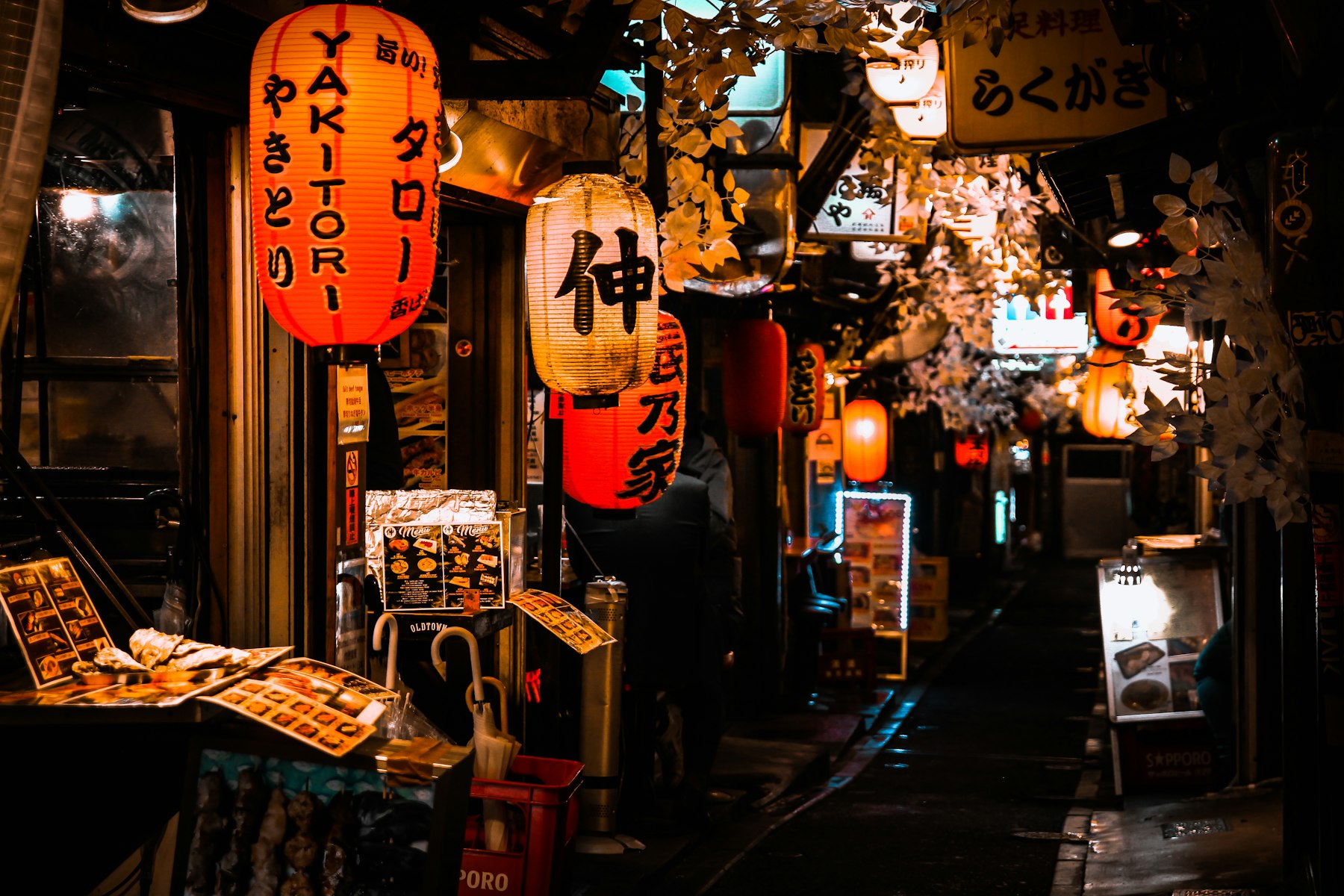
An izakaya in Tokyo will usually charge a small cover, called otoshi, and bring you a starter you didn’t order. That is normal, not a scam: Kyoto City’s official tourism site puts it at about ¥300–¥500 per person, and tiny alley bars may add a seat charge of ¥500–¥1,000 instead.
This guide covers how izakaya and bars in Tokyo work in 2026: cover charges, who can still smoke indoors, chains versus tiny independents, and how to order. It then goes station by station through ten drinking alleys (yokocho) in Tokyo, Osaka and Kyoto, with named bars, charges and hours checked between 19 and 21 October 2026. Looking for award-winning cocktails instead? Our best bars in Tokyo guide covers the World’s 50 Best list.
¥300–¥500
Typical otoshi per person (Kyoto City)
¥410
Every item at Torikizoku from 1 Oct 2026
c. 280
Bars in Shinjuku Golden Gai (GO TOKYO)
20
Minimum age to drink, or to enter a smoking area
What is the otoshi cover charge at an izakaya in Tokyo?
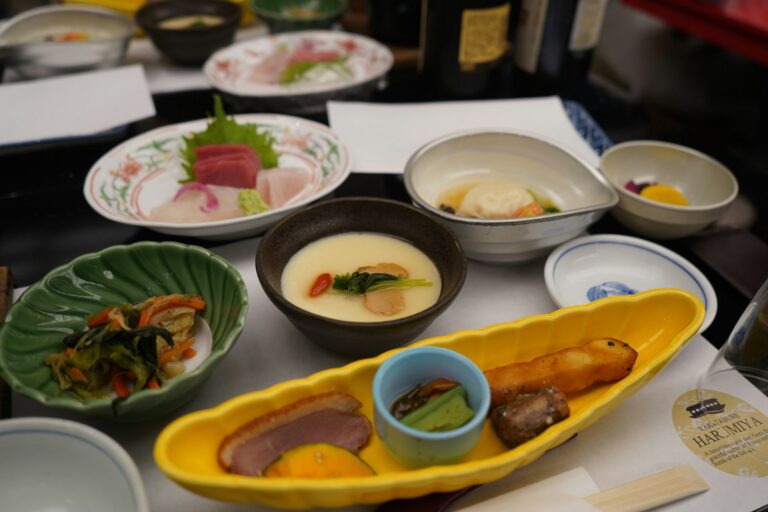
Otoshi (お通し) is a small dish brought as you sit down, and it is how most izakaya charge for your seat. Think a bowl of edamame, potato salad or simmered vegetables. It appears on the bill per person, whether you eat it or not.
Can you refuse it? Sometimes. Aichi Prefecture’s official travel guide and Kyoto City’s official site both say you can ask staff to skip or swap it, but many Tokyo places treat it as fixed. Ask before you sit down: “Otōshi wa ikura desu ka?” (How much is the otoshi?).
| Charge | What it is | 2026 example |
|---|---|---|
| Otoshi (お通し) | Starter served automatically, charged per person | ¥300–¥500 is typical in Kyoto (Kyoto City) |
| Seat or table charge (チャージ) | Fee for the seat, common in tiny bars | ¥500–¥1,000 at Nonbei Yokocho bars; ¥1,000 at 5GALLONS, Golden Gai |
| No charge | Some bars and standing places skip it | TIGHT (Nonbei Yokocho) lists no seat charge |
| Festival days | Golden Gai’s own events | No cover and ¥500 drinks at shops taking part (Sakura Festival, April 2025) |
Seat-charge figures for Nonbei Yokocho come from a May 2026 guide by Magical Trip. The 5GALLONS charge is from its official Tabelog listing, and the festival offer is from the Golden Gai association.
Can you smoke in izakaya and bars in Japan?
Mostly no, but tiny owner-run bars are the exception. Under Japan’s Health Promotion Act and Tokyo’s second-hand smoke ordinance, izakaya and restaurants are non-smoking indoors unless they have a sealed smoking room. Heated tobacco counts as smoking.
In Tokyo, a bar can allow smoking throughout only if it was open by 1 April 2020, has 100 m² of seating or less, has capital of ¥50 million or less (or is privately run) and has no employees. The no-employees rule is Tokyo’s own, according to the metropolitan government handbook. Those bars must post a sign at the door and cannot let anyone under 20 in.
Osaka went further on 1 April 2025: any restaurant with more than 30 m² of seating must now be non-smoking indoors, with penalties, according to Osaka Prefecture. So the smoky rooms you will find are mostly the tiny counter bars of Golden Gai and similar alleys. Tabelog’s official listing for 5GALLONS, for example, says smoking is allowed.
- Smoking in the street is banned in Golden Gai and Omoide Yokocho (GO TOKYO, Omoide Yokocho).
- Look for the sign at the entrance: 禁煙 means no smoking, 喫煙可 means smoking allowed.
- Under-20s may not enter a smoking area at all, even with adults.
Chain izakaya or tiny independent: which should you pick?
Chains are the easy option for a first night. Torikizoku, the yakitori chain, prices every item the same: ¥410 from 1 October 2026, up from ¥390, according to its parent company’s notice of 10 September 2026. You can book seats online through its official site.
Independents are why people come to the yokocho. Expect counters for six to ten people, handwritten Japanese menus and cash. Omoide Yokocho’s own guide says about 60% of its shops took cash only (in 2021), some require one drink and one food item per person, and some cap stays at 90 minutes.
| Chain izakaya | Yokocho independent | |
|---|---|---|
| Menu | Picture menus, often English; tablet or QR ordering | Handwritten or wall menus, sometimes English |
| Charges | Otoshi at many; clear set prices | Otoshi and/or seat charge; check the door |
| Payment | Cards and IC cards usually accepted | Often cash only |
| Booking | Online for groups | Walk in; most don’t take bookings |
| Group size | Big groups fine | Two or three people works best |
How do you order at an izakaya in Tokyo?
- Show the number in your group with your fingers. 満席 (manseki) on a sign means full.
- Order drinks first. “Toriaezu bīru” (a beer to start) is the classic opener, as Aichi’s guide notes.
- Call staff with “Sumimasen!” or the table button. Chains often use a tablet or a QR code on your phone.
- Order two or three plates at a time to share. Dishes arrive when ready, not as courses.
- Watch for last orders. At Daitoryo in Ueno, for example, last orders are 22:30 for a 23:30 close.
- Ask for the bill with “Okaikei onegaishimasu” and pay at the register. There is no tipping (Real Japan Guide, July 2026).
- All-you-can-drink (nomihodai) plans have their own time limit and last order.
The legal drinking age in Japan is 20, and staff may ask for ID.
How much does a night at an izakaya in Tokyo cost in 2026?
Budget about ¥2,000–¥5,000 per person for a casual izakaya Tokyo night with two or three drinks and some food. The cover charge is the part that surprises people, so add it to every bar you visit if you plan to hop.
| Where | What you pay | Source |
|---|---|---|
| Torikizoku (chain) | ¥410 per item, food or drink, from 1 Oct 2026 | Company notice |
| Daitoryo, Ameyoko | About ¥2,000–¥2,999 for dinner | Tabelog |
| 5GALLONS, Golden Gai | ¥1,000 charge; about ¥2,000–¥2,999 in total | Official Tabelog listing |
| Nonbei Yokocho bars | About ¥3,000–¥5,000 incl. seat charge and otoshi | Magical Trip, May 2026 |
| Niku Sushi, Ebisu Yokocho | Nigiri from ¥180, highball ¥390, beer ¥490 | Shop page |
| Pontocho izakaya, Kyoto | About ¥4,000 (Shutei Bankara) | Pontocho shop list |
Bar-hopping adds up fast: three Golden Gai bars at ¥1,000 each is ¥3,000 before a single drink. For a cheaper izakaya Tokyo crawl, start at a chain or a standing bar, then spend the cover charge on one tiny bar you really want to see.
Know before you go
Carry cash
Bring ¥5,000–¥10,000 in notes. Many alley bars still don't take cards.
Read the door
Charges are often posted outside. 会員制 means members only: move on.
Go early
Golden Gai bars mostly open around 20:00. Omoide Yokocho and Ameyoko get going earlier.
Keep groups small
Most counters seat six to ten people. Split up if there are more than three of you.
Ask before photos
Street photography in Golden Gai needs permission. Ask the owner before shooting inside any bar.
Check the last train
Most lines stop around midnight. A taxi home can cost more than the night out.
Izakaya Tokyo by station: which yokocho alley should you go to?
Each alley below sits within a few minutes of a big station. The table gives the short version; details and named bars follow.
| Station | Alley | Best for | Charges |
|---|---|---|---|
| Shinjuku (West Exit) | Omoide Yokocho | Yakitori and offal skewers, early evening | Table charge at some shops |
| Shinjuku (East Exit) | Golden Gai | Tiny themed bars, late | Seat charge at many, e.g. ¥1,000 |
| 澀谷 | Nonbei Yokocho | Oden, yakitori, 6–10 seat bars | ¥500–¥1,000 seat + ¥300–¥500 otoshi |
| Ebisu | Ebisu Yokocho | Busy food stalls, open until dawn | Varies by shop |
| Yurakucho / Shimbashi | Gado-shita and Hibiya OKUROJI | After-work beer under the tracks | Varies by shop |
| Ueno / Okachimachi | Ameyoko | Daytime drinking | None listed at Daitoryo |
| 吉祥寺 | Harmonica Yokocho | Standing bars, relaxed crowd | Varies by shop |
| Namba (Osaka) | Ura-Namba | Young chefs, standing bars | Otoshi at sit-down places |
| Ogimachi / Tenma (Osaka) | Tenma | Cheap daytime bar-hopping | Otoshi at some |
| Kawaramachi (Kyoto) | Pontocho | Narrow lantern-lit lane by the river | E.g. ¥600 charge at one bar |
Shinjuku West Exit: Omoide Yokocho
Omoide Yokocho began as a street market on burnt ground after the Second World War. It now has about 80 shops, including about 60 bars and restaurants, mostly yakitori and motsu-yaki (offal skewers), according to its official site. It is a two-minute walk from Shinjuku Station, and the lanes are barely wide enough for two people (GO TOKYO).
- Kabuto: eel skewers with no real menu; plates simply arrive, and each customer is limited to three alcoholic drinks (Omoide Yokocho guide). Its shop page lists 13:00–20:00, closed Sundays and holidays, cash only, 11 seats (information dated March 2021).
- The Nakadori lane shares one communal toilet. Go before you need to.
- Our Shinjuku guide has the rest of the area.
Shinjuku East Exit: Golden Gai
Golden Gai is six narrow lanes of tiny bars dating to the early 1950s, about five minutes from Shinjuku Station’s East Exit. GO TOKYO counts around 280 bars, many seating five or six people; most open around 20:00. Some are members only.
- 5GALLONS (3rd lane): ¥1,000 table charge, smoking allowed, no cards, budget ¥2,000–¥2,999, per its official Tabelog listing.
- Download the official map (updated 4 April 2026) to find bars by lane.
- No drinking or smoking in the street, and ask permission before photographing it.
Shibuya: Nonbei Yokocho
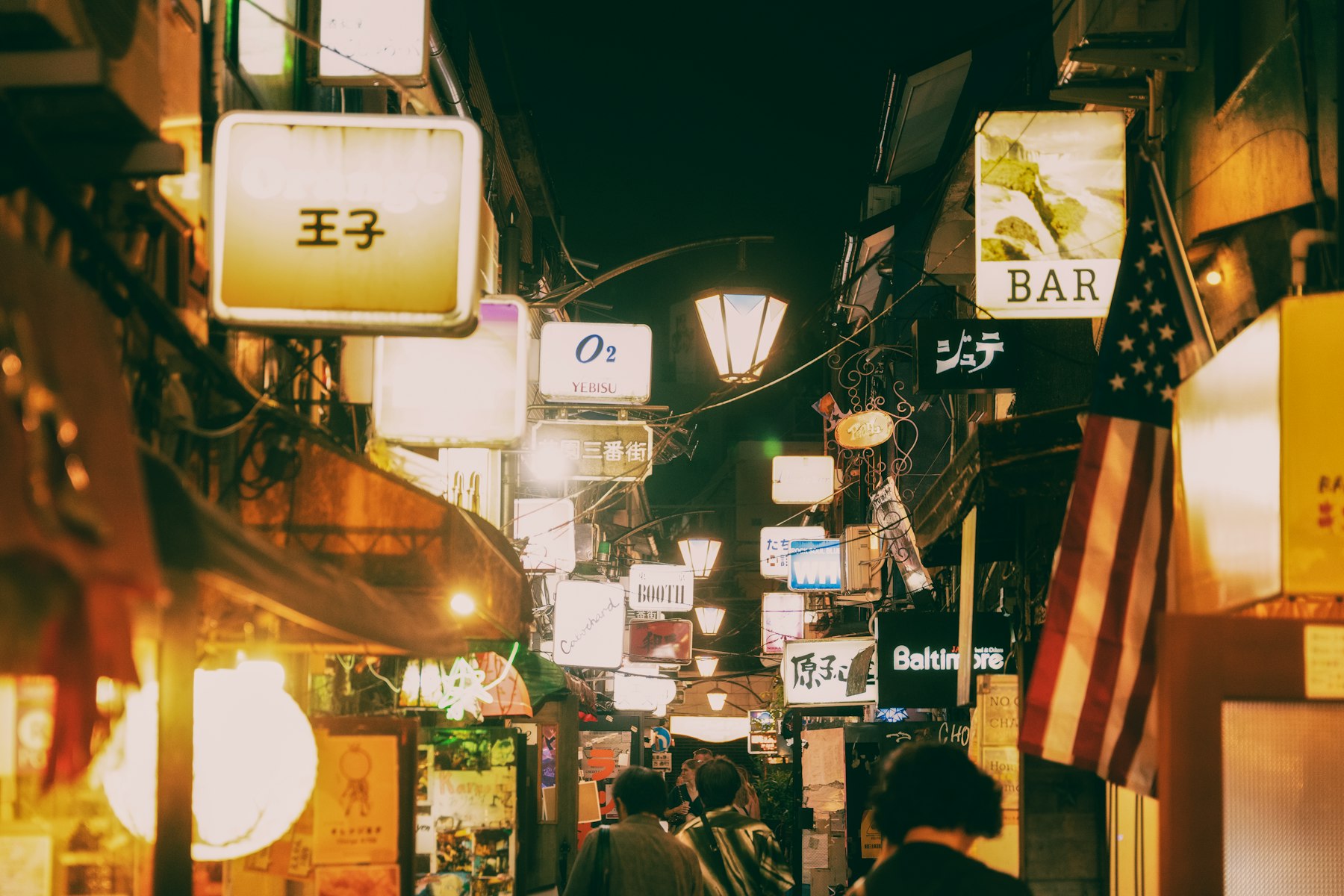
Nonbei Yokocho (“drunkards’ alley”) runs along the tracks two minutes from Shibuya Station. It has just under 40 tiny izakaya of six to ten seats; most open around 18:00 and close around midnight (Good Luck Trip). It has been trading since 1952, and most shops are cash only (Magical Trip, May 2026).
- Nadaichi: oden since 1950; 18:00–24:00, closed Sundays.
- Torifuku: yakitori; 16:00–20:00 (to 21:00 Mon and Tue), closed Sundays and holidays.
- TIGHT: cocktail bar with no seat charge; 19:00–2:00 (Sundays from 18:00).
- Budget about ¥3,000–¥5,000 each for the otoshi, two or three dishes and two or three drinks.
- Pair it with our Shibuya guide and map.
Ebisu: Ebisu Yokocho
Ebisu Yokocho fills a former shopping arcade at 1-7-4 Ebisu, two minutes on foot from the JR East Exit or the Hibiya Line (official site). It is louder and younger than the Shinjuku alleys, with about 17 food counters: oden, kushiage, seafood grills, offal teppan. Hours vary by shop, and reservations go to each shop directly.
- Niku Sushi (meat sushi): 17:00–5:00, open daily, no reservations. Horse nigiri from ¥180 a piece, highball ¥390, beer ¥490 (shop page).
Yurakucho and Shimbashi: drinking under the tracks
Yurakucho’s gado-shita (under the girders) runs along nearly 700 m of elevated track either side of the station, with old yakitori stalls on the grittier stretches (japan-guide.com). For something tidier, Hibiya OKUROJI fills 300 m of 1910 brick arches with about 43 shops, including bars. It is six minutes from the Hibiya Exit of JR Yurakucho or Shimbashi, and the passage itself is open 24 hours (Visit Chiyoda).
Ueno and Okachimachi: Ameyoko
Ameyoko is a 500 m market street with more than 400 shops between JR Ueno and Okachimachi stations, born as a post-war black market (official site). Its standing bars start pouring at lunchtime, which makes it the best izakaya alley in Tokyo for a daytime drink.
- Motsuyaki Daitoryo (branch), 6-13-2 Ueno: 10:00–23:30 (last order 22:30), no seat or service charge listed, non-smoking, cash only, according to Tabelog (hours updated September 2025).
Kichijoji: Harmonica Yokocho
Harmonica Yokocho is a grid of covered lanes one minute from the North Exit of Kichijoji Station. It started as a post-war flea market; most of today’s standing bars opened after the 1990s (GO TOKYO). Our Kichijoji guide covers it alongside Inokashira Park.
Where to drink in Osaka and Kyoto: Ura-Namba, Tenma and Pontocho
Namba: Ura-Namba
Ura-Namba (“behind Namba”) is the backstreet grid east of Nankai Namba Station, full of standing bars and small izakaya run by young chefs. Torame Yokocho at 2-3-15 Sennichimae packs eight stalls under one roof (Osaka Bob, 2023). Our Namba guide fits it into a full evening.
Tenma
Tenma, around JR Temma and Osaka Metro Ogimachi stations, is Osaka’s cheapest bar-hopping district, and many places open during the day. Osaka Metro’s own guide (details dated January 2023) lists Tajimaya, about five minutes from Ogimachi Exit 1, for doteyaki (beef tendon in miso) from 10:00 to 22:00. Kotobuki Tsukasa sells nigiri from ¥80 a piece (Osaka Metro).
Kyoto: Pontocho
Pontocho is a narrow lane between Sanjo and Shijo, beside the Kamo River and three minutes from Hankyu Kyoto-Kawaramachi (Inside Kyoto). Its shop association has 74 members (Pontocho Noren-kai). Expect an otoshi of ¥300–¥500 at sit-down places (Kyoto City).
- From the official shop list: Vodka Bar Nakanishi, 18:00–23:00 (from 17:00 weekends), from ¥3,000 plus a ¥600 charge; Shutei Bankara izakaya, 17:30–22:30, about ¥4,000; Nishiuo no Koya, drinks 20:00–5:00 from ¥500.
- 我們的 Gion-Shijo station guide has the exits and nearby food.
Izakaya Tokyo FAQ
Is the otoshi charge a scam?
No. It is a standard per-person cover charge served as a small starter. Expect about ¥300–¥500; ask the price before you sit if you are unsure.
Do izakaya in Tokyo take credit cards?
Chains usually do. Many small alley bars do not: Omoide Yokocho says about 60% of its shops were cash only, so carry notes.
Can I smoke in a Tokyo izakaya?
Usually not. In Tokyo, smoking throughout is allowed only in small, owner-run bars with no employees that opened by April 2020, and they must post a sign.
Do I need to book an izakaya?
Not for alley bars, which are walk-in. Book chains or larger izakaya for groups, especially on Friday and Saturday nights.
What time do Tokyo izakaya close?
Most close around midnight. Golden Gai bars run later, and some Ebisu Yokocho shops stay open until 5:00.
Are foreigners welcome in Golden Gai?
At many bars, yes. Some are members only (会員制) or regulars only; if a sign says so, try the next door.
Should I tip at an izakaya?
No. Tipping is not customary in Japan; the otoshi or seat charge is the only extra.
Sources and how we checked
We checked every charge, rule, hour and price between 19 and 21 October 2026 against the linked official sources: alley associations, GO TOKYO, the Tokyo Metropolitan Government, Osaka Prefecture, Kyoto City and operators’ own pages. Small bars change hours often, and some details come from dated listings that we have marked, so check before you go.
Plan a night out in Tokyo with Japan Pro
Tell Japan Pro where you are staying and we will help you book a food and bar tour or a table at an izakaya in English.
 English
 Japanese
 Chinese (Taiwan)
 Chinese (China)
 Korean
 French
 Italian
 Thai