
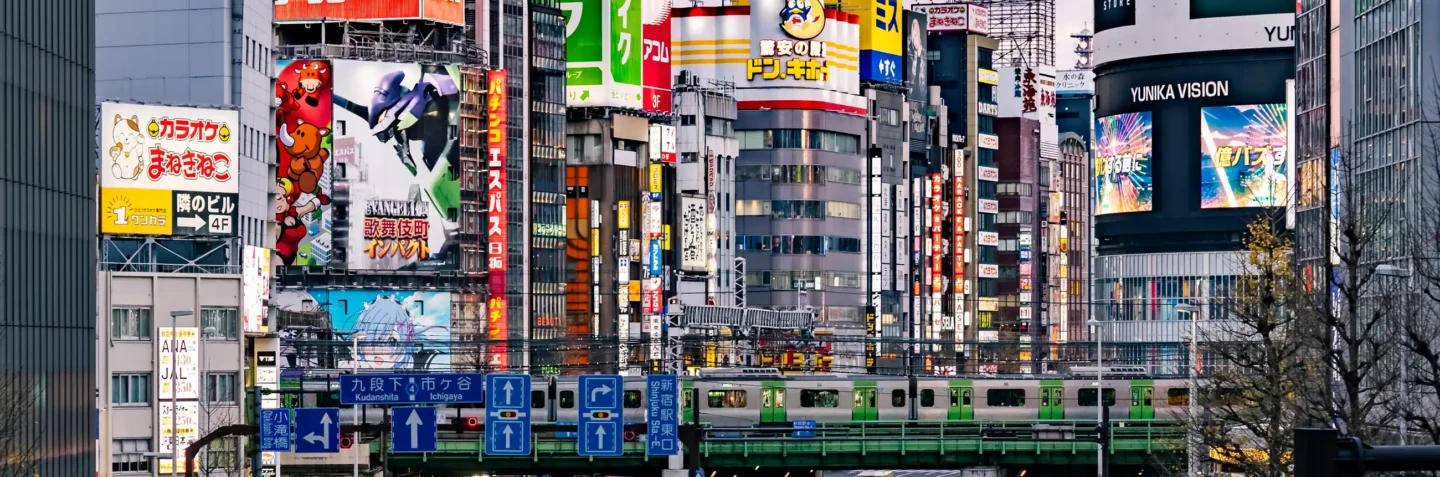

Shinjuku: A City Within a City
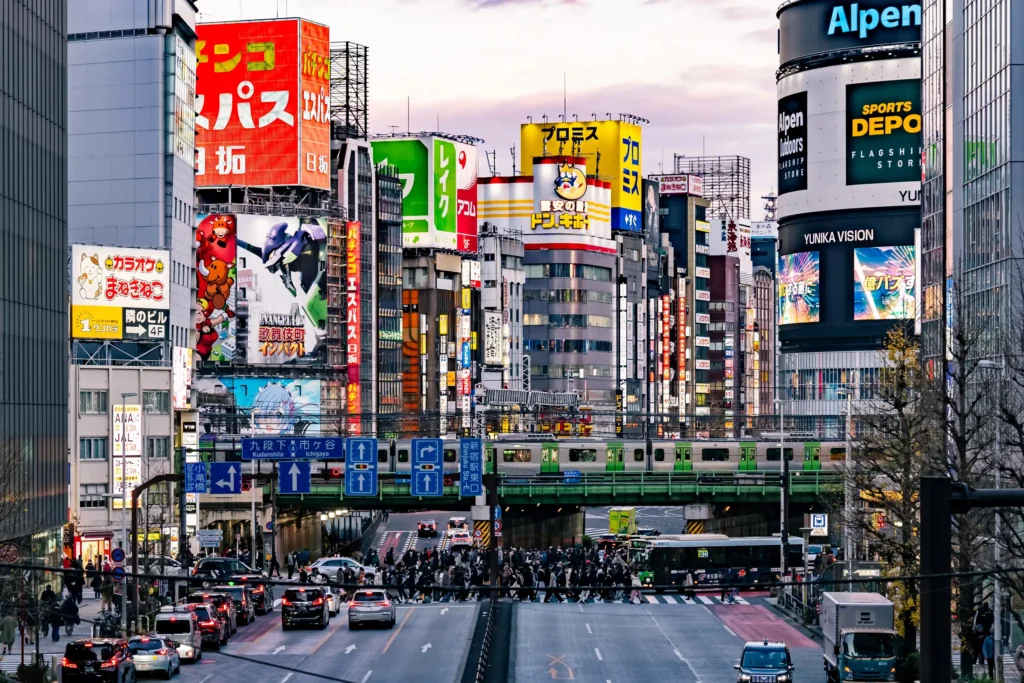
Looking for the best things to do in Shinjuku? You’ve come to the right place. Shinjuku isn’t a single neighborhood — it’s a city inside Tokyo, home to the world’s busiest train station and two starkly different personalities. To the west, an ultra-modern skyline of skyscrapers, government towers, and corporate headquarters rises above wide, orderly avenues. To the east, a dense maze of neon signs, cramped alleyways, and after-dark energy defines one of the city’s most iconic nightlife districts. Few areas in Tokyo pack this much contrast into a single train station exit, and understanding the east-west split is the key to planning your day here.
Japan Pro Tip: Choose your exit based on your destination, not your line — the West Exit drops you near the Metropolitan Government Building, the East Exit puts you at the doorstep of Kabukicho.
How to Get to Shinjuku
JR Yamanote Line
JR Chūō Line (Rapid)
JR Chūō-Sōbu Line
JR Saikyō Line
JR Shōnan-Shinjuku Line
Tokyo Metro Marunouchi Line
Toei Ōedo Line
Toei Shinjuku Line
Seibu Shinjuku Line
Keio Line
Keio New Line
Odakyu Odawara Line
Tokyo Metropolitan Government Building Observatories
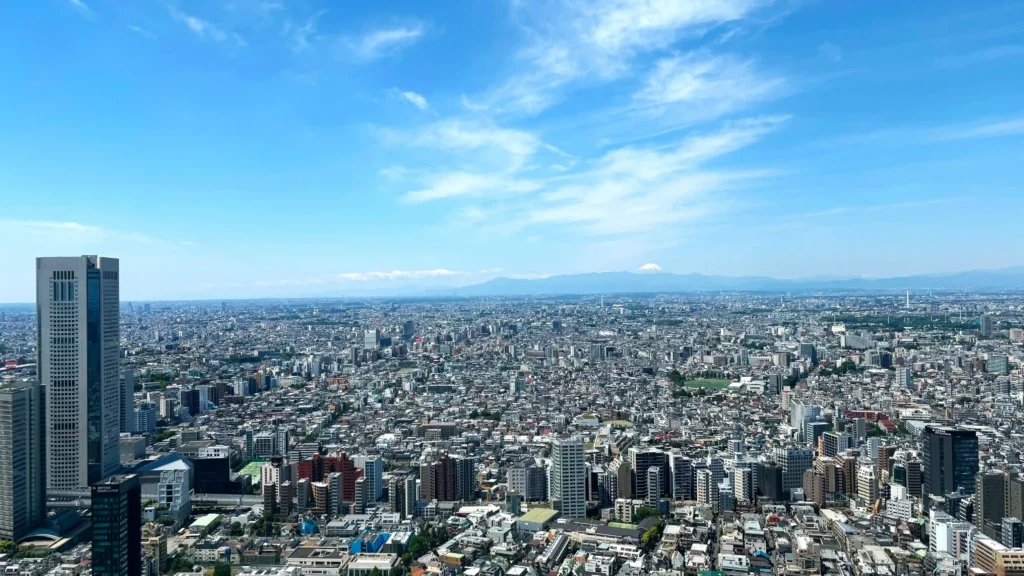
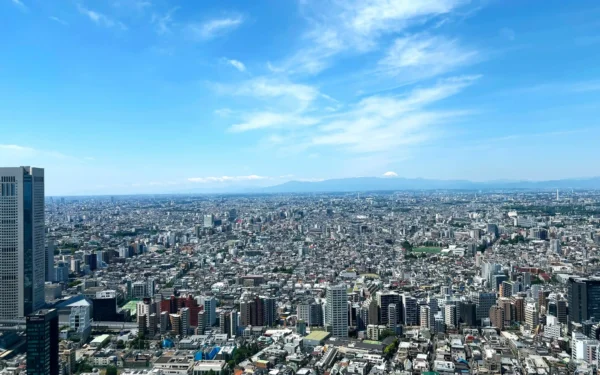
The Tokyo Metropolitan Government Building features two 202-meter-high observation decks offering panoramic views of landmarks like Mount Fuji and Tokyo Skytree, alongside on-site cafes and souvenir shops. Access is completely free from 09:30 to 21:30 (closed Tuesdays) and requires no advance reservations.
日本提示: Navigate from the Shinjuku Station West Exit for a direct 14-minute walk, and head to the 1st Floor of Main Building No. 1 to clear the mandatory security bag check before boarding the Observatory Elevator.
Omoide Yokocho: Memory Lane
A few minutes from the Metropolitan Government Building, near Shinjuku Station’s West Exit, is Omoide Yokocho — a narrow alley of roughly 80 small shops, mostly yakitori and motsuyaki (grilled offal) stalls, packed into about 2,000 square meters. It grew out of the black-market stalls that formed in the ruins of postwar Tokyo, and though a fire destroyed much of the original alley in 1999, it was rebuilt to keep the same Showa-era look. The alley is also known informally as “Piss Alley,” a name left over from the postwar years when the bars here had no restrooms.
Most stalls seat only a handful of people, and yakitori and nikomi (beef tendon stew) are the standard order alongside beer, sake, or shochu. The narrow street, strung with lanterns and signage, is decorated with sakura garlands in spring and maple leaf garlands in fall, making it one of the better photo spots in this part of Shinjuku.
日本提示: Go in the early evening for the best light and fewer crowds — the alley gets packed and smoky after 7 PM. Most stalls are cash-only.
Why Visit Shinjuku Gyoen National Garden?
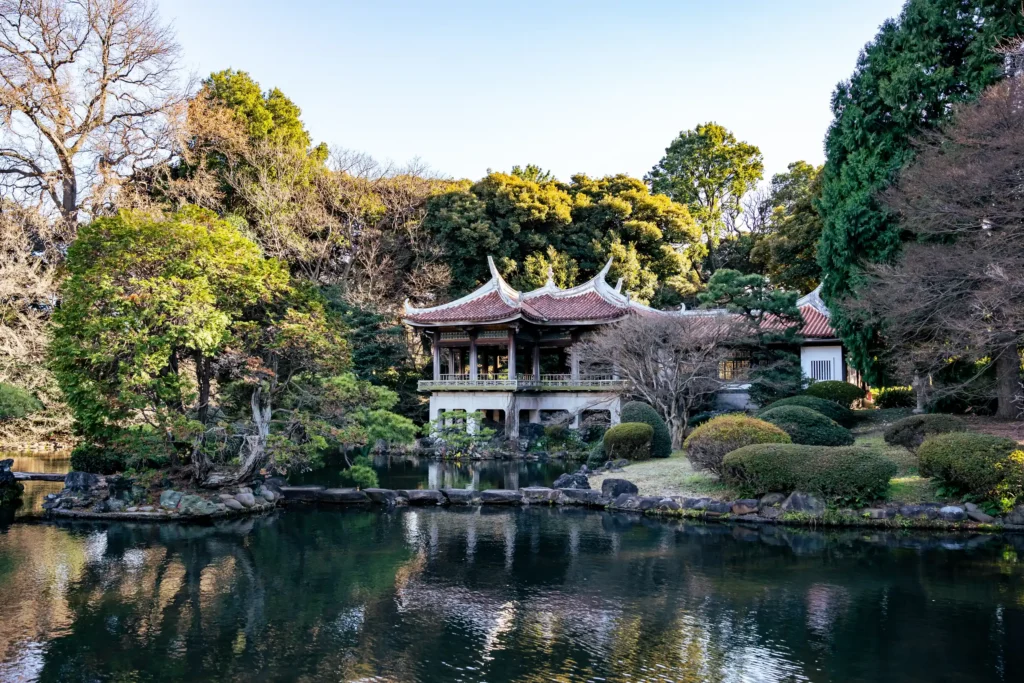
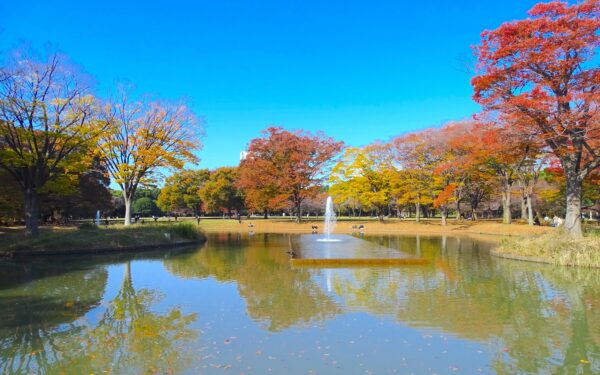
Shinjuku Gyoen is one of Tokyo’s largest public parks, consisting of a traditional Japanese landscape garden, a symmetrically arranged French garden, and an open English-style lawn. Few places in central Tokyo offer this much green space and quiet on this scale, making it a rare escape from the density of the surrounding city. The 500-yen entry fee provides access to these distinct zones, a tropical greenhouse, and prime viewing areas for spring cherry blossoms and autumn maple foliage.
日本提示: You must secure advance online reservations to enter on weekends during the peak cherry blossom season. The park normally closes on Mondays, but it operates daily without exception during both the cherry blossom period (March 25 to April 24) and the Chrysanthemum Exhibition (November 1–15). Check the specific operating hours before arriving, as closing times fluctuate between 16:30 in winter and 19:00 in mid-summer, with final admission always cut off 30 minutes prior.
Kabukicho and Tokyo’s Newest Icon
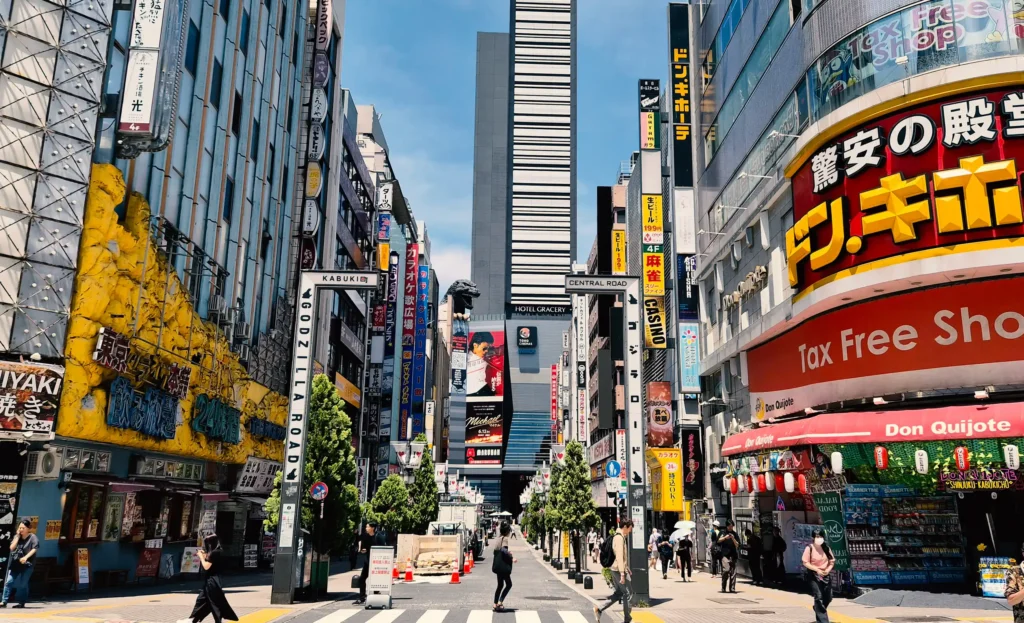
Leave Shinjuku Gyoen and head east, and the atmosphere changes fast. Wide avenues give way to narrow streets packed with neon signs, pachinko parlors, and restaurants. This is Kabukicho, Tokyo’s largest entertainment district, often called the city that never sleeps.
The Kabukicho Ichiban-gai arch marks the entrance to the district. Past it, neon signage covers entire buildings, and the streets are dense with restaurants, arcades, and bars. A giant Godzilla head sits on top of the Shinjuku Toho Building nearby, roaring and lighting up at set times in the evening — it’s a useful landmark if you need to find your bearings.
Tokyu Kabukicho Tower
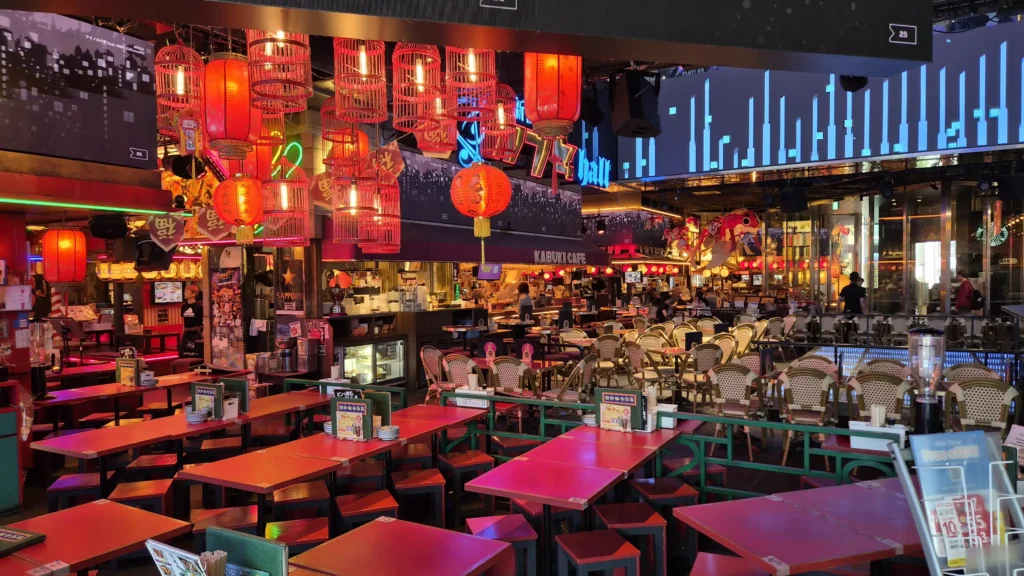
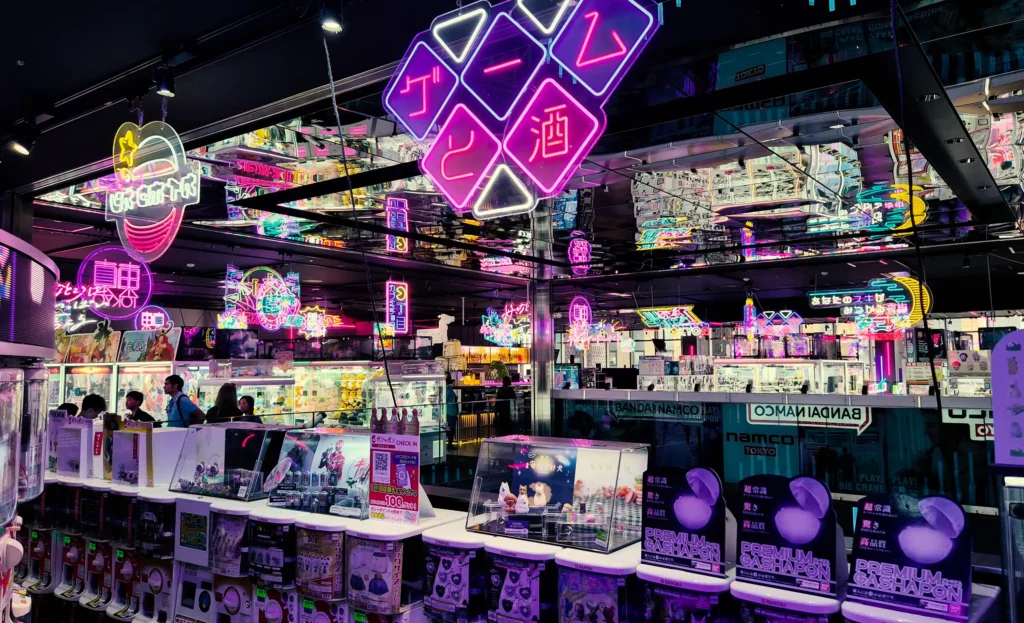
The newest structure in the skyline is the Tokyu Kabukicho Tower, opened in 2023. It’s a large commercial entertainment complex aimed mainly at tourists, and it’s worth saying that upfront. Still, a few floors are worth seeing. The 2nd floor holds Kabuki Yokocho, a food hall with stalls themed around different regions of Japan. The 3rd floor is namco TOKYO, an arcade with UFO catchers, gachagacha machines, lit in the neon style the district is known for.
日本提示: Ignore anyone on the street who offers to take you to a bar or club — these touts typically lead to venues with inflated, undisclosed prices. Only enter bars with visible, posted prices. Stick to the main streets at night rather than the smaller side alleys.
Golden Gai and Hanazono Shrine: Shinjuku’s Older Side
A short walk from Kabukicho Tower is Golden Gai, a cluster of narrow alleyways that survived Shinjuku’s postwar rebuilding. It’s a sharp contrast to the skyscrapers from earlier in the day: low wooden buildings, cramped passageways, and small bars, most seating only four or five people. Each bar tends to have its own theme, run by a single owner.
日本提示: Many bars charge a cover fee that isn’t posted outside, so ask before sitting down. Some display English signs noting no cover charge for foreign visitors — a safer bet if you’re unsure. Bring cash, as not all bars take cards. Golden Gai is quiet during the day; most bars don’t open until evening.
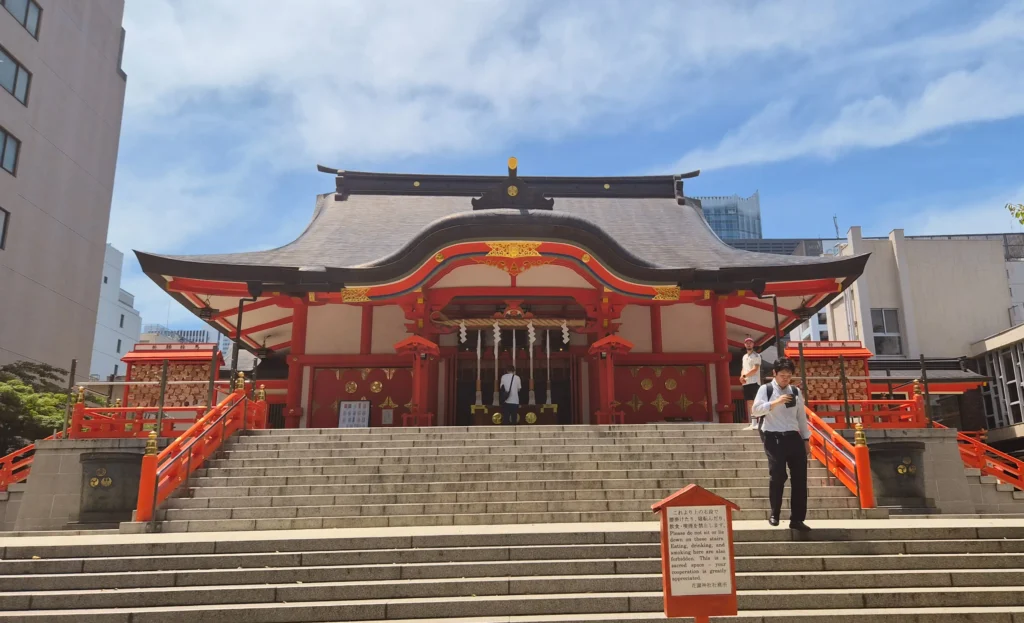
A few minutes away is Hanazono Shrine, tucked behind the surrounding buildings. It has been Shinjuku’s guardian shrine since the Edo period, when the area was known as Naito Shinjuku. Its red torii gates sit in direct contrast to the entertainment district around it, and the grounds are lit by lanterns at night. If you want to see more shrines like this without the crowds, check out our guide to Tokyo’s best shrines without the crowds
日本提示: The shrine is free to enter with no fixed closing time. Visit at night for the lanterns, or early morning for fewer people.
Where to Eat in Shinjuku
Gyopao Gyoza Shinjuku is an izakaya on the third floor near Shinjuku 3-chome. Its specialty is “gyopao,” steamed dumplings filled with broth instead of the usual pan-fried style, alongside tom yum soup dumplings and Chinese-Japanese small plates. It fills up in the evening; reservations are recommended on weekends.
Momo Paradise Shinjuku Higashi-guchi is an all-you-can-eat shabu-shabu and sukiyaki restaurant a few minutes from Shinjuku’s East Exit, on the 3rd and 4th floors of the Humax Pavilion building. Courses run for a set time, around 100 minutes, with a choice of hot pot styles, a self-serve vegetable bar, and Japanese beef at different price tiers.
Sugoi Niboshi Ramen Nagi Shinjuku Golden Gai Honkan is a ramen shop on the second floor of a narrow building in Golden Gai, reached by a tight staircase. It opened in 2004, founded by Ikuta Satoshi after he left the Ichiran chain to start his own shop.
The specialty is niboshi ramen: a thick broth made from dried baby sardines simmered for hours and mixed with shoyu and a pork base, giving it a strong, distinctly fishy, umami-heavy flavor that’s more intense than standard tonkotsu or shoyu ramen. The chashu pork is cut noticeably thick; an extra slice costs 100 yen. Portions are generous even for the regular size. Seating is limited to roughly 10-15 people along a counter, and the shop is open 24 hours.
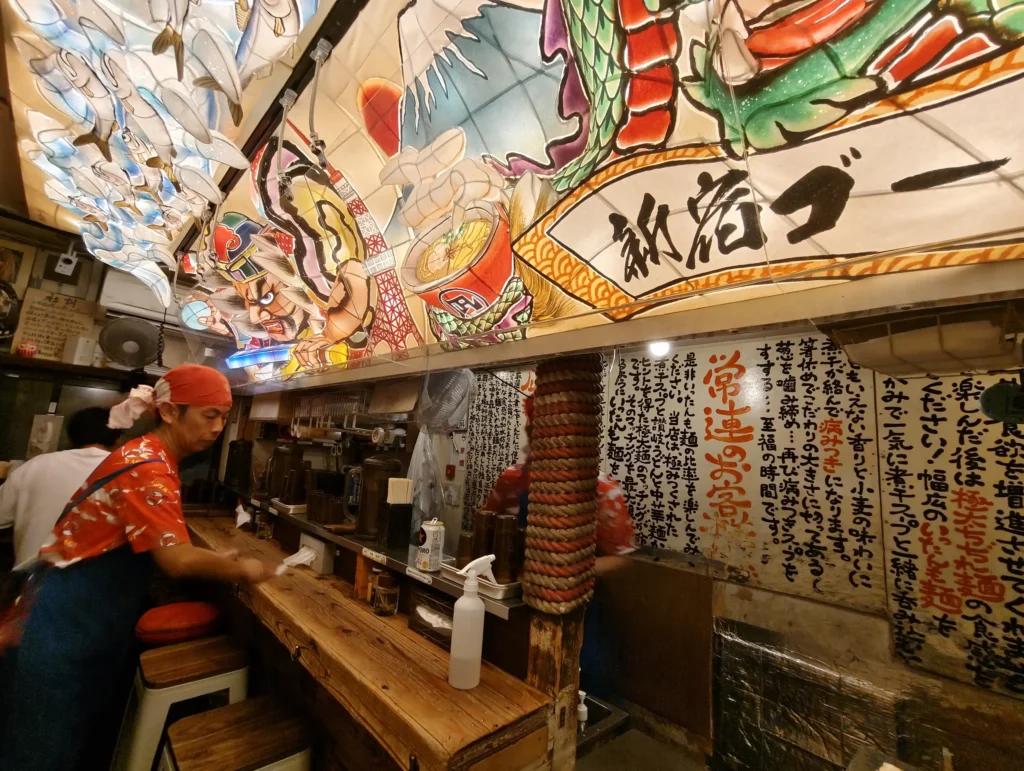
日本提示: For Sugoi Niboshi Ramen, lines can form during peak evening hours but move fairly quickly, and being open 24 hours means going right before or after the usual dinner rush (late afternoon or after midnight) usually means walking straight in.
The Best Things to Do in Shinjuku in a Day
The best things to do in Shinjuku fit a striking range into a single day: skyscrapers and free city views from the Tocho, quiet gardens at Gyoen, the density and neon of Kabukicho, the narrow bars of Golden Gai, and a shrine that predates all of it. Few areas in Tokyo cover this much ground on foot.
For more routes built the same way, check out our Tokyo bucket list, rearranged into 5 walkable routes covering 25 of the city’s essential sights.
 English
 Chinese (China)
 Chinese (Taiwan)
 Korean
 Thai
 French
 Spanish
 German
 Vietnamese
 Indonesian
 Italian