
Tori no Ichi 2026: Tokyo Dates, Hours & Kumade Guide
Tori no Ichi 2026 falls on Saturday 7 November 與 Thursday 19 November, the two “days of the rooster” this November. The biggest fair, at Ōtori Shrine in 淺草, opens with a drum at midnight and runs for 24 hours on each day; Hanazono Shrine in Shinjuku adds eve-of-fair nights on 6 and 18 November.
This is our full guide to the 2026 rooster fairs: which shrine to pick, how buying a kumade (a decorated bamboo rake for luck) actually works, the clapping ritual, the food, etiquette and the crowds. Dates and hours come from the shrines themselves (Ōtori Shrine Asakusa, Chōkokuji, Ōkunitama Shrine) and from Shinjuku’s official tourism listing, all checked on 2 November 2026. Where a shrine has not published something, we say so.
11 月 7 日和 19 日
Tori no Ichi 2026 rooster days (Sat & Thu)
24 小時
Asakusa Ōtori Shrine, 00:00–24:00 each day
From ¥1,000
Smallest kumade at Asakusa
No 3rd tori
Only two rooster days in 2026
When is Tori no Ichi 2026?
The Japanese calendar gives every day one of 12 zodiac animals, so a rooster (tori) day comes round every 12 days. In 2026 that puts the first rooster day (ichi-no-tori) on Saturday 7 November and the second (ni-no-tori) on Thursday 19 November.
There is no third rooster day (san-no-tori) this year: Ōtori Shrine in Asakusa states that the 2026 fair runs “up to the second tori” (Ōtori Shrine, 今年の酉の市). That matters for one bit of folklore. The shrine notes an old saying that years with three rooster days bring more fires, though it admits nobody knows why (Ōtori Shrine trivia page). 2026 is off the hook.
One small trap: the ceremony table on the Asakusa shrine’s page labels 19 November as a Wednesday. The date list on the same page, every other shrine and the calendar agree it is a 週四. Go on the 19th.
Tori no Ichi 2026 dates and hours by shrine
| 神社 | Fair days 2026 | 開放時間 | 最近車站 |
|---|---|---|---|
| Ōtori Shrine (鷲神社), Asakusa | Sat 7 & Thu 19 Nov | 00:00–24:00 (24 hours) | Iriya, Exit 3 · 7 min |
| Chōkokuji (長國寺), Asakusa | Sat 7 & Thu 19 Nov | Not published | Iriya · next door to Ōtori Shrine |
| Hanazono Shrine (花園神社), Shinjuku | Eve Fri 6 / Wed 18 Nov; main Sat 7 / Thu 19 Nov | Stalls c.15:00–24:00 (eve), c.12:00–24:00 (main) | Shinjuku-sanchome, Exit E2 · next to it |
| Ōkunitama Shrine (大國魂神社), Fuchu | Sat 7 & Thu 19 Nov | Gates 6:30–22:00; stalls c.9:00–22:00 | Keio Fuchu, South Exit · 5 min |
| Meguro Ōtori Shrine (大鳥神社) | Sat 7 & Thu 19 Nov | Varies by listing; check on the day | Meguro · 8 min |
| Suga Shrine (須賀神社), Yotsuya | Sat 7 & Thu 19 Nov | Lucky-rake charms 9:00–22:00 | Yotsuya-sanchome |
Sources: shrine pages linked in each section below; Hanazono from YOKOSO Shinjuku 與 Let's Enjoy Tokyo (which says it checked with the shrine office); Meguro and Suga from Rurubu 與 Let's Enjoy Tokyo. Times are “about” times: individual stalls open and close as they like.
Which Tori no Ichi 2026 fair should you go to?
Pick by the mood you want. Asakusa is the original and the biggest. Shinjuku is the night-out version, packed with food stalls and after-work crowds. Fuchu is a big local shrine festival with kagura dance. Meguro and Yotsuya are small enough to actually see the rakes.
| 如果你想要… | 去哪裡 | 原因 |
|---|---|---|
| The classic, the biggest, the midnight drum | Ōtori Shrine, Asakusa | 24-hour fair, about 150 kumade stalls, 700,000–800,000 visitors a year |
| Street food and a night out after dinner | Hanazono Shrine, Shinjuku | About 260 stalls on the grounds and Yasukuni-dōri, open to midnight |
| Kagura dance and a day trip feel | Ōkunitama Shrine, Fuchu | Edo sato-kagura at 15:00, 17:00 and 19:00 |
| A calm look at kumade | Meguro Ōtori Shrine or Suga Shrine | Small neighbourhood fairs; Meguro drew about 30,000 last year |
Asakusa: Ōtori Shrine and Chōkokuji
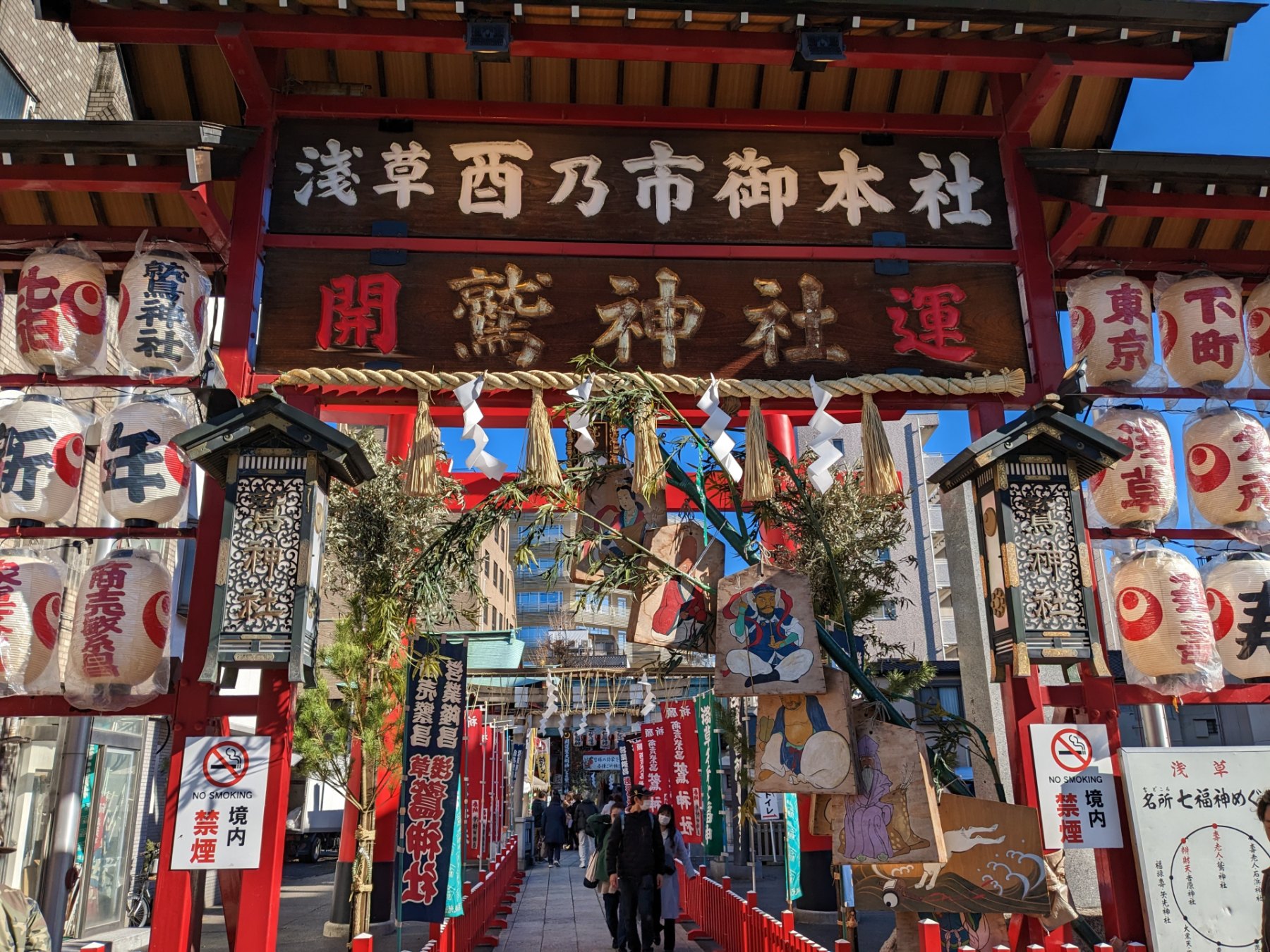
This is the fair that every other Tori no Ichi copies. Ōtori Shrine (locals call it Otori-sama) opens with the first drum (ichiban daiko) at midnight and stays open until midnight the next night, on both 7 and 19 November (official 2026 notice). Nippon.com puts attendance at 700,000 to 800,000 people a year (nippon.com).
New details for 2026 from the shrine: each kumade shop offers one charity kumade, sold first come, first served from the opening drum, with part of the proceeds going to Taito City for disaster relief. The shrine’s own kagura, Washi-mai (about 15 minutes), replaces the earlier taiko performance.
Two ceremonies are open to visitors who book ahead: the eve rite (宵宮開運福寿祭) at 23:15 on 6 and 18 November, and the special festival rite (鷲祭特別祭儀) at 13:00 on 7 and 19 November. Check in 15 minutes before the start. Personal prayers in the main hall start at ¥5,000, for up to five people from one family or group, first come on the day or booked in advance.
Right next door, Chōkokuji temple (長國寺, 3-19-6 Senzoku) holds its own fair on the same two days and sells kumade and omamori charms (Asakusa Tori no Ichi official site). JNTO describes the Asakusa fair as shared between the temple and the shrine (JNTO). The temple warned on 3 October 2026 that some charm prices rise from the first tori because of material and transport costs.
交通方式: Iriya Station (Hibiya Line), Exit 3, about 7 minutes on foot; Tsukuba Express Asakusa Station, about 8 minutes; Tawaramachi (Ginza Line) or the main Asakusa station (Ginza, Toei Asakusa and Tobu lines), about 15 minutes (shrine access page). Note that the Tsukuba Express Asakusa station is a separate station from the main one. If you are coming from Sensō-ji, our 淺草指南 介紹這一帶的其他地方。
Shinjuku: Hanazono Shrine Ōtori Festival
Hanazono runs four nights in 2026: eve festivals (zenyasai) on Friday 6 and Wednesday 18 November, main festivals on Saturday 7 and Thursday 19 November (YOKOSO Shinjuku, Shinjuku’s tourism site). Stalls run from about 15:00 to midnight on eve nights and from about noon to midnight on main days, with about 260 stalls in total (Let's Enjoy Tokyo). The donated lanterns beside the main hall are due to go off at 23:00, subject to change.
YOKOSO Shinjuku puts attendance at about 600,000 a year and says crowds build from the evening and peak at night. Hanazono is also known for its misemono-goya, a Shōwa-style sideshow tent; we could not find confirmation that it runs in 2026, so treat it as a bonus if you see it.
交通方式: Shinjuku-sanchome Station (Marunouchi, Fukutoshin and Toei Shinjuku lines), Exit E2, is right by the shrine; JR Shinjuku East Exit is about 7 minutes away (MATCHA). Make a night of it with our 新宿指南: Golden Gai is a short walk away.
Fuchu: Ōkunitama Shrine
Ōkunitama holds its fair at the Ōtori (大鷲) shrine inside its grounds on 7 and 19 November (shrine notice, 15 October 2026). On fair days the gates open 6:30–22:00; kumade and food stalls run from about 9:00 to 22:00. The shrine’s kumade talismans and Ōtori shrine ofuda are handed out at the entrance on fair days only, while stocks last.
What sets Fuchu apart is the programme. Edo sato-kagura, a masked shrine dance, is performed at 15:00, 17:00 and 19:00. Signal fireworks (three bangs each time) go off at 8:00, 12:00 and 18:00: noise, not a show.
交通方式: Keio Line Fuchu Station, South Exit, or JR Fuchu-Honmachi, both about 5 minutes on foot (shrine access page). Note that on normal days the shrine now closes at 17:00, so the late gates are a fair-day exception.
Smaller fairs: Meguro Ōtori Shrine and Yotsuya Suga Shrine
Meguro Ōtori Shrine has held a rooster fair since the Edo period and runs it on 7 and 19 November; admission is free and the shrine hands out lucky kumade charms (Rurubu). Listings disagree on the hours, so turn up in daylight or early evening and you are safe. It is about 8 minutes from Meguro Station.
Suga Shrine in Yotsuya, the one with the stone stairs made famous by the film 《你的名字》, also marks both days. Let’s Enjoy Tokyo lists lucky-rake charms from 9:00 to 22:00, a small kumade with a broom for ¥1,000 and a kakkome charm for ¥800 (Let's Enjoy Tokyo).
How to buy a kumade at Tori no Ichi 2026
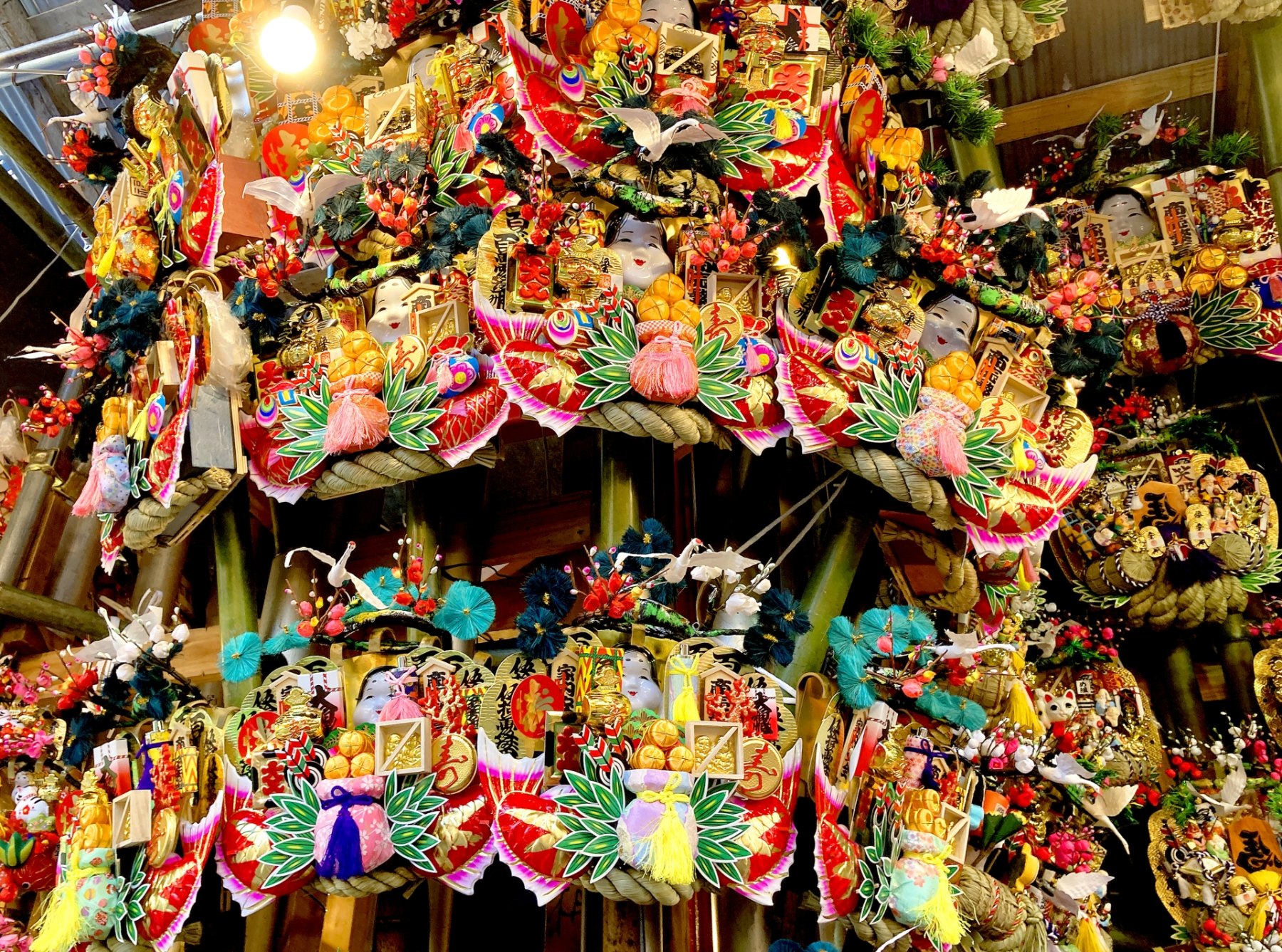
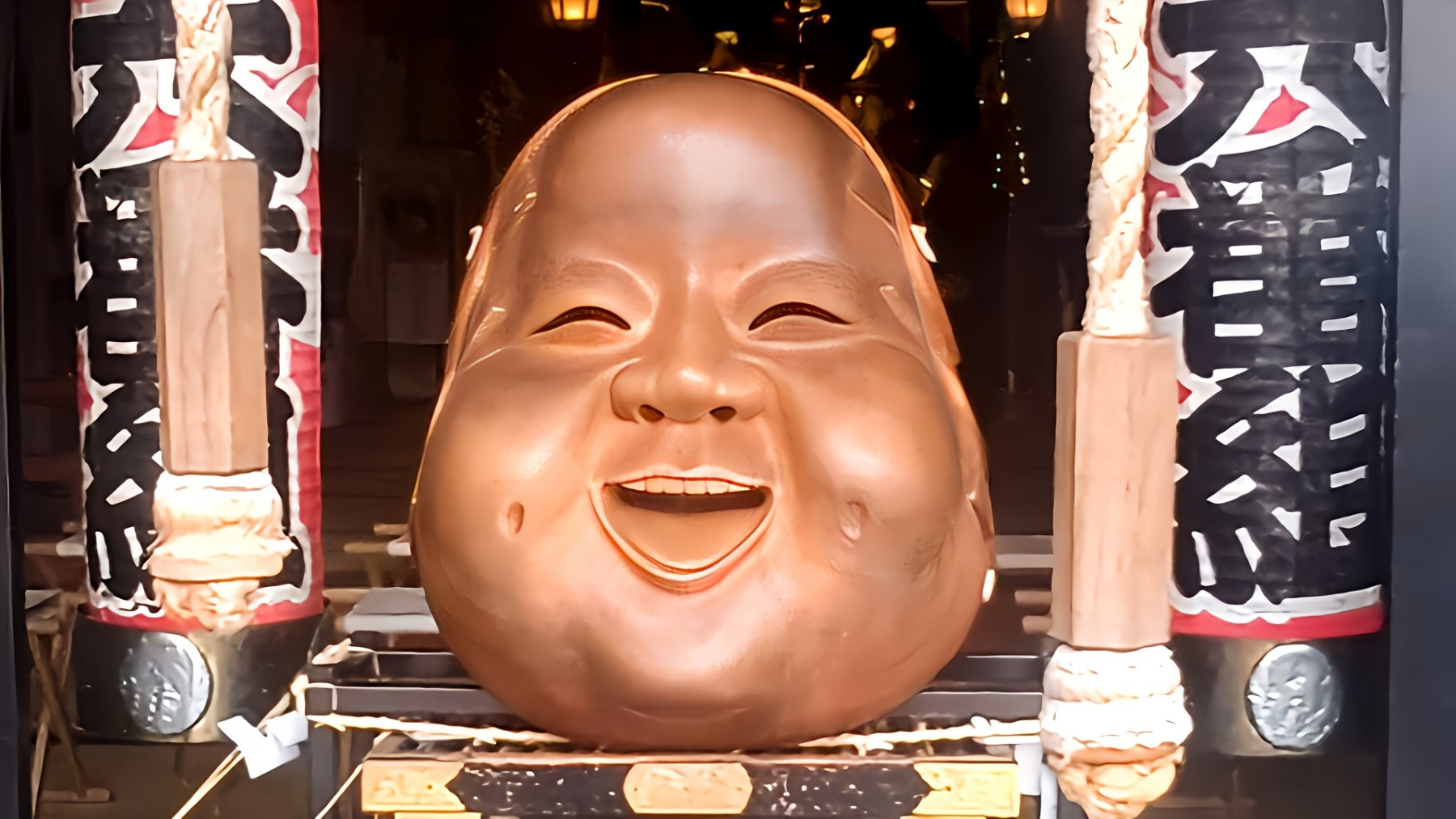
A kumade is a bamboo rake loaded with lucky symbols: the smiling Okame face, beckoning cats, cranes and turtles, rice bales, gold coins, sea bream and pine. The idea is simple. You rake in good fortune for the coming year, and businesses hang theirs over the till.
At Asakusa, the shrine says prices start at about ¥1,000 for a small one and run to several hundred thousand yen; the best sellers are ¥20,000–50,000 (鷲神社). Two rakes of the same size can cost very different amounts, because you pay for the decorations.
- Get the shrine charm first. At Asakusa most people pray and receive the kakkome, the shrine’s own small rake charm sold only at fair time, before shopping.
- Walk a full lap before buying. The shrine itself suggests circling the grounds to compare designs, then fixing a design and a budget.
- Ask the price. Point at the one you like and ask: Ikura desu ka? (How much is it?)
- Haggle, the Edo way. Bargaining is part of the theatre. The stylish move is to leave the amount you knocked off as goshūgi, a tip, so you end up paying the first price.
- Clap on the deal. When the sale closes, the sellers lead a rhythmic hand-clap (tejime) for your household or business.
- 帶現金。 No shrine publishes a payment policy for the stalls, so do not count on cards.
What is the clapping ritual?
The clapping is called tejime. Once buyer and seller agree, the stall staff shout and lead a three-part clap (sanbon-jime), and you join in. Nippon.com describes it as the moment the deal is sealed (nippon.com). You will hear it every few seconds across the grounds, and it is the soundtrack of the night.
Do you have to haggle? No. As a visitor, asking the price and paying it is perfectly polite, and smaller stalls may not play the game at all. If you do haggle, do it with a smile and leave the difference as a tip.
Small first, bigger every year
Tradition says start with a small kumade and buy a slightly bigger one each year as your business or household grows. For a first-timer flying home, a palm-sized rake is the sensible buy: it fits in a carry-on and the clapping is the same.
What to eat at Tori no Ichi
Rooster fairs are proper matsuri, with rows of festival food stalls alongside the kumade sellers. Hanazono has about 260 stalls in all; in Asakusa, JNTO notes the food stalls line the streets behind Chōkokuji. Two old Tori no Ichi treats are worth hunting down at Asakusa.
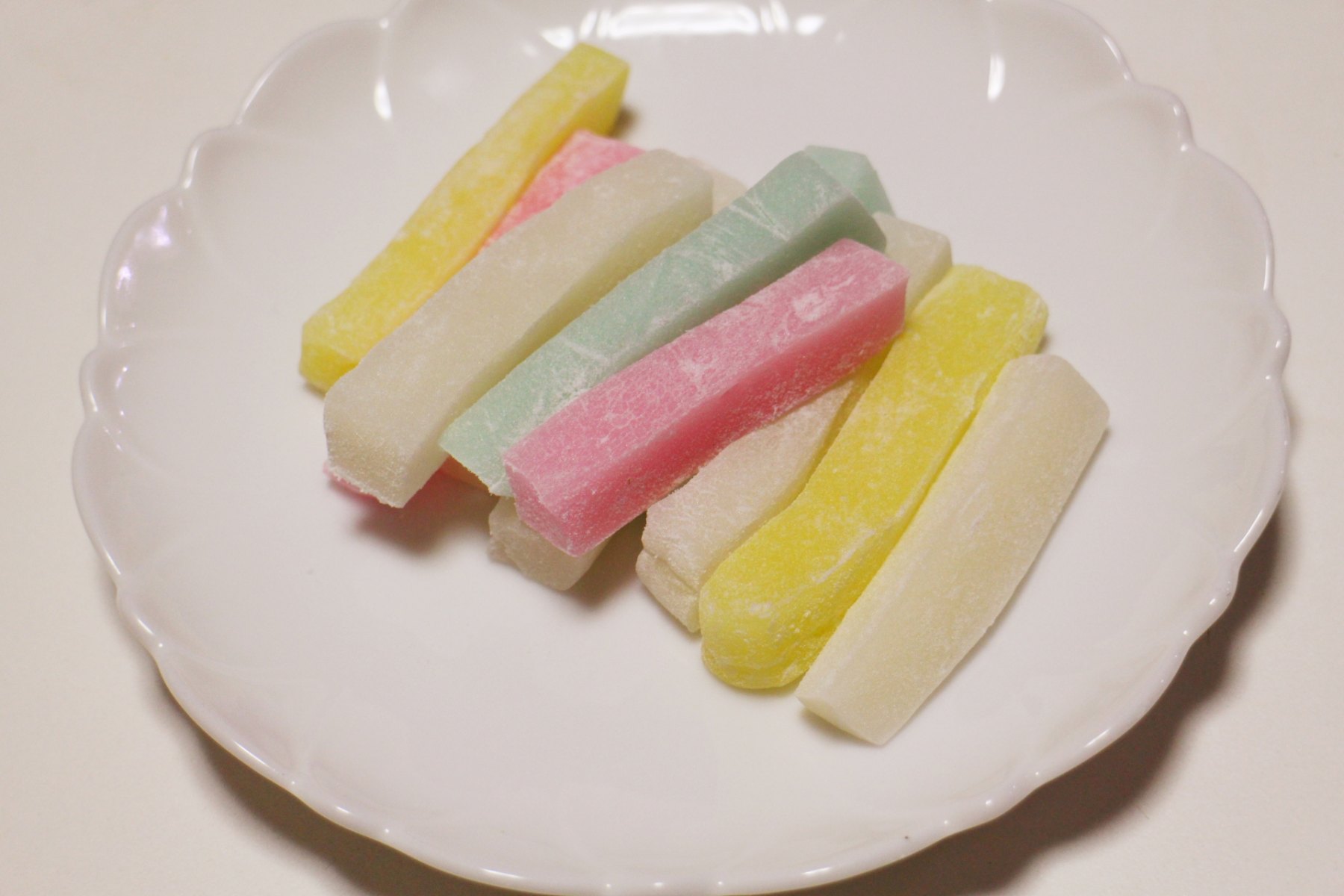
- Kirizanshō (切山椒): a chewy rice-flour sweet flavoured with sanshō pepper, cut into strips. Sanshō is lucky because every part of the plant is useful. Inside the grounds only one shop sells it: the first stall on the right after the torii gate (鷲神社).
- Yatsugashira (八つ頭): a big taro root with many buds, a charm for getting ahead in life and for children. Only one shop in the grounds sells it, the second on the right after the torii (Imokan).
The shrine also mentions kogane-mochi, golden millet cakes once sold for wealth, but says no shop makes them any more.
Tori no Ichi etiquette: the short version
- Pray before you shop. The queue for the main hall at Asakusa can be long; join it, do two bows, two claps, one bow, then go shopping.
- Ask before photographing a stall. Kumade sellers are working, and their rakes are their stock. A nod and a gesture at your camera goes a long way.
- Carry big rakes high. Some people hold the kumade up on the way home for rising fortune. It also keeps it from hitting people in packed lanes.
- Do not eat while walking in the queue. Eat at the stall or step aside; the grounds are tight.
- Take your rubbish with you. Bins are scarce at Japanese festivals.
Tori no Ichi 2026 crowds: when to go
The first day, 7 November, is a Saturday, so expect it to be the busier of the two at every shrine. Thursday 19 November is a working day, which means calmer daytime and heavy after-work crowds.
- For the atmosphere: Asakusa at midnight on 6–7 November or 18–19 November, when the first drum opens the fair. You will probably miss the last train home, so book a room nearby or plan a taxi.
- For space to look: weekday mornings and early afternoon. YOKOSO Shinjuku also recommends going early at Hanazono if you want to buy a kumade in peace.
- For food and buzz: Hanazono after 18:00. It is loud, packed and great fun.
- For kagura: Fuchu at 17:00 or 19:00.
Both rooster days fall in a busy week of autumn events. See our 2026 年 11 月東京活動 round-up and what’s on in Tokyo this weekend 規劃其餘行程。
Taking your kumade home: how to display and return it
Ōtori Shrine gives clear house rules (how to enshrine kumade and charms). Place your kumade high up, ideally on or near a kamidana (home shrine shelf) facing south or east, and avoid facing it north. New charms usually go up on 28 December; if you are swapping an old kumade for a new one, you can hang the new one straight away.
After a year, return the old kumade to the shrine or temple where you bought it, with a small fee for ritual burning (otakiage). If you are taking yours abroad, hang it high by your front door or desk and you are following the spirit of the rule.
出發前須知
Two days only
Tori no Ichi 2026 is Saturday 7 and Thursday 19 November. There is no third rooster day this year.
Midnight start
Asakusa opens with a drum at 00:00 and runs 24 hours. The last trains go long before the first drum ends.
Cash for kumade
Small rakes start at about ¥1,000 at Asakusa. No stall payment policy is published, so bring notes.
Eve nights in Shinjuku
Hanazono adds eve festivals on 6 and 18 November, with stalls from about 15:00 to midnight.
Fit it in your bag
A palm-sized kumade travels best. Big rakes are awkward on crowded trains and in overhead lockers.
Book the ceremonies
Asakusa's eve rite (23:15) and festival rite (13:00) need a reservation; arrive 15 minutes early.
Why Tori no Ichi exists: a two-minute history
Ōtori Shrine traces the fair to the Edo period. Legend says the warrior-prince Yamato Takeru prayed at the shrine before a campaign and returned to give thanks on a rooster day in November, which became the shrine’s festival day (nippon.com). The rite was first called tori no matsuri; as stalls multiplied it became tori no ichi, the rooster market.
The shrine’s English page adds the colour: the fair was the one day a year the gates of the nearby Yoshiwara pleasure quarter opened to the public, and small traders and farmers used their market takings to settle the year’s debts (Ōtori Shrine, English page). The haiku poet Takarai Kikaku, a pupil of Bashō, wrote that waiting for spring begins with Tori no Ichi. It still does: for Tokyo shopkeepers, this is the first sign of the year-end season. For the wider festival year, see our 日本祭典行事曆.
Tori no Ichi 2026 FAQ
When is Tori no Ichi 2026?
Tori no Ichi 2026 is on Saturday 7 November (ichi-no-tori) and Thursday 19 November (ni-no-tori). Ōtori Shrine in Asakusa confirms there is no third rooster day this year. Hanazono Shrine in Shinjuku also holds eve festivals on 6 and 18 November.
What time does Tori no Ichi start in Asakusa?
At Ōtori Shrine in Asakusa the fair opens with the first drum at midnight (00:00) and runs until midnight (24:00) on each rooster day, so 24 hours on 7 November and again on 19 November 2026.
How much does a kumade cost?
At Asakusa, Ōtori Shrine says small kumade start at about ¥1,000 and large ones run to several hundred thousand yen; the best sellers cost ¥20,000 to ¥50,000. Price depends on the decorations as well as the size.
Do you have to haggle for a kumade?
No. Haggling is a traditional part of the fun, and the classic custom is to leave the discount as a tip (goshūgi), so you pay the original price anyway. Asking the price and paying it is perfectly polite.
What is the clapping at Tori no Ichi?
It is tejime, a rhythmic group hand-clap that seals a kumade sale. The stall staff lead it once you agree a price, wishing prosperity on your household or business, and you join in.
Is Tori no Ichi free?
Yes, entry to the shrines is free. You pay only for kumade, charms and food. Asakusa’s optional personal prayer in the main hall starts at ¥5,000.
Which Tori no Ichi is best for tourists?
Asakusa’s Ōtori Shrine is the biggest and most traditional, open 24 hours. Hanazono Shrine in Shinjuku is easiest to reach and best for food stalls and a night out. Ōkunitama Shrine in Fuchu adds kagura dance at 15:00, 17:00 and 19:00.
What do you do with a kumade after a year?
Ōtori Shrine says to return it after a year to the shrine or temple where you bought it, with a fee for ritual burning, and display the new one high up, facing south or east.
資料來源與查核方式
All dates, hours and prices were checked on 2 November 2026 against Ōtori Shrine Asakusa (2026 notice, access, trivia and enshrining pages), the Asakusa Tori no Ichi site of Chōkokuji, Ōkunitama Shrine’s 2026 notice, Shinjuku’s official tourism site YOKOSO Shinjuku 與 Let's Enjoy Tokyo for Hanazono (the shrine’s own site could not be reached), and Rurubu and Let’s Enjoy Tokyo for Meguro and Suga Shrine. Background comes from nippon.com 與 JNTO. Stall hours are approximate and set by each vendor.
Make a night of Tori no Ichi
Japan Pro can book an Asakusa walking tour, a Shinjuku food tour or dinner around the rooster fair, so you see the kumade and eat well in the same evening.
 English
 Japanese
 Chinese (Taiwan)
 Chinese (China)
 Korean
 French
 Italian
 Thai