
Hakone itinerary: one night of bath, art, then the lake (2026)
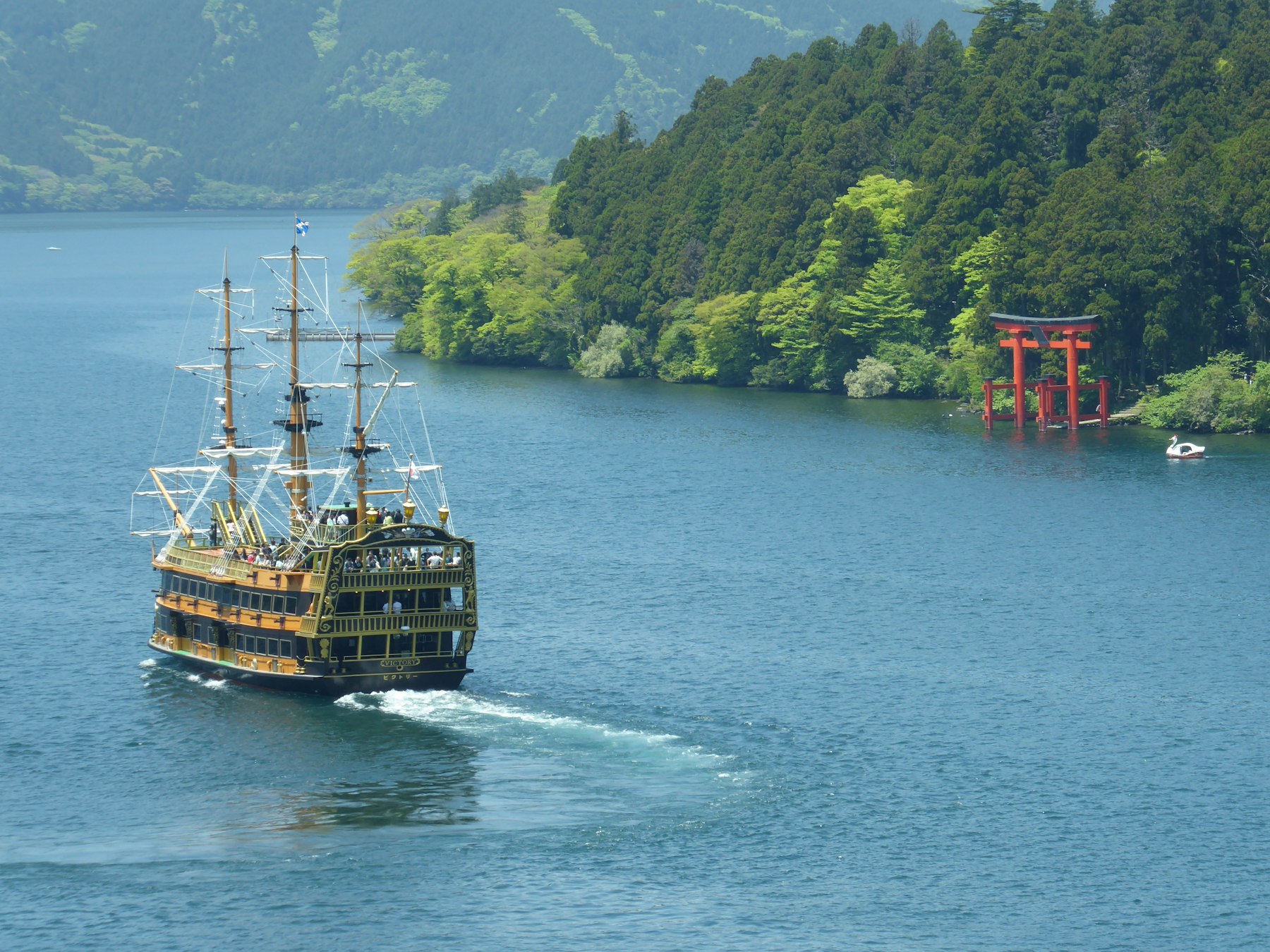
This Hakone itinerary does the classic loop in one night: a Romancecar from Shinjuku, two art museums on day one, a hot-spring bath and a ryokan dinner, then the ropeway, the Lake Ashi pirate ship and Hakone Shrine on day two. Budget about ¥8,300 for a Hakone Freepass plus a one-way Romancecar seat, before museums, food and your room.
Every price and time below was checked on 18 October 2026 against operator and museum pages. We also flag two things most guides miss: the ropeway closures already announced for December 2026 to February 2027, and the luggage-delivery price rise that took effect in April 2026.
¥7,100
Hakone Freepass, 2 days from Shinjuku
~80 min
Romancecar, Shinjuku to Hakone-Yumoto
¥1,500
Bag delivery to your hotel, per piece
Level 1
Hakone volcanic alert, Oct 2026
Is a Hakone overnight better than a day trip?
Yes, if you want the bath and the lake on the same trip. A day trip forces a choice: museums or the loop. A Hakone overnight lets you do the museums while the morning crowds ride the ropeway, then take the ropeway yourself at 9:00 the next day before the tour buses arrive.
It also gives you a proper onsen evening. If you only have a day, our Tagestouren von Tokio mit dem Zug guide has faster options. For other hot-spring towns, see the best onsen towns in Japan.
Romancecar or Shinkansen: which is the best way to start a Hakone itinerary?
For most visitors staying in central or west Tokyo, the Odakyu Romancecar wins. It runs direct from Shinjuku to Hakone-Yumoto in about 80 minutes, every seat is reserved, and there is space for luggage (Odakyu). The Shinkansen only makes sense if you start near Tokyo or Shinagawa station, or if you hold a JR pass.
| Option | Route | Time | Cost (adult, one way) |
|---|---|---|---|
| Romancecar | Shinjuku → Hakone-Yumoto, direct | Ca. 80 Minuten | ¥2,470 total (¥1,270 fare + ¥1,200 limited express fee) |
| Romancecar + Freepass | Shinjuku → Hakone-Yumoto | Ca. 80 Minuten | ¥7,100 pass (covers the fare) + ¥1,200 seat |
| Shinkansen | Tokyo → Odawara, then change | 34–36 min to Odawara | ¥3,280 unreserved, plus the onward trip to Hakone-Yumoto |
The Romancecar total of ¥2,470 comes from Hakone Navi; the ¥1,200 limited express fee is on the Odakyu page, which adds that buying the seat online through EMot saves ¥50. Seats go on sale at 10:00 one month before departure. Shinkansen figures are for a Hikari or Kodama in the regular season.
Two 2026 changes matter. Odakyu revised its timetable on 14 March 2026, adding extra weekend Hakone services and cutting the 9:00 Super Hakone from Shinjuku back to a 59-minute run to Odawara. JR East raised its conventional fares the same day (Tokyo–Odawara on the Tokaido Line is now ¥1,600), but Shinkansen totals on this stretch were reported unchanged.
Is the Hakone Freepass worth it in 2026?
Yes, for this route. The 2026 Hakone Freepass costs ¥7,100 for two days from Shinjuku (¥7,500 for three days), or ¥6,000 / ¥6,400 if you buy it at Odawara (Odakyu Hakone Freepass page). Children aged 6 to 11 pay ¥1,600 or ¥1,850 from Shinjuku.
It covers eight operators: the Odakyu Line (Shinjuku version only), the Hakone Tozan Train, the cable car, the Hakone Ropeway, the Hakone Sightseeing Cruise, and designated Hakone Tozan, Odakyu Highway and Tokai buses. The Romancecar seat is always extra.
Do the maths on just the legs we could price. The Shinjuku–Hakone-Yumoto fare is ¥1,270 each way, the Tozan Train to Gora ¥460, the ropeway ¥2,000 one way and the bus back from Moto-Hakone ¥1,210. That is ¥6,210 before the cable car and the boat, so the pass pays for itself.
Does the digital Freepass work?
Yes. Odakyu sells the Hakone Freepass as a digital ticket through EMot Online Tickets. You scan a QR code at readers or show the screen to staff. Three catches: it is smartphone-only, each traveller needs their own phone (one phone cannot run two of the same digital ticket at once), and a pass bought at a station is paper.
Validity runs on calendar days, not hours. The day you buy is day one, so a two-day pass bought at 17:00 is still only valid until the end of the next day.
The pass also gets you discounts at about 70 facilities. Several of the stops below offer one, so show it at every ticket desk before you pay.
Hakone itinerary day 1: train, sculpture, Monet
| Time | Stop | Notes |
|---|---|---|
| 09:00 | Romancecar from Shinjuku | Book ahead; all seats reserved |
| 10:30 | Hakone-Yumoto: drop bags | Carry Service counter, 8:30–12:00 |
| 10:45 | Hakone Tozan Train | About 30 min to Chokoku-no-Mori |
| 11:15 | Hakone Open-Air Museum | Allow 2 hours, eat lunch on site |
| 13:45 | Gora → Pola Museum | Free shuttle, about 8 min |
| 14:15 | Pola Museum of Art | Last shuttle back 16:50 |
| 16:30 | Check in, bath, dinner | Gora or Miyanoshita keeps day 2 simple |
Hakone-Yumoto: send your bags ahead
Hakone Carry Service takes bags from a counter inside Hakone-Yumoto Station between 8:30 and 12:00 and delivers them to partner hotels from 15:00 (Hakone Navi luggage service). Since 1 April 2026 a regular bag (up to 140 cm and 15 kg) costs ¥1,500, up from ¥1,000. A large bag (up to 200 cm and 30 kg) is ¥2,500.
Book online by smartphone; same-day online bookings close at 11:30. Only partner hotels are covered, so check yours before you leave Tokyo.
Hakone Tozan Railway
The mountain train climbs from Hakone-Yumoto to Gora in about 35 minutes, with departures every 15 to 20 minutes and three switchbacks where the driver changes ends. The single fare is ¥460, and it is covered by the Freepass. In June and July the line is lined with hydrangeas; illuminated evening trains run from mid-June to mid-July and need seat reservations.
Hakone Open-Air Museum
Get off at Chokoku-no-Mori, one stop before Gora. Adult entry is ¥2,000 at the window or ¥1,800 as a web ticket; high-school and university students pay ¥1,600 (¥1,400 online). It is open 9:00–17:00 every day, with last entry at 16:30 (museum visitor information).
Most of the collection is outdoors, so it is best in dry weather. The museum’s English site lists a closure from Monday 30 November to Friday 4 December, so check before booking those dates.
Pola Museum of Art
The Pola sits in the forest at Sengokuhara and shows Monet, Picasso and Foujita alongside contemporary work. Until 7 April 2027 its headline show is “The New Vision: Monet and the Contemporary Gaze” (exhibition page). Adults pay ¥2,200, students ¥1,700, and junior-high pupils and younger get in free; it is open 9:00–17:00 (last entry 16:30) and closed on 1 December.
Getting there changed in 2024: the direct TP bus ended on 31 March 2024. Use the museum’s free shuttle from behind Gora Station, about 8 minutes, roughly every 30 minutes (13 runs a day). The last shuttle leaves Gora at 15:45 and the last one back leaves the museum at 16:50 (Pola access page). A taxi is about ¥1,800.
Hakone itinerary day 2: ropeway, pirate ship, shrine, bath
| Time | Stop | Notes |
|---|---|---|
| 08:30 | Hotel desk: send bags back | Hand over by 10:00; collect at Hakone-Yumoto 13:30–18:30 |
| 08:45 | Cable car Gora → Sounzan | 10 min, every 15 min |
| 09:00 | Ropeway to Owakudani | First cars of the day, change gondolas here |
| 10:00 | Ropeway to Togendai | Whole ropeway about 30 min |
| 10:30 | Pirate ship to Hakone-machi | About 30 min, every 30–60 min |
| 11:15 | Walk to Moto-Hakone, Hakone Shrine | 20–30 min on foot |
| 13:00 | Bus to Hakone-Yumoto | About 35 min |
| 14:00 | Day-trip bath | Tenzan or Hakone Yuryo |
| 17:00 | Romancecar to Shinjuku | Collect bags at the station first |
Is the Hakone Ropeway running in 2026?
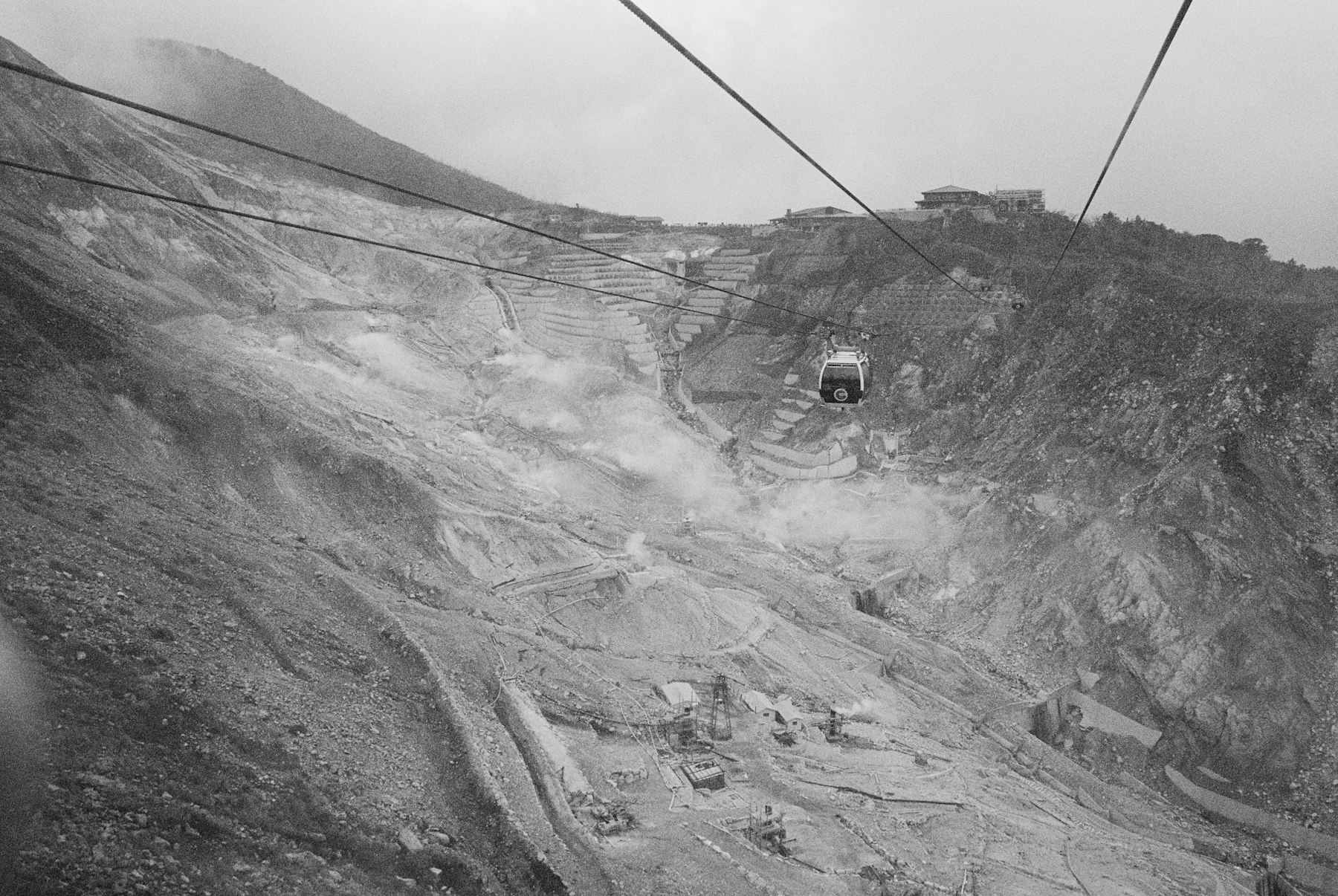
Yes. On 18 October 2026 the ropeway was running normally between Sounzan and Togendai via Owakudani, with gondolas every minute and a change at Owakudani. Fares are ¥2,000 one way and ¥3,000 return. It can stop at short notice for strong wind or volcanic gas, and people with asthma, heart disease or other respiratory conditions are not allowed to ride between Sounzan and Ubako (Hakone Ropeway).
Plan around two announced inspection closures (Odakyu Hakone notice, September 2026):
- Owakudani–Sounzan: 7 to 24 December 2026.
- Togendai–Ubako–Owakudani: 12 January to 26 February 2027.
- Replacement buses run about every 15 minutes (10–15 min rides) and accept the Freepass. Expect crowds and road traffic.
Owakudani and the volcanic alert
The Japan Meteorological Agency keeps Hakoneyama at alert Level 1, the lowest level, and has done since 7 October 2019 (JMA Hakoneyama page). Level 1 still means an active volcano. The last time it rose, in May 2019, the Owakudani section of the ropeway shut for months, so check the JMA page the night before.
At the top, the black eggs boiled in the hot springs cost ¥500 for four and sell from 9:00 to 16:40 (Owakudani official site). The Owakudani nature trail, about 700 m towards the vents, has reopened as a guided walk with advance booking only.
Lake Ashi pirate ship
From Togendai, the Hakone Sightseeing Cruise pirate ships cross to Hakone-machi in about 30 minutes, with sailings every 30 to 60 minutes. The Freepass covers these ships but not the rival Hakone Pleasure Cruise boats on the lake.
Hakone Shrine
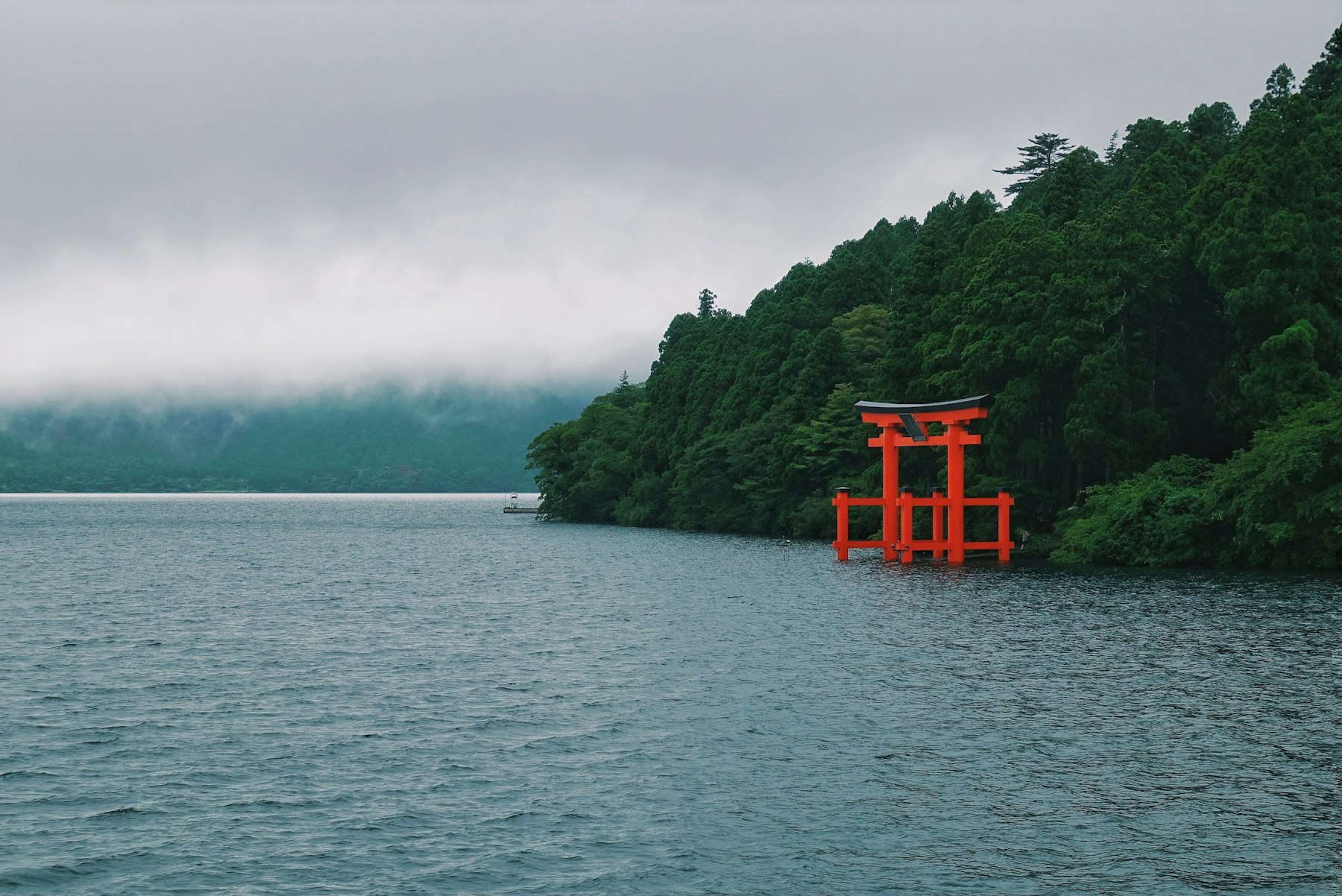
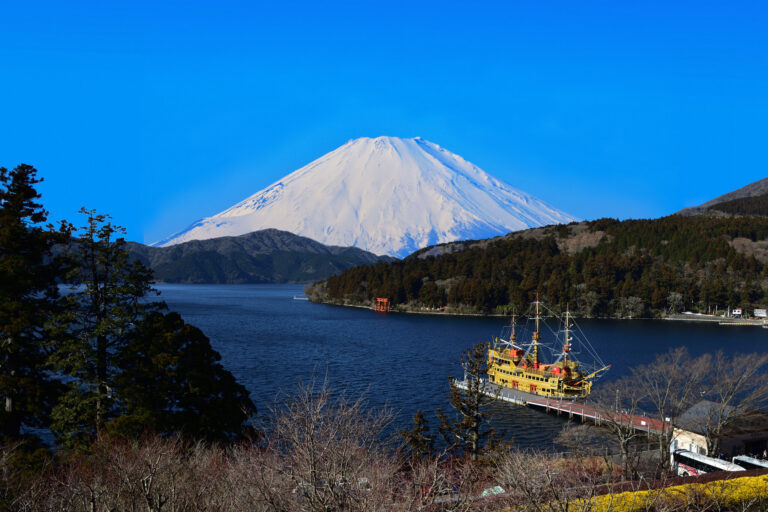
From Hakone-machi, walk 20 to 30 minutes along the lakeshore to Moto-Hakone and Hakone Shrine, whose red torii stands in the water. The shrine grounds are free. There is often a queue for the lakeside torii photo spot, so shoot the gate from the shore path if the line is long and spend the time in the cedar-lined approach instead.
Okada Museum of Art (swap for the bath)
If you would rather see art than soak, the Okada Museum at Kowakudani shows Japanese painting and ceramics. Adults pay ¥2,800, school pupils ¥1,800, and it is open 9:00–17:00 (last entry 16:30), closed on 31 December, 1 January and during exhibition changes (Okada Museum guide).
The footbath cafe out front costs ¥500, or nothing if you have a museum ticket. Get off the bus at Kowakien: it is about 20 minutes from Hakone-Yumoto or 2 minutes by bus from Kowakudani Station.
Where should you stay on a Hakone overnight?
Stay on the line you ride on day two. Gora and Miyanoshita put you minutes from the cable car; Hakone-Yumoto is best for late arrivals and the cheapest choice. Nightly rates swing heavily by date, so we only list what we could verify.
| Budget | Wo? | Example | Why it works |
|---|---|---|---|
| Budget | Gora | Hakone Tent | Onsen guesthouse with a bar, in Gora itself |
| Mid-range | Hakone-Yumoto | A ryokan with dinner on the station side of town | Ryokan shuttle bus from the station costs ¥200; easy return on day 2 |
| Splurge | Miyanoshita / Gora | Fujiya Hotel or Gora Kadan | Fujiya’s main building dates from 1891; Gora Kadan sits in a former imperial-family villa |
Book half-board (dinner and breakfast) at a ryokan if you can. Gora and Miyanoshita have few late-night restaurants, and the ryokan meal is part of the point.
Hakone accommodation tax: what do you pay in 2026?
In 2026 there is no Hakone accommodation tax yet. You do pay the existing bathing tax of ¥150 per person per night, which hotels and ryokan add to the bill.
Hakone Town announced in June 2026 that it plans an accommodation tax of ¥350 per person per night from April 2028, with preschool children and school trips exempt. It still needs a town ordinance and approval from the Ministry of Internal Affairs and Communications, so treat the date as a target.
Which day-trip onsen should you choose in Hakone?
Both are minutes from Hakone-Yumoto Station, which makes them the ideal last stop before the train home. Tenzan is woodsy and old-school; Hakone Yuryo is polished and has bookable private baths.
| Tenzan Tohji-kyo | Hakone Yuryo | |
|---|---|---|
| Adult entry | ¥1,450 (child ¥700) | ¥1,700–1,800 weekdays, ¥2,000–2,200 weekends |
| Hours | 9:00–23:00, last entry 22:00 | Weekdays 10:00–20:00, weekends 10:00–21:00 |
| Dorthin gelangen | Ryokan shuttle bus B, ¥200; or K-line bus ¥260 + 5 min walk | Free shuttle, 3 min from the station |
| Tattoos | Allowed only if you visit alone and cover up in the building | Restriction lifted on 1 April 2025 |
| Private baths | No | 19 rooms from ¥10,400 for 120 min (weekday, up to 2 people) |
| Watch out | Mostly cash only, no ATM nearby | Book private rooms ahead at weekends |
Tenzan details come from its access and usage pages and Jorudan’s listing updated in March 2026; it closes on 1 January and for about five days in mid-December. The Tenzan inn shuttle does not leave Hakone-Yumoto in the 11:00 and 12:00 hours, so take the route bus then. Hakone Yuryo’s prices are on its price page.
Know before you go
Book the Romancecar early
Weekend and autumn trains sell out. Seats open at 10:00 one month ahead.
Send bags by noon
The Hakone-Yumoto Carry Service counter closes at 12:00, and only partner hotels accept deliveries.
Ride the ropeway first
Be at Sounzan for 9:00 on day two. Go early to stay ahead of tour groups.
Check the volcano
Look at the JMA Hakoneyama page and Hakone Navi the night before.
One phone per pass
Digital Freepass tickets cannot be shared on one phone.
Carry cash
Tenzan and many small shops are cash only.
When is the best time for a Hakone itinerary?
Weekdays in any season beat weekends. Autumn colour usually peaks in November; see our best fall foliage spots for 2026 for timing. June and July bring hydrangeas on the Tozan line. If you go in December or between mid-January and late February, the ropeway closures above will add a bus leg.
Mount Fuji views from the lake are a bonus, not a promise; clear winter mornings give the best odds. For wider planning, JNTO’s official Japan travel site is a useful starting point, and our first-time-in-Tokyo guide covers the city side of the trip.
Hakone itinerary FAQ
How many days do you need in Hakone?
One night is enough for the main loop, two art museums and an onsen. Add a second night if you want a slow ryokan stay or extra museums.
How much does the Hakone Freepass cost in 2026?
From Shinjuku it costs ¥7,100 for two days or ¥7,500 for three. From Odawara it costs ¥6,000 or ¥6,400. The Romancecar seat costs ¥1,200 extra each way.
Can I buy the Hakone Freepass on my phone?
Yes. Odakyu sells a digital version through EMot Online Tickets. Each traveller needs their own smartphone, and tickets bought at stations are paper.
Is the Hakone Ropeway open now?
It was operating normally on 18 October 2026. Owakudani to Sounzan closes from 7 to 24 December 2026, and Togendai to Owakudani from 12 January to 26 February 2027, with replacement buses.
Is Owakudani safe to visit?
The Japan Meteorological Agency has kept Hakoneyama at Level 1, the lowest alert level, since October 2019. Volcanic gas can still close the ropeway, and visitors with asthma or heart conditions cannot ride the Sounzan to Ubako section.
How do I send luggage to my Hakone hotel?
Use Hakone Carry Service at Hakone-Yumoto Station. Drop bags between 8:30 and 12:00, and they reach partner hotels after 15:00. A regular bag costs ¥1,500 per piece since April 2026.
Does Hakone have an accommodation tax?
Not yet. You pay a ¥150 per night bathing tax. The town plans a ¥350 per night accommodation tax from April 2028, subject to approval.
Romancecar or Shinkansen to Hakone?
Take the Romancecar from Shinjuku: about 80 minutes direct to Hakone-Yumoto for ¥2,470. The Shinkansen reaches Odawara in about 35 minutes from Tokyo Station, but you then change trains.
Sources and how we checked
Every fact in this Hakone itinerary was checked on 18 October 2026 against the linked official sources: Odakyu, Hakone Navi, Hakone Ropeway, the Japan Meteorological Agency, the museums and the bathhouses. Where we used a secondary source (Japan Guide for journey times, Jorudan for Tenzan’s price, Kyodo News for the planned tax), we say so. Prices change, so confirm on the day.
Plan your Hakone overnight with Japan Pro
Tell us your dates and budget and Japan Pro will help you book the ryokan, the tours and the rest of your Japan trip.
 English
 Chinese (China)
 Chinese (Taiwan)
 Korean
 Thai
 French
 Spanish
 German
 Vietnamese
 Indonesian
 Italian