
Onsen Etiquette, Tattoos Included: What Actually Happens (2026)
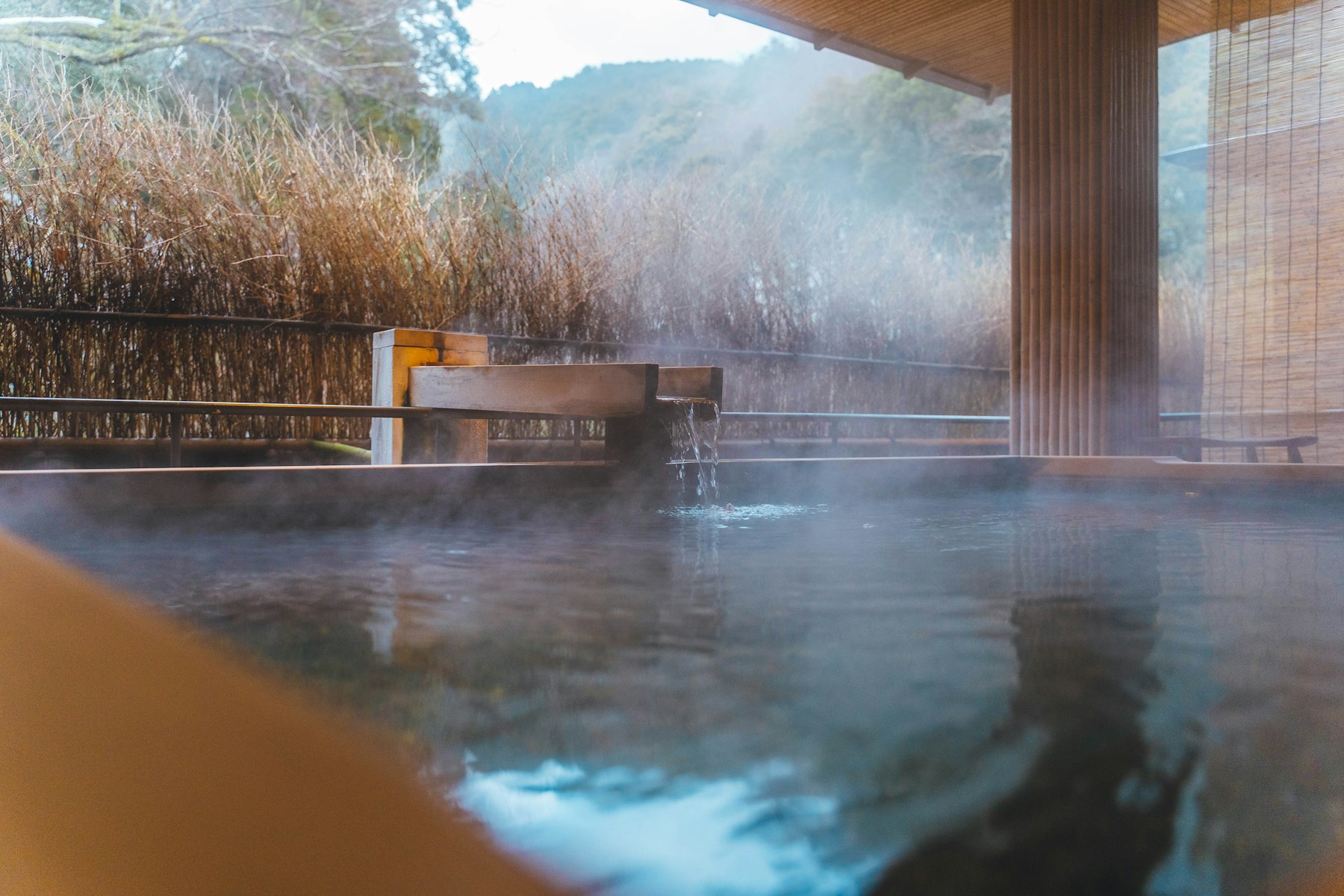
Onsen etiquette comes down to three things: wash before you get in, keep your towel and hair out of the water, and bathe naked. Tattoos are the grey area. There is no national ban, each bath sets its own rule, and towns such as Kinosaki, Kusatsu and Beppu now publish tattoo-friendly policies.
Good onsen etiquette is easy once you have done it once. This guide walks you through a real bath visit step by step, then covers towels, what to bring, private baths, sento versus onsen, the actual tattoo picture in 2026, mixed bathing, kids and health. Every rule and price below was checked on 18 October 2026 against the official source linked next to it.
¥600
Tokyo sento adult fee from 1 Aug 2026
56%
Hotels and ryokan refusing tattoos, 2015 government survey
41°C / 10 min
Official safe-bathing guide
7
Age when Tokyo kids must use their own-gender bath
What is onsen etiquette, in one minute?
An onsen is a bath filled from a natural hot spring. You share the water with strangers, so the rules exist to keep it clean and calm. You wash first, you soak quietly, and you leave the water as you found it.
The tub is for soaking, not cleaning. Soap, shampoo and scrubbing all happen at the washing stations before you go in. Nobody wears swimwear in a standard gender-separated bath.
Onsen etiquette step by step: a bath from start to finish
This is the routine at almost every public bath, ryokan bath and sento. Kinosaki’s official tourism site and the Tokyo Sento Association publish nearly identical versions, linked at the end of each step list.
1. Shoes off, pay, find the right curtain
Leave your shoes in the shoe lockers at the entrance. Pay at the counter or ticket machine. Red curtains (often marked 女) are for women, blue (男) for men. In Kinosaki, the colours are red for women and blue or sometimes purple for men.
2. Undress fully in the changing room
Everything goes in the locker or basket, including underwear. Keep only your small towel and your locker key, usually on a wristband. Phones and cameras stay in the locker: the Tokyo Sento Association bans smartphone use in changing rooms and bathing areas, and Kinosaki bans photography.
3. Wash at a station, sitting down
Rinse the stool, sit, and wash your whole body and hair. Stay seated so you don’t spray your neighbours. Rinse off every bit of soap, then rinse the stool and your spot before you leave it.
4. Ease into the water
Lower yourself in slowly. Some baths have a hot and a very hot pool, so test before you commit. Do not swim, splash or dive.
5. Towel on your head or on the side
Your small towel never goes in the water. Fold it on your head or leave it on the edge. Tie up long hair so it stays out of the bath too.
6. Keep it quiet
Talk softly, give people room and don’t hog the best corner. No food, drinks, shaving or teeth-brushing in or near the bath.
7. Get out before you feel dizzy
Short soaks with breaks beat one long one. If you feel hot or light-headed, stand up slowly and cool off on a stool.
8. Dry off before the changing room
Wring out your small towel and wipe yourself down before you step back onto the changing-room floor. Wet floors get slippery and annoy staff.
9. Rinse or not?
Whether you rinse off at the end is up to you. If your skin is sensitive or the water is strongly acidic, a fresh-water rinse is the safe choice. Under Japan’s Hot Springs Act every onsen must post its contraindications and bathing precautions, so check the sign by the entrance.
10. Rehydrate
Drink water after bathing. Lounges usually have vending machines, and Kinosaki’s official guide recommends the bathhouse classic: strawberry or coffee milk.
Official versions: Kinosaki: Taking a Japanese bath and Tokyo Sento Association: How to enjoy sento.
What are the towel rules at an onsen?
Towels cause more onsen etiquette slip-ups than anything else. You will see two towels. The small one (about face-cloth size) comes with you into the bathing area for washing, modesty on the walk to the tub and drying off. The big bath towel stays in the changing room.
- Never put any towel in the bath water.
- Don’t wring a towel out over the tub.
- Budget baths don’t always lend towels. Kusatsu’s town-run baths rent none and sell a face towel for ¥380 and a bath towel for ¥1,700 (Kusatsu FAQ).
- Beppu’s Hyotan Onsen rents bath towels for ¥150 and sells towels for ¥220 (Hyotan Onsen FAQ).
- Ryokan usually supply both towels in your room. Take them with you to the bath.
What should you bring to an onsen?
| Item | Why | Where to get it |
|---|---|---|
| Small towel | Washing and drying; often not free at public baths | Bring one, or buy at the counter (from ¥220 at Hyotan Onsen) |
| Cash and coins | Many sento and unmanned town baths take cash only | ATMs at convenience stores |
| Hair tie | Hair must stay out of the water | Bring from home |
| Tattoo cover sticker | Some baths accept small, covered tattoos | Drugstores in Japan, sometimes onsen front desks (per JNTO) |
| Water bottle | You lose fluid quickly in hot water | Vending machines |
| Plastic bag | For a damp towel after day bathing | Bring one |
Shampoo and body soap are usually supplied at ryokan and big day spas. The Tokyo Sento Association says most sento sell towels, shampoo, soap and razors, and some provide shampoo and soap free, so check before you go.
Can you go to an onsen with tattoos in 2026?
Often, yes, but it depends on the bath. No law bans tattoos at onsen. Each operator sets its own rule, and those rules range from “all tattoos welcome” to “no tattoos, even covered”.
The last official count is old. A Japan Tourism Agency survey of hotels and ryokan, reported in October 2015, found about 56% refused tattooed guests, about 31% allowed them, and about 13% allowed them with conditions such as a cover sticker (581 facilities answered; Travel Voice report).
What the Japan Tourism Agency actually asked baths to do
In March 2016 the Japan Tourism Agency sent a notice to the national hotel, ryokan and onsen associations about tattooed foreign visitors. It noted that tattoos carry religious, cultural or fashion meanings abroad, that they pose no hygiene problem, and it suggested three ways to let tattooed guests bathe (JTA notice, PDF; handling examples, PDF):
- Cover it: ask guests to cover tattoos with a sticker, or wear hygienic bathing wear. For a small tattoo (about palm-sized) that won’t alarm others, no special request is needed.
- Shift the time: suggest bathing at hours when few families use the bath.
- Use a private bath: guide guests to a reserved private bath, or to a room with its own bath.
This was guidance, not law, and it sits alongside normal onsen etiquette rather than replacing it. Baths that still refuse tattoos are within their rights, so read the sign at the entrance or ask.
Do tattoo cover stickers work?
For small tattoos, often. JNTO says cover tapes are widely sold at drugstores and sometimes at onsen front desks, in shades for different skin tones. Some places refuse even covered tattoos, and others set a size limit. A full sleeve or back piece won’t be covered by a sticker, so go to a tattoo-friendly town or book a private bath.
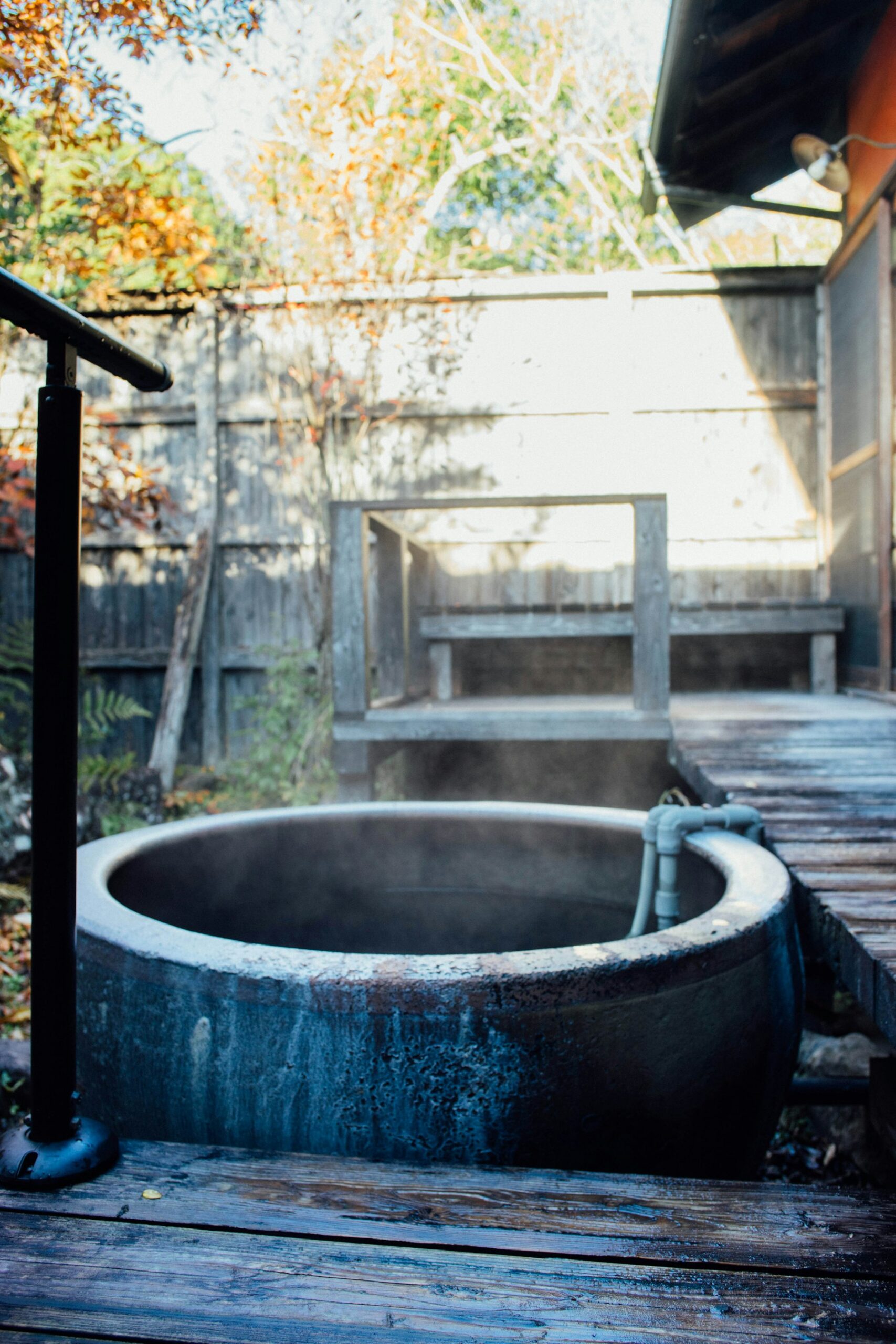
Where are tattoo-friendly onsen? Official policies by town
These are places where the operator, town or an official tourism body publishes the policy. Policies change, so click through before you go.
| Place | Official tattoo policy | Source |
|---|---|---|
| Tokyo sento | JNTO says sento typically accept tattoos, and a column on the Tokyo Sento Association’s own English site says sento don’t discriminate against people with tattoos. Individual sento can still post their own rules. | Tokyo Sento Association, JNTO |
| Kinosaki (Hyogo) | All seven public bathhouses accept tattoos of all sizes with no need to cover them (two are closed for renovation in October 2026). Ryokan baths set their own rules. | Visit Kinosaki (official) |
| Kusatsu (Gunma) | The three town-run baths, Otakinoyu, Gozanoyu and Sainokawara, say they do not refuse people with tattoos. | Kusatsu town baths FAQ |
| Beppu (Oita) | Oita’s official tourism site lists Takegawara Onsen, the municipal Kannawa Steam Bath, Hyotan Onsen, Shibaseki Onsen and a string of local public baths as tattoo-friendly. | Visit Oita (official) |
| Dogo (Ehime) | JNTO describes the baths at all three Dogo bathhouses (Honkan, Asuka-no-Yu and Tsubaki-no-Yu) as tattoo-friendly. | JNTO |
| Kurokawa (Kumamoto) | Varies by bath. We found no town-wide policy on the association’s site; each ryokan sets its own rule. Ask at Kaze-no-Sha, the association’s information centre, before buying a bath pass, or book a private family bath. | Kurokawa Onsen Ryokan Association |
Tokyo is the easiest start. Time Out Tokyo keeps a list of tattoo-friendly sento, and a standard visit costs ¥600 for adults from 1 August 2026 (Tokyo Sento Association). For towns where tattoos are welcome in public baths, see our directory of 38 onsen towns, with the tattoo policy for each.
What is a kashikiri (private) bath, and how do you book one?
A kashikiri-buro is a bath you rent for yourself, usually for 45 to 90 minutes. Families, couples, shy first-timers and anyone with large tattoos use them. Many ryokan have one or more, and some public bathhouses rent them too.
| Bath | Private option | Price (2026) | Booking |
|---|---|---|---|
| Otakinoyu, Kusatsu | Private bath, mixed use allowed in the Shakunage room | ¥2,000 per hour plus ¥1,200 adult entry | Otakinoyu FAQ |
| Asuka-no-Yu, Dogo | Special family bath, up to 5 people, 90 min | ¥2,040 per group plus ¥1,690 per adult; 5 groups a day | Reservation required (Dogo prices) |
| Dogo Onsen Honkan | Tama-no-Yu private suites, 90 min | From ¥3,000 per group plus ¥1,300 per person | Reservation required (Dogo prices) |
| Hyotan Onsen, Beppu | 10 family baths | Ask when booking | Phone 0977-67-3010, from one week ahead; one hour only on weekends and holidays (FAQ) |
At a ryokan, ask when you book: “Is there a kashikiri bath, and is it free for guests?” Some include it, some charge, and the popular slots go first.
Sento vs onsen vs ryokan bath: what’s the difference?
| Sento | Onsen (public) | Ryokan bath | |
|---|---|---|---|
| What it is | Neighbourhood public bathhouse | Bath fed by a natural hot spring | Bath inside a Japanese inn |
| Water | Heated bath water, not necessarily from a hot spring | Hot spring water; contraindications and precautions posted by law | Hot spring water in onsen towns |
| Price | ¥600 adults in Tokyo from 1 Aug 2026 (fixed by the governor) | Roughly ¥300 to ¥1,500 for town baths | Included in your stay; day use at Hakone ryokan typically ¥500 to ¥2,000 |
| Tattoos | Usually relaxed | Varies by bath | Varies by inn; private baths help |
| Best for | Cheap, local, any night of the week | Bath-hopping in an onsen town | Privacy, dinner, yukata evenings |
Sento prices are price-controlled: the Tokyo Sento Association explains that each prefectural governor sets the fee. In Tokyo it rose by ¥50 to ¥600 on 1 August 2026, with children 6 to 11 at ¥200 and under-6s at ¥100.
Is mixed bathing (konyoku) still a thing?
Yes, at a handful of places, mostly old mountain baths. Standard baths are separated by gender, so you will only meet konyoku if you go looking for it.
- Nyuto Onsen (Akita): Tsurunoyu, Kuroyu, Taenoyu, Ganiba and Magoroku each have a mixed outdoor bath.
- Takaragawa Onsen (Gunma): mixed outdoor baths where everyone must wear the bath dress provided; swimsuits and nude bathing aren’t allowed. Day visits 10:00 to 16:30 for ¥1,500 (Takaragawa).
- Private baths: the simplest way for couples to bathe together. Kusatsu’s Otakinoyu allows mixed use in its rented Shakunage bath.
Onsen etiquette in a mixed bath is the same as anywhere: no staring, no photos, no lingering by the entrance.
Can children go in onsen?
Yes. Kids are welcome, and many Japanese families bathe together. The rules on which bath a child may enter are set by each prefecture, so they change as you travel.
- Tokyo: from 1 January 2022, children aged 7 and over can’t enter the opposite-gender bath (Tokyo Sento Association Q&A).
- Gunma (Kusatsu): pre-school children may go into the opposite-gender bath with a parent. Babies from about six months are left to parents’ judgement (Kusatsu FAQ).
- Kinosaki: children must be with an adult; young children may enter the opposite-gender side if needed.
- Fees: Tokyo sento charge ¥200 for ages 6 to 11 and ¥100 under 6.
Keep small children’s soaks short, as hot water hits them faster. A private bath makes life easier with toddlers.
Onsen health precautions: who should be careful?
Hot baths are safe for most people, but the official advice is clear. Japan’s Consumer Affairs Agency recommends these rules, mainly aimed at older bathers in winter (Consumer Affairs Agency):
- Keep water at 41°C or below and soak for about 10 minutes.
- Don’t bathe straight after a meal or while still feeling alcohol.
- Don’t bathe after taking sleeping pills or tranquillisers.
- Warm the changing area first and stand up slowly.
- Tell someone before you go in.
Many town baths are hotter than 41°C, so choose the cooler pool and take breaks. Pregnancy is no longer a general reason to avoid onsen: Japan’s onsen contraindication standards were revised from 1 July 2014 and the blanket pregnancy warning was removed (Kagoshima Prefecture summary). Check the posted precautions for each spring, and ask your doctor if you have a heart condition, high blood pressure or other concerns.
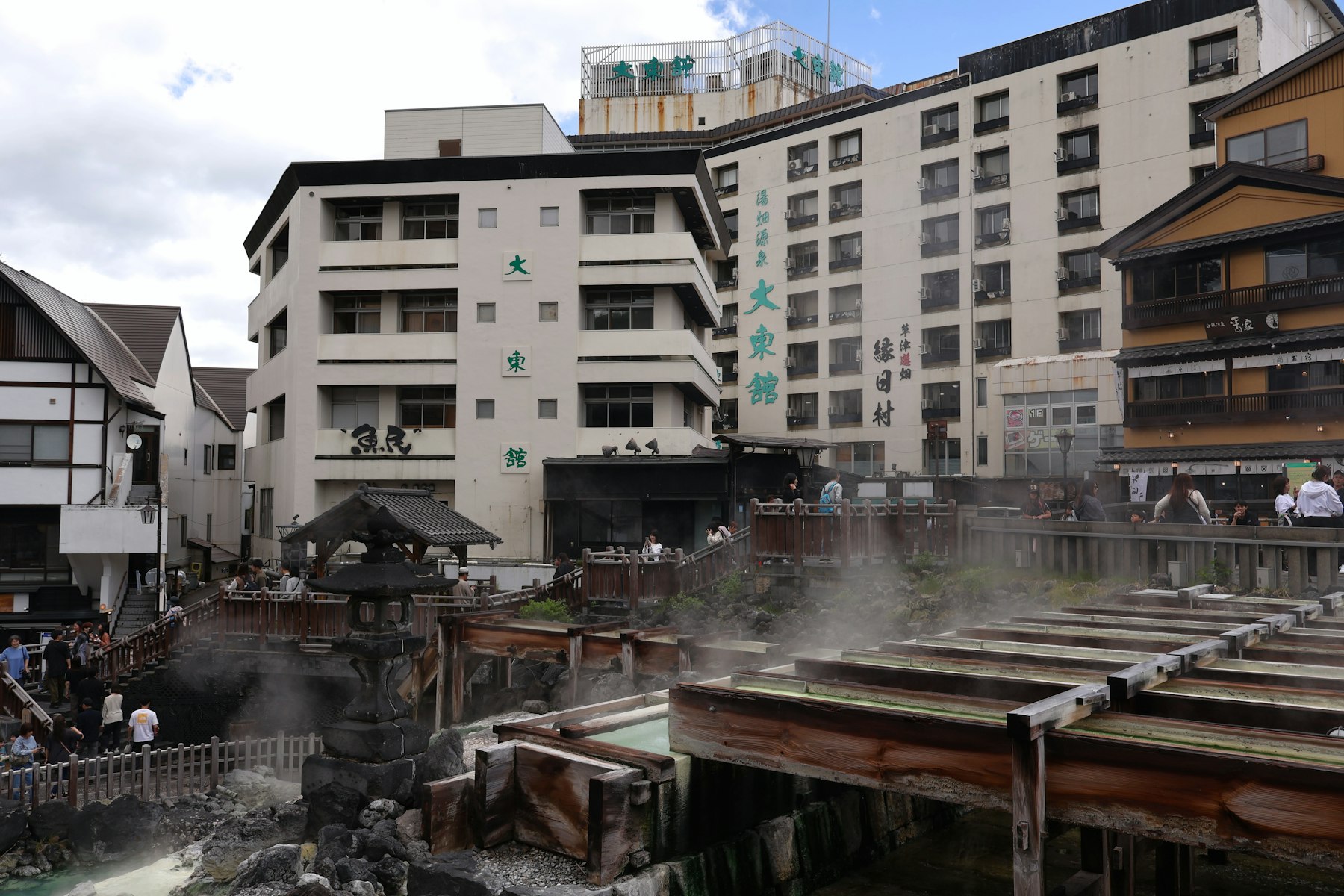
Onsen etiquette in 2026: what has changed?
- Tokyo sento cost more: ¥600 for adults from 1 August 2026, up from ¥550.
- More towns publish tattoo rules: Kinosaki, Kusatsu’s town-run baths and Oita’s official tourism site now state their policies in English.
- Crowd-sourced tattoo data: on 29 September 2026 the Tattoo Japan site relaunched as a bilingual, wiki-style database of 5,521 facilities. Its own tally lists 2,019 as tattoo-friendly, 727 conditional, 253 not allowed and 2,522 unconfirmed (press release). It’s a company count, not an official one.
- Kinosaki closures: Kono-yu is closed for renovation from 11 May to 30 October 2026, and Satono-yu has been closed for renovation since 1 April 2024 (Visit Kinosaki).
- The national guidance hasn’t changed: the Japan Tourism Agency’s 2016 cover, time-slot and private-bath advice is still the reference point.
Know before you go
Read the door sign
Tattoo rules are posted at the entrance or front desk. A tattoo symbol crossed out means no.
Ask before you pay
Show the tattoo and ask "Daijōbu desu ka?" (Is this OK?). Staff will answer straight.
Go early or late
Mornings and late evenings are quieter, which suits first-timers and tattooed guests.
Carry ¥1,000 in coins
Unmanned town baths and lockers often take coins only.
Pick the cooler pool
Town baths can run well above 41°C. Start with the cooler one.
Book private baths early
Family baths at Dogo and Beppu take limited daily slots.
Planning a full onsen trip? Our onsen towns of Japan directory covers 38 towns by region. For timing, see winter in Japan and the best time to visit Japan. Hakone and Kusatsu work as trips from the capital: see day trips from Tokyo by train and our JR Tokyo Wide Pass day trips.
Onsen etiquette FAQ
Do you have to be naked in an onsen?
Yes, in standard gender-separated baths. Swimsuits and underwear are not allowed. A few mixed baths, such as Takaragawa in Gunma, require a bath dress they provide.
Can I go to an onsen with a tattoo?
It depends on the bath. There is no national ban. Kinosaki’s public baths, Kusatsu’s three town-run baths and many Beppu baths accept tattoos; elsewhere, use a cover sticker for small tattoos or book a private bath.
What did the Japan Tourism Agency say about tattoos?
In March 2016 it asked hotel, ryokan and onsen associations to consider cover stickers, quieter time slots or private baths for tattooed foreign guests, and said small, palm-sized tattoos need no special request. It is guidance, not law.
Where do I put my towel in an onsen?
Keep the small towel on your head or on the edge of the bath. It must never touch the water. Leave the big towel in the changing room.
How much does a Tokyo sento cost in 2026?
From 1 August 2026, adults (12 and over) pay ¥600, children 6 to 11 pay ¥200 and children under 6 pay ¥100, per the Tokyo Sento Association.
Can my child come into my bath?
In Tokyo, children aged 7 and over must use their own-gender bath. Other prefectures set their own ages; in Gunma, pre-schoolers may go in with a parent.
How long should I stay in the hot water?
Japan’s Consumer Affairs Agency suggests water at 41°C or below and about 10 minutes, with no bathing right after meals or alcohol.
Can I take photos in an onsen?
No. Phones and cameras stay in the locker. The Tokyo Sento Association bans smartphone use in changing rooms and bathing areas.
Sources and how we checked
We checked every onsen etiquette rule, price, date and tattoo policy in this guide on 18 October 2026 against the official sources linked in the text: the Japan Tourism Agency notice, the Tokyo Sento Association, Japan’s Consumer Affairs Agency, JNTO, Visit Kinosaki, Kusatsu’s town-run baths, Visit Oita and Dogo Onsen. Policies change without notice, so confirm at the bath before you undress.
Plan your onsen trip with Japan Pro
Tell us your dates and whether you need a tattoo-friendly or private bath, and we'll help you book ryokan, tours and transport.
 English
 Japanese
 Chinese (Taiwan)
 Chinese (China)
 Korean
 French
 Italian
 Thai