

Dates, prices and forecasts checked 2 October 2026
Tokyo’s autumn leaves turn from the top down. Mount Takao, on the western edge of the city, colours first, in mid to late November. The gardens and avenues in the centre follow at the end of the month and hold into early December. This year’s forecasts put the city a little later than usual, with ginkgo yellow around 26 November and maple red around 28 November.
The dates that matter most, though, are fixed ones. Tokyo has two gardens that open at night to light up their autumn leaves, and both have announced their 2026 runs: Koishikawa Korakuen from 13 to 24 November, then Rikugien from 25 November to 6 December. This guide covers both, plus the best daytime spots, with prices, closing days and the timing for each.
The short version
- Peak in central Tokyo: late November into early December; ginkgo around 26 November, maples around 28 November
- Peak on Mount Takao: earlier, from mid to late November
- Night gardens: Koishikawa Korakuen 13 to 24 November (tickets on sale now), Rikugien 25 November to 6 December
- Free autumn leaves: the Jingu Gaien ginkgo avenue, Shiba Park under Tokyo Tower, Ueno Park
- Check first: Shinjuku Gyoen is closed on 16, 24 and 30 November
When Tokyo’s Autumn Leaves Peak in 2026
Japan’s main autumn leaves forecasters all expect a late season this year. The Japan Meteorological Corporation’s first forecast, out on 2 September, puts Tokyo’s ginkgo at their best around 26 November and its maples around 29 November, and the summit of Mount Takao from about 6 to 20 November. Its second forecast, on 1 October, brought Tokyo’s maples forward a day, to around 28 November. Weathernews, on 3 September, put Takao’s peak around 22 November and said most of Japan would be later than average, because autumn is expected to stay warm. The Japan Weather Association, on 1 October, also expects some lowland areas to peak later than usual.
In practice, that gives Tokyo a long season. The mountain and the city’s ginkgo come first, the maples in the big gardens come last, and some colour hangs on into the first week of December. Weathernews publishes its second forecast in early October, and we will change the dates here when the forecasts are updated.
Here is every spot in this guide at a glance:
| Tokyo autumn leaves spot | What you see | Best time in 2026 | Entry | Watch out for |
|---|---|---|---|---|
| Rikugien | Maples around a pond, lit at night | Late Nov to early Dec; nights 25 Nov–6 Dec | ¥300 day; ¥1,000 night in advance | Night ticket is separate |
| Koishikawa Korakuen | Maples and the Engetsukyo bridge, lit at night | Nights 13–24 Nov | ¥300 day; ¥1,000 night in advance | Night run ends before the maple peak |
| 新宿御苑 | Maples across a huge garden | Late Nov | 500 日圓 | Closed 16, 24 and 30 Nov |
| Jingu Gaien Ginkgo Avenue | 146 ginkgo trees in four rows | Mid-Nov to early Dec | 免費 | No festival dates yet |
| Mount Takao | Maples on a mountain | Mid to late Nov | Cable car ¥490 one way | Go early to beat the queue |
| Showa Kinen Park | Ginkgo avenues and a Japanese garden | Festival 29 Oct–29 Nov | ¥450 | Out west, in Tachikawa |
| Shiba Park Momijidani | Maples below Tokyo Tower | End of Nov | 免費 | Small: 20 minutes is enough |
💡 Japan Pro Tip: Ginkgo and maples don’t peak together. If you are in Tokyo in the third week of November, go for the yellow ginkgo avenues; if you are here at the end of the month, the red maples in the gardens are at their best.
How to Check the Autumn Leaves Before You Go
Forecasts give you a week to aim for, but the real colour depends on the weather in the weeks before. Weathernews, which tracks about 1,200 spots across Japan, and the Japan Weather Association’s tenki.jp both post the current state of each spot through the season, from green to starting to turn to at its best. The sites are in Japanese, but the status icons are easy to follow, and a check a day or two before you go is the surest way to catch Tokyo’s autumn leaves at their peak.
Tokyo’s Two Autumn Night Gardens in 2026
Seeing autumn leaves at night is one of the best things to do in Tokyo in November, and this year the two night gardens run back to back, with no overlap:
- Koishikawa Korakuen: 13 to 24 November 2026, 18:00 to 21:00 (last entry 20:00)
- Rikugien: 25 November to 6 December 2026, 18:00 to 20:30 (last entry 19:30)
Both charge ¥1,000 for an advance ticket. Koishikawa Korakuen’s tickets have been on sale since 1 October; Rikugien sells advance tickets online, with tickets on the day at the gate for a little more. Between them, they cover Tokyo’s autumn leaves season from the middle of November to its very end.
💡 Japan Pro Tip: In Tokyo for a week at the end of November? You can do both, on different evenings. Koishikawa Korakuen catches the earlier part of the season and Rikugien the peak, so if you can only do one in the last week of November, make it Rikugien.
1. Rikugien (Komagome): The Classic Night Garden
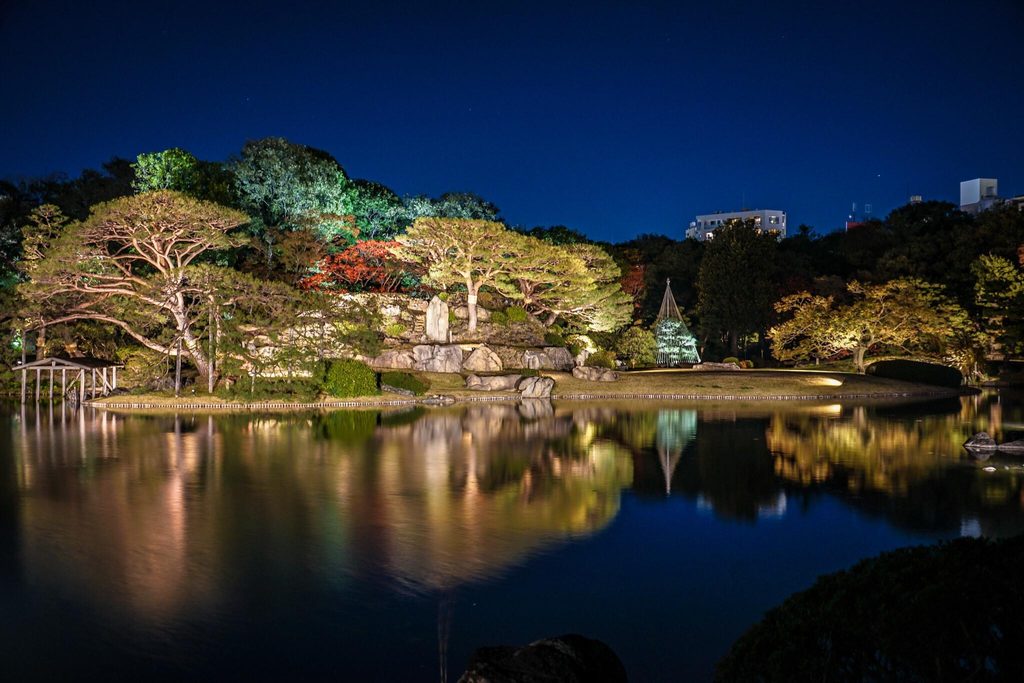
Rikugien is a strolling garden built around a pond about 300 years ago, and it’s the most famous place to see autumn leaves after dark in Tokyo. The maples around the pond are lit at night, with reflections on the water and projections on the old earthen walls.
The night viewing runs from 25 November to 6 December 2026. The garden closes at 17:00, then reopens at 18:00 for night ticket holders only, so you can’t stay on from the afternoon. Buy the night ticket in advance online for ¥1,000; tickets on the day at the gate cost more (¥1,200 last year).
- Where: 7 minutes on foot from Komagome Station (JR Yamanote Line and Namboku Line)
- Daytime: 9:00 to 17:00, last entry 30 minutes before closing; ¥300 for adults, ¥150 for over-65s
- Night viewing: 25 November to 6 December 2026, 18:00 to 20:30, last entry 19:30
- Official site: Rikugien night viewing (Japanese)
💡 Japan Pro Tip: Eat dinner in Komagome between the day closing and the night opening. The queue on the pond path moves slowly, so arrive close to 18:00 if you want time to walk the whole circuit.
2. Koishikawa Korakuen (Iidabashi): The Earlier Night Garden
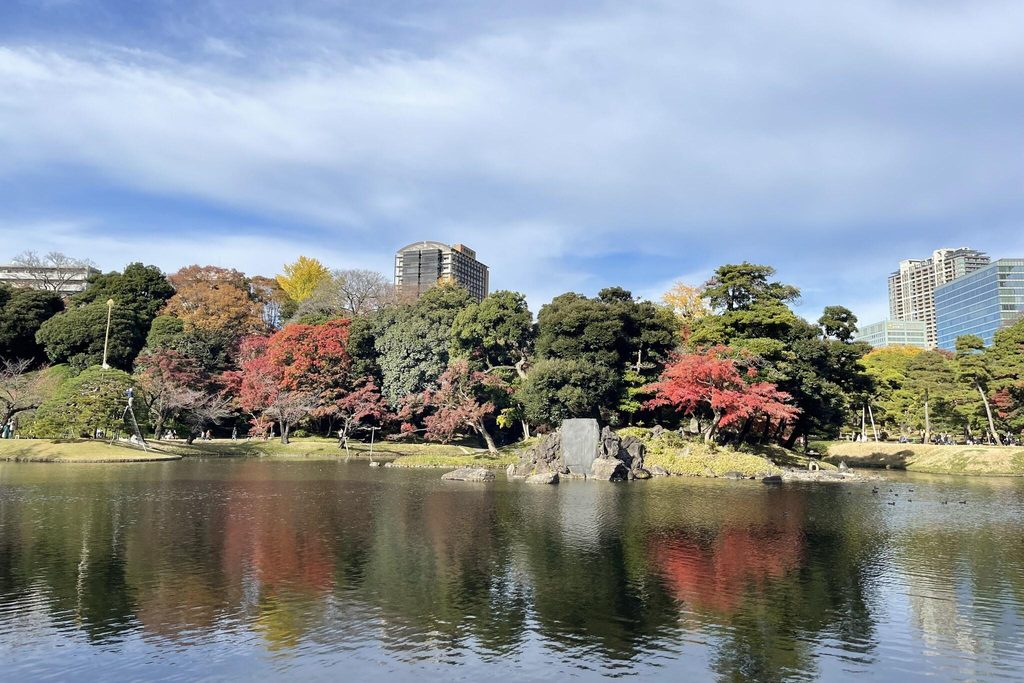
Koishikawa Korakuen is one of Tokyo’s oldest gardens, with Tokyo Dome rising behind its trees, and the contrast is part of the appeal. Its night opening comes first this year: 13 to 24 November 2026, twelve nights, from 18:00 to 21:00 with last entry at 20:00.
The lighting picks out the garden’s landmarks, including the Engetsukyo, a stone bridge whose arch and reflection make a full circle, and the earthen wall gets a projection of scenes of Edo life. The teahouse serves matcha and Japanese sweets during the run.
- Where: 3 minutes on foot from Iidabashi Station on the Oedo Line; also close to Korakuen and Suidobashi stations
- Daytime: 9:00 to 17:00; ¥300 for adults, ¥150 for over-65s
- Night tickets: ¥1,000 in advance, ¥1,200 on the day, free under school age; on sale since 1 October at Seven Ticket, KKday and Asoview
- Combination ticket: night entry plus three rides at Tokyo Dome City next door, ¥3,500 in advance or ¥3,700 on the day
💡 Japan Pro Tip: The night run finishes before the city’s maple forecast of 28 November, so expect the early part of the turn rather than full red. The last few nights, 22 to 24 November, should have the most colour.
3. Shinjuku Gyoen (Shinjuku): Check the Closing Days
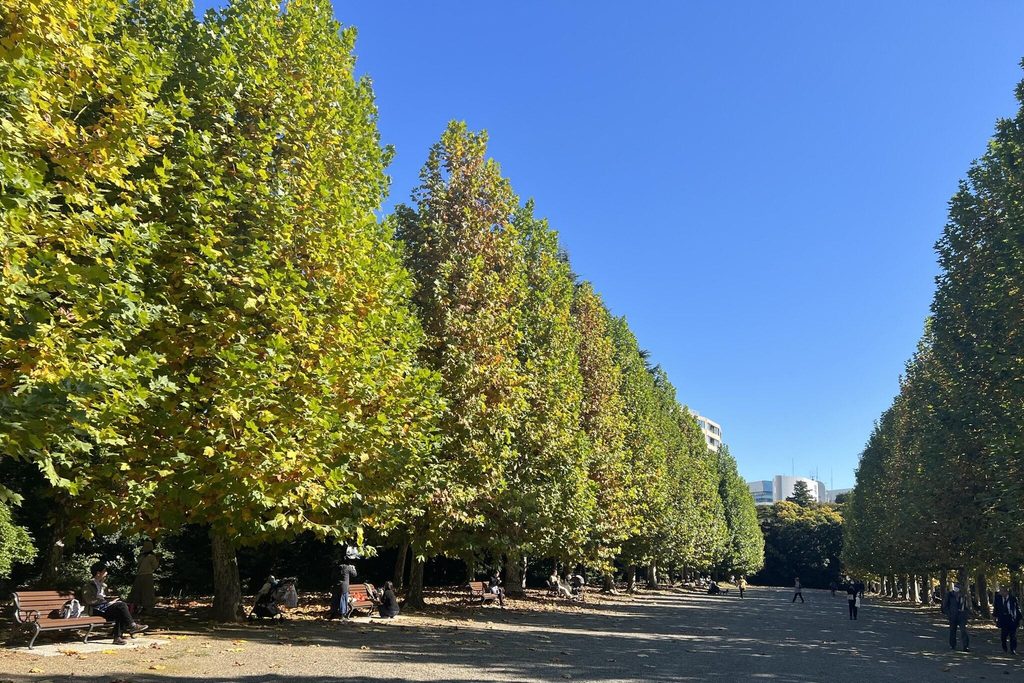
Shinjuku Gyoen is a huge former imperial garden ten minutes’ walk from Shinjuku Station, with French, English and Japanese gardens in one place. Its autumn leaves peak with the rest of the city, at the end of November, and there is enough space that it rarely feels as crowded as the smaller gardens.
The catch is the closing days. The garden is closed every Monday, or the next weekday when the Monday is a public holiday. It opens every day from 1 to 15 November for its chrysanthemum exhibition, but after that the closures come back. In November 2026, that means it is closed on Monday 16, Tuesday 24 (because Monday 23 is a public holiday) and Monday 30 November.
- 開放時間: 9:00 to 16:30 from 1 October, last entry 16:00
- Tickets: ¥500 for adults, ¥250 for over-65s and students, free for junior high age and under; web tickets can be bought in advance
- Official site: Shinjuku Gyoen admission guide
💡 Japan Pro Tip: The last entry is 16:00, earlier than most people expect. Arrive by 14:30 and you will have the low afternoon light on the autumn leaves before the gates close.
4. Jingu Gaien Ginkgo Avenue (Aoyama): The Yellow Tunnel
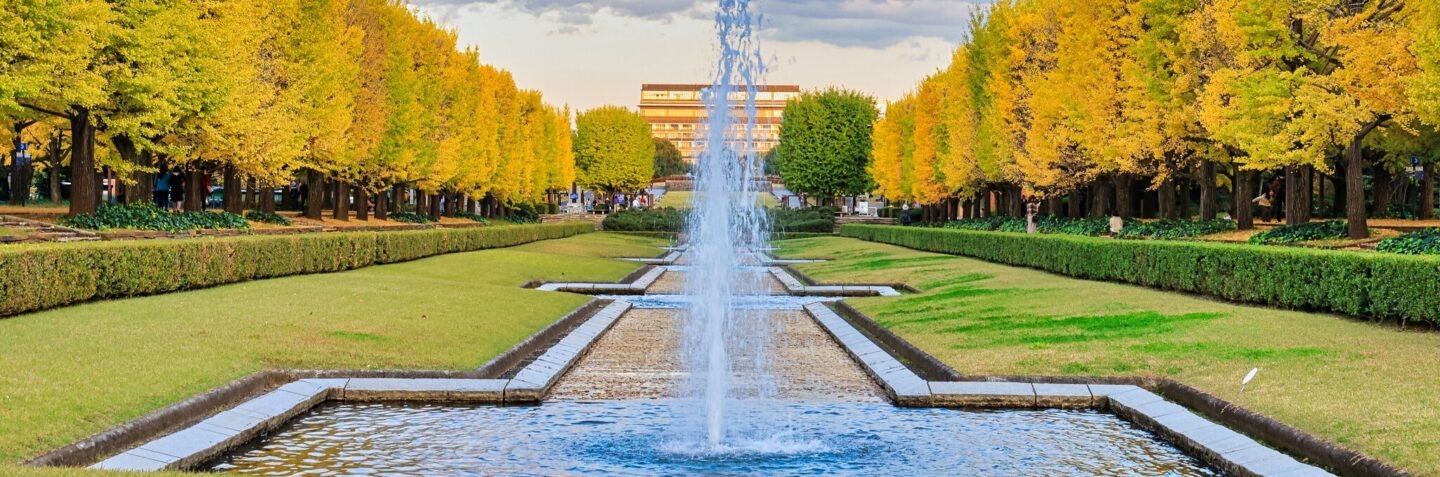
The Jingu Gaien ginkgo avenue is Tokyo’s best-known stretch of yellow autumn leaves: 146 trees in four rows along 300 metres, planted from 1908 and finished in 1923. It’s designed as a perspective: the trees are tallest at the Aoyama-dori end and get gradually lower towards the domed Meiji Memorial Picture Gallery, which makes the avenue look longer than it is.
The avenue is a public street, so it is free and always open. It usually turns gold from mid-November to early December, around the 26 November ginkgo forecast. The ginkgo festival is a separate event, and as of 2 October no 2026 dates have been announced for it or for an evening illumination.
- Where: Gaienmae or Aoyama-itchome on the Ginza Line, or 10 minutes from JR Shinanomachi
- Price: 免費
- More: Minato City on the avenue (Japanese)
💡 Japan Pro Tip: Everyone shoots from the Aoyama-dori end. Walk to the gallery end and shoot back for the same tunnel of yellow with far fewer people in it.
5. Mount Takao (Hachioji): The First to Turn
Mount Takao is the one real mountain in this guide, and its autumn leaves turn before the city’s. It’s about 50 minutes from Shinjuku on the Keio Line to Takaosanguchi Station, and the cable car runs up from there on what is billed as the steepest cable car track in Japan, at 31 degrees 18 minutes.
- Cable car: ¥490 one way for adults, ¥250 for children; about 6 minutes; first car at 8:00
- Peak: around 22 November according to Weathernews; 6 to 20 November at the summit according to the Japan Meteorological Corporation
- More: Mt. Takao cable car
💡 Japan Pro Tip: On a late-November weekend, the queue for the cable car can get long by mid-morning. Take an early train from Shinjuku and be at the station before 8:00.
6. Showa Kinen Park (Tachikawa): Ginkgo on a Grand Scale
Showa Kinen Park in Tachikawa is a vast park in western Tokyo with avenues of ginkgo along its central canal and maples in its Japanese garden. Its Koyo Autumn Leaves Festival runs from 29 October to 29 November 2026, so it is the place to go for autumn leaves if you are in Tokyo before the city centre turns.
- Where: 2 minutes on foot from Nishi-Tachikawa Station on the JR Ome Line
- Tickets: ¥450 for adults, ¥210 for over-65s
- Official site: Koyo Autumn Leaves Festival 2026
7. Shiba Park Momijidani (Tokyo Tower): Maples Under the Tower
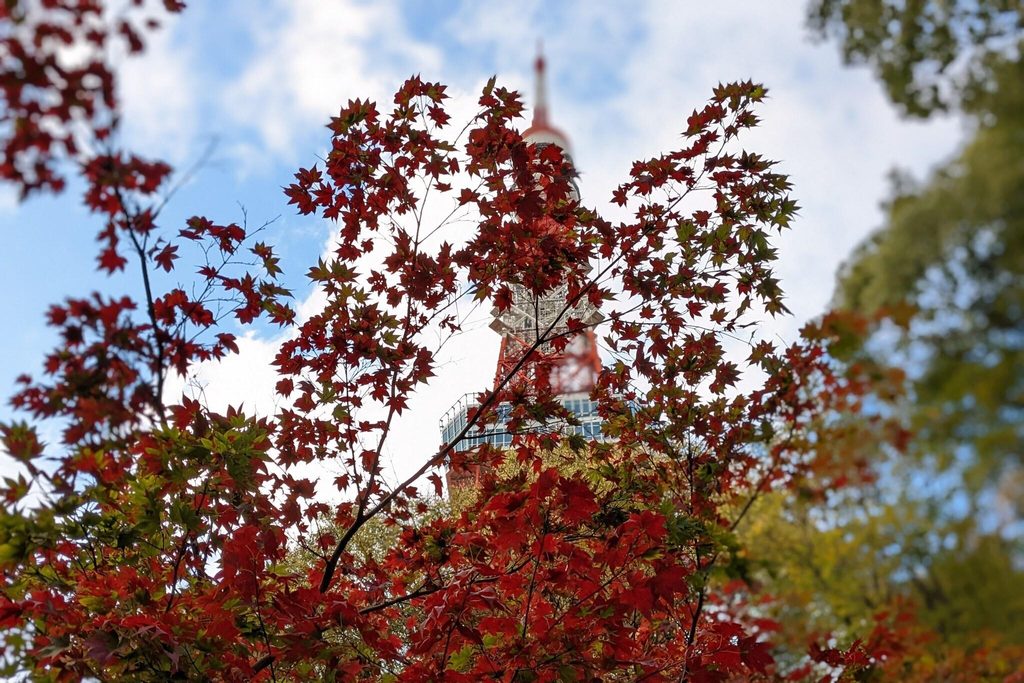
Momijidani, “maple valley”, is a small man-made ravine in Shiba Park, right below Tokyo Tower. It was restored in 1984, it’s free, and it gives you the photo many people come for: red autumn leaves with the orange tower above them. Twenty minutes is enough.
- Where: about 5 minutes on foot from Shibakoen, Daimon, Akabanebashi or Onarimon stations
- Price: free; going up Tokyo Tower is separate
💡 Japan Pro Tip: Go at dusk, when the tower’s lights come on but the sky is still blue. It’s a short window, and it makes the shot.
More Free Autumn Leaves: Ueno Park and Todoroki Valley
Ueno Park is free, open from 5:00 to 23:00, and five minutes from the Park Exit of JR Ueno Station. It’s better known for cherry blossom than autumn leaves, so treat it as a walk between museums rather than a reason for the trip. Todoroki Valley in Setagaya is a wooded ravine with a temple, Todoroki Fudoson, whose maples are usually best in late November. See our Todoroki Valley walk for the route.
The Garden Stamp Rally: 10 October to 6 December
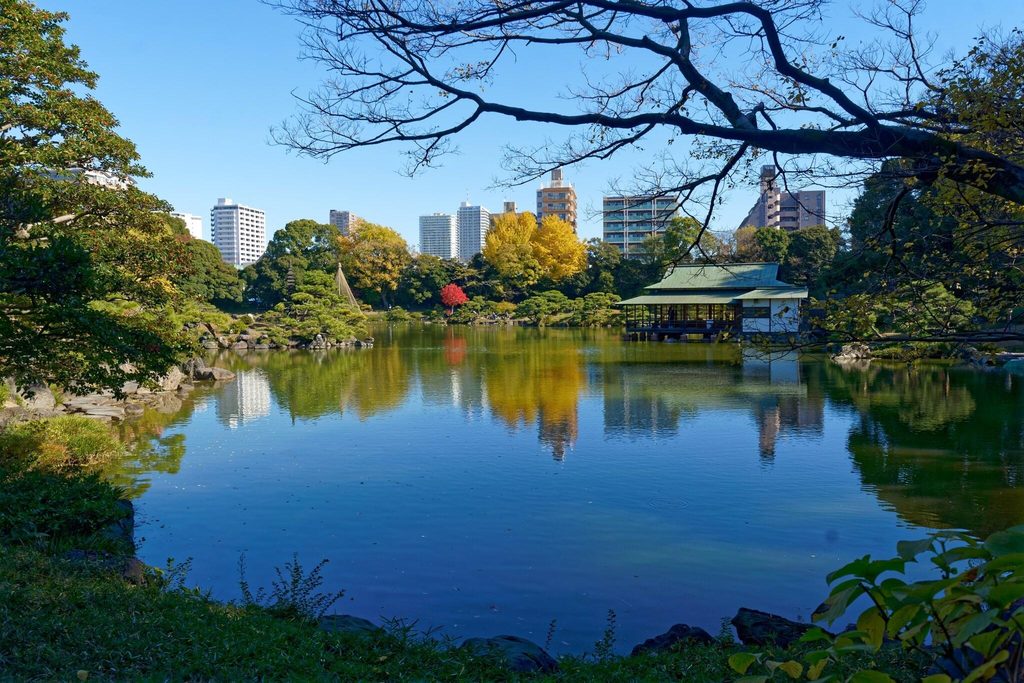
Tokyo’s metropolitan gardens run an autumn leaves stamp rally every year, and the 2026 edition runs from 10 October to 6 December across nine gardens: Rikugien, Koishikawa Korakuen, Hama-rikyu, Kyu-Shiba-rikyu, Kiyosumi, Kyu-Iwasaki-tei, Kyu-Furukawa, Mukojima-Hyakkaen and Tonogayato. You pay each garden’s normal admission and collect a stamp at each one.
Three stamps get you a postcard (for the first 4,000), five get a discount on the 2027 garden calendar, and seven or nine enter you into prize draws that include annual passes and Rikugien night tickets. More usefully, it’s a ready-made list of nine gardens with autumn leaves. Kiyosumi is the easiest to pair with a coffee stop: see our Kiyosumi Shirakawa guide.
A One-Day Tokyo Autumn Leaves Plan
For a day between 25 and 29 November, this order works:
- Morning: Shinjuku Gyoen from 9:00, before the crowds. It is open every day from the 25th to the 29th.
- Afternoon: the Jingu Gaien ginkgo avenue, close enough to walk from the garden’s Sendagaya Gate.
- Evening: Rikugien’s night viewing from 18:00. Komagome is on the JR Yamanote and Namboku lines.
Earlier in the month, swap Rikugien for Koishikawa Korakuen’s night opening (13 to 24 November), and Shinjuku Gyoen for Mount Takao or Showa Kinen Park.
Tips for Tokyo’s Autumn Leaves Season
- Go on a weekday morning. The famous spots fill up at weekends, most of all at the end of November.
- Book the night gardens first. They have fixed dates and advance tickets, so plan the rest of your autumn leaves days around them.
- Watch the weather. Strong wind can strip trees quickly. If a storm is forecast near the peak, go before it rather than after.
- Mix ginkgo and maples. In central Tokyo the ginkgo turn a few days before the maples, so a trip in the last ten days of November can catch both kinds of autumn leaves.
Pair the leaves with the rest of the month: see Tokyo events in November 2026.
Tokyo Autumn Leaves FAQ
When do Tokyo’s autumn leaves peak in 2026?
In central Tokyo, at the end of November: the first forecasts put the ginkgo around 26 November and the maples around 28 November. Mount Takao turns earlier, in mid to late November.
When is Rikugien’s night viewing in 2026?
From 25 November to 6 December 2026, 18:00 to 20:30, with last entry at 19:30. Advance tickets are ¥1,000.
When is Koishikawa Korakuen’s night opening in 2026?
From 13 to 24 November 2026, 18:00 to 21:00. Advance tickets are ¥1,000 and have been on sale since 1 October.
Is Shinjuku Gyoen open on Mondays in November?
Only from 1 to 15 November. In November 2026 it is closed on Monday 16, Tuesday 24 and Monday 30 November.
Is the Jingu Gaien Ginkgo Festival on in 2026?
No dates had been announced as of 2 October 2026. The avenue itself is a public street, free and open at any time.
What is the best place to see autumn leaves at night in Tokyo?
Rikugien, for the classic garden light-up from 25 November to 6 December. Koishikawa Korakuen opens at night earlier, from 13 to 24 November.
Do I need to book Rikugien’s night viewing?
It isn’t required, but advance tickets are sold online for ¥1,000, which is cheaper than buying on the day at the gate.
Where can I see autumn leaves in Tokyo for free?
The Jingu Gaien ginkgo avenue, Momijidani in Shiba Park below Tokyo Tower, Ueno Park and Todoroki Valley are all free.
We Update This Page
We checked every date, price and closing day here on 2 October 2026, against the gardens’ and organisers’ own pages and the first autumn leaves forecasts. We will update this page when the second forecasts come out in October, and if the Jingu Gaien Ginkgo Festival announces its 2026 dates.
For the rest of Japan, see our Japan Autumn Foliage Forecast 2026, and for the month-by-month picture, 日本最佳旅遊季節. The forecasts quoted here are summarised in English by nippon.com.



 English
 Japanese
 Chinese (Taiwan)
 Chinese (China)
 Korean
 French
 Italian
 Thai