
Sakai Osaka Guide 2026: Nintoku Tomb, Knife Workshops and Sen no Rikyu Tea in One Day
Is Sakai Osaka worth a day trip? Yes, if you want three things central Osaka cannot give you: the largest keyhole tomb in Japan, the hometown of the tea master Sen no Rikyu, and the workshops behind most of Japan’s professional chef knives. It is 10 to 15 minutes south of Namba by Nankai train.
This guide runs through Sakai Osaka in date order, from the 5th-century tombs to today’s knife makers. That also works as a route: start at Mozu Station in the south-east and finish by the old town and the tram line. It covers the four ways to see the Nintoku tomb, which are harder than they sound, plus bike hire, the Hankai tram and what is new for knife buyers.
486 m
Length of the Nintoku tomb
2019
UNESCO World Heritage listing
Free
Sakai City Hall 21F observatory
¥4,200
Kofun balloon flight, adults
Which station do you need for Sakai Osaka?
Sakai is a city of its own, so the station depends on which era you are visiting. The kofun are around JR Mozu, the city hall is at Nankai Sakai-higashi, and the old merchant town lies between Sakai-higashi, Nankai Sakai and the Hankai tram.
| Station | Line | From central Osaka | Go here for |
|---|---|---|---|
| Mozu | JR Hanwa Line (local trains only) | About 11 min from Tennoji; about 35 min from Shin-Osaka or Kansai Airport | Nintoku tomb, Visitor Center, Daisen Park, balloon |
| Sakai-higashi | Nankai Koya Line | About 12 min from Namba | City Hall 21F observatory; buses to Daisen Park |
| Sakai | Nankai Main Line | About 10 min from Namba; 37 min from Kansai Airport | Tourist information and bike hire; Sakai Old Port |
| Shukuin, Myokokuji-mae | Hankai Tramway | Tram from Ebisucho (Shinsekai) | Sakai Rishō no Mori; Sakai Densankan and the knife museum |
Times are from Sakai City and the Sakai Tourism Bureau train guide. All these lines take IC cards; see our IC card guide. If you are basing yourself in the south of Osaka, our Namba Osaka guide covers where to stay.
Era one: how do you actually see the Nintoku tomb?
The Mozu-Furuichi Kofun Group was inscribed by UNESCO in 2019: 45 components containing 49 burial mounds built for the elite between the late 4th and late 5th centuries (UNESCO). The Mozu half is in Sakai; the Furuichi half is in Habikino and Fujiidera.
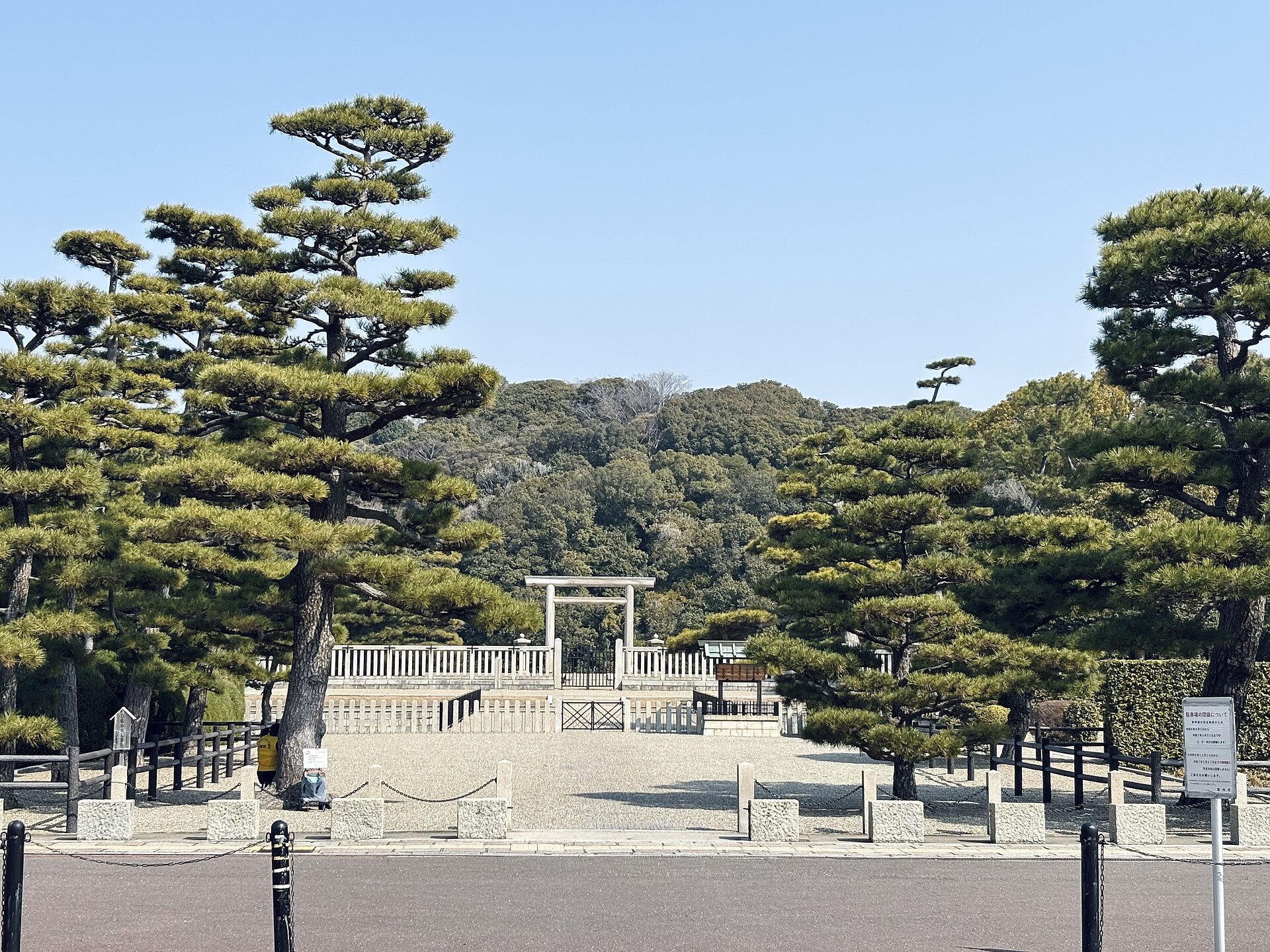
The star is the tomb attributed to Emperor Nintoku, also called Daisen Kofun. It is about 486 m long, with a round rear mound about 35.8 m high, three tiers, three moats and more than ten small satellite tombs (OSAKA-INFO). It is an imperial mausoleum, so you cannot go in. From the ground it looks like a wooded hill behind a moat. There are four ways round that problem.
1. Walk the moat
A path follows the outer moat for about 2.8 km, which takes about an hour, and viewing is free (OSAKA-INFO). Start at the worship place on the south side, where you get the classic view of the torii gate and the moat. Mozu Station is about 10 minutes away on foot.
2. Sakai City Hall 21F observation lobby
The 21st-floor lobby, named MI-TE Sakai, is free and open 9:00–21:00 every day, about 80 m up and 5 minutes from Sakai-higashi Station (OSAKA-INFO). The south side was renovated in April 2025 with an illustration of the Nintoku tomb and a 3D model of Sakai’s sights, and the north side was redone in March 2026 (Sakai City).
Be realistic: from here you see the long, tree-covered shape of the tomb, not the keyhole outline from the textbooks. On a clear day you also get Abeno Harukas to the north and Awaji Island to the west.
3. The Osaka Sakai Balloon
Since 4 October 2025 a tethered gas balloon has lifted visitors about 100 m above Daisen Park for roughly 15 minutes, high enough to look down on the tombs. It runs 10:00–18:00, all year except for weather or inspections; strong wind, rain, snow or dense fog stop it (Sakai City).
| Balloon ticket | Adult (16+) | Child (3–15) |
|---|---|---|
| General | ¥4,200 | ¥3,000 |
| Web discount (book online) | ¥4,000 | ¥2,800 |
| Sakai residents | ¥3,200 | ¥2,200 |
Under-3s fly free. Online booking opens at midnight 10 days before the flight, cancellation is free, and booked riders board first, so walk-ins may wait (Osaka Sakai Balloon). Check the daily operating forecast on the balloon site on the morning you go.
4. The Visitor Center’s 8K theatre
The Mozu Kofun Group Visitor Center, 350 m west of Mozu Station, shows ultra-high-definition aerial film on its walls and floor, the closest you will get to a drone view. Entry is free, it opens 9:00–18:00 and it closes 29 December–3 January. Look for the LEGO model of the Nintoku tomb (Sakai City).
The tourist desk inside hires bikes and stores bags: ¥500 for a small bag and ¥700 for a large one (Sakai Tourism Bureau).
| Method | Cost | Height | Do you see the keyhole? |
|---|---|---|---|
| Moat walk | Free | Ground | No; you see the moat and forest |
| City Hall 21F | Free | About 80 m | Partly; the long side in profile |
| Balloon | ¥4,000–¥4,200 | About 100 m | Better, weather permitting |
| 8K theatre | Free | Aerial film | Yes, on screen |
Daisen Park and the Sakai City Museum
Daisen Park sits beside the tomb. The Sakai City Museum covers Sakai’s history and has a film theatre on the Mozu tombs. It is open 9:30–17:15 (last entry 16:30), closed on Mondays unless a holiday, and costs ¥200 (Sakai City).
The park’s Japanese garden costs ¥200 for adults and ¥100 for children, opens 9:00–17:00 (last entry 16:30) and is closed on Mondays (Sakai City). In late autumn the park’s ginkgo avenue and zelkova trees turn colour.
Should you rent a bike in Sakai Osaka?
Yes. The tombs, the city hall and the old town are spread over a few kilometres, and buses between them are slow. You have two options.
- Tourist desks: the information centres at Nankai Sakai Station and at the Mozu Visitor Center hire regular bikes for ¥500 and electric bikes for ¥1,000. Bring photo ID such as a passport (Sakai Tourism Bureau).
- Mozufuru Rental Cycle: electric bikes with helmets, no booking needed, from the Daisen Park tourist information centre (9:00–16:30) and from stations in the Furuichi area. The listed rate is ¥1,000 a day, or ¥500 if you return the bike where you hired it (Japan Tourism Agency).
Prefer not to cycle? A free shuttle bus runs on Saturdays, Sundays and holidays from 20 March 2026 to 28 March 2027. It loops hourly, 9:00–18:00, between the Visitor Center, Sakai Rishō no Mori and Sakai Old Port, with 27 seats. It does not run on 1–3 January (Sakai City).
Era two: Sen no Rikyu and tea at Sakai Rishō no Mori
Sen no Rikyu was born in Sakai, perfected wabi-cha, the pared-back style of tea, and was later ordered to take his own life after falling out with Toyotomi Hideyoshi (Rurubu). Sakai Rishō no Mori, beside the Hankai tram’s Shukuin stop, tells his story and lets you drink the tea.
- Address: 2-1-1 Shukuin-cho Nishi, Sakai-ku (official site).
- Museums: the Sen no Rikyu Chanoyu Museum and the Yosano Akiko Museum, for the Sakai-born poet. Open 9:00–18:00, last entry 17:30; closed on the third Tuesday of each month and at New Year (Sakai Rishō no Mori).
- Price: ¥300 for adults, ¥200 for high school students, free for younger children (Walkerplus, March 2026). The tourist information area and shop are free.
Which tea experience should you book?
| Chair-style tea (ryūrei) | Tatami tea-room lesson | |
|---|---|---|
| What you get | Matcha and a seasonal Sakai sweet, served at tables | Tea-room etiquette, then you make your own tea |
| Price, adult | ¥800 | ¥1,000 |
| When | Daily from 10:00, about every 30 min, last at 16:40 | Third Sunday only for individuals: 15 November and 20 December 2026 |
| Booking | No; buy a ticket on the day | Opens 2 months ahead; socks required |
| Length | About 20 min | Not stated |
Details are from the tea experience page, which is in Japanese only. The chair-style session suits most visitors: no kneeling, no booking, and a tea teacher from one of the three Sen schools serves you. For tea in the capital, see our tea ceremony in Tokyo guide.
Across the road, the site of Rikyu’s house keeps his Tsubaki well under a roof built from old timbers of Daitokuji’s gate. It is free and open 10:00–17:00 (Rurubu).
Era three: what is new for Sakai knives?
Our guide to buying Japanese crafts already covers the Takumi Shop at Sakai Densankan and English-language sharpening classes. Here is what it does not.
Sakai Knife Museum CUT
Upstairs at Sakai Densankan (Sakai Traditional Crafts Museum), 1-1-30 Zaimokucho-nishi, the Sakai Knife Museum CUT explains how the knives are made. Entry is free, it opens 10:00–17:00, and it closes on the third Tuesday of each month and 29 December–3 January (Sakai Densankan).
- HIBANA: the centrepiece uses about 300 knife pieces to show seven stages, from forging to the final honing.
- Belt hammer: a power hammer in use from about 1950, which forges a soft iron body onto a hard steel edge.
- Division of labour: Sakai knives pass between separate specialist workshops for forging, sharpening and handles.
The building is about 100 m from the Hankai tram’s Myokokuji-mae stop and about 1.1 km from Nankai Sakai Station (Sakai City). The 2F exhibition also covers Sakai incense, rugs and kelp, with craft demonstrations on set days (events).
Can you visit a Sakai knife workshop?
Yes, with a booking. Baba Hamono Seisakusho, a blade-finishing workshop at 3-3-22 Yadoya-cho Higashi, runs a 1.5- to 2-hour visit through OSAKA-INFO. You watch the sharpening, see craftsmen correct warping by hand, test the edge and try a whetstone yourself (OSAKA-INFO).
- When: weekdays only, at 10:00, 13:00 or 15:00, for 2 to 6 people.
- Price: listed at about US$27–33 per person.
- Language: Japanese as standard; English interpretation costs extra.
- Booking: on request, not instant. Full refund up to 14 days before.
- Wear: comfortable shoes and clothes you do not mind getting dirty.
Osaka Prefecture also lists several Sakai forges and sharpeners that accept visits by reservation, some with free demonstrations (Osaka Prefecture). That list was last updated in 2022 and is in Japanese, so ask your hotel or the tourist desk to call ahead.
How do you ride the Hankai tram?
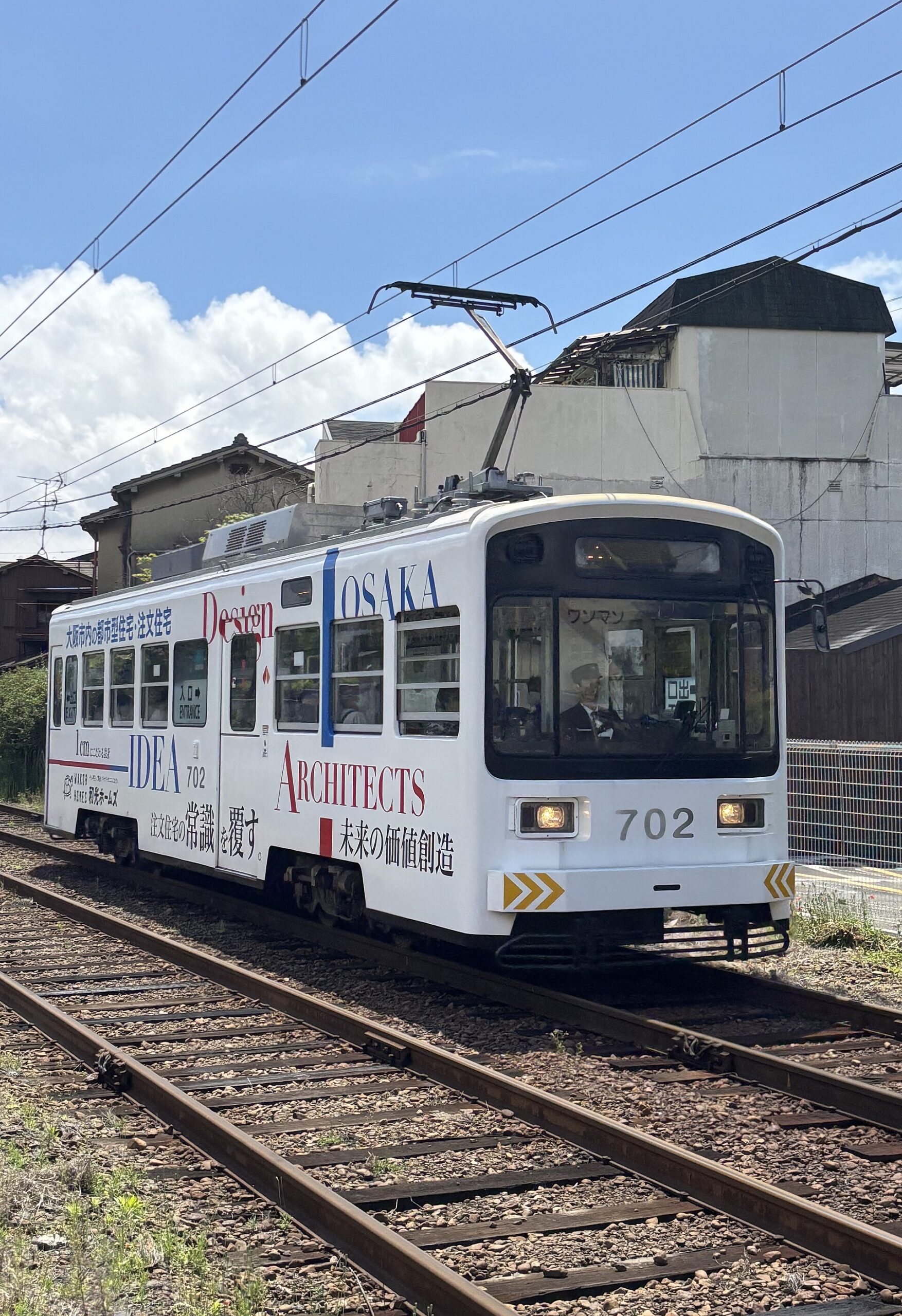
The Hankai Tramway is a street tramway. The Hankai Line runs from Ebisucho, by Shinsekai, to Hamadera-ekimae in Sakai, and the Uemachi Line from Tennoji-ekimae to Sumiyoshi (Good Luck Trip).
- Fare: one flat fare for any distance. Pay when you get off.
- IC cards: ICOCA, Suica, PASMO, PiTaPa and the other main cards work (Sakai Tourism Bureau).
- Stops to know: Shukuin for Rishō no Mori and Rikyu’s house; Myokokuji-mae for Densankan and the workshops.
- Look out: between Ayanocho and Goryomae the central strip of the main road is planted with seasonal flowers.
It is slower than the Nankai train, so use it to hop between Sakai stops rather than to get there from central Osaka.
A one-day Sakai Osaka route
| Time | Stop | Notes |
|---|---|---|
| 9:30 | Mozu Station, Visitor Center | 8K film; hire a bike |
| 10:00 | Nintoku tomb worship place and moat | Ride or walk part of the 2.8 km loop |
| 11:00 | Balloon or Sakai City Museum | Book the balloon online the night before |
| 13:00 | Sakai City Hall 21F | Free; 5 min from Sakai-higashi |
| 14:30 | Sakai Densankan and Knife Museum CUT | Closes at 17:00 |
| 15:30 | Sakai Rishō no Mori | Chair-style tea; last session 16:40 |
| 17:00 | Nankai Sakai Station | About 10 minutes back to Namba |
Avoid two days. On Mondays the museum and Japanese garden are shut. On the third Tuesday of the month, Densankan and the Rishō no Mori museums close. If ancient sites are your thing, pair Sakai Osaka with our guide to quiet temples in Nara on another day.
Sakai Osaka in late autumn and winter 2026–27
- November: ginkgo and zelkova colour in Daisen Park.
- 15 November and 20 December 2026: individual tatami tea-room lessons at Rishō no Mori.
- Winter: the balloon keeps flying, but wind stops it more often. Check the forecast on the day.
- 29 December–3 January: the Visitor Center and Densankan close; the free shuttle does not run on 1–3 January.
- Until 28 March 2027: free weekend shuttle bus between the tombs, Rishō no Mori and the port.
Know before you go
Book the balloon
Online booking opens 10 days ahead, is ¥200 cheaper and lets you board first.
Mind the calendar
Mondays and the third Tuesday close key sights. Go Wednesday to Sunday.
Bring ID for bikes
Bike hire needs a passport or other photo ID.
Knives fly in the hold
Pack any knife you buy in checked baggage.
Use the city hall
The free 21F lobby is open until 21:00, good for a sunset view.
Sakai Osaka FAQ
Is Sakai worth visiting from Osaka?
Yes, for a day. It has the UNESCO-listed Nintoku tomb, the Sen no Rikyu tea museum and Japan’s main professional knife industry, 10 to 15 minutes from Namba.
Can you go inside the Nintoku tomb?
No. It is an imperial mausoleum. You can walk the 2.8 km moat path, view it from the free City Hall 21F lobby, take the balloon, or watch the aerial film at the Visitor Center.
How much is the Sakai kofun balloon?
¥4,200 for adults and ¥3,000 for children aged 3 to 15, or ¥4,000 and ¥2,800 if booked online. Flights last about 15 minutes at about 100 m.
Is the Sakai City Hall observatory free?
Yes. The 21st-floor lobby is free and open 9:00 to 21:00 every day, 5 minutes from Sakai-higashi Station.
Where can I see how Sakai knives are made?
At the free Sakai Knife Museum CUT inside Sakai Densankan, or on a booked workshop visit such as Baba Hamono Seisakusho.
Can I do a tea ceremony in Sakai without booking?
Yes. The chair-style tea at Sakai Rishō no Mori runs daily from 10:00, costs ¥800 and needs no reservation for individuals.
Which station is best for the Mozu kofun?
JR Mozu on the Hanwa Line, about 11 minutes from Tennoji. Only local trains stop there.
Sources and how we checked
All facts in this Sakai Osaka guide were checked on 23 October 2026 against the linked sources: UNESCO, Sakai City, the Sakai Tourism & Convention Bureau, OSAKA-INFO, the Osaka Sakai Balloon, Sakai Rishō no Mori and Sakai Densankan. Workshop prices are listed in US dollars by the booking site and may change with exchange rates.
See Sakai with Japan Pro
Book Osaka and Sakai experiences, from craft workshops to guided days, with English support through Japan Pro.
Read next
Umeda Osaka Guide 2026: Sky Building, Grand Green Osaka and the Underground, Level by Level
Higashiyama Kyoto Guide 2026: Kiyomizu-dera to Yasaka in 6 Stops, Without the Crowds
Shinsekai Osaka Guide 2026: Tsutenkaku, Kushikatsu Rules and Spa World, Hour by Hour
 English
 Japanese
 Chinese (Taiwan)
 Chinese (China)
 Korean
 French
 Italian
 Thai