
Namba Osaka Guide 2026: 7 Streets to Eat, Drink and Shop, Street by Street
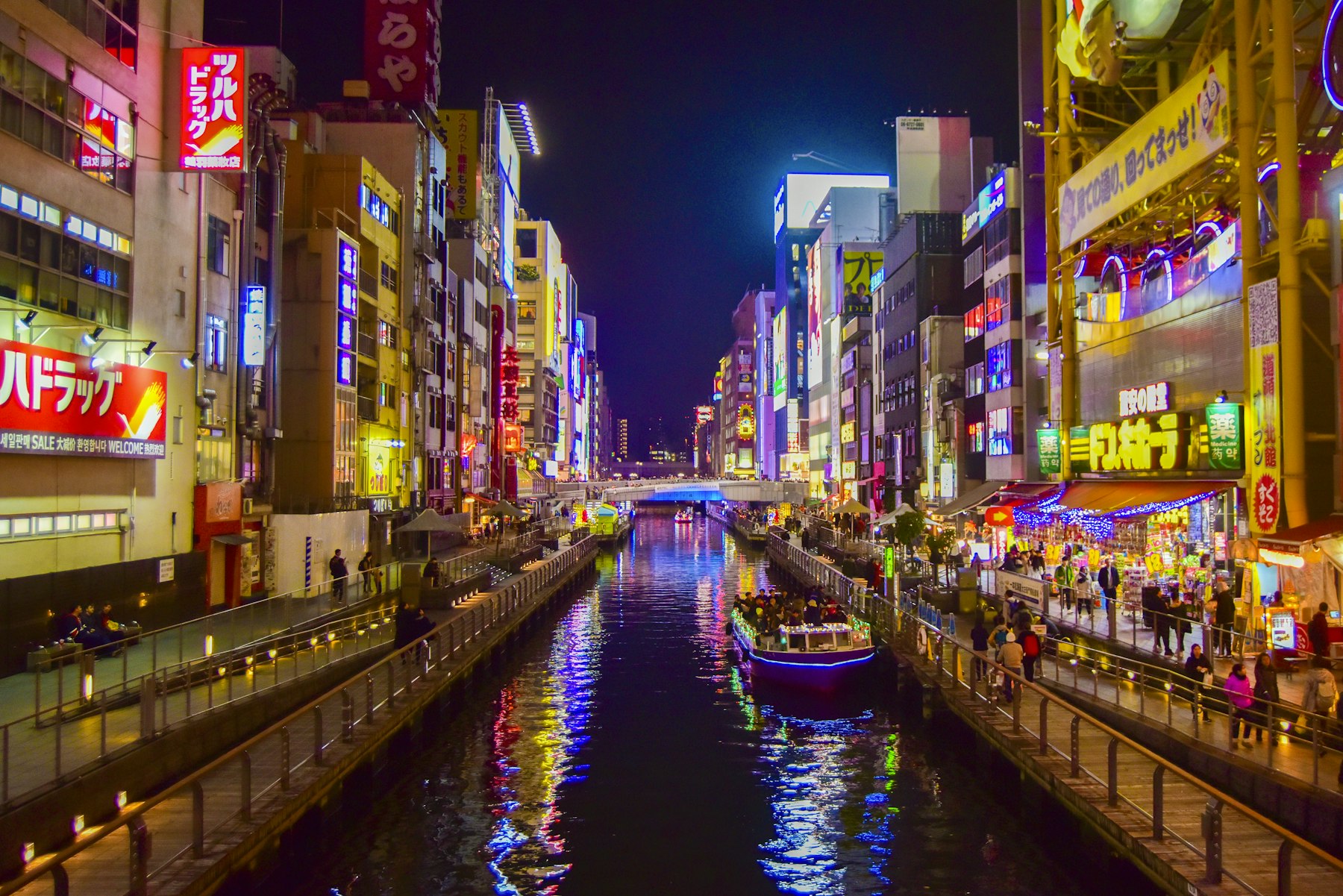
Namba is the south half of Osaka’s Minami district and the city’s best area for street food: takoyaki and okonomiyaki on Dotonbori, lantern-lit Hozenji Yokocho, chef-supply shops on Doguyasuji and seafood at Kuromon Market. Base yourself at Nankai Namba station and you can walk every street below in one long afternoon and evening, most of them within 10 minutes of each other.
This guide to Namba Osaka goes street by street, in a walking order that works, with named dishes, shops and 2026 prices. After the food you will find the practical part: which Namba station to use, Rapi:t to the airport, safety on Dotonbori, and the Osaka accommodation tax.
4
Stations named Namba
¥700
Rapi:t Regular seat surcharge
580 m
Length of Kuromon Market
¥500
Two 551 Horai pork buns
How is Namba Osaka laid out, and what order should you walk it in?
Think of Namba as a rectangle. Dotonbori canal is the top edge. Nankai Namba station and Namba Parks sit at the bottom left, Kuromon Market and Den Den Town on the right, and Sennichimae’s side streets fill the middle.
| Order | Street | Go for | Best time |
|---|---|---|---|
| 1 | Kuromon Market | Seafood breakfast, fruit | Morning, before tour groups |
| 2 | Sennichimae Doguyasuji | Knives, plastic food samples | Late morning to afternoon |
| 3 | Den Den Town (Nipponbashi) | Anime, games, electronics | Afternoon |
| 4 | Namba Parks | Rooftop garden, a break | Late afternoon |
| 5 | Hozenji Yokocho | Old Osaka, Mizukake Fudo | Dusk |
| 6 | Dotonbori and Shinsaibashi-suji | Neon, takoyaki, okonomiyaki | After dark |
| 7 | Ura-Namba | Standing bars, izakayas | Late evening |
The order is not random. Kuromon is best early, Doguyasuji shops keep daytime hours, and Dotonbori is at its best once the signs are lit.
1. Kuromon Market: is it worth it, or just a tourist trap?
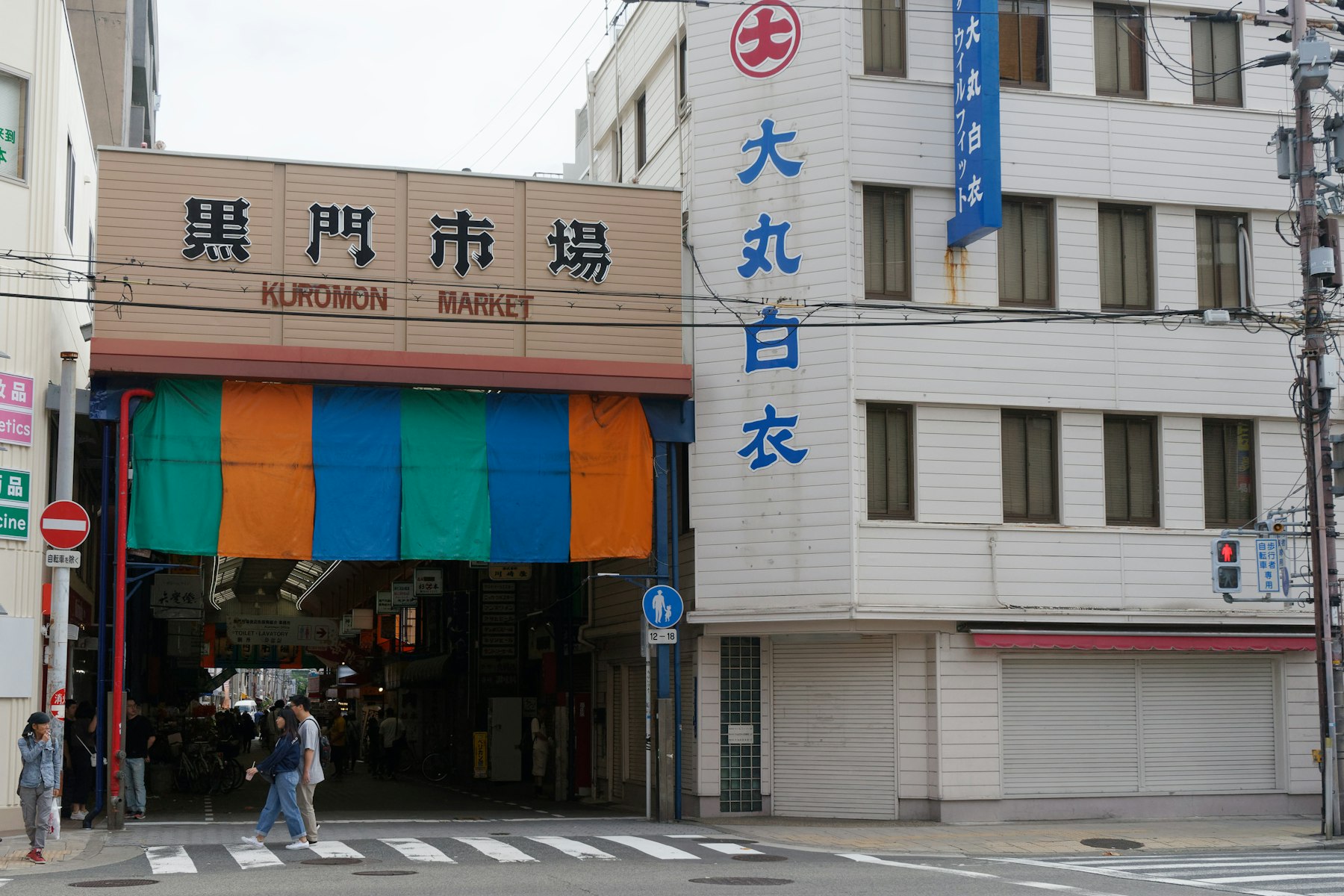
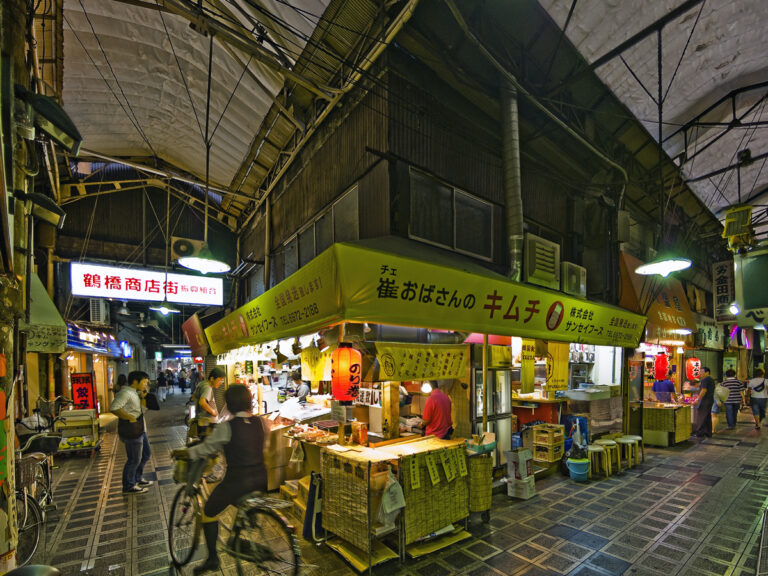
Kuromon Ichiba is a covered market about 580 m long with around 150 shops, at 2-4-1 Nipponbashi, Chuo-ku, per the market’s official site. It has fed Osaka’s kitchens since the early 1800s, when fish merchants traded outside the black gate (kuro-mon) of a temple that no longer stands.
Its reputation took a hit from around 2023. Japanese media and social posts reported tourist-facing prices such as four crab legs for ¥30,000, a single shrimp for ¥3,500, a raw oyster for ¥1,300 and a Kobe beef skewer for ¥4,000, and social media labelled it a place to avoid (summary of the coverage).
The crowds explain the prices. By 2017 the market saw 26,000–30,000 visitors on a weekday, 50–80% of them from overseas, and more than 150,000 a day at year-end in 2018. The market responded with a free rest area, a multilingual information centre and currency exchange, all still useful.
Our verdict: go, but shop like a local. Hours vary by shop, and many close on Sundays and holidays. Examples from the market directory: Kuromon Sanpei opens 8:00–20:00 every day, and Kuromon Ichiba MARU 10:00–17:30.
- Check the price per piece before anyone cooks it. Seafood priced by weight can turn a skewer into a ¥5,000 snack.
- Buy fruit, pickles and tamagoyaki, which are still sensibly priced, and skip the “wagyu skewer” stands.
- Eat at the stall or in the rest area. Don’t walk the narrow aisles holding a dripping skewer.
- Dietary needs: the official directory tags halal, vegetarian and vegan shops, so check it before you go.
- Nearest station: Nippombashi (Sakaisuji and Sennichimae lines, Kintetsu), a few minutes’ walk.
2. Sennichimae Doguyasuji: what can you buy there?
Doguyasuji is a covered arcade of restaurant-supply shops: knives, pots, takoyaki pans, lacquerware, noren curtains, chef’s uniforms and the plastic food samples you see in every Japanese restaurant window. It is a 3-minute walk from Nankai Namba or the Midosuji Line, and 5 minutes from Nippombashi, per the shopping street association.
- Best buys: a Japanese kitchen knife (ask about engraving), a cast-iron takoyaki pan, and food-sample fridge magnets as cheap gifts.
- Rules for knives: pack them in checked luggage, never your carry-on.
- Timing: the street is pedestrian-only from 9:00 to 1:00. Shops keep trade hours, so come between late morning and early evening. The 41st Doguyasuji Matsuri street festival ran on 10 October 2026.
- Tax-free: ask before you pay and bring your passport; and read our Japan tax refund guide first.
3. Den Den Town: is it Osaka’s Akihabara?
Yes, on a smaller scale. Den Den Town is the Nipponbashi electronics district east of Nankai Namba, along Sakaisuji avenue. These days it runs on anime goods, retro video games, figures, card games and maid cafés.
It is a 10-minute walk from Doguyasuji, so pair them. It is quieter and easier to browse than Tokyo’s version; if you have done Akihabara, expect fewer towers and more single-floor specialists.
4. Namba Parks: why stop here?
Namba Parks is a shopping complex built straight onto Nankai Namba station, with a terraced rooftop garden that climbs from the 2nd to the 9th floor. The Parks Garden is free and open 10:00–24:00, with about 11,500 m² of planting, per Namba Parks.
| Namba Parks | Details (2026) |
|---|---|
| Address | 2-10-70 Namba-naka, Naniwa-ku |
| Shops | 11:00–21:00 |
| Restaurants | 11:00–22:00 (some differ) |
| Parks Garden | 10:00–24:00, free |
| Walk from | Nankai Namba: direct; Midosuji Line: 7 min; Osaka-Namba (Kintetsu/Hanshin): 10 min; JR Namba: 15 min |
Use it as your mid-afternoon reset: benches, shade, toilets and a view back over Namba before the evening crowds. Source: Namba Parks access page.
5. Hozenji Yokocho: what is the moss-covered statue?
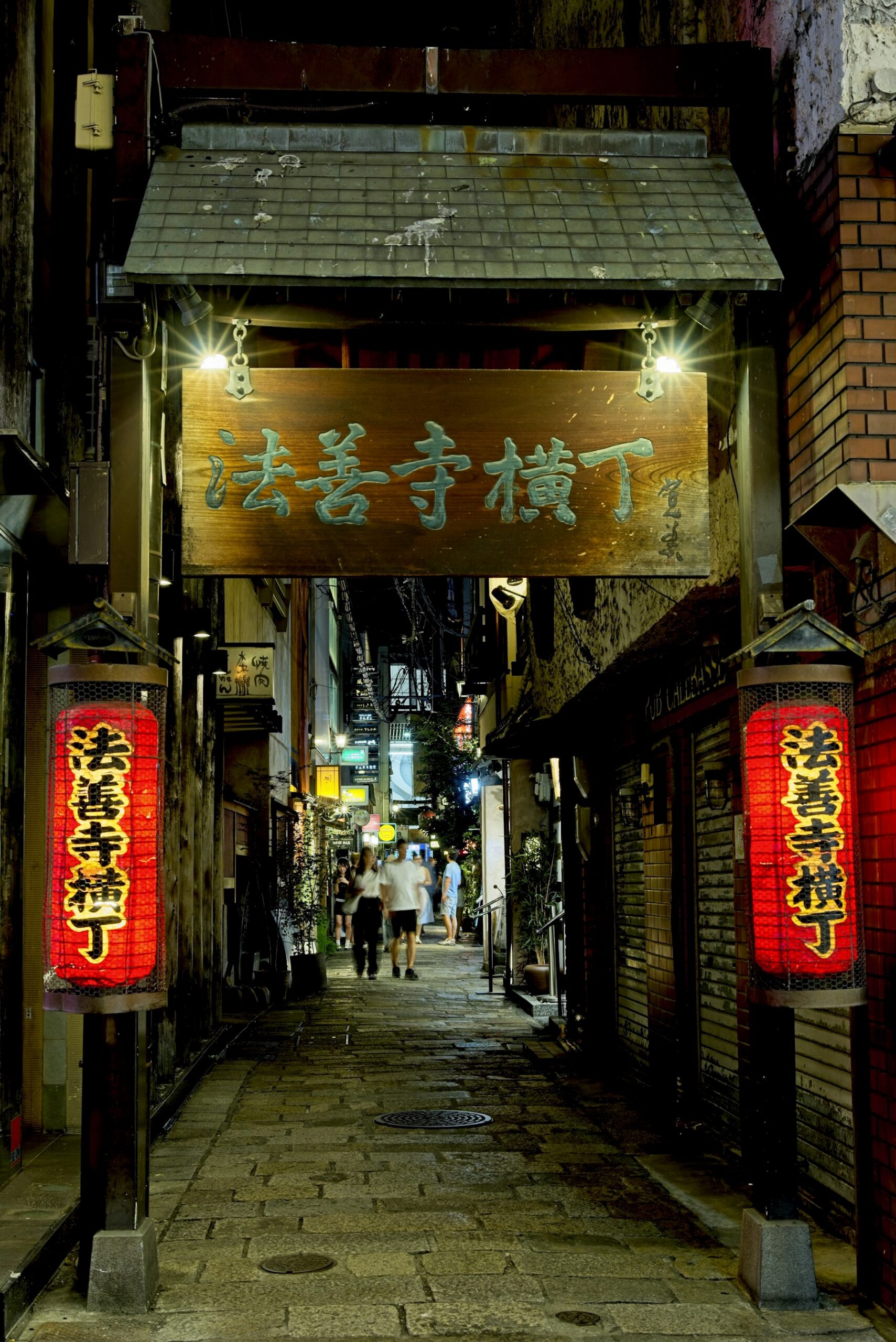
Hozenji Yokocho is a narrow stone-paved lane of old restaurants and bars just south of Dotonbori, running along the north side of Hozenji Temple. It became famous through Sakunosuke Oda’s novel Meoto Zenzai, and a sweet shop of the same name still serves zenzai (red-bean soup) in the alley.
The temple’s Mizukake Fudo statue is covered completely in green moss, because visitors splash it with water as they pray. It was the only thing at Hozenji to survive the March 1945 air raid. Ladle a little water over the statue, bow, and move on – it is a working place of prayer.
The alley burned in a 2002 fire and was rebuilt by 2004 in the same style, so the stone paving and lanterns are restored, not original. Come at dusk, when the lanterns are on and the after-work crowd arrives.
6. Dotonbori: what should you eat, and where?
Dotonbori is the canal-side strip of giant signs and food counters between Ebisubashi bridge and the Sennichimae area. The Glico running-man sign has been there since 1935; the current sixth version, an LED board, went up in October 2014. The canal itself was dug between 1612 and 1615.
| Dish | 어디에 | Price and hours |
|---|---|---|
| Takoyaki (octopus balls) | Kukuru Dotonbori main shop, 1-10-5 Dotonbori | Takeout 10:30–21:30 weekdays, 10:00–21:45 weekends; dine-in from 11:00 (10:30 weekends) to 20:30 |
| Okonomiyaki and yamaimo-yaki | Mizuno, 1-4-15 Dotonbori | 11:00–22:00 (L.O. 21:00); open daily since February 2026 |
| Butaman (pork buns) | 551 Horai, Namba main shop | ¥500 for 2, ¥1,000 for 4, ¥1,500 for 6 |
| Meibutsu curry (curry with raw egg) | Jiyuken, 3-1-34 Namba, Sennichimae | A Namba institution for over 100 years |
| Rikuro’s cheesecake | Rikuro Ojisan, Namba main store | Purchase limits apply at busy times |
Mizuno is the okonomiyaki queue to join: it stopped its Thursday closures in February 2026 and now opens every day, per its official site. For takoyaki, Kukuru puts a large piece of octopus in each ball; hours are from Kukuru. Jiyuken closed its Tenpozan branch on 27 September 2026, leaving the Namba main store as its only shop (Jiyuken).
A price tip: 551 Horai’s butaman at ¥250 each is the best-value hot snack in Namba. Eat them warm, straight from the bag.
Dotonbori was a theatre street long before it was a food street. The shogunate made it Osaka’s official entertainment district in 1621, and by 1662 it had six kabuki and five bunraku theatres. Almost all were lost in the Second World War; the Osaka Shochikuza survived.
To get away from the crush on the street, drop down to the Tonbori River Walk, the canal-side promenades on both banks built between 2004 and 2013. Sightseeing boats leave from several landings along it, which is the easiest way to see the signs without being jostled.
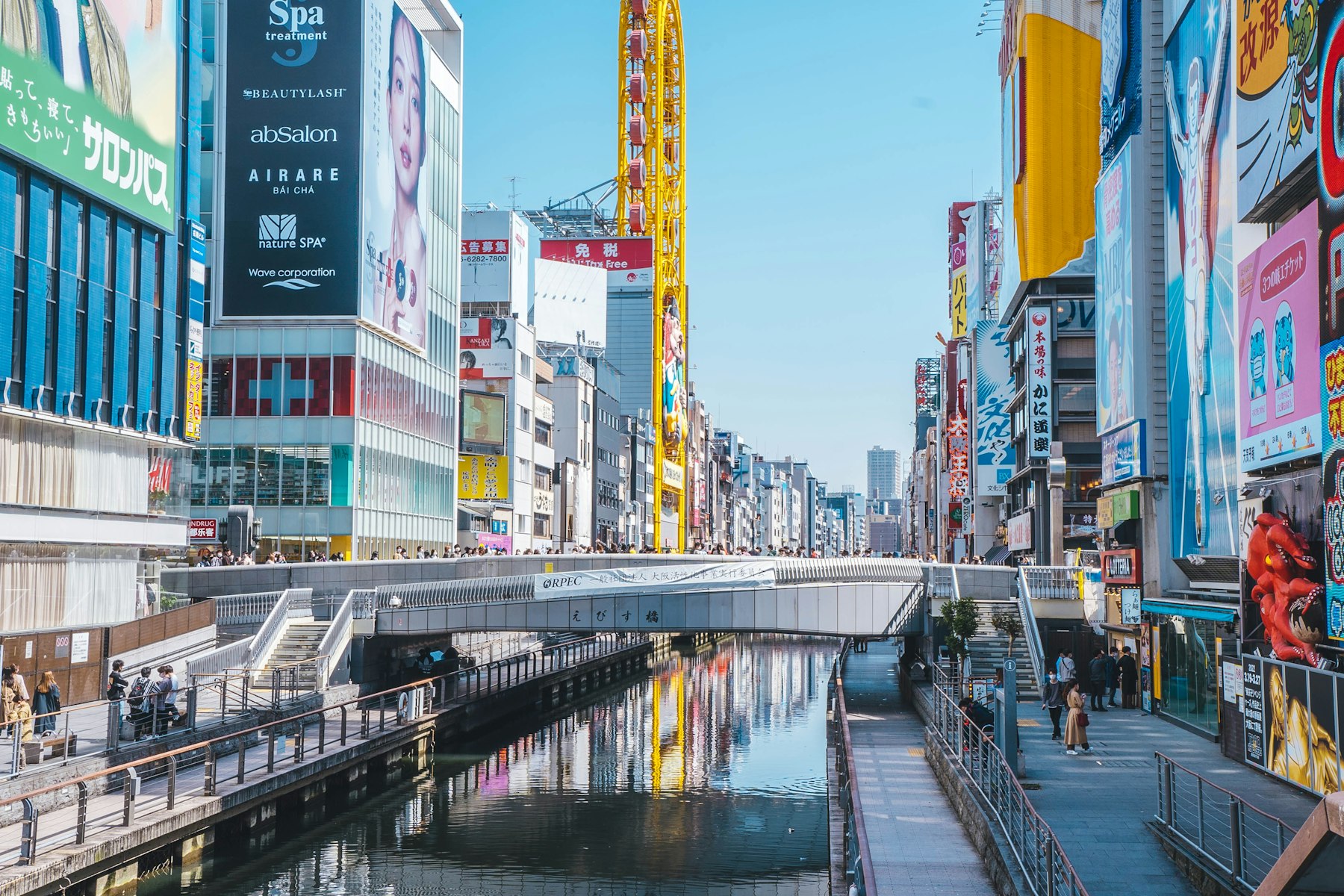
From Ebisubashi, the covered Shinsaibashi-suji arcade runs north for chain fashion, drugstores and souvenir shops. It is a useful rain route up to Shinsaibashi station when Dotonbori is too crowded.
7. Ura-Namba: where do locals drink?
Ura-Namba (“back Namba”) is the grid of small streets behind Nankai Namba station and towards Sennichimae. It is where Osaka’s office workers drink: standing bars, yakitori counters, oyster bars and tiny izakayas with 8–10 seats.
- Expect a table charge (otoshi) of a few hundred yen at sit-down izakayas. That is normal, not a scam.
- Standing bars (tachinomi) rarely charge one, and drinks are cheaper.
- Cash still matters in the smallest places. Carry ¥5,000 in notes.
- Smoking: some small bars still allow it inside. Outside, smoke only in designated smoking areas.
What are the best things to do in Namba in one evening?
If you only have one night, this is the order we would do it. It keeps you moving against the crowds and ends near the stations.
| Time | Do | Why then |
|---|---|---|
| 16:00 | Namba Parks rooftop garden | Daylight, free, quiet; open until midnight |
| 17:00 | Doguyasuji | Shops still open before they shut for the evening |
| 18:00 | Hozenji Yokocho and Mizukake Fudo | Lanterns on, alley not yet full |
| 19:00 | Dotonbori: takoyaki, okonomiyaki, the Glico sign | Signs lit; Mizuno takes last orders at 21:00 |
| 20:30 | Tonbori River Walk or a canal boat | The best view of the signs |
| 21:30 | Ura-Namba standing bars | Locals arrive after work and dinner |
Save Kuromon Market and Den Den Town for the next morning: Kuromon is at its freshest early, and most shops in both areas shut by evening. That split gives you the full list of things to do in Namba across a day and a half without rushing.
Which Namba station do you need?
Four stations carry the Namba name, run by Nankai, Osaka Metro, Kintetsu/Hanshin and JR, and Nippombashi sits one stop east. Underground malls link most of them, but JR Namba is about 15 minutes on foot from Namba Parks.
| 역 | Lines | Use it for |
|---|---|---|
| Nankai Namba (NK01) | Nankai Main, Koya and Airport lines | Kansai Airport (Rapi:t, Airport Express), Koyasan via the Koya Line, Namba Parks |
| Osaka Metro Namba | Midosuji (M20), Yotsubashi (Y15), Sennichimae (S16) | Umeda and Shin-Osaka (Midosuji), most of the city |
| Osaka-Namba | Kintetsu and Hanshin | Nara (Kintetsu) and Kobe (Hanshin) without changing |
| JR Namba | JR Yamatoji Line | Nara and Tennoji on JR; also the OCAT bus terminal |
| Nippombashi | Sakaisuji and Sennichimae lines, Kintetsu | Kuromon Market and Den Den Town |
Quick rules for Namba Osaka: arriving from the airport, stay at a hotel near Nankai Namba. Going to Shin-Osaka for the shinkansen, take the Midosuji Line. Going to Nara, take Kintetsu from Osaka-Namba; its station is in Kintetsu’s Nara city centre, closer to the deer park than JR Nara. Osaka-Namba was renamed from Kintetsu Namba in 2009; JR Namba was called Minatomachi until 1994.
Rapi:t or Airport Express from Nankai Namba?
| Rapi:t α / β | Airport Express | |
|---|---|---|
| Time to Kansai Airport | 34 min (α) / 37 min (β) | Longer, more stops |
| Surcharge on top of fare | Regular ¥700; Super Seat ¥910 | 없음 |
| Seats | All reserved | Unreserved commuter train |
| 최선은 | Big bags, peak hours, comfort | Light luggage, saving money |
The ¥700 and ¥910 figures are Rapi:t’s limited express charges for the whole route, added to the normal fare. Buying on board costs ¥300 more; booking through the Nankai ticketless service costs ¥150 less, per Nankai. Going on to Kyoto instead? See our 칸사이 공항에서 교토까지의 가이드.
What is changing at Namba after Expo 2025?
Expo 2025 Osaka is over, so ignore older guides built around Expo shuttles. The next big change for Namba Osaka is the Naniwasuji Line, a new rail link due by 2031, which will run from Osaka Station in a tunnel with new underground platforms at Namba and join the Nankai line to the south. When it opens, Namba will gain a direct line to Umeda’s Osaka Station and a second fast airport route.
Until then, the Midosuji Line remains the quickest way between Namba and Umeda, and Rapi:t the quickest to the airport.
Is Namba Osaka safe? Bridges, pickpockets and touts
Namba is safe by world standards, but it is Osaka’s best-known nightlife area, and the usual big-city rules apply.
- Don’t jump off Ebisubashi. After big sports wins, especially for the Hanshin Tigers, fans leap into the canal. Local legend blamed a Colonel Sanders statue thrown in during the 1985 celebrations for the Tigers’ long title drought, a curse considered broken in 2023. The water is still not rated safe for swimming, and a man has drowned after falling from the bridge (source).
- “Hikkake-bashi”: Japanese call Ebisubashi the “pick-up bridge”. Ignore anyone who approaches you there.
- Ignore touts. Street touts offering bars, all-you-can-drink deals or “girls bars” are the main way visitors end up with huge bills. Good places in Namba do not need anyone on the pavement.
- Pickpockets: keep phones and wallets in a front pocket in the Ebisubashi crush and on the Glico photo spot, where everyone is looking up.
- Late trains: Osaka Metro stops around midnight. Plan the last train or budget for a taxi.
What is the Osaka accommodation tax in 2026?
Osaka Prefecture charges an accommodation tax per person, per night, which your hotel adds to the bill. In November 2024 the prefectural assembly voted to lower the tax-free threshold to rooms under ¥5,000 per person per night and raise each band by up to ¥200, with the change taking effect in the second half of 2025.
Before the revision, rooms from ¥7,000 paid ¥100–300 a night. Under the new rules most mid-range hotels add a few hundred yen per person per night; your booking should show the exact figure, and hotels often collect it at check-in even if you prepaid the room online.
Know before you go
Kuromon first thing
Go before 10:00 and check every price tag. Fruit and pickles are still fair; wagyu skewers are not.
Pack knives in checked bags
Doguyasuji knives must go in the hold, never in carry-on.
Take the Midosuji Line north
For Umeda and Shin-Osaka, the Midosuji Line from Namba is fastest.
Rapi:t with big bags
All seats are reserved, and the Regular seat surcharge is ¥700. The Airport Express is cheaper.
Never follow a tout
Street touts lead to overpriced bars. Pick places yourself.
Splash, don't scrub
At Hozenji, ladle water over Mizukake Fudo gently; it is an active temple.
Namba Osaka FAQ
What are the best things to do in Namba Osaka?
Eat takoyaki and okonomiyaki on Dotonbori, walk Hozenji Yokocho at dusk, shop for knives on Sennichimae Doguyasuji, see Kuromon Market in the morning, rest in the Namba Parks rooftop garden and drink in Ura-Namba’s standing bars.
Is Namba or Umeda better to stay in?
Namba is better for food, nightlife and the airport (Rapi:t to Kansai Airport takes 34–37 minutes). Umeda is better for JR trains and day trips. The Midosuji Line links the two.
Is Kuromon Market a tourist trap?
Parts of it are. Since around 2023, some stalls have been criticised for very high prices on crab, shrimp and wagyu skewers. Fruit, pickles and tamagoyaki are still good value. Check prices before ordering.
How much is the Rapi:t from Namba to Kansai Airport?
The Rapi:t limited express charge is ¥700 for a Regular seat or ¥910 for a Super Seat, on top of the normal fare. Buying on board costs ¥300 more.
Which Namba station is for Nara?
Osaka-Namba, for Kintetsu trains to Kintetsu-Nara. JR Namba also serves Nara on the JR Yamatoji Line, but Kintetsu Nara is closer to the park.
Is Dotonbori open at night?
Yes. Most food counters stay open until 21:00–22:00, and bars and some ramen shops run much later. The signs are lit every evening.
Can you swim or jump into the Dotonbori canal?
No. The water is not rated safe for swimming, and a man has drowned after falling from Ebisubashi. The city discourages jumping.
출처 및 확인 방법
All facts in this Namba Osaka guide were checked on 18 October 2026 against the linked sources: Nankai Electric Railway, Namba Parks, Kuromon Market, the Doguyasuji shopping street association, Kansai Airport and the restaurants’ own websites. Prices and hours change, so confirm on the day.
Eat Osaka with a local
Book Namba food tours, izakaya crawls and Osaka experiences with English support through Japan Pro.
 English
 Japanese
 Chinese (Taiwan)
 Chinese (China)
 Korean
 French
 Italian
 Thai