
Japan with Kids: What Works, What Doesn’t (2026 Family Guide)
Japan with kids works very well: trains are clean and on time, food is easy, and under-6s ride JR trains free. What doesn’t work is the classic adult itinerary of long temple days, rush-hour trains and late dinners, plus a few rules that catch families out, from Shinkansen seat fares for toddlers to onsen age limits.
This is a practical guide, not a list of attractions. It covers the rules we could verify on 23 October 2026 with official sources, and the planning choices that make the biggest difference to a family trip.
무료
Under-6s on JR, up to 2 per adult, no own reserved seat
Half
JR fare for ages 6–11
Age 7
Guideline age for using the same-sex bath
4–11
Child ticket ages at Tokyo Disney and USJ
What works and what doesn’t in Japan with kids?
| Works well | Doesn’t work |
|---|---|
| Short train hops between sights, with a playground or park in between | Three temples back to back, in the heat, with a stroller on gravel |
| Theme parks and big museums booked in advance | Turning up at Disney or USJ on a Saturday without a ticket |
| Family restaurants, department store food halls, convenience stores | Tiny counter-only restaurants and late kaiseki dinners |
| Travelling after 9:30 on weekdays | Commuter trains on weekday mornings with a stroller and suitcases |
| One hotel base per 3–4 nights, luggage sent ahead | Changing hotels every night |
| Private or family baths at onsen inns | Assuming a 7-year-old can bathe with the other parent |
The rest of this guide takes each of those in turn: fares, strollers, baby rooms, food, theme parks, museums, hotels, onsen and jet lag.
How do child fares work on JR trains in Japan?
Children aged 6 to 11 pay half fare, and children under 6 ride free, with conditions. JR Central sets out the categories on its fares page: adults are 12 and over, children 6–11, infants 1–5, and babies under 1.
| Age | JR category | What they pay |
|---|---|---|
| Under 1 | Baby | 무료 |
| 1–5 | Infant | Free, up to two per paying adult or child |
| 6–11 | 어린이 | Half fare (and half price on JR passes) |
| 12+ | 성인 | Full fare. A 12-year-old still in elementary school pays child fare |
The catch is seats. An under-6 needs a child ticket if they use their own reserved seat, a Green Car seat or a bed, if they are the third infant with one adult, or if they travel alone. On a full Shinkansen, a toddler on your lap for two and a half hours is a long ride, so many parents simply buy the child fare and reserve a seat.
The age edges are tied to the Japanese school year: a 6-year-old who hasn’t started elementary school still counts as an infant. All the regional passes in our second time in Japan guide charge half for 6–11s, and our Japan Rail Pass verdict covers the national pass.
Can kids get their own IC card?
Yes. The child Welcome Suica charges child fares automatically on trains and buses. Buy it at JR East Travel Service Centers (Narita, Haneda Terminal 3, Tokyo, Shinjuku and others) or the Welcome Suica machines at the airports, and bring the child’s passport: staff check it. It lasts 28 days from purchase and can be used until 31 March after the child’s 12th birthday. Source: JR 동일본. More in our IC 카드 가이드.
Can you use a stroller on trains, the Shinkansen and at temples?
Yes on trains, sort of at temples. Strollers are generally used unfolded on city trains and subways (fold them when it is packed), and most big stations have lifts, though the lift is often at one end of a long platform. The Toei bus and tram FAQ asks you to strap the stroller in on buses and says you may be asked to fold it on a crowded tram; large twin strollers can be refused there.
Strollers on the Shinkansen
Good news: JR Central says its oversized-baggage reservation rule does not apply to strollers on the Tokaido, Sanyo and Kyushu Shinkansen. You can put a stroller on the luggage rack, in the deck baggage area, or behind the last row; you only need a reservation if you want to guarantee that last-row space. Big suitcases are different: over 160 cm total needs a reserved oversized-baggage seat, or you pay a ¥1,000 fee. Source: JR Central.
There are no dedicated stroller bays on board. JR East’s guidance, reported by SoraNews24, is to fold the stroller and keep babies on your lap where possible. Book the last row of the car if you can: it gives you the space behind the seats.
Strollers at temples and shrines
Expect gravel paths, steps and shoes-off halls where the stroller stays outside. Big sights like 후시미 이나리 have long staircases once you leave the lower gates. A baby carrier is the better tool for temple days; bring the stroller for city streets, malls and theme parks.
Where are baby rooms and nursing rooms in Japan?
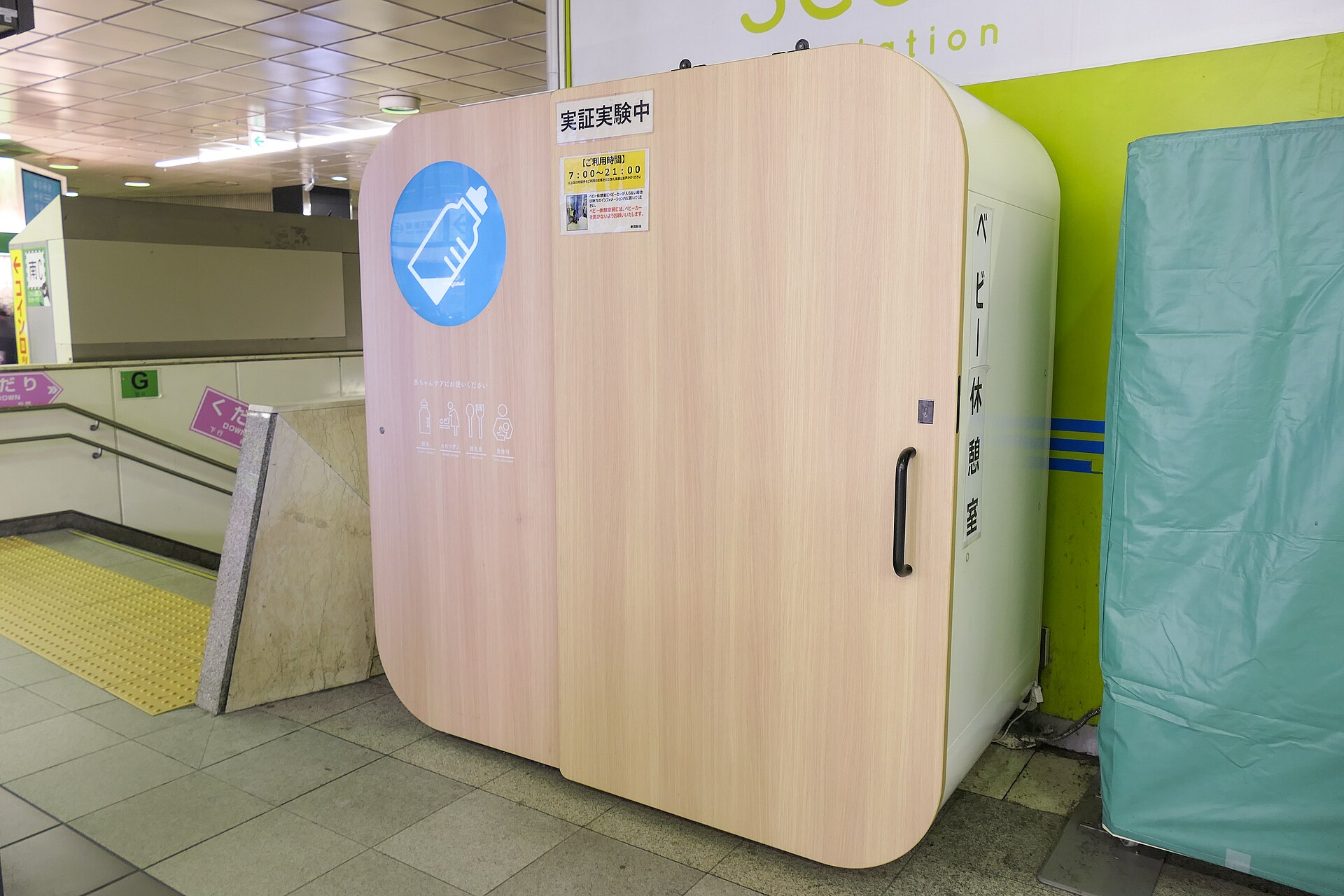
Almost everywhere you will spend time with a baby: department stores, big malls, airports, large stations and museums. Department stores are the most reliable, often with a baby lounge near the children’s floor that has changing tables, a nursing room and hot water for formula. Our Tokyo department store guide is useful for this alone.
Many local governments also register “Akachan no Eki” (baby stations): spaces anyone can use free for nappy changes or nursing, marked with a sticker at the entrance. Saitama Prefecture’s scheme page explains the idea; some station spaces are for rail users only. Look for the 授乳室 (nursing room) and おむつ替え (nappy change) signs.
Convenience stores sell nappies, wipes and baby food, but sizes and brands differ from home, so bring the first few days’ supply. Formula is sold at pharmacies and supermarkets.
What do kids eat in Japan?
More than you’d think. Family restaurant chains, department store restaurant floors and food courts usually have a kids’ menu, often an “okosama” plate with rice, a small hamburger or fried chicken and a toy. Udon, plain rice balls, gyoza, tamagoyaki and karaage are safe bets for picky eaters.
Small izakaya and counter restaurants are a harder sell: they are cramped, often smoky late at night, and not set up for high chairs. Eat early, around 17:30–18:00, and book where you can; our guide to 일본 식당 예약 가이드 explains how. For allergies, carry a written card in Japanese: packaged food labels list major allergens in Japanese, but restaurant staff may not know every ingredient.
USJ or Tokyo Disney: which theme park with kids?
Tokyo Disney Resort suits younger children; Universal Studios Japan suits older kids who are into Nintendo and Harry Potter. Both use date-based pricing and both sell out on weekends and school holidays.
- Tokyo Disneyland and DisneySea: children are 4–11, juniors 12–17, and under-4s go free. In November 2026 an adult 1-Day Passport costs ¥9,900 to ¥12,400 by date; child tickets start at ¥5,300. Source: Tokyo Disney Resort.
- Universal Studios Japan: child tickets (4–11) start at ¥5,500, and Super Nintendo World needs a timed entry on busy days. Full details, Express Pass prices and Nintendo tips are in our USJ tickets guide.
Go on a weekday, arrive before opening, and plan to leave by mid-afternoon with small children. A theme park day followed by an easy morning works better than two park days in a row.
Which museums and attractions do kids love in Japan?
The best museums for Japan with kids are hands-on and cheap. A few that are easy to fit in:
| 장소 | Why kids like it | Price and hours (checked 23 Oct 2026) |
|---|---|---|
| Cupnoodles Museum Yokohama | Design and make your own cup noodle at My Cupnoodles Factory (extra charge, same-day numbered tickets) | Adults ¥500, high-school age and under free; 10:00–18:00, closed Tuesdays (공식) |
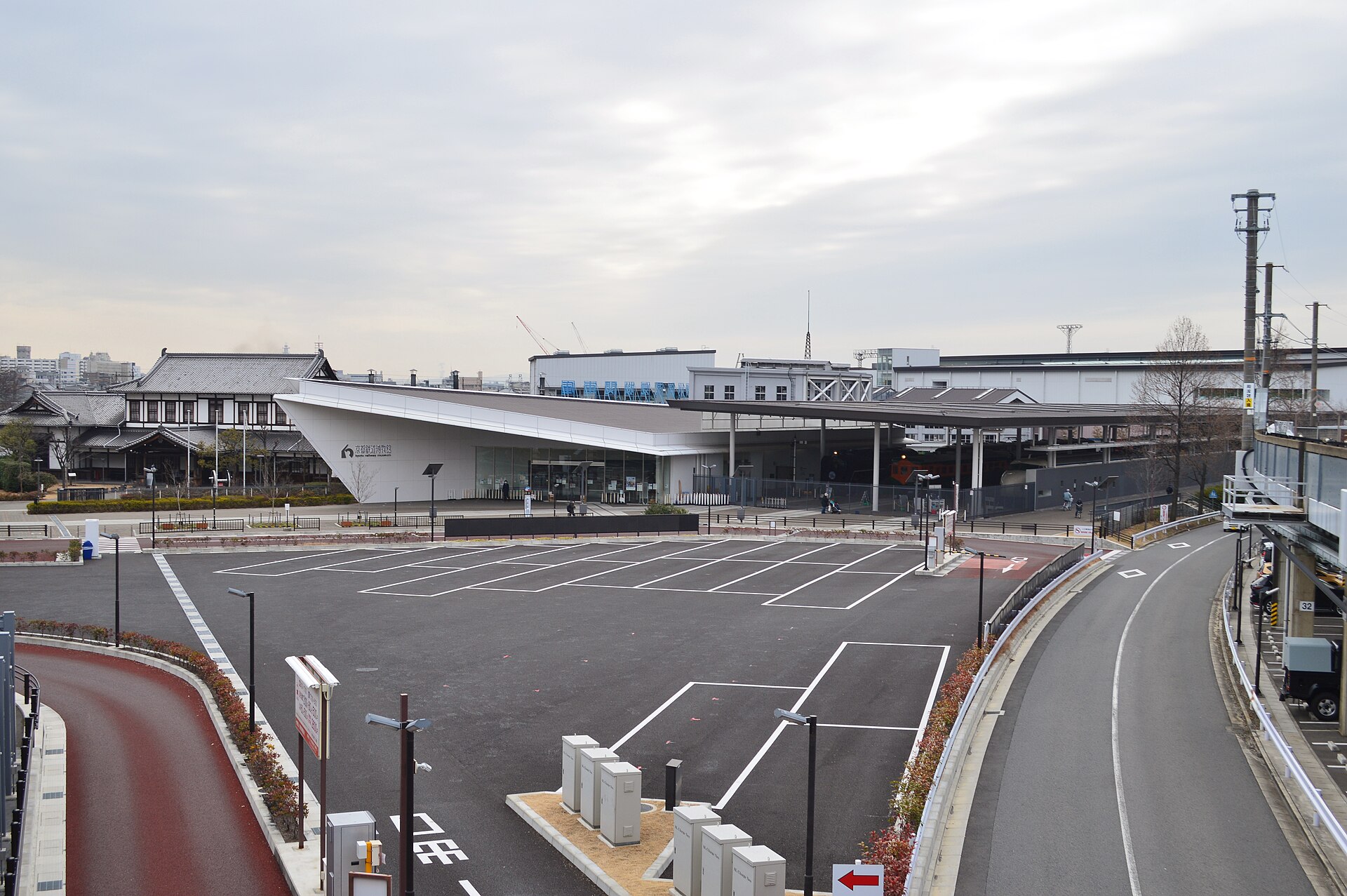
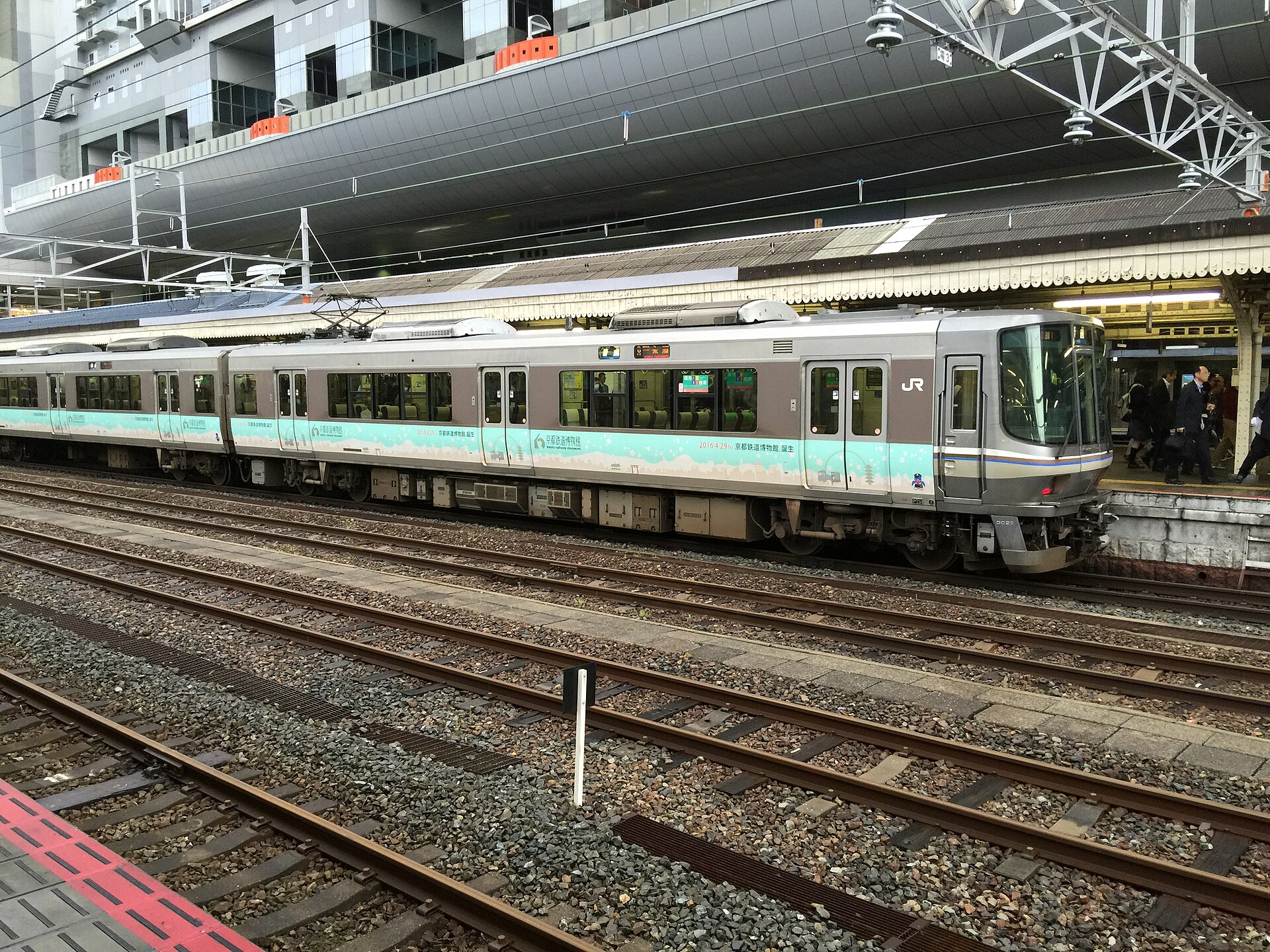
| Kyoto Railway Museum | Real Shinkansen and steam locomotives you can walk around | Adults ¥1,500, school kids ¥500, ages 3+ ¥200; 10:00–17:00, closed Wednesdays (공식) |
| Miraikan, Tokyo | Science museum with robots and a giant globe | Closed for refurbishment 1 Oct 2026–22 Apr 2027; then adults ¥630, under-18 ¥210, preschoolers free (공식) |
Aquariums are the other big win in any weather; see our biggest aquariums in Japan. For Totoro fans, book well ahead using our 지브리 파크 티켓 가이드. Tokyo’s 카사이 린카이 공원 has space to run, and our 비 오는 날 도쿄 목록 helps on wet days.
What hotel rooms work for families in Japan?
City hotel rooms are the tightest part of Japan with kids. Many business-hotel doubles fit two adults and a cot only just, so check the room size in square metres on the listing and look for rooms of 25 m² or more for a family of four. Twin rooms with a sofa bed, apartment hotels and “family” or Japanese-style rooms are the usual answers.
Many Japanese hotels and most ryokan price per person, not per room, and policies for children sharing a bed vary by hotel: some let preschoolers share free, some charge from a set age. Always enter the children’s ages when you book, or the rate can change at check-in.
A ryokan with a tatami room is often the easiest family stay of all: futons on the floor mean nobody falls out of bed, and dinner is served in the room or a private dining room. Our 료칸 가이드 explains what is included.
Can kids go in an onsen?
Yes, and onsen are one of the highlights of Japan with kids, but know the age rule. Public baths in Japan are split by sex, and young children can go in with a parent of the other sex. In December 2020 the national hygiene guideline for public baths lowered that limit from about age 10 to about age 7, and prefectures have adopted it into their own rules. Chiba explains the change on its prefecture page, and Tokyo’s advisory council also recommended age 7.
In practice: a 7-year-old boy travelling with his mother, or a girl with her father, may need to use the same-sex bath alone or a private bath. Rules for babies in nappies vary, and many baths don’t allow them, so ask first.
The easy fix is a family or private bath (kashikiri-buro) that you book by the hour, or a room with its own open-air bath. Our onsen etiquette guide covers the washing rules kids need to know, and the 하코네 1박 일정 is a family-friendly first onsen trip.
How do you handle jet lag with kids in Japan?
Japan is 7–9 hours ahead of Europe and 13–17 hours ahead of the US mainland, depending on the season, so expect a few days of early wake-ups or late nights.
- Plan nothing timed for the first two days. Use them for a park, a convenience store breakfast and an early night.
- Get outside in daylight in the morning; it helps everyone reset.
- Use the early wake-ups: parks and big shrines are quiet at 7:00.
- Keep the first theme park day for day three or later, when everyone can last until the evening.
What doesn’t work in Japan with kids?
Four things, mostly, on any trip to Japan with kids. Long temple days: two sights and a park beat five sights. Rush hour: avoid weekday trains before about 9:30 and the early-evening commute, especially with a stroller. Big luggage on the move: send suitcases ahead between hotels with a luggage-forwarding service at your hotel desk or a convenience store, and travel light.
And over-packing the itinerary. Kids remember the vending machines, the trains and the playgrounds as much as the sights. Build those in, and our 도쿄 첫 여행 가이드 will fill the rest.
떠나기 전에 알아 둘 것
Book the last row
On the Shinkansen, the last row of the car gives you the space behind the seats for a stroller or bags.
Bring the passport
You need the child's passport to buy a child Welcome Suica.
Carrier for temples
Use a baby carrier on temple and shrine days; gravel and steps defeat most strollers.
Eat early
Sit down by 18:00. Restaurants are calmer and more likely to have a table.
Ask for a private bath
Book a family bath at onsen inns if your kids are 7 or over and travelling with one parent.
Check Miraikan dates
Tokyo's science museum is closed until 22 April 2027 for refurbishment.
Japan with kids FAQ
Is Japan good for travelling with kids?
Yes. It is safe, clean and punctual, with good food for children and baby rooms in most department stores and stations. The hard parts are crowded rush-hour trains, long temple days and small hotel rooms.
Do children ride trains free in Japan?
Under-6s ride JR trains free, up to two per paying adult or child, as long as they don’t use their own reserved seat. Children 6–11 pay half fare.
Do toddlers need a Shinkansen ticket?
Not if they sit on your lap in an unreserved or shared seat. If you want a reserved seat for them, you pay the child fare.
Can I take a stroller on the Shinkansen?
Yes. JR Central’s oversized-baggage reservation rule does not apply to strollers. Fold it and store it on the rack, in the deck area or behind the last row.
Can children go to onsen in Japan?
Yes. Under the national guideline revised in December 2020, children from about age 7 should use the bath for their own sex. Younger children can go with either parent. Private family baths avoid the issue.
What age is a child ticket at Tokyo Disney and USJ?
Ages 4 to 11 at both. Under-4s enter free. Tokyo Disney charges junior prices for ages 12–17.
Are there baby changing rooms in Japan?
Yes, in department stores, malls, airports, large stations and museums. Look for the 授乳室 (nursing room) sign or a registered “Akachan no Eki” sticker.
Where can kids eat in Japan?
Family restaurants, department store restaurant floors and food courts have kids’ menus. Small izakaya and counter restaurants are harder with young children.
출처와 확인 방법
We checked the facts in this Japan with kids guide on 23 October 2026 against the linked official sources: JR Central for child fares and Shinkansen baggage rules, JR East for the child Welcome Suica, Toei Transportation for buses and trams, Tokyo Disney Resort for ticket prices, the museums’ own websites, and the Chiba and Tokyo governments for onsen age rules. Stroller guidance on the Shinkansen is JR East’s advice as reported by SoraNews24. Hotel and restaurant points are practical advice, not rules, and vary by venue.
Plan a family trip to Japan
Tell us your children's ages and Japan Pro will help you book family rooms, theme park tickets and kid-friendly experiences across Japan.
다음 글
Kamakura Back Streets 2026: 4 Quiet Routes Around Komachi-dori, With Fees and Hours
Second Time in Japan: 6 Routes for When You’ve Done Tokyo, Kyoto and Osaka (2026–27)
National Parks in Japan: All 35, Ranked by How Easy They Are to Reach (2026)
 English
 Japanese
 Chinese (Taiwan)
 Chinese (China)
 Korean
 French
 Italian
 Thai