
誰も撮らない東京の多摩川:渓谷、日本酒、1653年の堰(2026年)
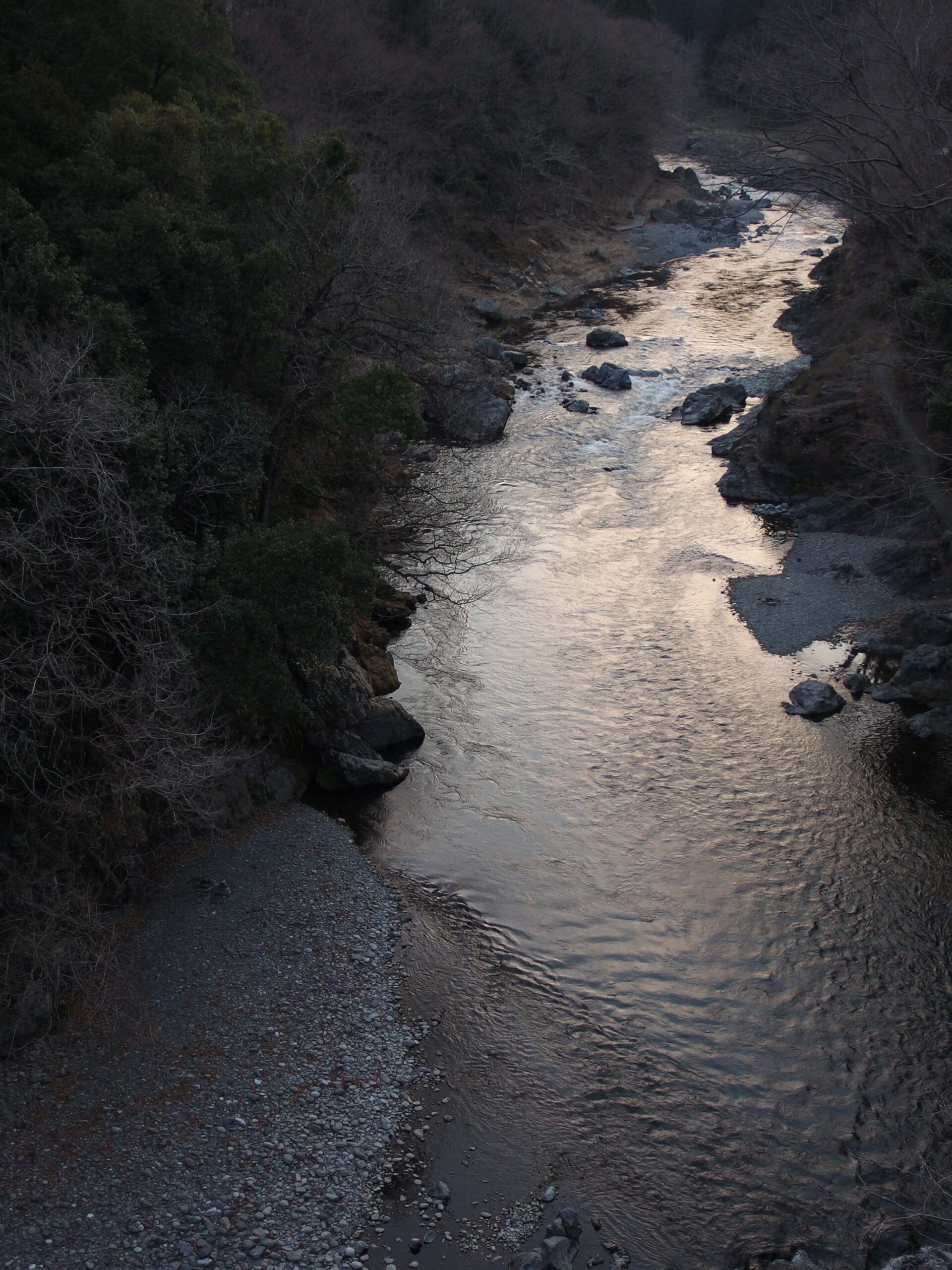
The Tama River side of Tokyo is the stretch of river between Hamura and Okutama, at the far western end of the JR Ome Line. Here the river most people know from the flat banks at Futako-Tamagawa runs through rock gorges, past a sake brewery and under suspension bridges, and it is all still inside Tokyo.
Most visitors to west Tokyo go up Mt Takao or ride the cable car on Mt Mitake and never walk down to the water. This guide stays at river level instead: the Mitake Gorge path, Hatonosu, Okutama town and the Edo-era weir at Hamura, with train times, 2026 prices and what changes in late autumn and winter 2026–27.
4 km
Mitake Gorge riverside
600円
Gyokudo Art Museum
700円
Sawanoi brewery tour
Early–late Nov
Usual Mitake leaf peak
Where is the Tama River side of Tokyo?
Think of the upper Tama River as a string of stations on one line. The JR Ome Line leaves the Chuo Line at Tachikawa, reaches Hamura, then Ome, and from Ome climbs into the hills to Okutama. Every stop worth your time between Ome and Okutama is a short walk from the platform.
The river changes character as you go up. At Hamura it is wide and tamed, with a 17th-century intake weir. By Sawai and Mitake it is a green, boulder-filled gorge. Past Hatonosu it narrows into cliffs, and at Okutama it meets the Nippara River below the mountains.
| Stop | Station (JR Ome Line) | What is there | おすすめ |
|---|---|---|---|
| Hamura | Hamura | Hamura Intake Weir, start of the Tamagawa Josui canal, spring tulips | History, cycling start |
| Ome | Ome | Ome Railway Park (reopened March 2026), old town | Train fans, a lunch stop |
| Mitake Gorge | Ikusabata, Sawai, Mitake | Riverside path, Sawanoi brewery, Gyokudo Art Museum | The best half-day walk |
| Hatonosu | Hatonosu, Shiromaru | Hatonosu Gorge, suspension bridge, Shiromaru Dam | Quiet gorge views |
| Okutama | Okutama | River confluence, onsen, buses to Lake Okutama | End of the line, hot bath |
Two stretches of the same river are already covered on this blog. For the city end, read our Futako-Tamagawa guide. For summit hikes from Mitake Station, including the cable car and the Rock Garden loop, see hiking near Tokyo. This page is about the bits in between, down at the water.
How do you get to the upper Tama River by train?
Take the JR Chuo Line west from Shinjuku and change to the Ome Line at Tachikawa or Ome. Allow about 1½ to 2 hours to Mitake or Okutama, depending on connections. IC cards work all the way, and no reservation is needed (Japan Web Magazine).
Since 15 March 2025, Chuo Line Rapid trains have had Green Cars, and the service runs on the Ome Line as far as Ome. You pay a Green Car supplement, and you get a reclining seat, a table and a power socket (JR East).
Beyond Ome the line gets sparse. On the October 2026 Saturday and holiday timetable, trains from Ome towards Okutama run roughly twice an hour, and only once in the 13:00 hour (JR East timetable). Check your return train before you start walking.
- Holiday Rapid Okutama: on Saturdays and holidays until 29 November 2026, the Holiday Rapid Okutama 85 leaves Ome at 9:38, Mitake at 10:01 and reaches Okutama at 10:19 (JR East).
- Planned cancellations: on 11 December 2026 and 14, 15, 18 and 19 January 2027, eight trains each way between Ome and Okutama are cancelled for engineering work, from about 8:37 to 13:57 out of Ome and 8:56 to 13:55 out of Okutama (Ome Tourism Association). Avoid those days.
- Rail day trips: for how this line compares with other easy escapes, see our 電車で行く東京発日帰り旅行.
Mitake Gorge: the best stretch of the Tama River to walk
If you only do one thing on the Tama River, walk Mitake Gorge. The river runs for about 4 km through the gorge, inside Chichibu-Tama-Kai National Park, and a path follows it between the Okutama Fishing Center and JR Ikusabata Station. The full course takes about 3 hours (Japan Tourism Agency).
You don’t have to do the whole thing. Ikusabata, Sawai and Mitake stations sit in a row along the gorge, so you can walk one or two sections and hop back on the train. The classic short version is Sawai to Mitake, past the brewery and the art museum.
Along the path you pass the Ozawa sake brewery, the Sawanoi riverside garden, Kanzanji temple, the Gyokudo Art Museum and Kajikaen. On the water you will see canoes running the rapids and stand-up paddleboards on the calmer pools (Japan Tourism Agency).
Sawanoi: sake by the river
Ozawa Shuzo brews Sawanoi sake at Sawai, and the mountain springs that feed this stretch of the river also supply water to local sake brewing (Japan Tourism Agency). Its riverside garden, Sawanoi-en, is open 10:00–17:00. Snacks are served 10:00–16:00 and noodles 11:00–16:00 (Sawanoi).
The menu is simple: yuba udon and soba, oden, grilled rice balls and sake manju, with curry udon only in winter. There is a covered shelter on the riverbank where you can eat what you buy. It is cash only: buy a ticket from the machine and hand it to the counter.
The brewery tour costs ¥700 and lasts about 40 minutes, tasting included, with yuzu cider for under-20s, who go free. It runs at 11:00 and 13:00 on weekdays and 11:00, 12:30 and 14:00 on weekends and holidays. Book online by the day before (Sawanoi). More on brewery visits in our authentic experiences guide.
- Sawanoi-en and the brewery tours are closed on Mondays (Tuesday if Monday is a holiday) and over New Year.
Gyokudo Art Museum
About 5 minutes’ walk from Mitake Station is the museum of the Japanese-style painter Kawai Gyokudo. It is open 10:00–17:00, or to 16:30 in some periods, with last entry 30 minutes before closing. Entry costs ¥600, cash, and it is closed on Mondays and over New Year (GO TOKYO).
Come in November for the big ginkgo in front of the museum. It is one of the recommended leaf spots in the gorge (Walkerplus autumn leaves).
Hatonosu and Shiromaru: the gorge most visitors skip
Three stops past Mitake, the river squeezes between rock walls at Hatonosu Gorge. It is free, open 24 hours, and a short walk from Hatonosu Station. A suspension bridge crosses the ravine and gives the best view down onto the water (GO TOKYO).
Walk upstream and you reach Shiromaru Dam. Next to it, Tokyo’s transport bureau runs Eco-tto Shiromaru, a free renewable-energy visitor centre, about 11 minutes on foot from Shiromaru Station or 9 minutes from Hatonosu (Bureau of Transportation, Tokyo).
It only opens on set days. In 2026 that is 1–3, 7–8 and 14–29 November (10:00–16:00), then 5–6, 12–13, 19–20 and 26–27 December (10:00–15:00). Parking is limited, so come by train.
Okutama town: where the river leaves the mountains
Okutama Station is the end of the line, and the town sits where the Nippara River joins the Tama. It is the base for the bigger mountains, but you can have a good river day here without hiking at all.
- Moegi no Yu: a day-use onsen about 10 minutes’ walk from the station. Adults pay ¥1,050 for three hours, and it is closed on Mondays. Hours are shorter from December to March (Jorudan onsen listing, updated March 2026). Read our onsen etiquette guide 。
- Lake Okutama: the reservoir behind Ogochi Dam, about 15 minutes by bus from Okutama Station. Get off at the Okutama-ko stop (Tokyo Waterworks).
- Riverside walks: the Hikawa Valley paths, small bridges and gravel bars around the confluence are all within a few minutes of the station (Japan Web Magazine).
A safety note. In May 2026 a climber was seriously injured by a bear on a forest road west of Okutama Station, and several ridge trails were closed (Tabi-mag, citing Okutama Town). Riverside paths near stations are a different world from remote ridges, but carry a bell, don’t walk alone at dusk, and check the town’s notices before you go.
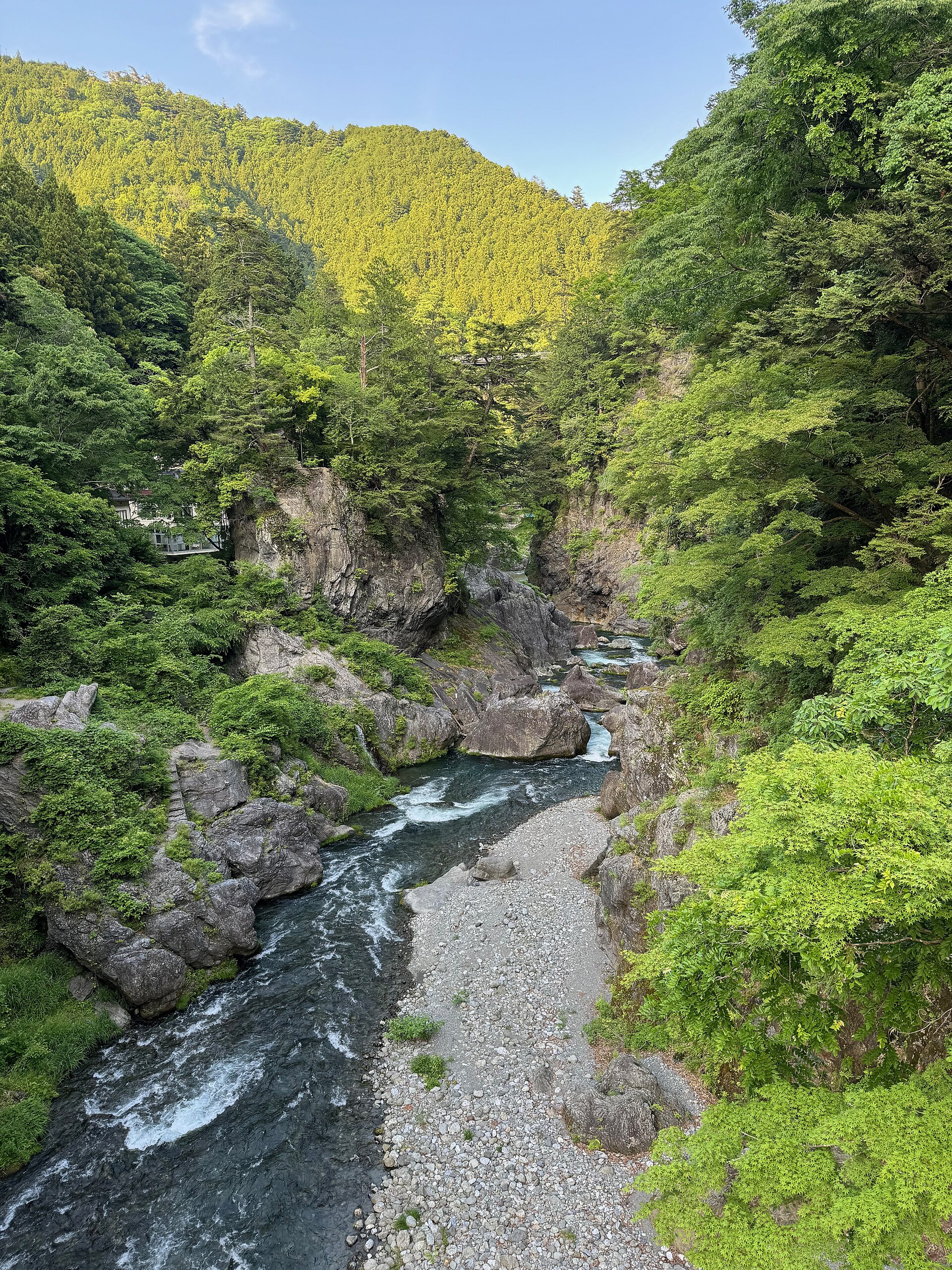
Hamura: where the Tama River starts feeding Tokyo
Hamura is the least scenic stop and the most interesting. Since 1653, the Hamura Intake Weir has diverted river water into the Tamagawa Josui canal, and it still feeds the Murayama and Yamaguchi reservoirs. About 2 tonnes per second are left to flow on down the river. It is about 10 minutes’ walk from Hamura Station (GO TOKYO).
The canal runs about 43 km from here to Yotsuya Okido in central Tokyo. The open stretch is a national historic site, and a statue of the Tamagawa brothers, who built it, has stood by the weir since 1958 (Tokyo Waterworks). Part of the weir is still made of pine logs, branches and gravel, so it can be pulled apart in floods.
Hamura is busiest in spring. In 2026 the cherry blossom festival ran from 28 March to 12 April and the tulip festival in the Negaramae paddy fields from 5 to 15 April (Hamura City). The 2027 dates are not yet announced.
Can you cycle the Tama River from Hamura?
Yes. The Tama River cycling road, known locally as Tamasai, starts at the Hamura weir and runs about 60 km downstream towards Haneda Airport, with paths on both banks. Tokyo’s planning bureau also signs a route called Tama River 50 km, about 53 km from Hamura to Daishibashi in Ota Ward (Mynavi News).
Going downstream is the easy direction. A realistic half-day ride is Hamura to Tachikawa. Fitter riders can follow the river all the way to Futako-Tamagawa and finish with dinner there.
Is Ome worth a stop on the way?
For train fans, yes. Ome Railway Park reopened on 21 March 2026 after a renovation that began in August 2023. It now has roofs over all its exhibits, three more trains and a new playground. Adults pay ¥500, and it is open 10:00–16:00, closed on Tuesdays (JR East).
The park is about 15 minutes’ walk from Ome Station. Ome is also where most trips up the valley change trains, so it costs you little to fit it in on the way back.
What is the Tama River like in late autumn and winter 2026–27?
Late autumn is the best time to come. In Mitake Gorge the leaves usually start turning in early November and peak from early to late November. On 22 October 2026 the trees were still green (ウォーカープラス). For more spots, see our Tokyo autumn leaves 2026 guide.
- Mitake Gorge autumn festival: in 2025 it ran from 25 October to 24 November. The 2026 dates were not yet announced when we checked (ウォーカープラス).
- Guided nature walk: a Japanese-language walk through the gorge runs on Friday 13 November 2026, 10:00–14:00, from Sawai Station. It costs ¥5,000 with lunch and entry, for up to 20 people, and you book by 6 November (Ome Tourism Association).
- Winter: the gorge path stays open and is very quiet. Eco-tto Shiromaru closes at 15:00 in December, Moegi no Yu shortens its hours from December, and Sawanoi adds curry udon to the menu.
- Avoid: the train cancellation days (11 December 2026; 14, 15, 18 and 19 January 2027). On Sunday 21 February 2027 the Ome Marathon fills Ome with runners (Ome Tourism Association).
Two easy river days from central Tokyo
| プラン | Route | Time on foot | Costs (2026) |
|---|---|---|---|
| Gorge and sake | Sawai Station → Sawanoi-en and brewery tour → riverside path → Gyokudo Art Museum → Mitake Station | About 1–1.5 hours, plus stops | Tour ¥700, museum ¥600 |
| Gorges to onsen | Hatonosu Station → Hatonosu Gorge → Shiromaru Dam → train to Okutama → Moegi no Yu | About 1 hour, plus stops | Eco-tto free, onsen ¥1,050 |
| History and bike | Hamura Station → Hamura weir → ride the cycling road downstream | Ride as far as you like | Weir free |
出発前に知っておきたいこと
Check trains back
Beyond Ome, trains can be 30–60 minutes apart. Note your return train before you start walking.
Bring cash
Sawanoi-en and the Gyokudo Art Museum are cash only.
月曜に注意
Sawanoi-en, the brewery tour, the Gyokudo Art Museum and Moegi no Yu all close on Mondays.
Shoes with grip
The gorge path has rock steps and can be muddy and slippery after rain.
Bears are real
Carry a bell, don't hike alone, and read Okutama Town's notices before heading off the river path.
平日に行く
November weekends are busy on the Ome Line. Weekdays in the gorge are almost empty.
Tama River Tokyo FAQ
How long does it take to get to the Tama River gorges from Shinjuku?
Allow about 1½ to 2 hours on the JR Chuo and Ome lines to Mitake or Okutama, with a change at Tachikawa or Ome. IC cards work and no reservations are needed.
How long is the Mitake Gorge walking path?
The Tama River runs about 4 km through Mitake Gorge. The full riverside course between the Okutama Fishing Center and Ikusabata Station takes about 3 hours, but you can do short sections between Ikusabata, Sawai and Mitake stations.
Can you visit the Sawanoi sake brewery without speaking Japanese?
Yes, you can book the ¥700 tour online by the day before, and the riverside garden needs no booking. The tour page does not say tours are run in English.
When do the autumn leaves peak on the Tama River?
In Mitake Gorge the leaves usually peak from early to late November. On 22 October 2026 they were still green.
Can you swim or raft on the river at Okutama?
Rafting is the safer way onto the water. Several companies run guided trips, mainly from April to October, with equipment and a safety briefing included. The river rises fast after rain, so keep to the paths in autumn and winter.
Are there bears in Okutama?
Yes, Asiatic black bears live in the Okutama mountains. In May 2026 a climber was injured on a forest road near Okutama. Carry a bell and check Okutama Town’s notices before you go.
Where does the Tama River cycling road start?
At the Hamura Intake Weir, about 10 minutes’ walk from Hamura Station. From there, paths follow the river about 60 km downstream towards Haneda.
出典と確認方法
All prices, opening hours, train times and dates on this page were checked on 23 October 2026 against the linked official pages: JR East, the Ome Tourism Association, Sawanoi (Ozawa Shuzo), GO TOKYO, the Japan Tourism Agency, Tokyo Waterworks, the Tokyo Bureau of Transportation and Hamura City. A few details come from news and listing sites, which we link. Riverside paths can close after storms, so check the day before.
Plan your west Tokyo day
Want a guide, a sake tasting or a rafting trip in west Tokyo? Japan Pro can book it for you.
 English
 Japanese
 Chinese (Taiwan)
 Chinese (China)
 Korean
 French
 Italian
 Thai