
Fushimi Inari Guide 2026: Climb Times, Crowds, Rules and the Sake District
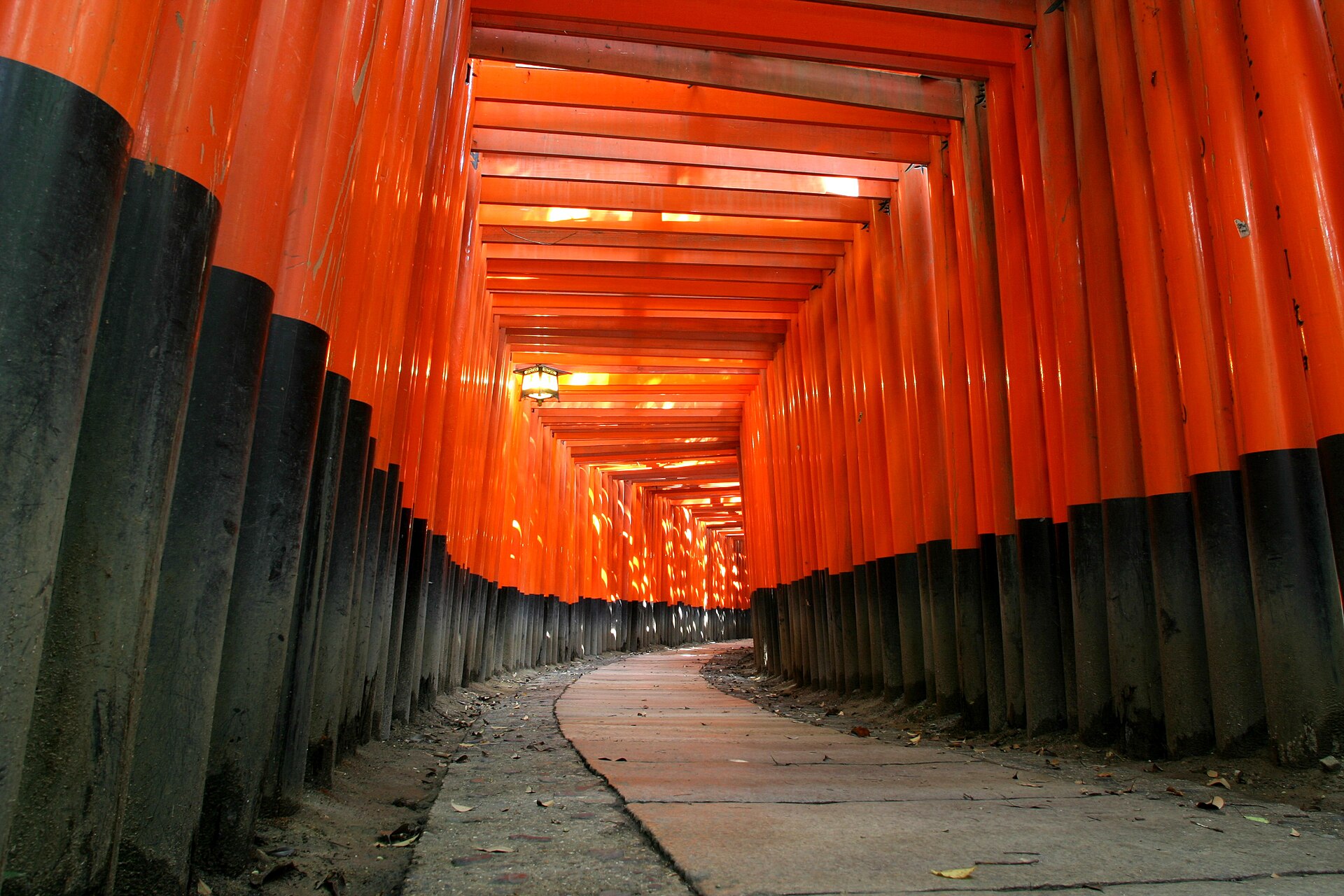
Fushimi Inari takes 30–45 minutes to climb to the Yotsutsuji viewpoint and 2–3 hours for the full loop over the 233 m summit, and it is free and open around the clock. Go before 8am or after dark, then ride the Keihan line south to Fushimi-Momoyama for sake tasting, canal boats and the Teradaya inn: the two halves of Fushimi fit neatly into one day.
Most visitors see the gates, turn round and leave Fushimi. That misses the better half of the ward. This guide is built as a day plan: the shrine in the morning, the old port town in the afternoon, with 2026 prices, boat dates and the shrine’s own rules, checked between 19 and 21 October 2026.
Free, 24h
Fushimi Inari entry
2–3 hrs
Full mountain loop
¥600
Gekkeikan museum (20+)
¥1,900
Jikkokubune boat, adult
How do you fit Fushimi Inari and the sake district into one day?
Treat Fushimi as two stops on the same railway. Fushimi Inari sits at the north end; the brewery quarter around Chushojima and Fushimi-Momoyama is a few stops south on the Keihan Main Line. You do not need to go back to central Kyoto in between.
Here is the order that works on a weekday in autumn, when the boats run every day. Adjust the start if you are a night owl: the shrine never closes, but the museum and boats do.
| Time | Where | Why then |
|---|---|---|
| 7:00 | Arrive at JR Inari or Keihan Fushimi-Inari | The gates are at their quietest before tour groups arrive |
| 7:15–9:45 | Climb to Yotsutsuji, or do the full summit loop | Cool air, empty Senbon Torii, time to stop at Okusha |
| 10:00 | Keihan local train south to Chushojima | Leaves the shrine just as crowds build |
| 10:30–11:30 | Gekkeikan Okura Sake Museum | Opens 9:30; tasting included for adults |
| 11:40 | Jikkokubune boat (booked ahead) | About 50 minutes on the canal |
| 13:00 | Lunch in the brewery quarter | Kizakura Kappa Country is a few minutes’ walk |
| 14:30 | Teradaya | Last entry 15:40 |
Two things break this plan: Mondays outside the peak months, when the boats do not run, and the four autumn days in 2026 when Gekkeikan cuts its hours (below). Check both before you fix a date.
How long does it take to climb Fushimi Inari?
The mountain behind the shrine, Inariyama, is 233 m high and the whole of it counts as shrine grounds, according to the shrine’s official English site. You do not have to reach the top. Most people turn at Yotsutsuji, a crossroads with a view over south Kyoto.
| Turnaround point | Time from the main hall | What you get |
|---|---|---|
| Senbon Torii and Okusha Hohaisho | The first stretch above the main hall, well short of Yotsutsuji | The famous double tunnel of gates and the “heavy-light” stones |
| Yotsutsuji crossroads | 30–45 minutes up (japan-guide.com) | City view, rest stops, the point where crowds drop off |
| Full loop over the summit | 2–3 hours return (japan-guide.com); about 3 hours and 5 km at an easy pace (Inside Kyoto) | Every peak shrine and the quietest stretch of gates |
Times are from japan-guide.com e Inside Kyoto, the two most consistent published sources; the shrine itself does not publish a hiking time. The path is stone steps almost all the way, so add time if you are slow on stairs.
What is worth stopping for on the way up?
- Romon gate: the big two-storey gate at the bottom, donated in 1589 by Toyotomi Hideyoshi (japan-guide.com).
- Okusha Hohaisho: the prayer hall at the end of Senbon Torii. In its back right-hand corner are the omokaru-ishi stone lanterns. Make a wish and lift the top stone; if it feels lighter than you expected, the wish is likely to come true, says the shrine.
- Kumatakasha and Shin-ike pond: local belief says that if you are looking for someone who is missing, you clap at the pond and the echo comes back from their direction (shrine page).
- Otsuka stones: more than ten thousand small stone monuments carved with deity names cover the upper slopes. They are what makes the top half feel different from the gate tunnels.
If you want the theory of why the gates are there, and quieter torii shrines elsewhere in Japan, we cover that in our guide to red torii gates. This page sticks to the practical side of the climb.
When is Fushimi Inari least crowded?
Early morning and after dark. The shrine has no gates or tickets, so you can walk in at 6am or 10pm. Kyoto’s tourism association has warned that the Fushimi Inari area is “experiencing heavy crowding” and points visitors to its Kyoto Travel Congestion Forecast.
That forecast is the most useful tool most guides never mention. It rates Fushimi-Inari Taisha on a 5-point scale for every hour from 6:00 to 23:00, lets you choose sunny, rainy or heavy-rain conditions, and links to a live camera. The Fushimi page was last updated on 13 October 2026.
| Time slot | What to expect | Tip |
|---|---|---|
| Before 8:00 | Quietest daylight window | Best for photos in the lower tunnels |
| Late morning to mid-afternoon | Busiest; queues at Senbon Torii and at the omokaru stones (Inside Kyoto) | Keep climbing: crowds thin above Yotsutsuji |
| After dusk | Quiet; upper paths are partly lit | Bring a torch and do not go above Yotsutsuji alone |
| 1–3 January | Peak hatsumode crowds | Avoid unless you want the New Year scene |
Rain is worth planning for rather than avoiding: the forecast lets you compare a sunny and a rainy day for the same hour, and long stretches of the path run under the gates. Wear shoes with grip, because stone steps get slippery when wet.
What are the rules at Fushimi Inari?
Since 1 January 2022 the shrine has posted a list of 17 prohibited behaviours on its Request for All Visitors page. Staff will ask you to stop, and to leave if you do not. These are the ones visitors most often break:
| Rule | What it means in practice |
|---|---|
| No eating or drinking outside marked rest areas | This includes eating while walking or standing. Food stalls are outside the grounds; eat there or at a teahouse. |
| Do not block narrow paths while photographing or filming | Step aside in the gate tunnels. Long setups at Senbon Torii are exactly what this targets. |
| No commercial photography or filming in restricted areas | Paid shoots need permission from the shrine. |
| No wedding dresses or costumes unsuitable for worship | Rented kimono is fine; cosplay and wedding shoots are not. |
| No drones | Applies to the whole precinct, which is the whole mountain. |
| No sitting on the ground or shouting | Rest on benches at the teahouses on the way up. |
| Do not put things on lanterns or damage gates and trees | No coins on top of lanterns, no carving names. |
| No pets (guide and assistance dogs excepted) | Leave the dog at the hotel. |
| No smoking or fires; take your rubbish home | There are very few bins on the mountain. |
The other requests cover staying out of fenced and restricted areas, not feeding wild animals, not leaving strollers outside marked areas, and not using shrine parking unless you are visiting.
Which station is best for Fushimi Inari?
JR Inari Station on the Nara Line is right outside the shrine and two stops (about five minutes) from Kyoto Station, according to the shrine’s access page. Not every Nara Line train stops there, so take a local. Keihan Fushimi-Inari Station is a 5-minute walk west of the shrine, and the city bus stop Inari Taisha-mae (route Minami 5) is 7 minutes away.
Use Keihan if you are coming from Gion. Our Gion-Shijo station guide explains that station’s exits. Keihan is also the line you need afterwards, because it runs straight on to the sake district. If you are arriving from the airport first, see Kansai Airport to Kyoto.
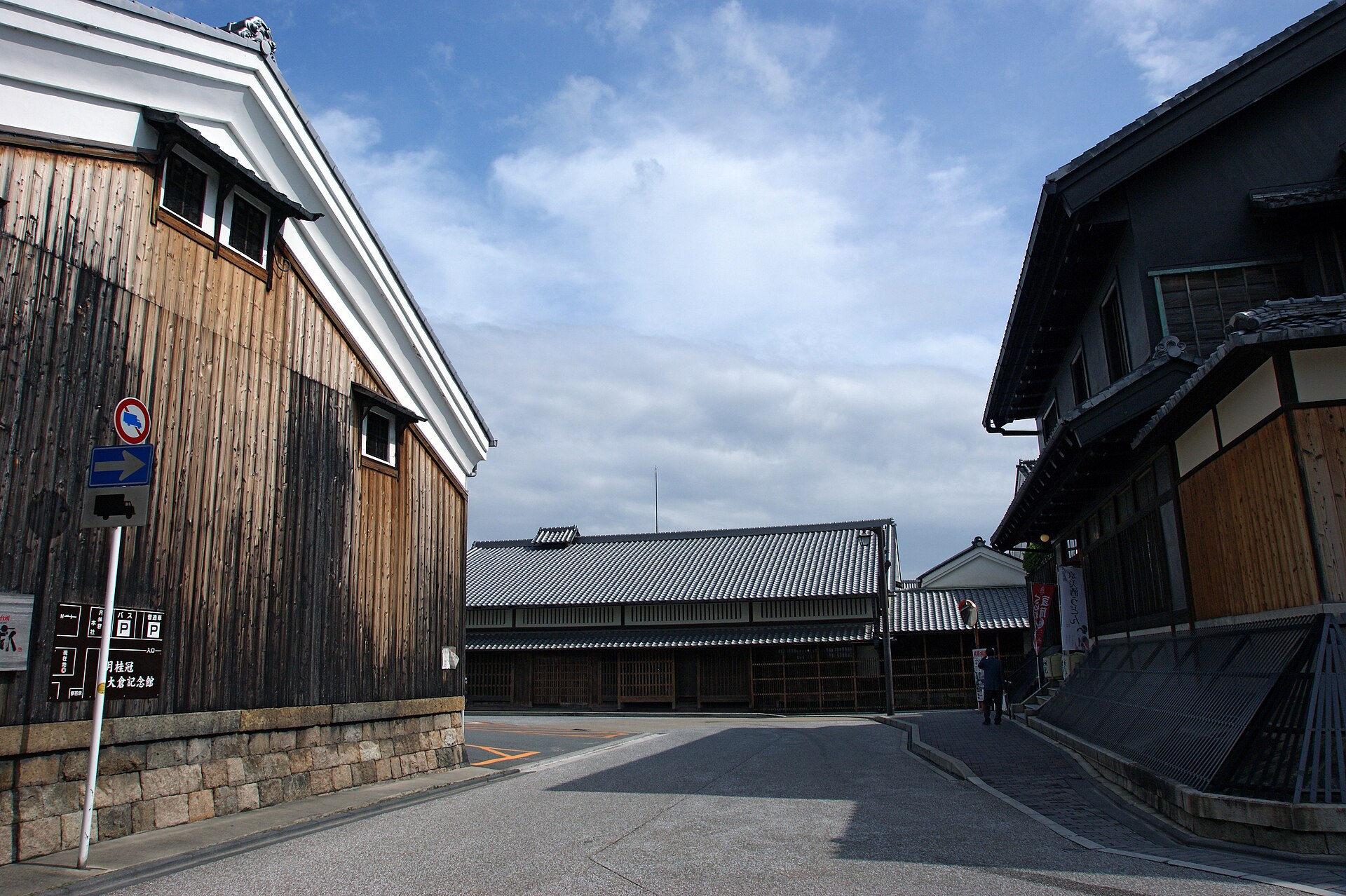
How do you get from Fushimi Inari to the sake district?
Go back to Keihan Fushimi-Inari Station and take a train heading south (towards Yodoyabashi/Osaka). Get off at Fushimi-Momoyama for the Otesuji shopping street, or one stop further at Chushojima for Gekkeikan, the boats and Teradaya. An IC card such as ICOCA or Suica works on the whole route.
Watch the train type. Kyoto City’s tourism site warns that Keihan limited express trains do not stop at Fushimi-Momoyama; if you board one, change at Tambabashi (kyoto.travel). Limited and rapid expresses also skip Fushimi-Inari itself, so locals are the simple choice. More on cards in our IC card guide.
Is the Gekkeikan Okura Sake Museum worth it in 2026?
Yes, if you drink. Adults 20 and over pay ¥600, ages 13–19 pay ¥100 and children 12 and under are free, according to Gekkeikan’s visitor page. Adults get three tastings chosen from about ten seasonal sakes, and everyone 13 and over gets a souvenir.
| Detail | 2026 information |
|---|---|
| Hours | 9:30–16:30, last entry 16:00; visit takes 40–60 minutes |
| Closed | 13–16 August and 28 December–4 January, plus occasional closures |
| Payment | Cashless only since 1 July 2026: card, e-money or QR code. No cash. |
| Booking | Online, opens two weeks ahead at 9:30 (Japanese-only system); walk-ins accepted if there is space |
| Groups | Maximum 12 people; groups of 13+ suspended |
| Guide | No guided tour; a digital museum guide runs on your own phone over free Wi-Fi |
| Nearest stations | Keihan Chushojima 5 min; Fushimi-Momoyama 10 min; Kintetsu Momoyama-goryomae 10 min; JR Momoyama 18 min |
Four days have shorter hours this autumn: 26 October (9:30–13:00), 7 November (13:00–16:30), and 10 and 20 November (9:30–14:00), per the museum’s notices. On 26 October there is also a “Moonlit Sake Brewery Light-up 2026” from 17:30 to 19:30.
Two rules catch people out. Anyone driving or riding a bike cannot taste, and neither can pregnant or breastfeeding visitors or anyone under 20. And cash really does not work any more, so bring a card.
What is Kizakura Kappa Country?
It is the visitor complex of Kizakura, a Fushimi brewer founded in 1925 that makes both sake and beer. The company opened it in 1995 in its old brewery buildings, with a small museum, a courtyard, a restaurant and a shop, according to the Japan Tourism Agency’s multilingual text.
The museum has an old wooden sake press next to its modern equivalent, and a tap of Fushimizu spring water, the water Kizakura uses for all its sake and beer. The kappa (river imp) theme comes from the brand’s long-running mascot. It is the place in Fushimi to drink craft beer brewed on site alongside sake.
Published hours and closing days for the restaurant, shop and museum differ between sources, and Kizakura’s own site could not be checked for this article. Treat it as a lunch option and confirm on the day.
How do the Jikkokubune boats work in 2026?
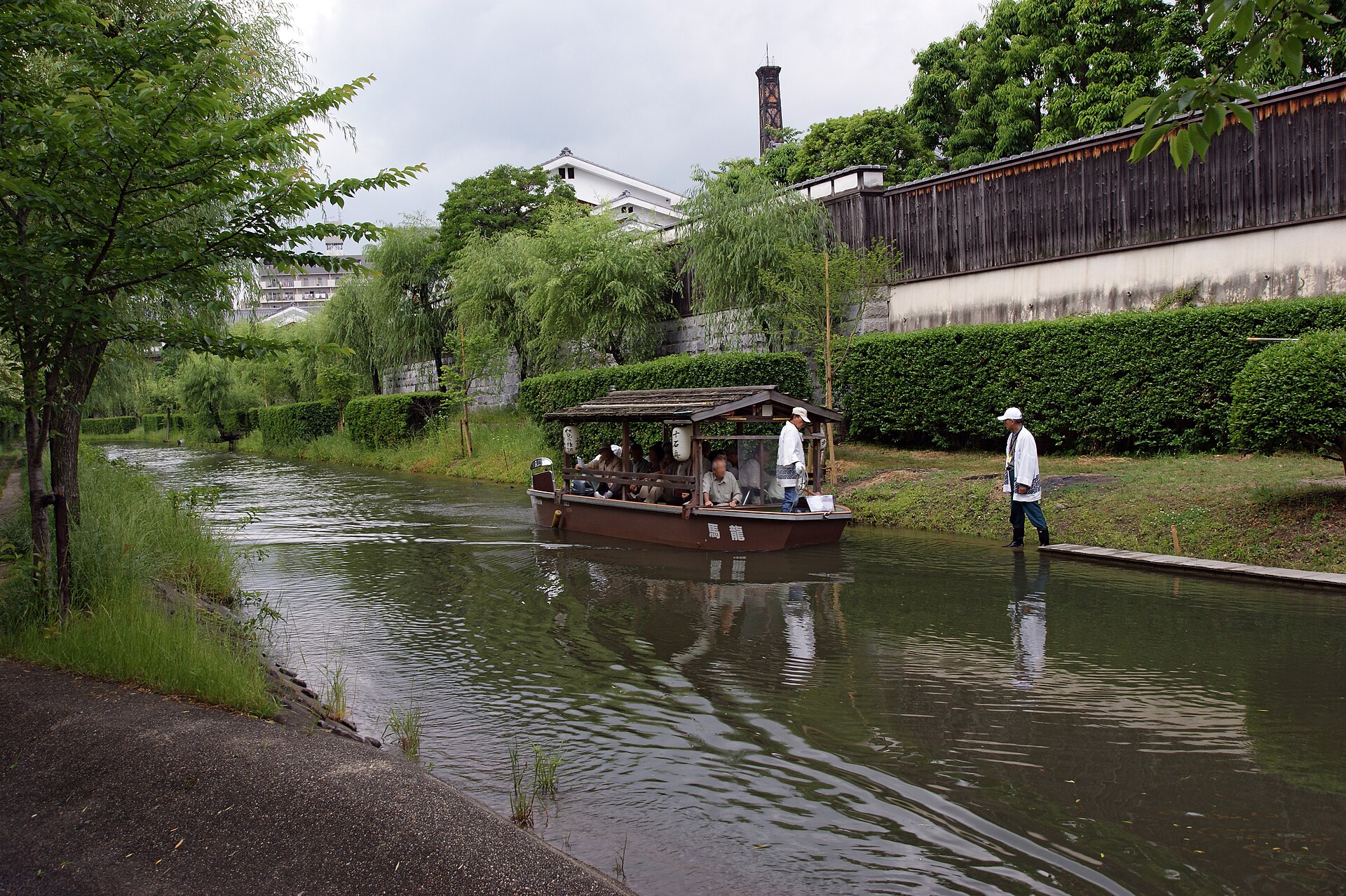
The Jikkokubune are small replica Edo-period river boats that run a round trip of about 50 minutes on the canals, starting behind the Gekkeikan Okura Sake Museum. The 2026 season runs from 20 March to 6 December, with fares of ¥1,900 for adults (junior high and older) and ¥900 for primary-age children (Jalan event listing, updated 5 June 2026).
- No boats on Mondays, except national holidays and in April, May, October and November, when they run daily.
- No boats from mid-August to 31 August, and none from mid-December to mid-March.
- Book online only, until midnight two days before. You pay at the boarding office on the day and must check in at least 15 minutes before departure (Fushimi Tourism Association).
- The boats stop at Fushimi Minato Hiroba and at the Misu Lock museum, where you get off for a short look before returning.
- The larger Sanjukkokubune runs a 40-minute route and is booked by phone only on 075-623-1030 (10:00–16:00 in season).
Departure times shift by season and can change at short notice for safety reasons, so check the booking page rather than relying on a printed timetable.
What happened at Teradaya, and can you go inside?
Teradaya is the inn where officers from the Fushimi magistrate’s office tried to catch the reformer Sakamoto Ryoma in March 1866. Oryo, who was bathing downstairs, ran up to warn him; Ryoma fired his pistol, escaped wounded, and married her soon after (Japan Tourism Agency text).
You can go inside. Hours are 10:00–16:00 with last entry at 15:40, and admission is ¥600 for adults, ¥300 for secondary and university students and ¥200 for primary pupils, as listed by Arukikata (March 2025). It closes 1–3 January and on some Mondays. It is about 5 minutes on foot from Chushojima.
Be clear about what you are seeing. The original building burned in the Battle of Toba-Fushimi in 1868, and what stands now is a rebuild that recreates Ryoma’s room, the staircase and the bath. Recent research suggests old materials may have been reused, but the “sword marks” are best taken as part of the story rather than proof.
Where to eat and drink in Fushimi
At the shrine, the classic snacks are inari-zushi and kitsune udon, both built on fried tofu, the food linked to Inari’s fox messengers. Stalls and old teahouses line the lane from JR Inari to the main gate, and there are teahouses partway up the mountain. Remember the no-eating-while-walking rule inside the grounds.
In the sake district, Otesuji shopping street runs from Fushimi-Momoyama Station towards the breweries and is the easiest place to find a set lunch or a sake shop. For a guide to booking sit-down meals in Japan, see how to book restaurants in Japan.
Know before you go
Climb early
Arrive before 8:00 for empty gate tunnels; the shrine never closes.
Check the forecast
Kyoto's congestion forecast rates Fushimi Inari hour by hour from 6:00 to 23:00.
Bring a card
Gekkeikan has been cashless-only since 1 July 2026.
Book the boat
Jikkokubune reservations close at midnight two days before.
Mind Mondays
Boats skip Mondays except holidays and in April–May and October–November.
No food on the trail
Eating while walking is banned inside the shrine grounds.
Fushimi Inari FAQ
How long does it take to walk Fushimi Inari?
About 30–45 minutes up to the Yotsutsuji viewpoint, and 2–3 hours for the full loop over the 233 m summit and back.
Is Fushimi Inari open at night?
Yes. The shrine grounds are open 24 hours with no admission fee. The upper paths are only partly lit, so carry a torch.
What time is Fushimi Inari least crowded?
Before 8am and after dark. Kyoto’s official congestion forecast shows expected crowd levels for each hour from 6:00 to 23:00.
Can you eat at Fushimi Inari?
Not while walking. The shrine bans eating and drinking outside marked rest areas. Eat at the stalls outside the grounds or at a teahouse.
How much is the Gekkeikan Okura Sake Museum in 2026?
¥600 for adults 20 and over, including three tastings, ¥100 for ages 13–19 and free for 12 and under. Payment is cashless only.
When do the Jikkokubune boats run in 2026?
From 20 March to 6 December 2026, about 50 minutes per trip, ¥1,900 for adults. No service on most Mondays or from mid-August to 31 August.
How do I get from Fushimi Inari to the sake district?
Take a Keihan local train south from Fushimi-Inari to Fushimi-Momoyama or Chushojima. Limited expresses do not stop at either Fushimi-Inari or Fushimi-Momoyama.
Can I fly a drone at Fushimi Inari?
No. Drones are banned across the whole precinct, which covers the mountain.
Sources and how we checked
All facts in this Fushimi guide were checked between 19 and 21 October 2026 against the linked sources: Fushimi Inari Taisha’s official site, the Kyoto Travel Congestion Forecast, Gekkeikan’s museum pages, the Fushimi Tourism Association boat pages and the Japan Tourism Agency’s multilingual texts. Where only a secondary source was available, such as hiking times and Teradaya admission, we name it. For the cost of a wider Kyoto trip, see our Japan travel cost guide.
Plan your Kyoto days with Japan Pro
Book Kyoto tours, sake tastings and experiences with English support through Japan Pro.
 English
 Japanese
 Chinese (Taiwan)
 Chinese (China)
 Korean
 French
 Italian
 Thai