
Harajuku and Omotesando Guide 2026: Meiji Jingu, Takeshita-dori and an Architecture Walk
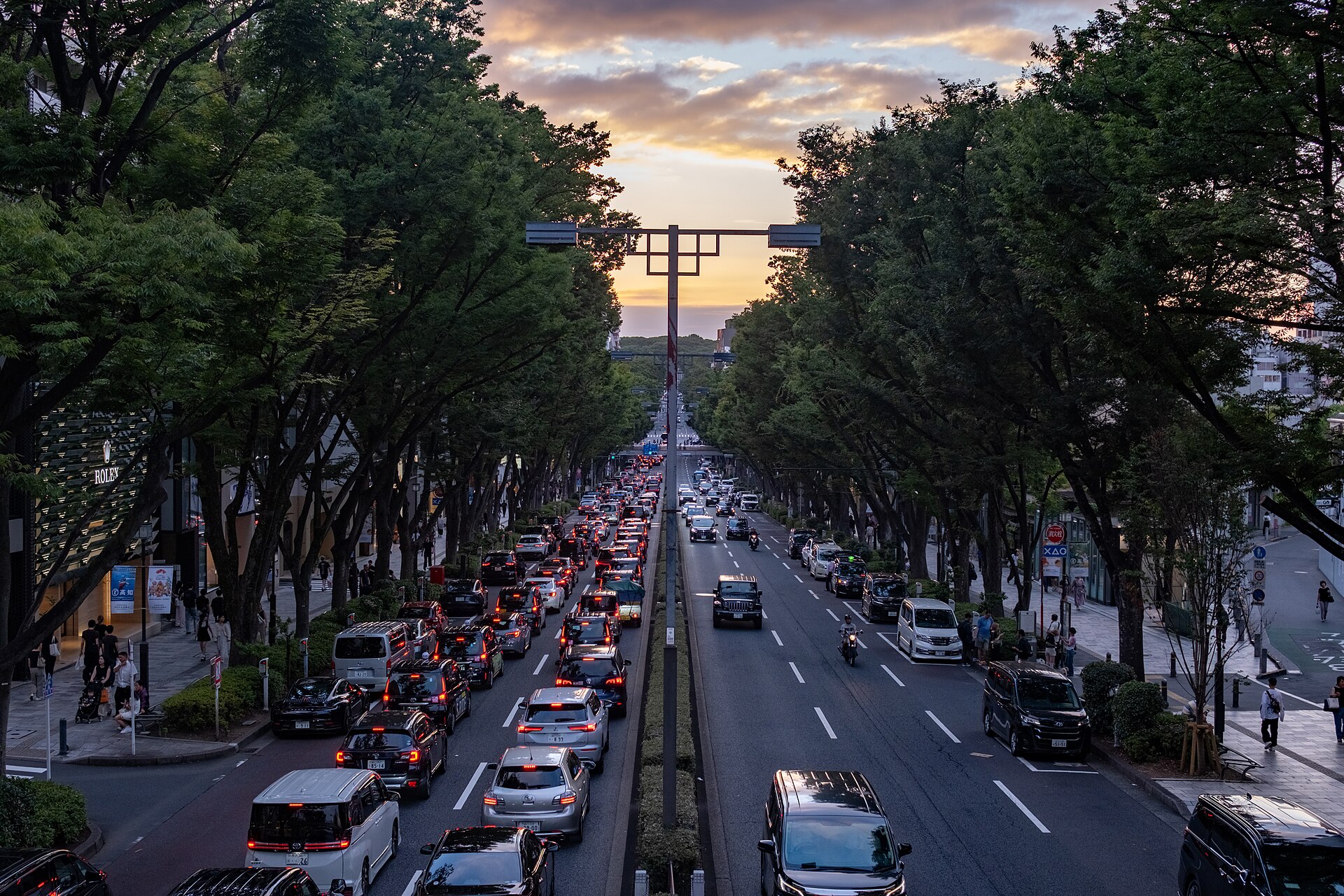
Harajuku and Omotesando are one district with two moods: a forest shrine and teenage street fashion at the Harajuku end, and a tree-lined avenue of designer buildings at the Omotesando end. You can walk the whole thing in a day, and the order you do it in matters more than what you pick.
This guide follows the day as it works best: Meiji Jingu at opening time, Takeshita-dori before the crowds peak, lunch at the new malls on the Jingumae crossing, then the architecture of Omotesando in the afternoon light, and the back streets of Ura-Harajuku and Cat Street at the end. Yoyogi Park fits in wherever you need a break.
Free
Meiji Jingu grounds
¥500
Meiji Jingu Inner Garden
~350 m
Takeshita-dori
6:10
Meiji Jingu opens in November
Which station: Harajuku, Meiji-jingumae or Omotesando?
Three stations cover the area and they are all walkable from each other. Pick the one at the end where you want to start.
| Station | Lines | Best for |
|---|---|---|
| Harajuku (JR) | Yamanote Line | Meiji Jingu, Takeshita-dori, Yoyogi Park |
| Meiji-jingumae ‘Harajuku’ | Tokyo Metro Chiyoda, Fukutoshin | The Jingumae crossing: Harakado, Omokado, Harajuku Quest |
| Omotesando | Tokyo Metro Ginza, Hanzomon, Chiyoda | The architecture end, Nezu Museum, Aoyama |
JR Harajuku moved into a new station building on 21 March 2020, with a much bigger concourse and lifts (Trafficnews). Its Omotesando gate opens towards both the avenue and Meiji Jingu; the separate Takeshita exit puts you directly opposite Takeshita-dori.
On the JR Yamanote Line, Harajuku is one stop from Shibuya and two from Shinjuku. If you are on the Chiyoda Line, Meiji-jingumae and Omotesando are one stop apart, so you can ride back to your start point at the end of the walk instead of retracing your steps.
For step-free travel, the new JR station has a 24-person lift and toilets about twice the size of the old ones. At the Omotesando end, the Nezu Museum recommends exit B3, the lift exit, which adds about two minutes to the walk.
Start at Meiji Jingu: hours, Inner Garden and museum
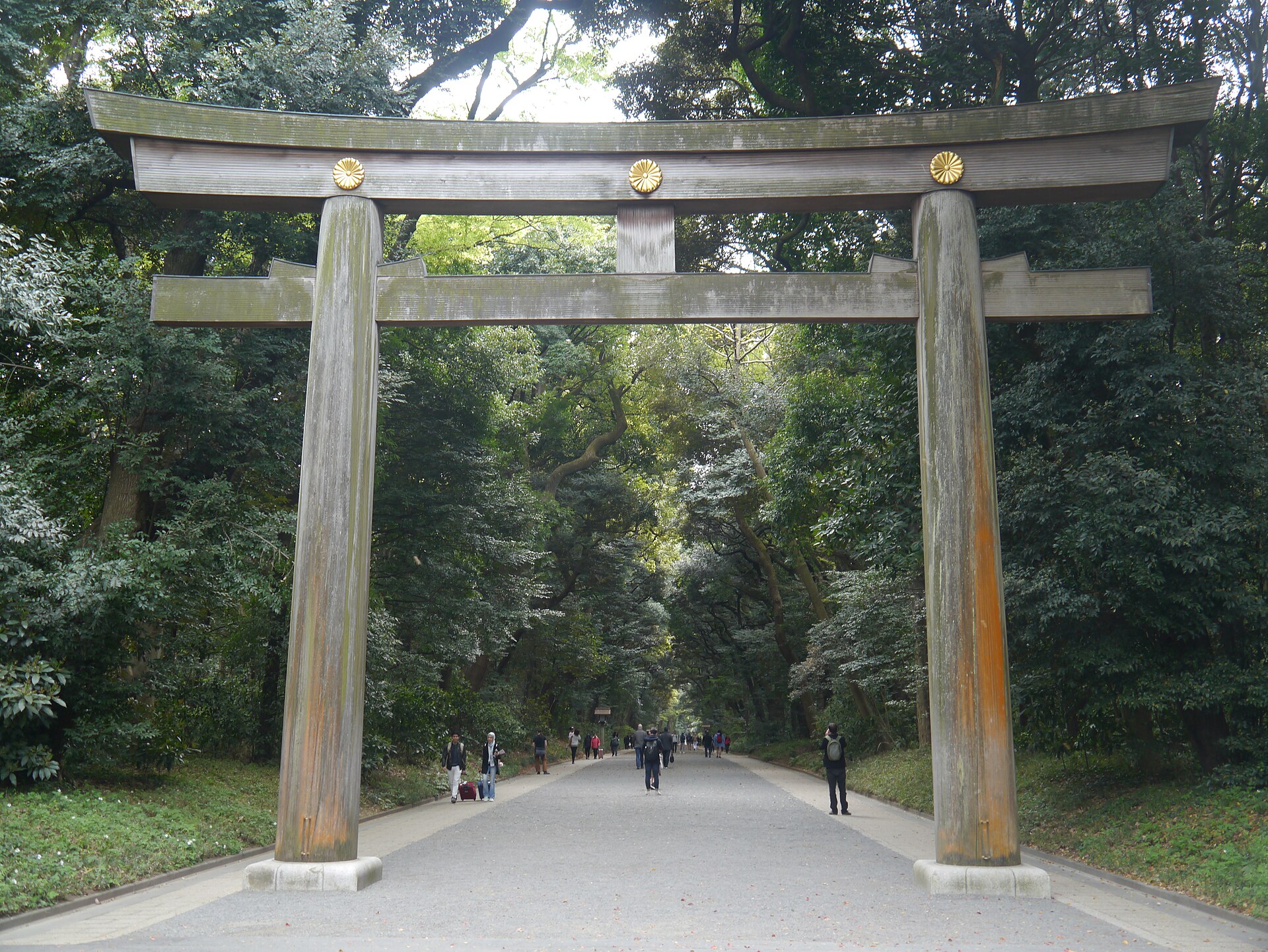
Meiji Jingu is the shrine to Emperor Meiji and Empress Shoken, completed on 1 November 1920. Its 70-hectare forest was planted with about 100,000 trees donated from across Japan, and it survived the 1945 air raids that burned most of the buildings; the shrine was rebuilt by 1958 (Meiji Jingu).
Entry is free and the gates open at sunrise and close at sunset, so the times change every month. Arrive near opening time and the gravel approach is far quieter than at midday.
| Month | Opens | Closes |
|---|---|---|
| October | 5:40 | 16:40 |
| November | 6:10 | 16:10 |
| December | 6:40 | 16:00 |
| January | 6:40 | 16:20 |
| February | 6:20 | 16:50 |
Times are from Meiji Jingu’s visitor page. Some inner facilities keep shorter hours, mostly 9:00–16:00.
Meiji Jingu Inner Garden (Gyoen)
The Inner Garden is the only part of the grounds older than the shrine: it was an Edo-period garden of the Kato family, lords of Kumamoto. It has a teahouse, a pond, an iris field and Kiyomasa’s Well, a spring at the far end (Japan Tourism Agency multilingual database).
- Fee: ¥500 maintenance donation.
- Hours: 9:00–16:00 from November to February; 9:00–16:30 from March to October; longer in June for the irises.
- Late autumn: the maples colour in late November, which makes it the best-value ¥500 in the area this season.
Meiji Jingu Museum
A low building by Kengo Kuma on the shrine grounds, showing objects connected with the emperor and empress. Admission is ¥1,000, hours are 10:00–16:30, and it closes on Thursdays and between exhibitions (summary of the official page). Skip it if you only have half a day.
Meiji Jingu draws enormous crowds for hatsumode, the first prayer of the New Year. If you are in town on 1–3 January, read our New Year in Tokyo 2027 guide first.
Is Takeshita-dori worth it?
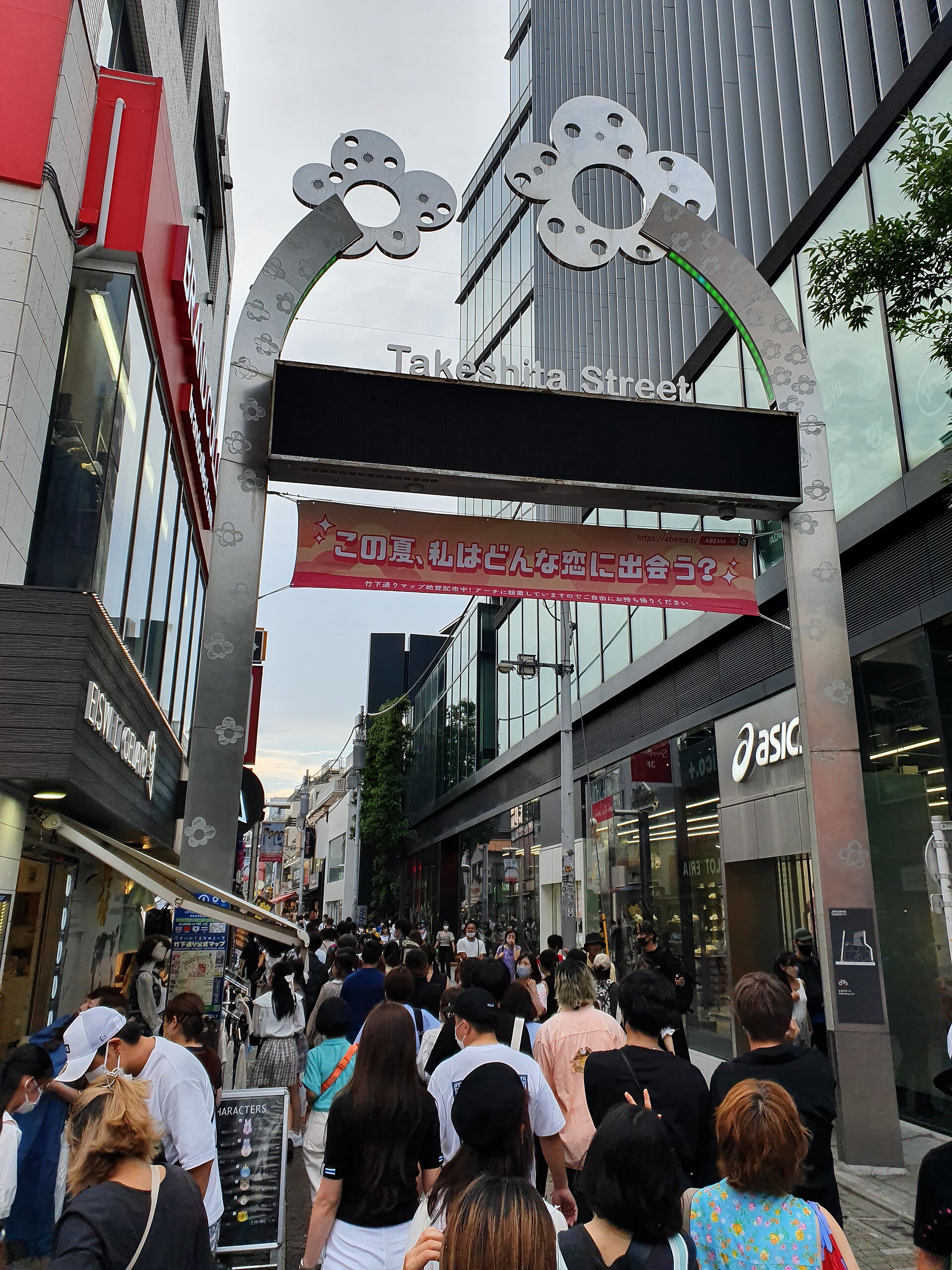
Yes, for about 30 minutes. Takeshita-dori is a narrow, roughly 350 m pedestrian street running downhill from the Takeshita exit of JR Harajuku to Meiji-dori, packed with kawaii fashion, cosmetics, crepes and sweets (GLTJP). It is the Harajuku of photos, and it is crowded every day.
- Cars are blocked from 11:00 to 18:00, when the street is pedestrian-only (Takeshita Street association).
- The association asks visitors to keep left and move in one direction.
- Touting is banned. If someone approaches with a catalogue or offers a handshake, do not stop or reply.
- Go before noon on a weekday. Weekend afternoons are wall-to-wall.
Our Tokyo, Kyoto and Osaka shopping guide covers what to buy here. In this guide, Takeshita-dori is simply the way down the hill to the main crossing.
The Jingumae crossing: Harakado, Omokado and Harajuku Quest
Where Omotesando meets Meiji-dori, three new or rebuilt complexes now face each other. They are where to eat, use a clean toilet and get out of the rain.
Harakado (Tokyu Plaza Harajuku)
Opened on 17 April 2024 on the crossing at 6-31-21 Jingumae, with about 75 shops from the basement to the roof (Impress Watch). Shops open 11:00–21:00; the 5th–6th floor food floors run 11:00–23:00 (Harakado).
- Kosugiyu Harajuku (B1): a public bathhouse run by the long-established Kosugiyu of Koenji, open 7:00–23:00. A rare chance to try a sento in a shopping centre.
- Rooftop terrace (7F): a garden terrace overlooking the crossing.
Omokado (Tokyu Plaza Omotesando)
Across the road, the 2012 building with the mirrored entrance was renamed Omokado when Harakado opened. Its design is by Hiroshi Nakamura (Where in Tokyo). On the 3rd floor is THE HYUNDAI, the Korean department store’s first overseas outlet, which we cover in our The Hyundai Omotesando guide.
Harajuku Quest
The old Harajuku Quest building was rebuilt by NTT Urban Development to a design by Shohei Shigematsu of OMA. Nike Harajuku opened on floors 1–3 on 11 September 2025, with the other tenants opening in stages from November 2025: a food-and-music hall called The Tunnel in the basement and restaurants on the 5th and 6th floors (Impress Watch). The address is 1-13-14 Jingumae.
Where to eat and rest between Harajuku and Omotesando
The area is short on benches and long on queues, so it helps to know where to sit down. The three complexes on the crossing are the easiest bets, and they all keep longer hours than the boutiques around them.
| Place | What it offers | Hours (checked Oct 2026) |
|---|---|---|
| Harakado 5F–6F, Harajuku Kitchen & Terrace | Food floors under the rooftop terrace | 11:00–23:00 |
| Harakado B1, Kosugiyu Harajuku | Public bathhouse, good after a long walking day | 7:00–23:00 |
| Harakado 3F, Baby the Coffee Brew Club | Coffee from early morning | 8:00–23:00 |
| Harajuku Quest B1, The Tunnel | Food hall with a music theme | Check on the day |
| Harajuku Quest 5F–6F | Taiwanese, tempura and French restaurants | Check on the day |
If you start at Meiji Jingu before 9:00, eat breakfast near your hotel. Shops and most cafés here open later in the morning; the Harakado coffee bar, from 8:00, is an exception.
An Omotesando architecture walk
Omotesando was laid out as the approach to Meiji Jingu, which is why it is so wide and lined with zelkova trees. Since the early 2000s, fashion brands have hired star architects for their stores here, and the avenue is now a free open-air gallery of Japanese and European architecture. Walk it from the Jingumae crossing towards Aoyama.
| Building | Architect | Year | Look for |
|---|---|---|---|
| Tokyu Plaza Omotesando (Omokado) | Hiroshi Nakamura | 2012 | Mirrored entrance |
| GYRE | MVRDV | 2007 | Stacked, twisted floors |
| Omotesando Hills | Tadao Ando | 2006 | Long low facade, inner spiral ramp |
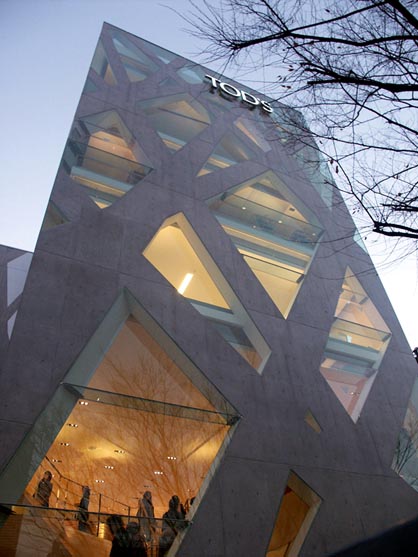
| Tod’s Omotesando | Toyo Ito | 2004 | Concrete branches like the zelkova trees |
| Dior Omotesando | SANAA | 2003 | Layered white glass box |
| Prada Aoyama | Herzog & de Meuron | 2003 | Diamond-grid glass |
| Miu Miu Aoyama | Herzog & de Meuron | 2015 | Folded metal lid |
| Sunny Hills | Kengo Kuma | 2014 | Woven timber lattice |
| Nezu Museum | Kengo Kuma | 2009 | Bamboo-lined entrance path |
Architects and years are from Where in Tokyo’s Harajuku and Aoyama architecture tour. Most of these are shops, so the outside is free; the Nezu Museum is the one paid stop.
Omotesando Hills
Tadao Ando’s mall replaced the old Dojunkai Aoyama Apartments and was kept low so the avenue stays open to the sky. The facade runs about 250 m along the street, and inside a 700 m spiral ramp rises at about 3 degrees, the same gradient as Omotesando itself (DESIGNART). Walk the ramp even if you do not shop.
Nezu Museum
The end of the walk, eight minutes from Omotesando Station exit A5. The museum of Japanese and East Asian art has one of Tokyo’s best private gardens, open only to ticket holders. Hours are 10:00–17:00, closed on Mondays; collection shows cost ¥1,400 online or ¥1,600 at the door, and special exhibitions ¥1,600 online or ¥1,800 (Nezu Museum). Book a timed online ticket in autumn, when the garden maples bring crowds.
Ura-Harajuku and Cat Street: the back streets
Ura-Harajuku means ‘back Harajuku’: the lanes behind the main roads, full of small select shops, streetwear, vintage clothing and some brands’ first stores in Japan. Its spine is Cat Street, a pedestrian path that runs along the line of the old Shibuya River from Omotesando south towards Shibuya (GLTJP).
Cat Street is quieter than Takeshita-dori and better for browsing. Cat Street crosses Omotesando between the Jingumae crossing and Omotesando Hills; head south on it and you can follow it to Shibuya. Our Shibuya guide and map picks up at the other end.
- Cat Street has brand stores and cafés as well as small shops. For coffee stops, see our best coffee guide.
- Most shops do not open until late morning, so leave the back streets for the afternoon.
Yoyogi Park: when to use it
Yoyogi Park is the large open park next to Meiji Jingu, about three minutes on foot from JR Harajuku. It is always open and free. The site was an army parade ground, then the US ‘Washington Heights’ housing area after the war, then the athletes’ village for the 1964 Tokyo Olympics; the park opened on 20 October 1967 (Tokyo Metropolitan Park Association).
- The Olympic memorial house, used by Dutch athletes in 1964, reopened as a café in April 2026.
- The ginkgo trees turn yellow in late autumn; for timing, see our Tokyo autumn leaves 2026 guide.
- Area B, across the road, has the outdoor stage and event space, where events are often held at weekends.
Harajuku and Omotesando in late autumn and winter 2026–27
Late November is the best time of year for this walk. The Inner Garden maples, the Yoyogi ginkgo and the Nezu Museum garden all colour at about the same time, and the zelkovas on Omotesando turn brown and gold.
On 1–3 January Meiji Jingu is extremely crowded, so expect long queues to reach the main hall. Meiji Jingu had not posted its 2026–27 New Year hours when we checked on 23 October 2026; it normally stays open through the night of 31 December. If you want a quiet visit, go after 7 January.
Harajuku and Omotesando: know before you go
Shrine first
Meiji Jingu opens at sunrise and the shops open at 11:00. Use the morning for the shrine and the garden.
Check the closing time
In December Meiji Jingu closes at 16:00, earlier than most visitors expect.
Thursdays and Mondays
Meiji Jingu Museum closes on Thursdays, Nezu Museum on Mondays.
Ignore touts
Takeshita-dori bans touting. Do not stop for people handing out catalogues.
Use the malls
Harakado and Omokado have toilets, seating and rooftop terraces, handy on a wet or hot day.
Walk downhill
Start at Harajuku and end at Omotesando or Shibuya. You spend less time climbing.
Harajuku and Omotesando FAQ
Is Meiji Jingu free?
Yes. The shrine grounds are free. The Inner Garden costs ¥500 and the Meiji Jingu Museum ¥1,000.
What time does Meiji Jingu open and close?
It follows sunrise and sunset. In November 2026 it is open 6:10–16:10, and in December 6:40–16:00.
How long is Takeshita-dori?
About 350 m, from JR Harajuku’s Takeshita exit down to Meiji-dori. It is pedestrian-only from 11:00 to 18:00.
What is Harakado?
Tokyu Plaza Harajuku, a mall on the Jingumae crossing that opened in April 2024, with about 75 shops, food floors, a rooftop terrace and a public bathhouse, Kosugiyu Harajuku.
What is the difference between Harajuku and Omotesando?
Harajuku is the youth-fashion side around Takeshita-dori and the station; Omotesando is the avenue running east from it, with luxury brands and famous architecture.
Can I walk from Harajuku to Shibuya?
Yes. Cat Street runs south from Omotesando towards Shibuya, and it is a pleasant walk past small shops.
Is Harajuku busy on weekends?
Very. Takeshita-dori is wall-to-wall on weekend afternoons. Go on a weekday morning if you can.
Sources and how we checked
We checked the hours, fees and opening dates in this Harajuku and Omotesando guide on 23 October 2026 against the linked sources: Meiji Jingu, the Japan Tourism Agency multilingual database, the Takeshita Street association, Tokyu Plaza Harajuku, the Nezu Museum, the Tokyo Metropolitan Park Association, and news reports on Harakado and Harajuku Quest. Shop and restaurant hours change often, so confirm on the day.
Explore Harajuku and Omotesando with Japan Pro
Japan Pro can book a local guide for Meiji Jingu and the Omotesando architecture walk, or plan your whole Tokyo itinerary.
Read next
Ryogoku Guide 2026–27: Edo-Tokyo Museum, Hokusai, Chanko Nabe and the Sumo Town by Day of the Week
Roppongi Guide 2026: Art Triangle Museums, Tokyo City View, Azabudai Hills and Safe Nights Out
Nakameguro Guide 2026–27: Meguro River, Daikanyama and the Walk to Ebisu
 English
 Japanese
 Chinese (Taiwan)
 Chinese (China)
 Korean
 French
 Italian
 Thai