

Futako Tamagawa (Nikotama): What to Know Before You Go
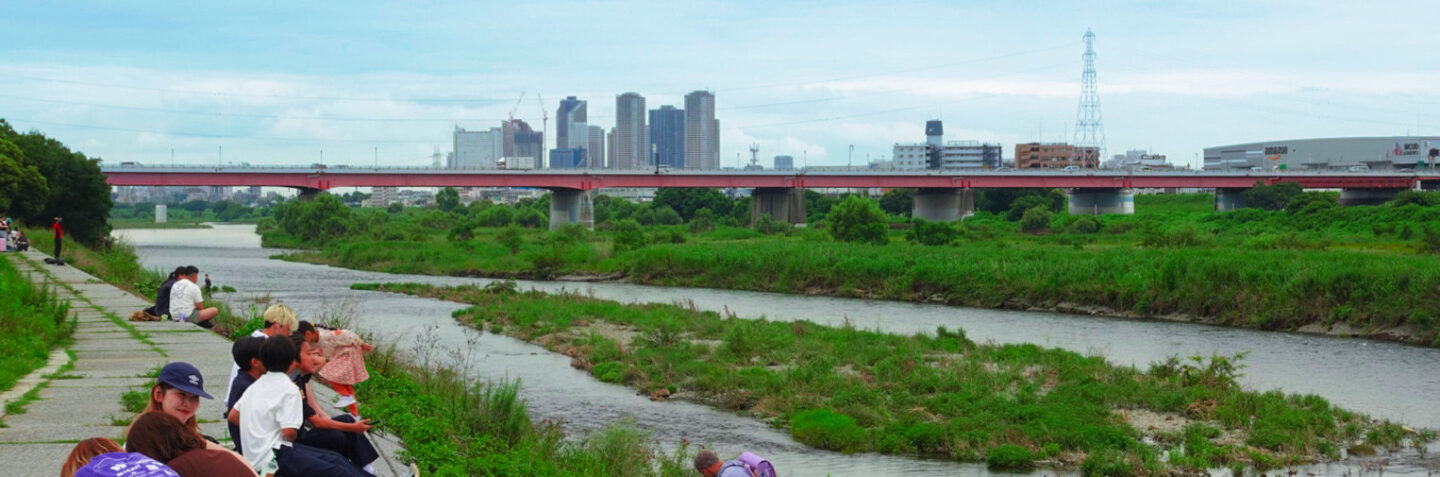
Futako Tamagawa sits fifteen minutes from Shibuya on the Den-en-toshi Line, and it is the closest thing Tokyo has to a neighbourhood with two personalities. On one side of the station there is a glass and steel shopping complex with a department store across the road. On the other there is a park that runs straight into the bank of the Tama River, where people spread out blankets and nobody is in a hurry.
Locals call it Nikotama. It works as a half day, and it is one of the few places in the city where you can go from a department store food hall to sitting on a riverbank with what you just bought in under ten minutes.

Need to Know
- From Shibuya: about 15 minutes on the Den-en-toshi Line
- From Shinjuku: about 30 minutes, Yamanote Line to Shibuya then the Den-en-toshi Line
- Cost: nothing to enter the park, the garden or the riverbank
- How long to allow: three to four hours, or a full afternoon if you eat by the river
- Best for: shopping, walking, a picnic, sunset
💡 Japan Pro Tip: Come out of the ticket gates and turn right for the East Exit, which puts you straight into the Rise complex. The West Exit takes you toward Takashimaya instead. Either works, but the East Exit is the one that leads to the elevated walkway through to the park.
How to Get to Futako Tamagawa
The Den-en-toshi Line runs from Shibuya through Sangenjaya and Futako Tamagawa on its way out to Kanagawa, so this is an easy stop to fold into a day rather than a trip you need to plan around. The Oimachi Line also terminates here if you are coming across from the east side of the city.
The station itself is worth thirty seconds of your attention. The platforms sit up on an embankment right beside the river, so as the train pulls in you get a wide view over the water and the grass banks before you have even got off.

Futako Tamagawa Rise and Takashimaya: Where to Shop
Rise is the large development on the east side of the station: a long, open air run of shops, restaurants and offices under a glass canopy, with residential towers behind it. It does not feel like a mall. The walkways are outdoors, there are trees, and it opens out rather than closing in.

Takashimaya sits directly across the road on the west side and has been there far longer, since 1969. Between the two you have most of what you would want from a day of shopping in one place, without the crush of Shibuya.
Three things inside the complex are worth singling out. Tsutaya Electrics mixes home electronics with books and a cafe, which sounds like it should not work and does. Akomeya sells rice, seasonings and kitchen goods, and is the best place here to pick up something to take home that is not a keyring. And the Tokyu Food Show in the station building does prepared food, bento and pastries.
💡 Japan Pro Tip: Buy lunch at the Food Show rather than sitting down somewhere. It is cheaper, the quality is high, and the whole point of this neighbourhood is that the riverbank is a five minute walk away.

Futako Tamagawa Park and the Kishin-en Garden
An elevated walkway runs from the Rise complex directly into Futako Tamagawa Park, so you never cross a road. The park is mostly open lawn and paths, sloping gently down toward the river.
Tucked inside it is Kishin-en, a traditional Japanese strolling garden built around a pond, with a small arched bridge, arranged rocks and clipped pines. It opened in 2013, which makes it new by the standards of Japanese gardens, but it is properly done and it is free. Ten minutes here is a complete change of pace from the shopping five minutes behind you.

There is also a Starbucks on the rise above the park with a grass roof and outdoor seating that looks out over the river. On a clear day you can see Mount Fuji from it. It is busy at weekends for exactly that reason.

The Tama River: Tokyo’s Free Sunset and Mount Fuji Spot
This is the reason to come. The Tama River marks the boundary between Tokyo and Kanagawa, and the banks here are wide, flat and green, with paved paths running along them in both directions.
What actually happens on them is the appeal. People cycle, run, walk dogs, play catch and sit around on the grass. There are baseball diamonds marked out on the flats. On a warm weekend the bank fills up with groups eating, and none of it feels staged for anyone.

The paths run for kilometres, so you can walk as far as you like and turn back whenever. Head downstream and the skyline of central Tokyo sits on the horizon behind you. How pleasant any of this is depends heavily on the season, so it is worth knowing the best time to visit Japan before you build an afternoon around being outdoors.

💡 Japan Pro Tip: Save the river for late afternoon. The view west along the water is open all the way to the horizon, which makes this one of the easiest places in Tokyo to watch the sun go down without climbing anything or paying for a ticket.
What to Do Next: Todoroki Valley and Shimokitazawa
The obvious next move is Todoroki Valley, Tokyo’s only natural gorge, which is a few minutes away on the Oimachi Line. It is the exact opposite of the open riverbank here: narrow, shaded, and green overhead. Doing both in one afternoon gives you two completely different versions of the same corner of the city.
Shimokitazawa is also close if you want to carry on into the evening, and if the quiet green side of Tokyo is what you came for, the museum in Koganei is the other one worth knowing about.
FAQ
Is Futako Tamagawa worth visiting?
Yes, if you want a half day that mixes shopping with somewhere to sit outdoors. It is fifteen minutes from Shibuya, the park and riverbank cost nothing, and it gives you a version of Tokyo that most visitors never see because it is residential rather than a sight.
How long do you need in Futako Tamagawa?
Three to four hours covers the shopping complex, the park, the garden and a walk along the river. Make it a full afternoon if you plan to eat by the water or walk down to Todoroki Valley afterwards.
What is Nikotama?
Nikotama is the local nickname for Futako Tamagawa, a shortening of the Japanese name. You will hear residents use it and see it on shop signs around the station.
Can you see Mount Fuji from Futako Tamagawa?
On a clear day, yes. The view west along the Tama River is open, and the Starbucks above the park is the usual spot for it. Winter mornings and clear late afternoons give you the best chance.
Is Futako Tamagawa good for families?
It is one of the better neighbourhoods in Tokyo for it. The park and riverbank are open and flat, there is a lot of room to run around, everything is walkable from the station without crossing major roads, and the shopping complex has plenty of places to stop.
Ready to Experience Japan?
Discover handpicked stays, local experiences, and guided journeys curated by Japan experts.
Explore Japan


 English
  Japanese
  Chinese (Taiwan)
  Chinese (China)
  Korean
  French
  Italian
  Thai
Thai