
Fukuoka Food Guide 2026: Why It’s the Best-Eating City in Japan (Yatai, Ramen and 5 More Reasons)
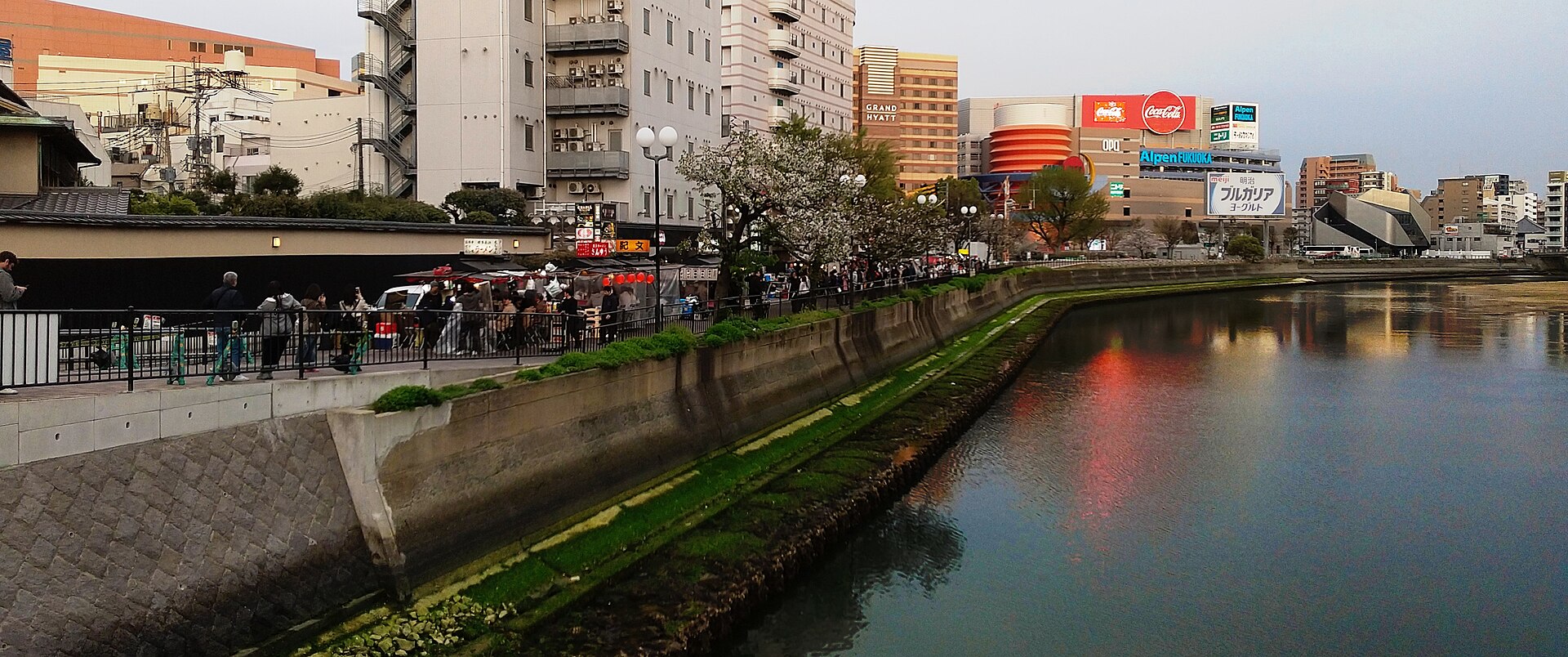
Fukuoka is the best-eating city in Japan for a visitor because nowhere else puts this much specialist food this close together, this cheaply, this late at night. A Fukuoka food guide can be argued in numbers: 101 licensed yatai street stalls, a bowl of Nagahama ramen listed at ¥550, a fish market that opens to the public once a month, and an airport five minutes from Hakata Station by subway.
Tokyo has more restaurants and Osaka has the louder reputation, so this Fukuoka food guide does not claim more choice. But Fukuoka, a city of 1.67 million, is small enough to eat across in two days, and its signature dishes are things you can only do properly here. This guide makes that case, then gives you the names, prices and hours to test it yourself.
101
Licensed yatai stalls (April 2026)
¥550
Ganso Nagahamaya ramen (Mapple listing)
5 min
Fukuoka Airport to Hakata by subway
200+
Mentaiko makers in Fukuoka
Why does this Fukuoka food guide call it the best food city in Japan?
Because the case rests on things you can check, not on taste. Here is the short version, with the facts behind it.
| Claim | The fact behind it | Source |
|---|---|---|
| You start eating faster than anywhere else | The subway runs from Fukuoka Airport to Hakata Station in about 5 minutes and to Tenjin in about 10–11 minutes, for ¥260. The fastest Narita Express to Tokyo Station takes 53 minutes. | Go Fukuoka, ANA, JR East |
| It has Japan’s best-known street-stall scene | 101 yatai were licensed as of 1 April 2026, regulated by a city ordinance since 2013. | Fukuoka City, April 2026 |
| Its signature dishes started here | Fukuya released what it calls the first karashi mentaiko in Nakasu in 1949; Nagahama is credited with thin noodles and kaedama refills. | Crossroad Fukuoka, Crossroad Fukuoka |
| The fish is local and the market lets you in | Nagahama Fish Market sells to the public on monthly Citizen Appreciation Days; the next are 14 November and 12 December 2026. | Crossroad Fukuoka |
| It is cheap at the bottom end | Ramen from ¥550 to ¥1,080 at the shops below; motsunabe from ¥2,398 per person at a famous name. | Mapple, Ichiran, Oyama |
The counter-argument is fair: Tokyo and Osaka have more range, more fine dining and more international food. Fukuoka wins on a narrower test. If you want to eat very well on a two-night trip without booking anything weeks ahead, it is the easiest big city in Japan to do that in.
How do Fukuoka yatai work, and what are the rules?
Yatai are mobile food stalls that are wheeled onto the pavement each evening and taken away before dawn. Since September 2013 they have been governed by the Fukuoka City Yatai Basic Ordinance, which says the city wants them to be a lasting part of the streetscape while keeping pavements safe and food hygienic.
Each stall needs three permits: road occupancy, road use and a food business licence. The operator must run it in person; transferring or subletting the permit is banned. At least 2 m of pavement must stay clear beside the stall.
The rules that affect you as a customer
The city’s 2026 recruitment page for new operators spells out the practical rules (Fukuoka City, updated 15 August 2026):
- Site use, including set-up and take-down, runs from 17:00 to 04:00 the next morning.
- The stall can be no wider than 3 m and no deeper than 2.5 m, and seating cannot spill beyond that footprint.
- No raw food. Everything must be heated thoroughly just before it is served, so you will not find sashimi at a yatai.
- No takeaway and no delivery. You eat at the counter.
- Only food and drink can be sold, and the licence holder must be at the stall during business hours.
The city’s sample day for an operator shows opening at about 18:30 and closing at about 01:00. That matches what Crossroad Fukuoka, the prefecture’s official tourism site, tells visitors: a few stalls open at 18:00, most at 18:30–19:00, and the crowd peaks around 20:00.
Licences are changing hands in 2027
Licences used to pass down within families. Since the 2013 rules, the city fills empty pitches by open competition. The sixth round, which closed in 2026, covers 23 pitches in Nagahama, Tenjin, Nakasu-Kita and Seiryu Park, with new operators trading from 1 April 2027 to 31 March 2030, renewable to 2037. Seven stalls closed between May 2024 and April 2026, mostly because of the owner’s age or health (Fukuoka City). Expect some new names on the streets from spring 2027.
Where are the yatai, and which area suits you?
| Area | What it is like | Nearest station |
|---|---|---|
| Nakasu | The riverside row by the Naka River; busiest and most photographed, lots of visitors | Nakasu-Kawabata (subway) |
| Tenjin | Stalls spread along Tenjin’s streets; calmer, more locals, good for one person | Tenjin (subway) or Nishitetsu Fukuoka (Tenjin) |
| Nagahama | Near the fish market; the home of Nagahama ramen | Akasaka (subway) |
Area descriptions come from Crossroad Fukuoka. If you want a seat without queuing, arrive at opening. If you want atmosphere, go after 20:00 and accept a wait in Nakasu.
Yatai etiquette in eight lines
Go to the toilet first
Stalls have none. Use a station or convenience store before you sit down.
Check before you sit
Look at the menu, prices and payment methods first; cash is the safe default.
Order, eat, move on
Seats are shared and few. Don’t sit for hours over one drink at a busy stall.
Keep bags small
There is no space for luggage. Hold your bag on your lap.
Dress for winter
From December the stalls are cold even with plastic sheeting. Wear layers.
No drinking outside
Standing and drinking around the stall is not allowed. Keep the noise down.
Which Hakata ramen shops should a Fukuoka food guide send you to?
Hakata ramen means a cloudy pork-bone (tonkotsu) broth and very thin, straight noodles. You order the firmness of the noodles, and when you run out you ask for kaedama, a second serving of noodles dropped into the broth you still have. Crossroad Fukuoka credits Nagahama with both the thin noodles and the kaedama habit.
| Shop | Bowl price | Hours | Where | Source |
|---|---|---|---|---|
| Ichiran Honsha Sohonten (main store) | ¥1,080; kaedama ¥210 (half ¥150) | 24 hours; late-night surcharge 22:00–06:00 | Nakasu 5-3-2; 1 min from Nakasu-Kawabata exit 2 | Ichiran, official |
| Ganso Nagahamaya | ¥550; kaedama ¥150 | 05:00–01:45; Tuesdays to 22:00 | Nagahama 2-5-25; Minato 1-chome bus stop | Mapple |
| Hakata Ikkousha Sohonten | Awa-kei ramen ¥950 | 11:00–23:00 (Sun to 21:00) | Hakata-ekimae 3-23-12; 5 min from Hakata Station | Mapple |
| Shin-Shin (Hakata Deitos branch) | ¥650 | 11:00–23:30 | Hakata Deitos 2F, inside Hakata Station | Mapple |
| Hakata Issou (Hakata-eki Higashi) | ¥680 | 11:00–24:00 | Hakata-eki Higashi 3-1-6; 6 min from Hakata Station | Mapple |
Ichiran’s figures are from its own shop page. The others come from Mapple guide listings, which say prices are as of their research date, so allow for small rises. Shin-Shin’s main shop is at Tenjin 3-2-19, about 5 minutes from Tenjin subway station (Shin-Shin).
Which one, if you only have one night?
Go to Ganso Nagahamaya for the cheapest, plainest version of the local style, and order kaedama to see why it exists. Go to Ichiran’s main store if you arrive late: it is open around the clock, takes cards and IC cards, and has 40 solo counter seats. Ikkousha suits a lunch near Hakata Station.
What is motsunabe and where do you eat it?
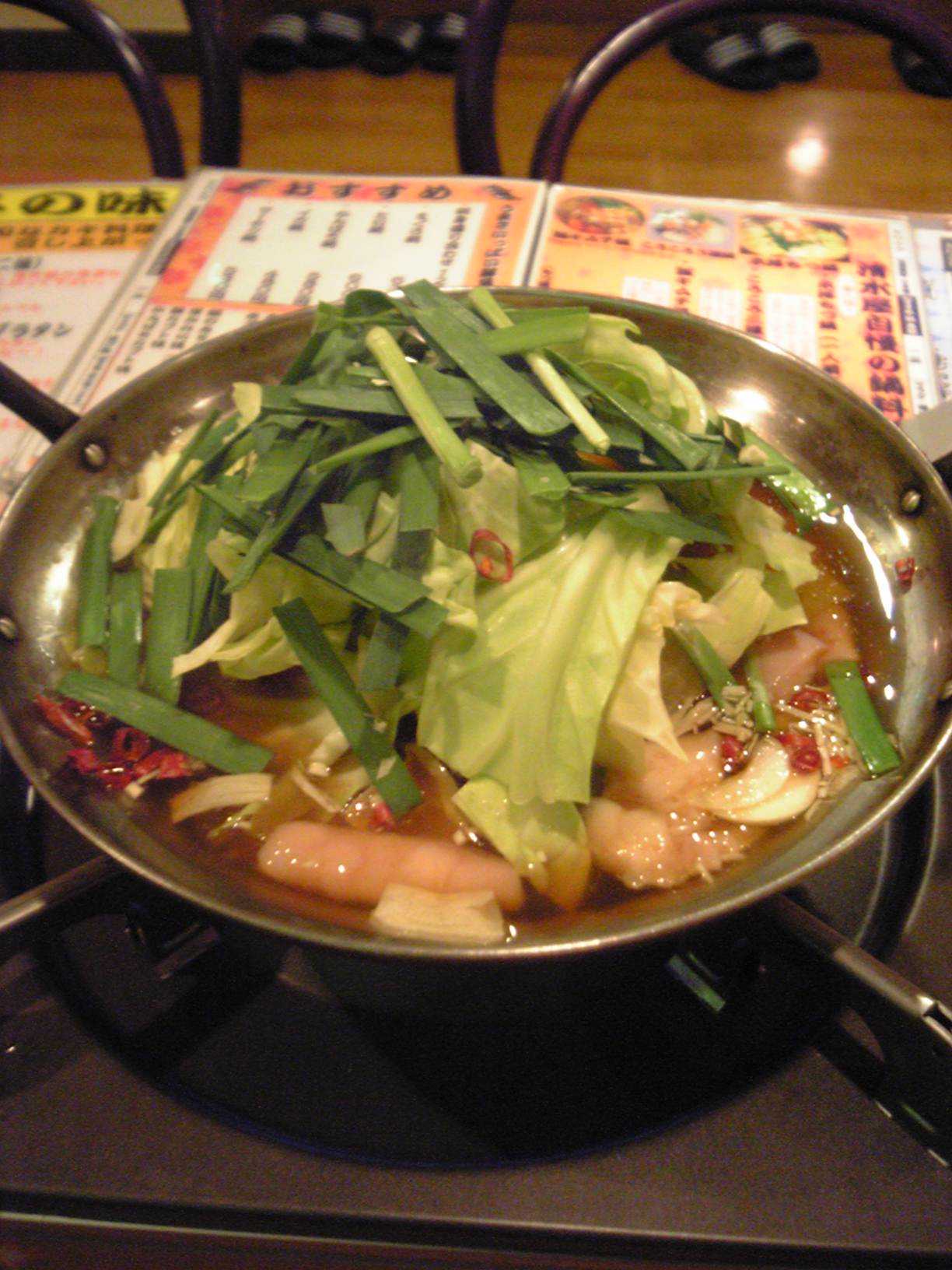
Motsunabe is a hotpot of beef or pork offal, cabbage and garlic chives, simmered at the table in a miso or soy broth. ANA’s Fukuoka city guide lists it with tonkotsu ramen, mizutaki and yakitori as the dishes to eat here.
At Hakata Motsunabe Oyama’s main shop (Tenyamachi 7-28, 2 minutes from Gofukumachi subway station), the miso, soy and mizutaki-style pots are each ¥2,398 per person including tax. It opens 16:00–23:00 (food last orders 22:00) and closes only on 31 December and 1 January. Oyama posted an October 2026 price revision on its website, so check the menu when you book. Oyama also has branches at Hakata Deitos, KITTE Hakata and Fukuoka Airport.
What is mizutaki, and is it worth the price?
Mizutaki is chicken simmered in a white, collagen-rich broth that you drink on its own before the meat and vegetables go in. It is the dish to book in advance in Fukuoka, and it costs several times more than a bowl of ramen.
- Mizutaki Nagano, Tsushimakoji 1-6: mizutaki or minced-chicken soup pot ¥3,200 per person, ojiya rice finish ¥330. 12:00–22:00, last entry 20:00. Closed Sundays and Mondays. Phone reservation required (092-281-2200). About 10 minutes from Nakasu-Kawabata exit 7 (Rurubu).
- Shin-Miura Hakata Honten, Sekijomachi 21-12: a mizutaki house Rurubu describes as 115 years old. 12:00–15:00 (last entry 14:00) and 18:00–22:00 (last entry 20:00). Closed Sundays. Tel 092-291-0821 (Rurubu).
Our guide to booking restaurants in Japan explains how to make phone-only reservations from abroad, including using your hotel.
Why is mentaiko a Fukuoka food?
Mentaiko is pollock roe cured in a chilli marinade. According to Crossroad Fukuoka, Kawahara Toshio, who founded Fukuya in 1948, first ate a spicy roe dish as a child in Busan and adapted it for Japanese tastes after the war. Fukuya sold what it calls the first karashi mentaiko in Nakasu in 1949.
Kawahara never patented the method and taught it to other producers, so Fukuoka now has more than 200 mentaiko makers and ranks first in Japan for both production and consumption. The 1975 extension of the Sanyo Shinkansen to Hakata is credited with taking it nationwide.
Where to eat and see it made
- Yamaya Factory Terrace: free factory viewing, a curing workshop and an all-you-can-eat mentaiko restaurant.
- Fukutaro’s head office factory: free tour and tasting; phone the day before to book.
- Fukuya’s factory site Hakuhaku: make your own spice blend, plus a café.
- Mentaiko French bread, a Fukuoka-born bakery item: try it at more than one bakery.
For a last meal on the way out, Oyama and Shin-Shin both have branches at Hakata Station and Fukuoka Airport, and Ichiran has a branch by Hakata Station.
Is Yanagibashi Rengo Market worth a morning?
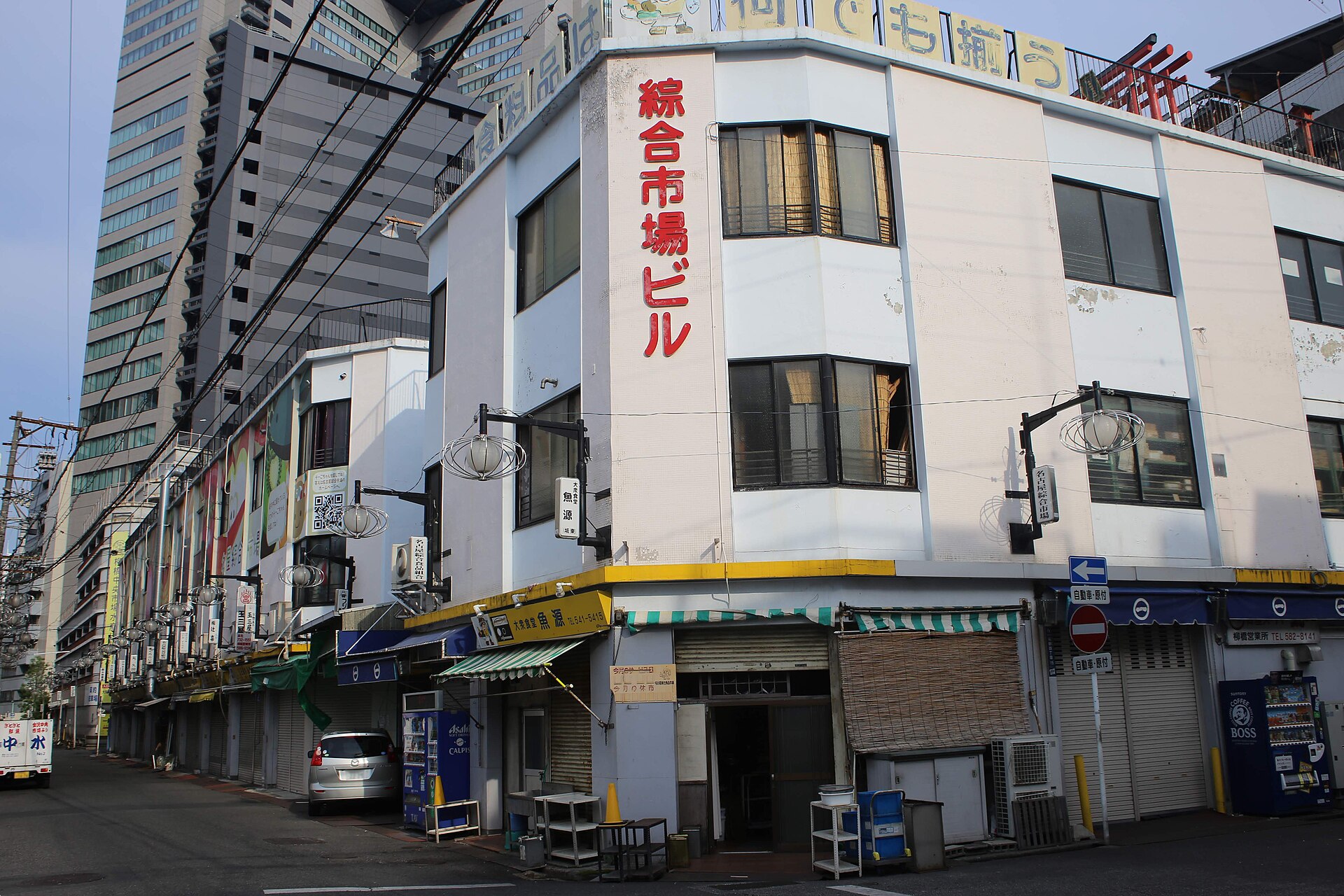
Yes, if you like markets that still serve local cooks rather than tour groups. Yanagibashi Rengo Market (Haruyoshi 1-6-1, Chuo-ku) is a set of alleys about 1 m wide packed with fishmongers, greengrocers, sweet shops and stalls selling kelp, dried fish and pickles. It is 3 minutes on foot from Watanabe-dori subway station.
Shops open from about 08:00 and close in the evening, with hours varying by stall. The market is closed on Sundays and public holidays. Some shops have counters where you can eat, and in winter you will see wild fugu and anglerfish on the slabs.
When can you visit Nagahama Fish Market?
Nagahama is Fukuoka’s wholesale fish market, so the public can only buy fish there on the monthly Citizen Appreciation Day (Shimin Kansha Day). The rest of the time you can still eat in the building and watch the auctions.
| What | When (2026–27) | Notes |
|---|---|---|
| Citizen Appreciation Day | Sat 14 November 2026 and Sat 12 December 2026, 09:00–12:00 | Fish sales end 11:00; bluefin tuna cutting show; none January–March 2027 |
| Market Kaikan restaurants (1F) | Mon–Sat, about 08:00–16:30 (by shop) | Open to everyone; some serve breakfast; long queues at lunch |
| Auction viewing | Market days | Public walkway on the 2nd floor |
| Uozaza | Opened November 2024 | Food hall and shop in the east section |
Dates are from Crossroad Fukuoka’s event page and building details from its market page. The market is at Nagahama 3-11-3, about 12 minutes on foot from Akasaka subway station. Parking is limited, so take the subway.
What is eating in Fukuoka like in late autumn and winter 2026–27?
This is the best season to use a Fukuoka food guide like this one. Hotpots like motsunabe and mizutaki make most sense in the cold, and fugu and anglerfish appear at Yanagibashi. Nagahama’s two remaining public days of 2026 fall on 14 November and 12 December.
The trade-off is the yatai. They stay open, but you are sitting outdoors, and the prefecture’s own advice is to dress warmly. In 2027, watch for new yatai operators taking over pitches from 1 April.
How do you get to Fukuoka?
| From | How | Time | Cost (one way, adult) |
|---|---|---|---|
| Tokyo | Nozomi Shinkansen to Hakata | About 5 hr 10 min | ¥23,810 reserved; ¥22,220 unreserved |
| Shin-Osaka | Nozomi or Mizuho Shinkansen | About 2 hr 30 min | ¥16,020 reserved; ¥14,750 unreserved |
| Tokyo (Haneda) | JAL, ANA, Skymark or Starflyer | About 1 hr 50 min–2 hr 5 min scheduled | Varies; lowest fare seen ¥9,890 (Skymark, Jan 2027) |
| Fukuoka Airport | Subway Airport Line | 5 min to Hakata, 10–11 min to Tenjin | ¥260 |
Shinkansen fares are regular-season prices from Tabiris (Tokyo) and Tabiris (Shin-Osaka); flight times and airlines are from Airtrip. Subway times are from Go Fukuoka and ANA’s airport page; trains run from 05:43 to midnight. The international terminal is a 10-minute shuttle bus from the domestic terminal.
If you are covering Kyushu and Honshu by train, read whether the JR Pass is worth it and our note on the Shinkansen fare increase in 2027. Fukuoka also makes a natural base for Kumamoto and the Kyushu shrines that look like Ghibli sets.
How do you use this Fukuoka food guide on a two-day trip?
- Day 1 evening: land, drop bags, go straight to a Nakasu or Tenjin yatai at 18:30 for a first round of stall food and a bowl of ramen.
- Day 2 morning: Yanagibashi Rengo Market (not Sunday), or Nagahama on a Citizen Appreciation Day.
- Day 2 lunch: ramen near Hakata Station, then mentaiko shopping or a factory visit.
- Day 2 dinner: mizutaki (book ahead) or motsunabe, then one last stall in Nagahama.
Pre-dinner drinks? Our izakaya and bars by station guide has the format.
Fukuoka food guide FAQ
What food is Fukuoka famous for?
Hakata tonkotsu ramen, yatai street-stall cooking, motsunabe offal hotpot, mizutaki chicken hotpot and mentaiko spicy pollock roe.
What time do Fukuoka yatai open?
Most open around 18:30–19:00 and close around 01:00. The city allows site use from 17:00 to 04:00 including set-up and take-down.
How many yatai are there in Fukuoka?
101 as of 1 April 2026, according to Fukuoka City. New operators chosen in 2026 start on 1 April 2027.
Can you eat raw fish at a yatai?
No. City rules ban raw food at yatai; everything must be thoroughly heated before serving.
How much is ramen in Fukuoka?
From ¥550 at Ganso Nagahamaya (Mapple listing) to ¥1,080 at Ichiran’s main store; a kaedama noodle refill is ¥150–210.
When is Nagahama Fish Market open to the public?
On its monthly Citizen Appreciation Day, 09:00–12:00. Remaining 2026 dates are 14 November and 12 December; there are none January–March 2027.
Do I need to book mizutaki?
Yes for the famous houses. Mizutaki Nagano requires a phone booking and is closed Sundays and Mondays.
How far is Fukuoka Airport from the city?
About 5 minutes to Hakata and 10–11 minutes to Tenjin on the subway, for ¥260.
Sources and how we checked
We checked the facts in this Fukuoka food guide on 23 October 2026 against Fukuoka City’s yatai ordinance and recruitment pages, Crossroad Fukuoka (the prefecture’s official tourism site), Ichiran and Oyama’s own shop pages, Go Fukuoka, ANA and JR East. Prices for some shops come from Mapple and Rurubu listings, which can lag behind price rises, so check before you go.
Eat your way around Fukuoka
Japan Pro can book your Shinkansen, hotel and a local food tour so you spend your Fukuoka nights eating, not planning.
Read next
Best Coffee in Tokyo, Kyoto and Osaka: 32 Cafés and Kissaten by Station (2026)
Izakaya Tokyo Guide 2026: Cover Charges, Smoking Rules and 10 Bar Alleys by Station
Tsukiji Food Tour 2026: Prices, What You Eat and a DIY Stall Route
 English
 Japanese
 Chinese (Taiwan)
 Chinese (China)
 Korean
 French
 Italian
 Thai