
Shibamata Guide 2026: Taishakuten Carvings, Kusa Dango and the Yagiri Ferry
Shibamata is a pocket of old Tokyo in Katsushika City where one short shopping street leads from a tiny Keisei station to Shibamata Taishakuten, a temple covered in wood carvings, and on to the Edogawa River, where a small ferry still crosses to Chiba. The whole Shibamata guide fits into about a kilometre, so you can see it in half a day for about ¥1,600 in entry fees, ferry included.
Most of the town is famous because of one man, Tora-san, the wandering hero of the 48 Otoko wa Tsurai yo films released between 1969 and 1995. You do not need to have seen them. In 2018 the area became the first place in Tokyo to be named an Important Cultural Landscape by the national government, and it still looks the part.
¥400
Taishakuten carvings and garden
¥300
Yagiri no Watashi ferry, one way
9:00–16:00
Carvings gallery hours
~1 km
Station to river on foot
How do you get to Shibamata from Ueno, Asakusa or Tokyo Station?
Shibamata Station is on the Keisei Kanamachi Line, a two-stop branch between Keisei Takasago and Kanamachi. Every route in this Shibamata guide ends with a short hop on it, so the real question is where you change.
| From | Route | Change at |
|---|---|---|
| Ueno | Keisei Main Line from Keisei Ueno to Keisei Takasago, then Kanamachi Line one stop | Keisei Takasago |
| Asakusa | Toei Asakusa Line; many trains run through onto the Keisei line to Keisei Takasago, then Kanamachi Line one stop | Keisei Takasago |
| Tokyo Station | JR Yamanote Line to Nishi-Nippori, Tokyo Metro Chiyoda Line to Kanamachi, then Keisei Kanamachi Line one stop (about 50 min) | Nishi-Nippori, Kanamachi |
| Shinjuku | JR Yamanote Line to Nippori, Keisei Main Line to Keisei Takasago, then Kanamachi Line (about 60 min) | Nippori, Keisei Takasago |
Journey times above come from GO TOKYO, the city’s official tourism site. All of these lines take Suica and PASMO, so you do not need tickets; see our IC card guide. If you change at Kanamachi, the Keisei and JR/Metro gates are about 130 m apart on the street.
One quirk: Shibamata Station is so small that if you arrive on the Kanamachi-bound platform you cross the tracks inside the station to reach the only ticket gate. There is also Shin-Shibamata on the Hokuso Line, but it is a 12-minute walk from the temple, so use it only if you are coming from the Chiba side.
What is the best walking order in Shibamata?
This Shibamata guide follows the town in a straight line, station to river, and you come back the same way. The distances are short enough that you will not need a map once you are on the approach street.
| Stop | Distance from previous | Time to allow |
|---|---|---|
| Tora-san and Sakura statues (station plaza) | 0 m | 5 min |
| Taishakuten Sando shopping street | About 100 m (2 min) | 30–45 min |
| Shibamata Taishakuten (Nitenmon gate) | About 150 m (3 min) | 45–60 min |
| Yamamoto-tei | A few minutes behind the temple; 8 min from the station | 30–45 min |
| Tora-san Museum and Yamada Yoji Museum | On the embankment side; 8 min from the station | 45–60 min |
| Yagiri no Watashi ferry pier | Down on the Edogawa riverbank; about 10 min from the station | 20–40 min |
Station distances are from the Tokyo Metropolitan Government accessible tourism route and GO TOKYO. Allow three to four hours if you want the ferry and both museums; two hours covers the street and temple only.
Shibamata Station plaza: Tora-san and Sakura
Outside the gate is a bronze Tora-san looking back over his shoulder as he leaves home, as he does in the films; it was put up in 1999. A smaller statue of his sister Sakura, seeing him off, stands nearby. The Shibamata Tourist Information Center is a few steps away at 7-1-5 Shibamata and sells local crafts.
What should you eat on Taishakuten Sando?
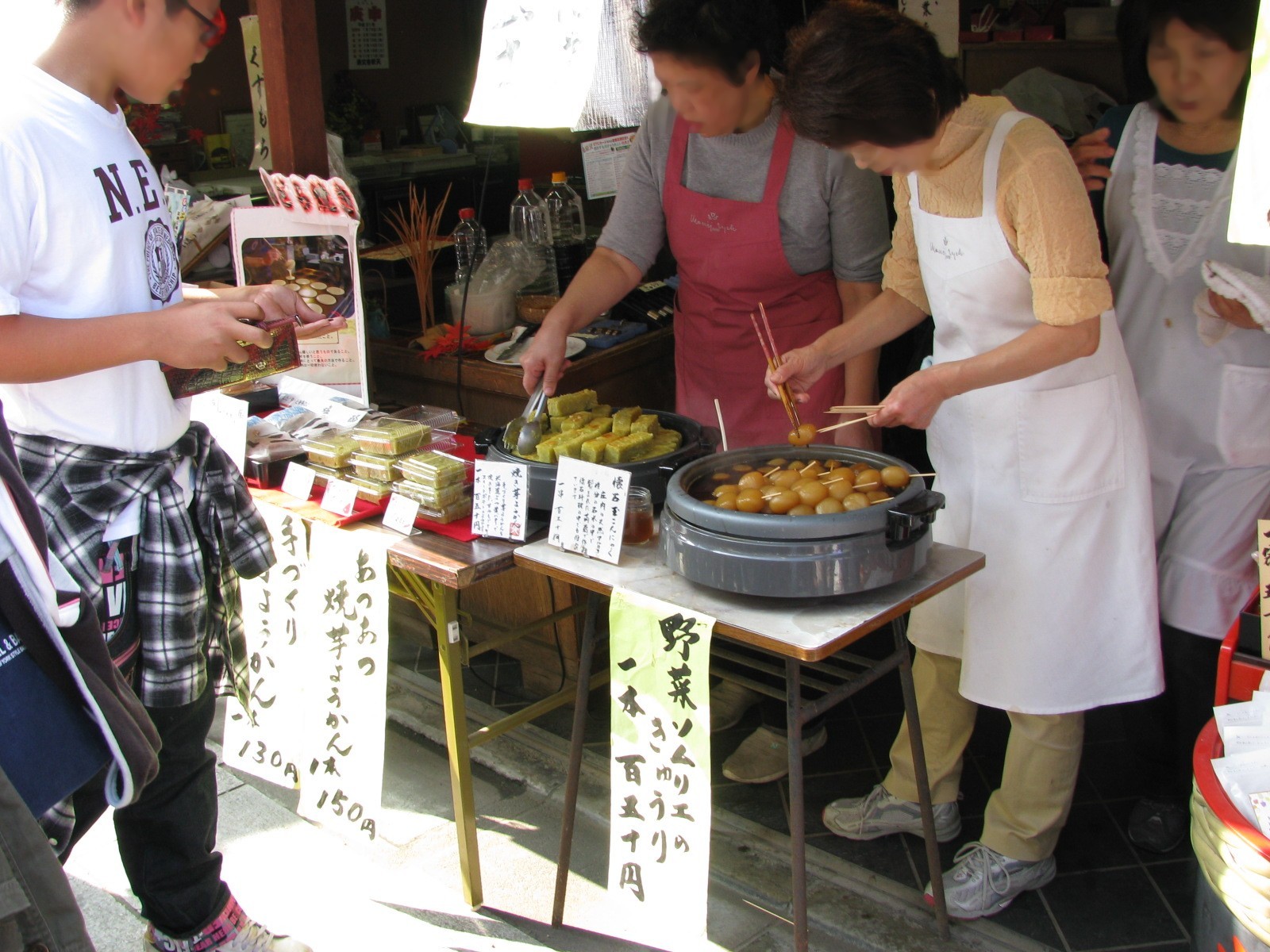
The Sando is the short approach street from the station to the temple gate, lined with low wooden shops that survived the war. The thing to eat is kusa dango: chewy rice dumplings coloured green with mugwort and topped with sweet red bean paste. In the films, Tora-san’s family runs a dango shop on this street.
Takagiya Rouho
The best-known dango shop, at 7-7-4 Shibamata, has film photos on the walls. Its takeaway shop opens 9:00–17:00 and the sit-down café 10:00–16:00, per Takagiya’s own site. It revised some prices in October 2026, so check the board, and holds a small lucky fair on the 10th of every month, which it calls Tora-san Day.
Other shops on the approach
Toraya, Ebisuya and Kameya Honpo are among the long-running shops facing each other along the Sando; they were the street-food stalls at the 2026 Shibamata Yoi Festa. Alongside dango, the street is known for toasted rice crackers. For something sillier, Shibamata Haikara Yokocho has retro pinball machines, old-style penny sweets and 1960s postcards.
Takagiya’s café stops at 16:00 and its shop at 17:00, so come before mid-afternoon if food is the main reason for your trip.
What is special about Shibamata Taishakuten?
Shibamata Taishakuten is the popular name for Daikyoji (7-10-3 Shibamata), a Nichiren Buddhist temple founded in 1629. The grounds are free and open 9:00–18:00. The real reason to come is behind the main hall, where you pay ¥400 to see the carvings and the garden.
| Taishakuten facility | Hours | Fee (2026) |
|---|---|---|
| Temple grounds | 9:00–18:00 | Free |
| Carvings gallery (Chokoku Gallery) | 9:00–16:00 | ¥400 (combined) |
| Suikei-en garden | 9:00–16:00 | Included in the ¥400 ticket |
| Closing days | None regular | – |
Hours and fees are from the Tokyo Metropolitan Government and GO TOKYO. The temple does not publish an English site, and the gallery closes at 16:00, two hours before the grounds, so do not leave it to the end of the day.
The Nitenmon gate and the Taishakudo
The Nitenmon gate you walk through dates from 1896. The Taishakudo, the hall behind it, was finished in 1929 and survived the wartime bombing. Look up on the way in: the gate and hall are covered in carved wooden panels, and an enormous old pine spreads across the courtyard.
The carvings gallery
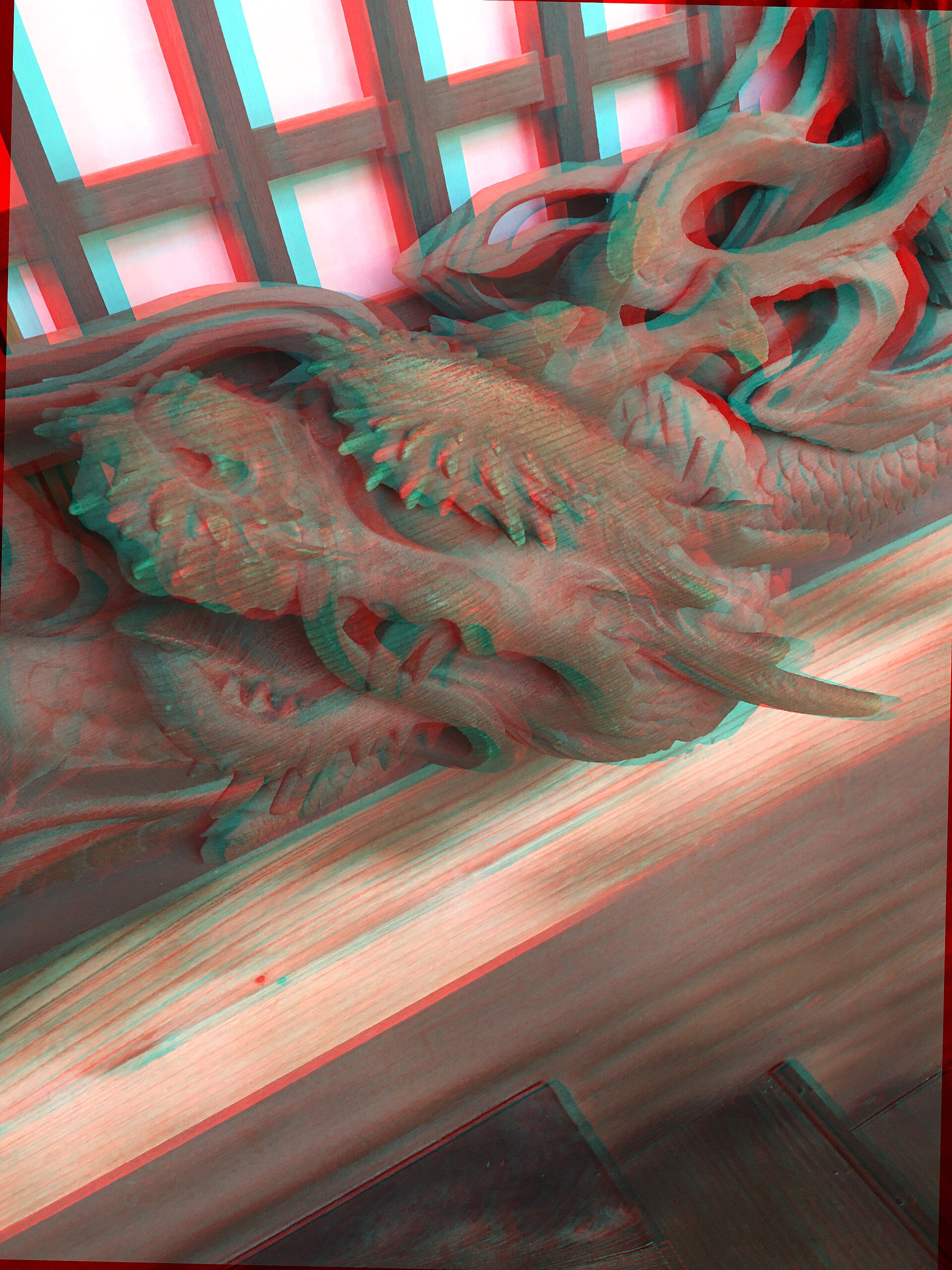
The outer walls of the inner hall are covered in large wooden panels carved between 1915 and 1929 by several different artists, showing stories from the Lotus Sutra. A viewing gallery runs around the hall so you can get close to the panels. Few overseas visitors know it exists.
Suikei-en garden
A Japanese garden behind the hall, viewed from a covered walkway. It has turned up as a location in the Tora-san films and in the manga KochiKame.
Accessibility: there are many steps into the main hall and the Taishakudo, so they cannot be reached by wheelchair. The temple has no public toilets; use the accessible public toilets in front of the Nitenmon gate.
Is Yamamoto-tei worth ¥100?
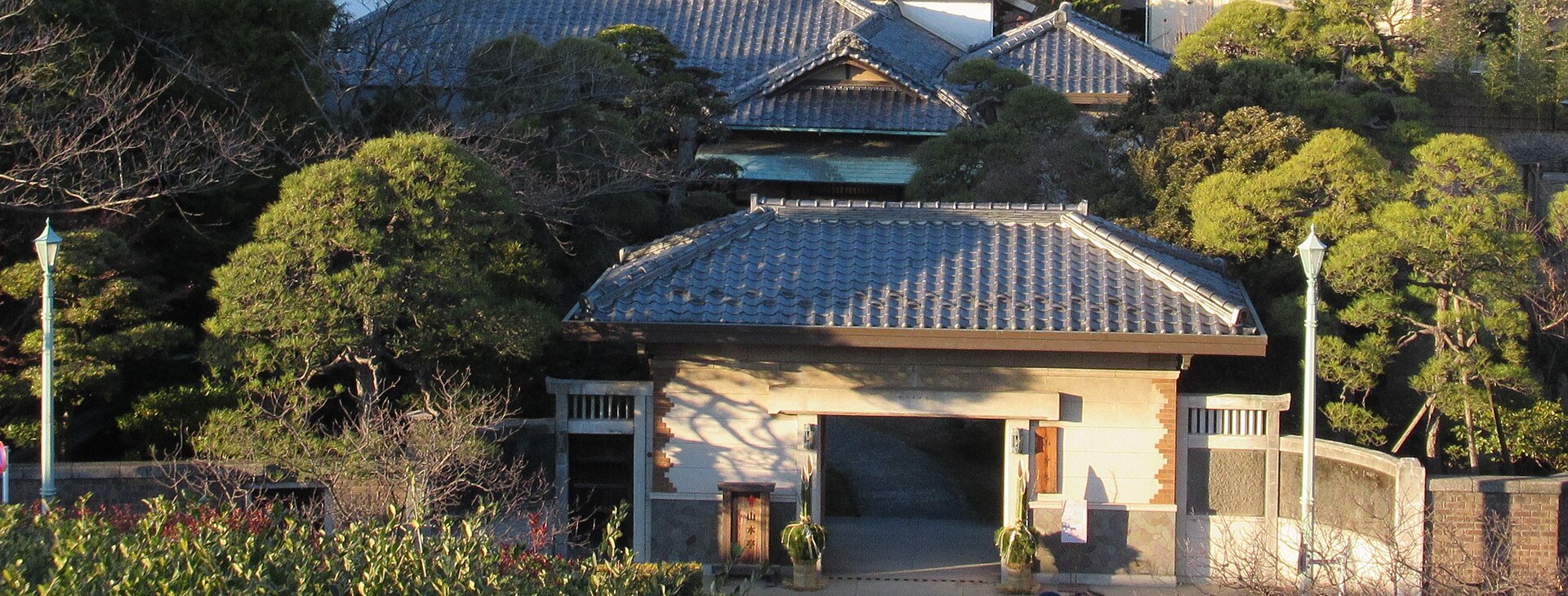
Yes. Yamamoto-tei (7-19-32 Shibamata) is a 1920s house built for a local businessman, mixing traditional shoin-style Japanese rooms with Western-style rooms. Katsushika City bought it in 1988 and opens it as a registered cultural property, with tea served overlooking the garden.
- Hours: 9:00–17:00, last entry 30 minutes before closing.
- Closed: the third Tuesday of each month, plus the Wednesday and Thursday after it in December (in late 2026: 17 November and 15–17 December).
- Admission: ¥100; junior-high age and under free.
- Café: matcha, zenzai (sweet bean soup), coffee and ramune, served on the tatami facing the garden. Prices are on the Yamamoto-tei site.
Hours and the fee are from GO TOKYO and Katsushika City. The house also has a wartime air-raid shelter, opened for special lottery tours in August 2026, and hosts evening concerts during the Shibamata Yoi Festa each October.
Tora-san Museum and Yamada Yoji Museum: what is inside?
The Katsushika Shibamata Tora-san Museum (6-22-19 Shibamata) backs onto the Edogawa embankment. It recreates the Kurumaya dango shop set used in filming, which you can sit in, plus a model of 1950s Shibamata and displays on how the films were shot. Next door, the Yamada Yoji Museum covers the director’s wider career; one ticket covers both.
| Ticket (covers both museums) | Price (2026) |
|---|---|
| Adult | ¥500 |
| Primary and junior-high students | ¥300 |
| Seniors and groups | ¥400 |
Both open 9:00–17:00 with last entry 30 minutes before closing. They close on the third Tuesday of the month (the next weekday if that is a holiday) and on the third Tuesday, Wednesday and Thursday of December, but stay open over New Year, per the museum’s official page. Wheelchairs can be borrowed here for the Sando, and the building’s lift goes up to the Edogawa embankment, which is the step-free way to the river.
When does the Yagiri no Watashi ferry run, and how much is it?
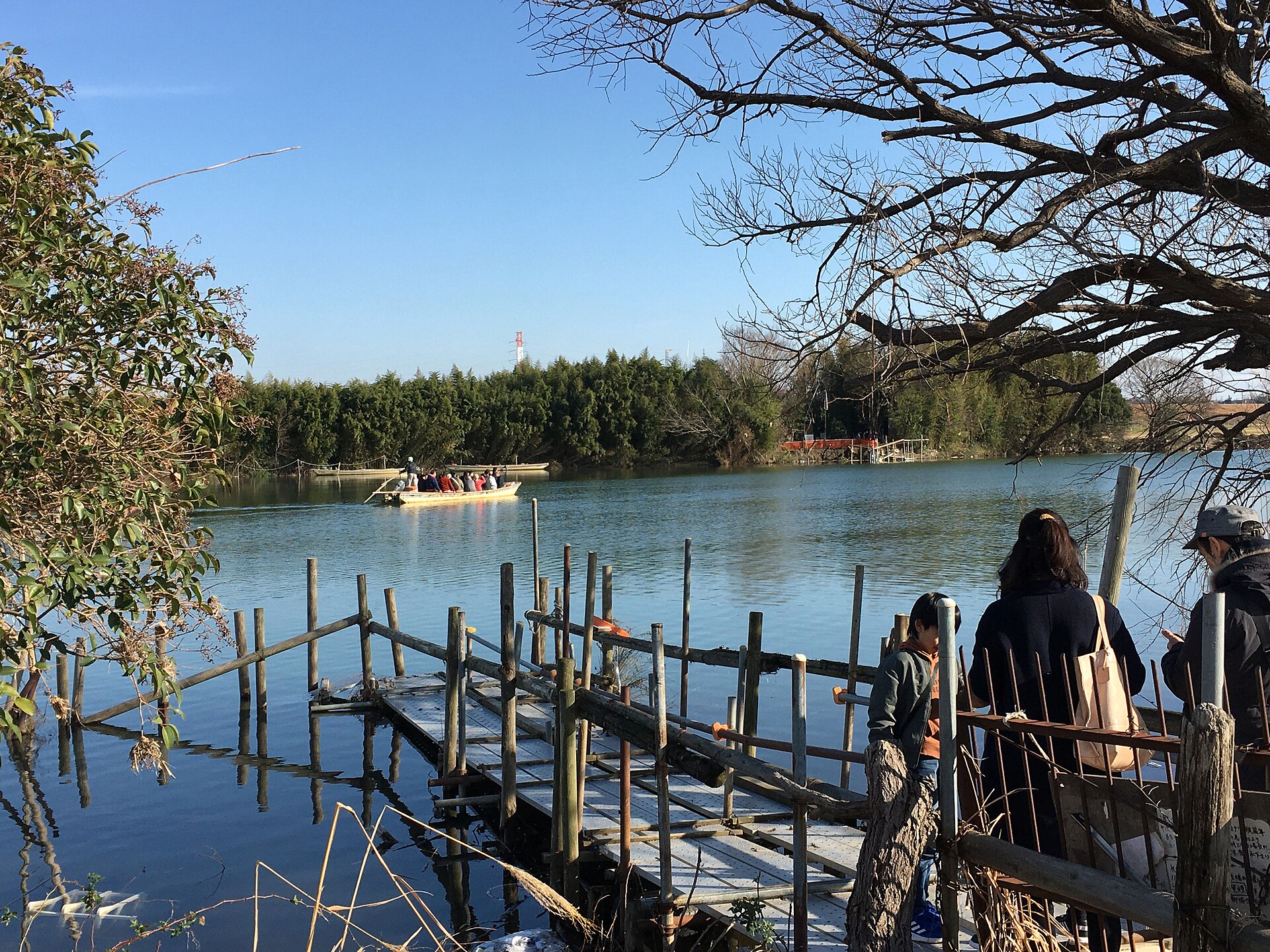
The Yagiri no Watashi is the last farmers’ ferry on the Edogawa, crossing between Shibamata in Tokyo and Yagiri in Matsudo, Chiba. It has run for more than 380 years, since the Edo period, when the shogunate banned bridges on the river. Its sounds (the boat, skylarks and gulls) are on the national list of 100 Soundscapes of Japan.
| Season | Operating days | Hours |
|---|---|---|
| Mid-March to November | Daily, except Mondays and Tuesdays in July and August (open on holidays) | 10:00–16:00 |
| December to early March | Saturdays, Sundays and holidays only | 10:00–16:00 |
| 1–7 January | Daily | 10:00–16:00 |
| Bad weather | No crossings; also some irregular closures | – |
Fares are ¥300 one way for junior-high age and over and ¥100 for children from age four to primary school, per the Chiba Prefecture tourism site. Crossings stop in bad weather and on some irregular days, so call 047-363-9357 if in doubt.
Two things most guides miss: first, the ferry is not currently hand-rowed, although older photos show an oarsman. Second, the Chiba side is rural: Yagiri Station on the Hokuso Line is about a 35-minute walk away, or take a bus from Matsudo Station West exit. Unless you are walking on into Matsudo, cross, take in the view back to Tokyo from the observation deck and catch the boat back.
Shibamata guide by season: when is the best time to visit?
Late autumn (now to early December 2026)
Late October and November are the easy months: the ferry still runs daily until the end of November, and the riverside is pleasant on clear days. For leaf-peeping, combine Shibamata with the bigger spots in our Tokyo autumn leaves 2026 guide. From December the ferry switches to weekends and holidays only.
New Year (hatsumode) 2027
Taishakuten is a popular place for hatsumode, the first temple or shrine visit of the year, and the first three days of January are by far the busiest. Go early in the morning or after 7 January. The ferry runs daily on 1–7 January and the Tora-san Museum stays open; for other New Year plans see New Year in Tokyo 2027.
Koshin days and the 10th of the month
Taishakuten is traditionally busiest on Koshin days, which come round every 60 days in the old calendar and bring extra stalls to the Sando. The temple does not publish an English calendar, so ask at the tourist information centre if you want to catch one. Takagiya’s fair on the 10th of every month is smaller but easy to plan for.
Early October: Shibamata Yoi Festa
This evening festival on the Sando and at Yamamoto-tei ran on 3–4 October 2026 from 16:00 to 20:00, with skewer food from 11 shops, craft beer and garden concerts. Dates for 2027 are not yet announced; check Katsushika City Tourism from September.
Shibamata guide: what does a half-day cost?
| Item | Cost (2026) |
|---|---|
| Taishakuten carvings and garden | ¥400 |
| Yamamoto-tei | ¥100 |
| Tora-san Museum and Yamada Yoji Museum | ¥500 |
| Yagiri no Watashi, return | ¥600 |
| Total entry fees, adult | ¥1,600 |
Add train fares and dango. Skip the ferry and the total is ¥1,000; the street and temple grounds alone are free.
Informez-vous avant de partir
Do the gallery first
The Taishakuten carvings gallery stops at 16:00. Go there before lunch, then eat on the Sando.
Avoid third Tuesdays
Yamamoto-tei and both museums close on the third Tuesday: 17 November and 15–17 December 2026.
Check the weather
The ferry stops in bad weather. Call 047-363-9357 if the sky looks doubtful.
Winter ferry
From December to early March the ferry only runs on weekends and holidays.
Pair it with Asakusa
Asakusa is on the same Toei/Keisei through line, so Shibamata makes an easy afternoon add-on.
Shibamata pairs well with Asakusa on the same line, or as a second old-Tokyo walk after Yanaka Ginza. For more quiet neighbourhoods, see our Tokyo hidden gems.
Shibamata guide FAQ
How long do you need in Shibamata?
Two hours covers the Sando and Taishakuten. Allow three to four hours to add Yamamoto-tei, the Tora-san Museum and the ferry.
How much is Shibamata Taishakuten?
The temple grounds are free. The carvings gallery and Suikei-en garden cost ¥400 together and are open 9:00–16:00.
Is the Yagiri no Watashi ferry running in winter?
Only on Saturdays, Sundays and holidays from December to early March, plus daily on 1–7 January. It runs 10:00–16:00 and stops in bad weather.
How much is the Yagiri no Watashi ferry?
¥300 one way for junior-high age and over, ¥100 for children aged four to primary school, paid in cash.
How do I get to Shibamata from Asakusa?
Take the Toei Asakusa Line towards Keisei Takasago (many trains run through), then change to the Keisei Kanamachi Line for one stop to Shibamata.
Do I need to know the Tora-san films?
No. The temple carvings, Yamamoto-tei and the ferry are worth the trip alone, and the museum explains the films.
Is Shibamata busy at New Year?
Yes. Taishakuten is a popular hatsumode spot and 1 to 3 January are the busiest days, so go early in the morning or after 7 January.
Sources and how we checked
We checked the hours, fees, closing days and ferry season in this Shibamata guide on 23 October 2026 against the linked official sources: GO TOKYO, the Tokyo Metropolitan Government accessible tourism pages, Katsushika City and Katsushika City Tourism, the Chiba Prefecture tourism site and Takagiya. The temple has no English website, so confirm on the day.
Plan your Shibamata day with Japan Pro
Japan Pro can help you combine Shibamata with Asakusa or book a local guide for old Tokyo.
Read next
Go Kart Tokyo 2026: Street Kart Prices, Routes and IDP Rules
Ryogoku Guide 2026–27: Edo-Tokyo Museum, Hokusai, Chanko Nabe and the Sumo Town by Day of the Week
Roppongi Guide 2026: Art Triangle Museums, Tokyo City View, Azabudai Hills and Safe Nights Out
 English
 Japanese
 Chinese (Taiwan)
 Chinese (China)
 Korean
 French
 Italian
 Thai