
Kishiwada Danjiri Matsuri 2027: Dates, Schedule and 3 Safe Places to Watch Yarimawashi
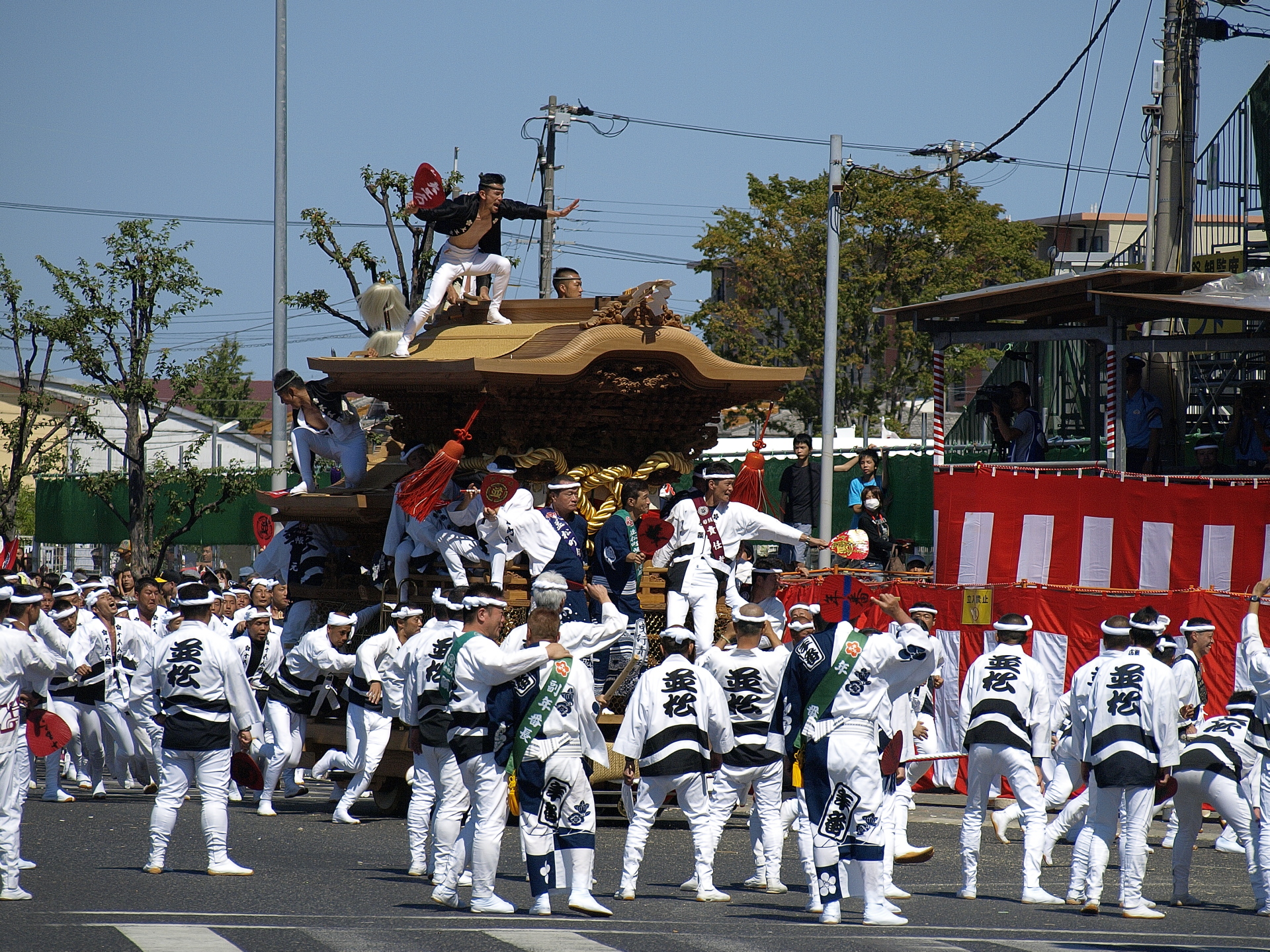
La Kishiwada Danjiri Matsuri is held on the Saturday and Sunday before Respect for the Aged Day in mid-September, so the next one should fall on Saturday 18 and Sunday 19 September 2027. Kishiwada City has not announced 2027 yet. In 2026 it ran on 19–20 September, with 34 four-tonne wooden floats taking street corners at a run from 6:00 to 22:00.
This is a practical guide to Kishiwada Danjiri Matsuri: the date rule, what happens hour by hour, where the yarimawashi corner turns are safest to watch, what the paid seats cost, and how to get there on the Nankai line from Namba. It also clears up a common mix-up about the Haruki and October festivals. For the rest of the year, see our Japanese festival calendar. Everything was checked on 23 October 2026.
18–19 Sep 2027
Expected dates (not yet announced)
34 danjiri
22 Kishiwada + 12 Haruki
From ¥3,300
Kankanba bench seat, 2026
¥540
Namba to Kishiwada, 26 min
When is Kishiwada Danjiri Matsuri 2027?
Since 2006 the September festival has been held on the Saturday and Sunday just before Respect for the Aged Day, the third Monday of September (Imidas almanac). Before that it ran on fixed dates, 14 and 15 September. The Saturday is the yoimiya (eve) and the Sunday the honmiya (main day).
Respect for the Aged Day falls on Monday 20 September 2027, so the rule points to 18–19 September 2027. Treat that as an expected date: the official Kishiwada City danjiri site only lists 2026 so far. The city posted the 2026 parade order on 1 September and the illustrated maps on 14 August, so look for 2027 detail in late summer.
| Day | 2026 date | Hours (official) | 2027 (expected) |
|---|---|---|---|
| Test run (shiken-biki) | Sun 6 Sep and Fri 18 Sep | 14:00–16:00 | Not announced |
| Yoimiya (eve) | Sat 19 Sep | 6:00–22:00 | Sat 18 Sep |
| Honmiya (main day) | Sun 20 Sep | 9:00–22:00 | Sun 19 Sep |
| October festival test run | Sun 4 Oct | 13:00–17:00 | Not announced |
| October festival yoimiya | Sat 10 Oct | 6:00–22:00 | Not announced |
| October festival honmiya | Sun 11 Oct | 7:00–22:00 (varies by district) | Not announced |
Source: Kishiwada City danjiri site, 2026 schedule. The test runs are proper runs through the streets, with smaller crowds than the main weekend. They are a good option if you cannot face the main days.
Kishiwada, Haruki or the October festival: which is which?
This trips up a lot of visitors. The Haruki floats are part of the September festival, not the October one. On the city schedule, the Kishiwada district (22 danjiri) and the Haruki district (12 danjiri) both run on the September weekend. Together they make the 34 floats JNTO quotes.
The October festival is a separate weekend run by Kishiwada’s other districts, which are mostly inland, along the JR Hanwa Line rather than the Nankai line. JR West’s October 2026 join-the-pull tour, for example, met at JR Higashi-Kishiwada Station (JR Odekake Net).
| Festival | Month (2026) | Floats | Main station | Shrine visit (miyairi) |
|---|---|---|---|---|
| Kishiwada district | 19–20 Sep | 22 | Nankai Kishiwada | Kishiki Shrine (via Konagara-zaka), Kishiwada Tenjingu |
| Haruki district | 19–20 Sep | 12 | Nankai Haruki | Yasaka Shrine (Haruki) |
| October districts | 10–11 Oct | Not published in one place | JR Hanwa Line (e.g. Higashi-Kishiwada) | Varies by district |
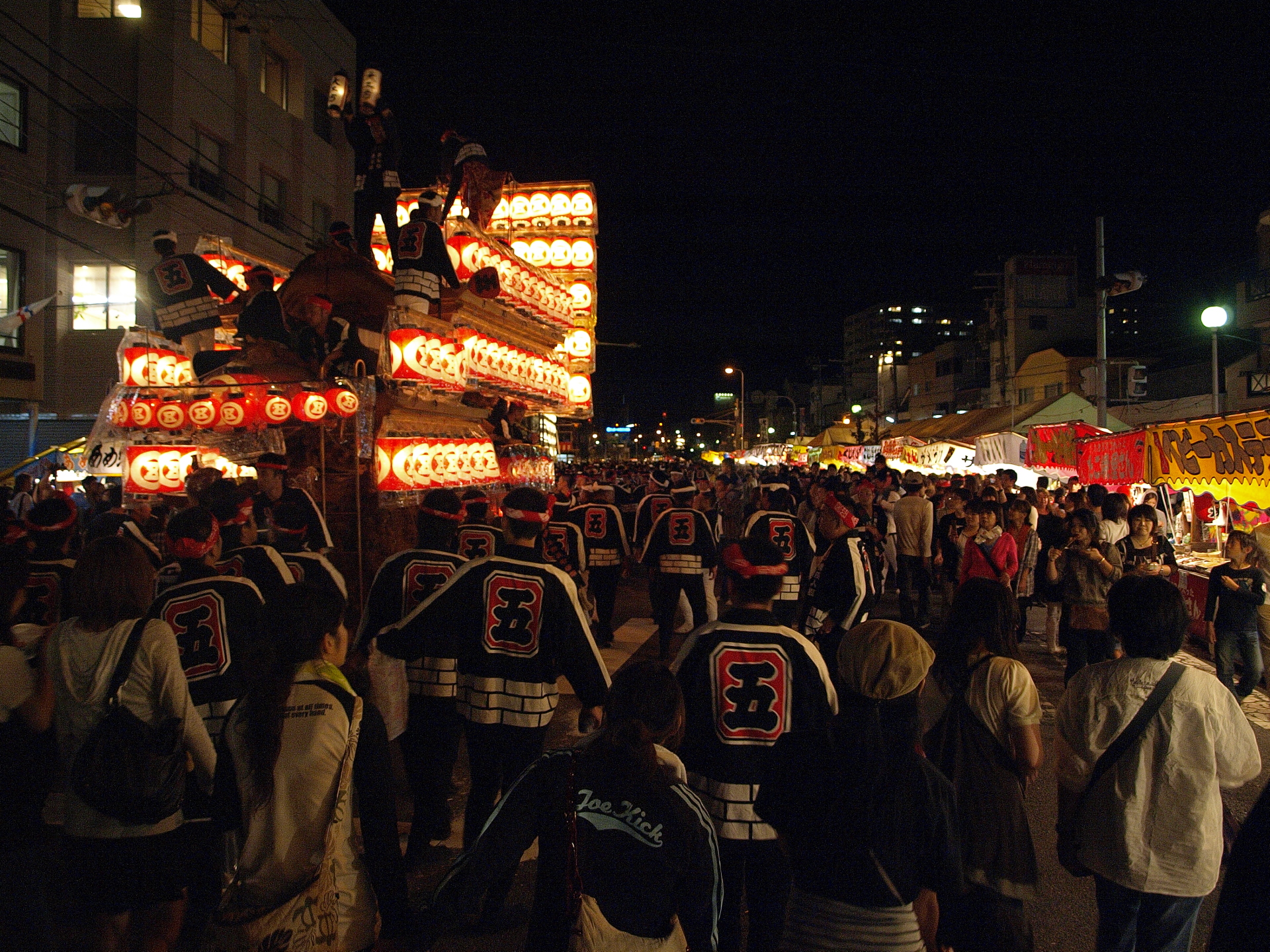
If you want the famous version, the one on TV, go in September. October is smaller, more local, and the floats are lit with lanterns at night, so it is a good second look if you are already in Osaka.
What is yarimawashi, and why is it dangerous?
Yarimawashi is the move Kishiwada is famous for: a danjiri of more than four tonnes turns a 90-degree street corner while still running. Most float festivals slow right down for corners. Kishiwada does not (Kishiwada City: yarimawashi).
Four groups have to get the timing exactly right. The young men’s team hauls the ropes, the front lever crew starts the turn, the rear lever crew steers, and the daiku-gata (carpenters) dancing on the roof signal the rear crew. When it works it is fast and precise. When it does not, the float clips a building, and anyone standing on the outside of the corner is in the way.
The festival dates back to 1703, when the lord of Kishiwada, Okabe Nagayasu, held an Inari festival inside the castle grounds to pray for a good harvest (Kishiwada City: history). It became nationally known after an NHK broadcast in 1972. JNTO puts pre-pandemic crowds at about 500,000 people a year (JNTO).
Kishiwada Danjiri Matsuri hour by hour
These times are from the official 2026 parade and shrine-entry lists. The order of the floats changes every year, but the shape of each day stays much the same.
Saturday (yoimiya)
| Time (2026) | What happens | Where |
|---|---|---|
| 6:00 | Floats start running; the day officially opens | Both districts |
| 9:30–11:20 | Haruki parade: 12 floats set off at 10-minute intervals | In front of La Park, by Nankai Haruki Station |
| 13:00–14:45 | Kishiwada parade: 22 floats set off at 5-minute intervals | In front of Nankai Kishiwada Station |
| Afternoon | Floats run their course again and again, turning at every corner | Old town, Kankanba, Kishu Kaido |
| Evening–22:00 | Lanterns go on and the floats run more slowly | Across the course |
Sunday (honmiya)
| Time (2026) | What happens | Where |
|---|---|---|
| 7:00 | Haruki-Minami float enters Yasaka Shrine (outside the ranking) | Yasaka Shrine |
| 8:30–11:05 | Haruki miyairi: 12 floats enter the shrine | Yasaka Shrine |
| 9:30–11:22 | Kishiwada miyairi: 15 floats charge up Konagara-zaka at 8-minute intervals | Konagara-zaka to Kishiki Shrine |
| 10:00–11:15 | Six floats enter Kishiwada Tenjingu at 15-minute intervals | Kishiwada Tenjingu |
| Afternoon–22:00 | Running continues; evening lantern runs | Across the course |
Sources: Kishiwada district order 2026 and Haruki district order 2026. Times are the official start or departure times; real timings drift as the day goes on.
The busiest moments are the Saturday afternoon parade from Kishiwada Station and the Sunday morning charge up Konagara-zaka. If you can only do one, do Sunday morning, then stay for afternoon corner turns.
Where to watch yarimawashi safely
The rule of thumb: stand on the inside of a corner or well back along a straight, never on the outer edge of a turn. A float that misjudges a corner swings wide, and the outer kerb and the shopfronts behind it are where it ends up.
Kankanba
The best-known yarimawashi corner, in the Daihoku-cho area on the seaward side of the old town. This is where the paid seats go (see below). It is the most dramatic spot and the most crowded, so arrive well before the Saturday afternoon parade (Viewing Seat 2026 release).
Konagara-zaka
The steep slope beside Kishiwada City Hall that leads up into the castle grounds to Kishiki Shrine. On Sunday morning, 15 floats run up it one after another. Traffic controls close off approaches early, so get there from early morning. All About recommends Nankai Takojizo Station, about 7 minutes’ walk, over Kishiwada Station (All About).
Kishu Kaido
The old north–south road through the castle town, past Sakaimachi and Honmachi, with white walls and tiled roofs. Floats pass here too, with far fewer people. It is the best choice for a first visit, for families and for anyone who wants to see the carvings up close rather than the speed.
The official spectator rules
- Do what festival staff and police tell you, straight away.
- No stepladders or stools to see over the crowd.
- No umbrellas, even in rain. Bring a raincoat or poncho.
- No smoking while watching.
- Give a passing float room: the rear steering lever needs about twice the float’s width to work.
- Take your rubbish home.
Source: Kishiwada City: spectator guidelines. The same page includes a diagram of the danger zones around a corner. Download the 2026 illustrated maps for Kishiwada and Haruki before you go; they show the course for each district.
Kishiwada Danjiri Matsuri paid seats: are they worth it?
If you want to watch yarimawashi sitting down, with no jostling, yes. The only paid seating we could find is the private Viewing Seat run by TryHard Japan facing the Kankanba corner. 2026 was its fourth year; it started in 2023.
| Detail | 2026 |
|---|---|
| Dates | Fri 18 Sep (test run), Sat 19 Sep, Sun 20 Sep |
| Mountain-side venue | Coop Kishiwada car park, facing the Kankanba for close-up turns |
| Sea-side venue | Kankan Bayside Mall, a more relaxed view; includes shaded sofa VIP seats |
| Price | Benches from ¥3,300 incl. tax; VIP prices only on the official ticket list |
| Sales | Online via e+ from 3 July 2026, 10:00; in person at Namikiri Shrine on 2, 9 and 30 August |
| Rules | No refunds or exchanges; photos and video allowed |
Sources: PR Times release via Koubo and Resemom. 2027 seats are not announced. Based on 2026, expect sales to open in early July, and check the organiser’s Instagram, @kishiwadadanjiri_vie, from June.
How to get to Kishiwada Danjiri Matsuri
Take the Nankai Main Line from Namba. In 2026, Ekitan shows the Airport Express taking 26 minutes from Kishiwada to Nankai Namba for ¥540 by IC card or ticket (Ekitan). Some Rapi:t airport trains skip Kishiwada, so check before you board (Osaka Convention & Tourism Bureau).
- For the Kishiwada district: Kishiwada Station is extremely crowded on festival days. The city suggests using the neighbouring Takojizo or Izumi-Ōmiya stations instead.
- For Haruki: Nankai Haruki Station. The Haruki parade starts right outside, in front of La Park.
- For the October festival: JR Hanwa Line stations such as Higashi-Kishiwada, from Tennoji.
- Do not drive. Traffic controls cover a wide area on all four September run days (6, 18, 19 and 20 September in 2026), and residents need permits.
- From Kansai Airport: Kishiwada is on the same Nankai line, between the airport and Namba. Our IC card guide explains paying fares with a tap.
Sources: Kishiwada City spectator guidelines, 2026 traffic regulation notice. The festival runs until 22:00 and platforms are packed after dark. Leaving at 20:30 or walking to Izumi-Ōmiya is easier than queuing at Kishiwada at 22:00.
A simple plan for the festival weekend
If you have one weekend and no local friends, this is the order we would suggest, using the 2026 times as a guide. Check the city’s 2027 parade list in early September and shift it to match.
- Saturday morning: get off at Nankai Haruki and watch the 12 Haruki floats set off from 9:30. The crowd is smaller than in Kishiwada and you can see the carvings up close.
- Saturday midday: ride on to Izumi-Ōmiya and walk into Kishiwada. Eat at the stalls and find your spot along the Kishu Kaido or near the Kankanba by noon.
- Saturday afternoon: the Kishiwada parade sets off from the station at 13:00, then floats loop the course and turn at every corner until dark.
- Sunday morning: Takojizo Station, early, for Konagara-zaka. The first float left at 9:30 in 2026 and the last at 11:22.
- Sunday afternoon: Kishiwada Castle or Danjiri Kaikan, then one evening lantern run before an early train back to Namba.
Where to stay
Stay in Namba. It is 26 minutes away on the same line, has far more rooms than Kishiwada, and has food until late. Our Namba guide covers the area around the Nankai terminal. If you want a cheaper, more local base, Tsuruhashi is a short ride from Namba on the Kintetsu or Sennichimae lines.
The festival weekend sits right before a public holiday Monday, so Osaka hotels are busier than a normal September weekend. Book once the dates are confirmed. Kishiwada itself has a handful of business hotels, which local families and returning residents fill early.
Informez-vous avant de partir
It is still hot
Osaka averages 29.5°C highs in September (JMA, 1991–2020). Bring water, a hat and a towel.
Rain does not stop it
Umbrellas are banned on the street, so pack a poncho.
Shoes matter
Wear closed shoes. Crowds surge back when a float comes through.
Food is easy
Stalls line the course with takoyaki, okonomiyaki and grilled squid.
Cash helps
Small stalls and the in-person seat sales are easier with cash.
Kids
Use Kishu Kaido or seats rather than the Kankanba crowd, and keep them on the inside of corners.
What else to see in Kishiwada
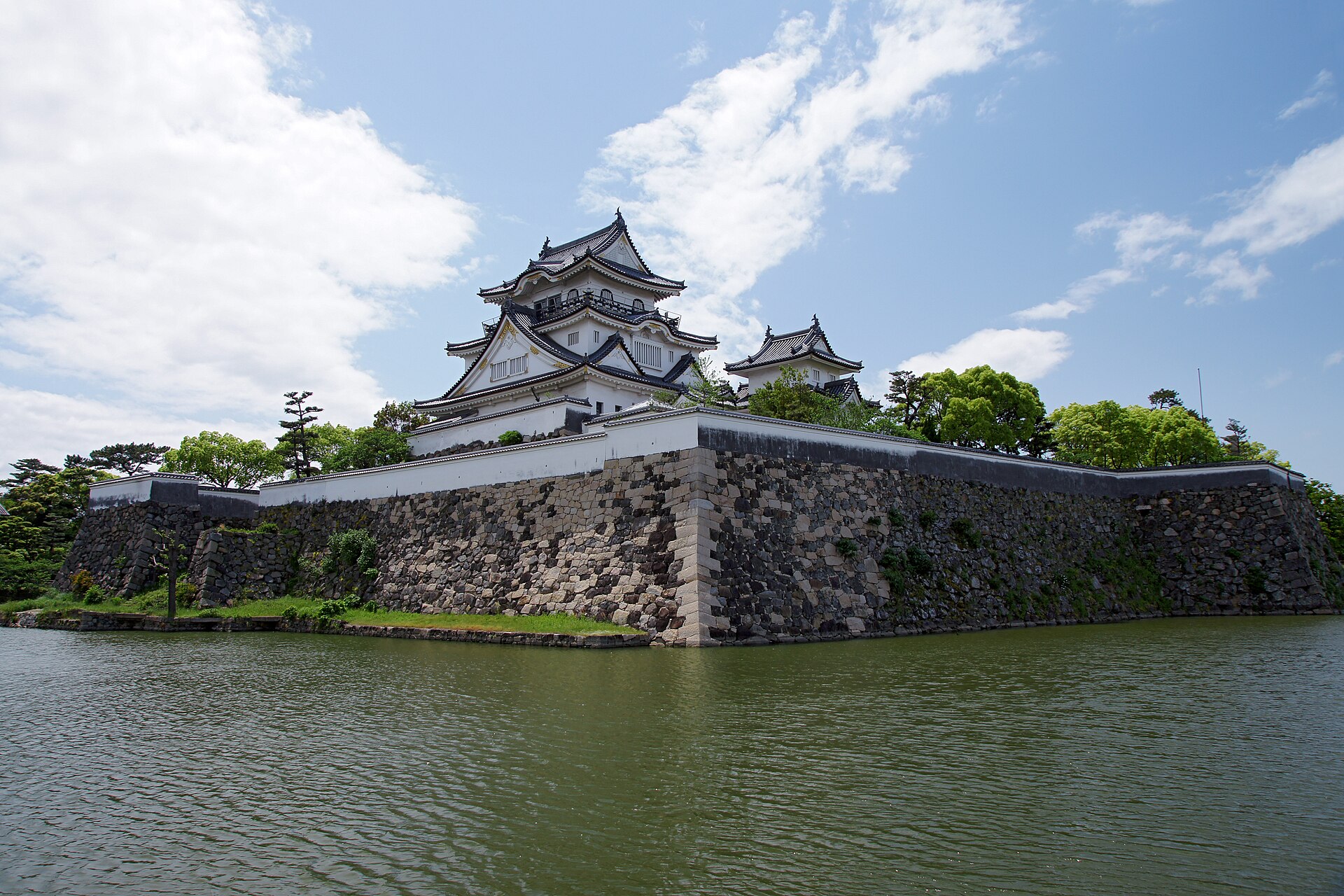
- Kishiwada Castle: a rebuilt castle (the original was hit by lightning in 1827) with a 360-degree view from the top floor and Mirei Shigemori’s 1953 Hachijin no Niwa garden below.
- Danjiri Kaikan: the city’s danjiri museum, with its oldest known float, carvings and a 3D film of a turn. A combined ticket with the castle was ¥700 at the time of checking.
- Danjiri hut tours: in 2026 the city’s tourism association ran small-group walks around the float sheds and carving sites for ¥2,000, for 10–20 people.
Sources: Osaka Convention & Tourism Bureau and Osaka Info: danjiri hut tours. Danjiri Kaikan is the best way to see a float out of season.
Kishiwada Danjiri Matsuri FAQ
When is Kishiwada Danjiri Matsuri 2027?
The festival is held on the Saturday and Sunday before Respect for the Aged Day, which points to 18–19 September 2027. Kishiwada City had not announced it as of 23 October 2026.
When was Kishiwada Danjiri Matsuri 2026?
The September festival was on 19–20 September 2026, with test runs on 6 and 18 September. The October festival was on 10–11 October 2026.
Is the Haruki danjiri festival in October?
No. The 12 Haruki floats run on the September weekend with Kishiwada. October is a separate festival in the inland districts.
Where is the best place to see yarimawashi?
The Kankanba corner for drama, Konagara-zaka on Sunday morning for the shrine charge, and Kishu Kaido for a calmer view. Stand on the inside of corners.
Are there paid seats?
Yes. A private Viewing Seat faces the Kankanba corner. In 2026 benches started at ¥3,300 and went on sale via e+ on 3 July.
Which station should I use?
Nankai Kishiwada is closest but packed. The city recommends Takojizo or Izumi-Ōmiya. Use Nankai Haruki for the Haruki floats.
Can I bring an umbrella?
No. Umbrellas are banned on the street because they are dangerous in the crowd. Wear a raincoat.
Sources and how we checked
All dates, times, prices and rules here were checked on 23 October 2026 against the linked sources, mainly the Kishiwada City danjiri pages, JNTO, the Osaka Convention & Tourism Bureau, the Viewing Seat organiser’s release and the Japan Meteorological Agency. The 2027 dates are expected from the official rule, not announced; we will update this guide when the city publishes them. For other festivals still to come this year, see Japan festivals 2026: still to come, and for parade-style seating in Kyoto, our Gion Matsuri guide.
Want Kishiwada sorted?
Japan Pro can book your Osaka room, your Kankanba seats and a guide who knows the course, even when the forms are only in Japanese.
Read next
Nada no Kenka Matsuri 2027: Himeji’s Fighting Festival Explained (14–15 October)
Omizutori 2027: Nara Fire Festival Guide to Torch Times, Crowds and Free Viewing
Awa Odori 2027: Tokushima Dance Festival Guide to Tickets, Free Streets and Joining In
 English
 Japanese
 Chinese (Taiwan)
 Chinese (China)
 Korean
 French
 Italian
 Thai