

Dates checked 2 October 2026
Where do Japanese people want to spend winter in Japan? The travel comparison site Travelko answered that last December, with a ranking of the prefectures its users searched most for trips in January and February. Okinawa came first, then Hokkaido and Fukuoka, with Osaka, Tokyo, Chiba, Nagasaki, Aichi, Kyoto and Kanagawa making up the top 10.
This guide takes the same ten places and adds what the ranking left out: what each one is best for, and the dates already confirmed for winter in Japan in 2026–27, from the Sapporo Snow Festival to the Nagasaki Lantern Festival. It also flags where the popular picture is wrong, such as Kyoto, which rarely gets snow.
La version courte
- Warmest: Okinawa, about 17°C on average in January, with humpback whales from late December to early April
- Snow: the Sapporo Snow Festival, 4 to 11 February 2027
- Lanterns: the Nagasaki Lantern Festival, 5 to 21 February 2027
- Lights: Nabana no Sato from 17 October, Yomiuri Land in Tokyo from 29 October, Osaka’s Midosuji from 3 November
- Watch out: Hakone on 2 and 3 January (the Hakone Ekiden road race), and Nabana no Sato on 23 to 25 December (advance tickets only)
How Japanese Travellers Ranked Winter in Japan
Travelko ranked the prefectures by searches on its own site: searches made between 1 October and 8 December 2025, for trips between 1 January and 28 February 2026. It measures interest, not visits, and most of its users are Japanese. So it’s a picture of where Japanese travellers wanted to spend the winter, not a ranking of what foreign visitors do.
That makes it useful in its own way. It’s why Fukuoka beats Kyoto here, and why Chiba makes the list at all. Travelko explained only its top three: Okinawa as a warm escape, Hokkaido for seafood, snow and winter sports, and Fukuoka for warming local food. The notes on the other seven below are ours.
💡 Japan Pro Tip: A ranking based on searches shows what’s popular, not what suits you. Use it as a shortlist, then choose by what you want from the season: warmth, snow, lights or food.
Winter in Japan 2026–27 at a Glance
Here are the ten places, what each is best for, and the dates already confirmed for this winter.
| # | Winter in Japan: where | Le meilleur pour | Key dates for 2026–27 |
|---|---|---|---|
| 1 | Okinawa | Warm weather, humpback whales | Whales late Dec to early Apr |
| 2 | Hokkaido | Snow, seafood, skiing | Sapporo Snow Festival 4–11 Feb |
| 3 | Fukuoka | Yatai, ramen, hot pots | Yatai open evenings |
| 4 | Osaka | Crab, illuminations | Midosuji lights 3 Nov–31 Dec; crab from 6 Nov |
| 5 | Tokyo | Illuminations | Jewellumination 29 Oct–4 Apr |
| 6 | Chiba | First sunrise, Narita at New Year | Sunrise at Inubosaki about 6:46 on 1 Jan |
| 7 | Nagasaki | Lantern Festival | 5–21 Feb |
| 8 | Aichi | Nabana no Sato (in Mie), Ghibli Park | Nabana 17 Oct–31 May; closed 6–7 Jan |
| 9 | Kyoto | Quiet temples | Snow is rare |
| 10 | Kanagawa | Hakone onsen | Avoid the roads 2–3 Jan |
Winter in Japan: Three Climates in One Country
Winter in Japan isn’t one season but three, depending on where you are. In Hokkaido and along the Sea of Japan coast, cold winds from the continent bring heavy snow, which is why the ski resorts and snow festivals are there. On the Pacific side, from Tokyo to Osaka, winters are mostly dry and sunny, with cold mornings and little snow. And in Okinawa, far to the south, winter is mild enough for a walk on the beach.
That spread is the reason the ranking below mixes snow, sun and city lights. It also means you can plan a winter trip that never sees snow at all, or one that sees nothing else.
1. Okinawa: The Warm Escape
Okinawa tops the list because it’s the warmest place in the country in winter. Naha averages about 17°C in January, and Travelko’s own note calls Okinawa a place to escape the cold. Winter is also low season, so flights and hotels cost less than in summer.
The big draw is humpback whales, which come to the warm waters around the Kerama Islands to breed and raise their calves. The season runs from late December to early April, and late January to February is the best time to go. Tours leave from Zamami, about an hour from Naha’s Tomari Port on the high-speed ferry, and scouts on the island’s lookouts spot the whales for the boats.
- Whale season: late December to early April; best from late January to February
- Tours: about two hours, in the morning and afternoon; infants can’t board
- New: JUNGLIA, a theme park in the north of Okinawa’s main island, opened in July 2025
- Official site: Whale watching in the Kerama Islands (JNTO)
💡 Japan Pro Tip: Whale boats don’t sail in rough seas, and winter seas are at their roughest, so leave a spare day in your plan. Bring a windproof jacket too: an open boat is cold, even in Okinawa.
2. Hokkaido: The Sapporo Snow Festival
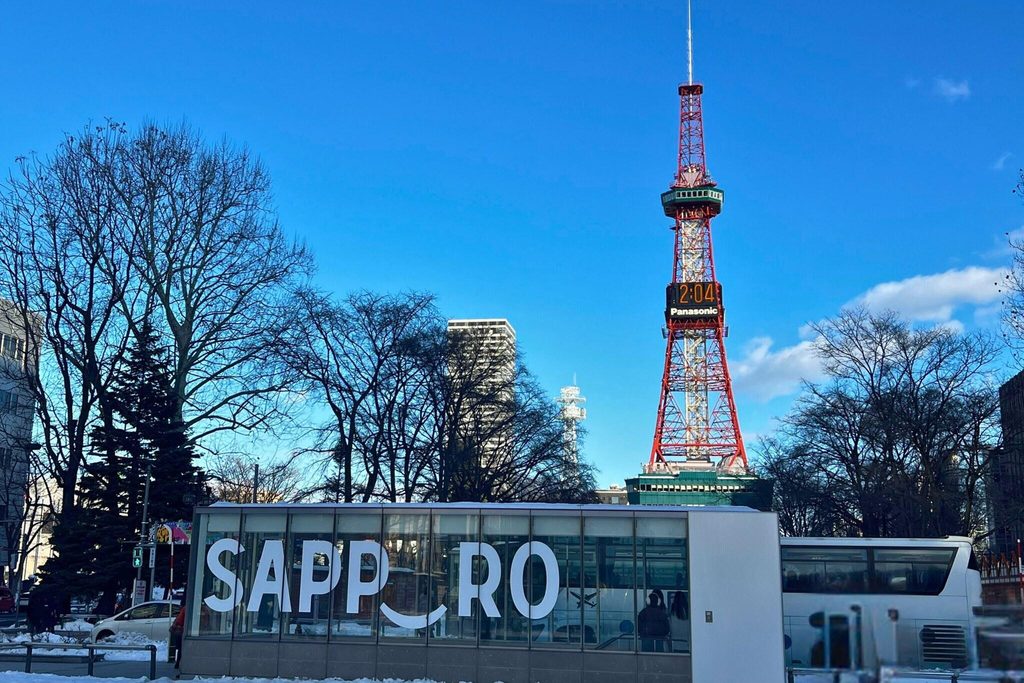
Hokkaido is where winter is at its deepest, with snow from December to March, the country’s best-known ski resorts, and crab and other seafood at their best. Its headline event already has dates: the 77th Sapporo Snow Festival runs from 4 to 11 February 2027.
The festival has three sites. Odori Park, in the city centre, is the main one, with the big snow sculptures. Susukino, the nightlife district, is known for its ice sculptures, and Tsudome, a sports dome outside the centre, is the family site.
- Dates: 4 to 11 February 2027
- Sites: Odori Park (blocks 1 to 11 West), Susukino (Ekimae-dori, South 4 to South 6) and Tsudome
- Official site: Sapporo Snow Festival
💡 Japan Pro Tip: Sapporo’s hotels fill up early for festival week. If the festival is the point of your trip, book your room before your flights.
3. Fukuoka: Yatai and Hot Pots
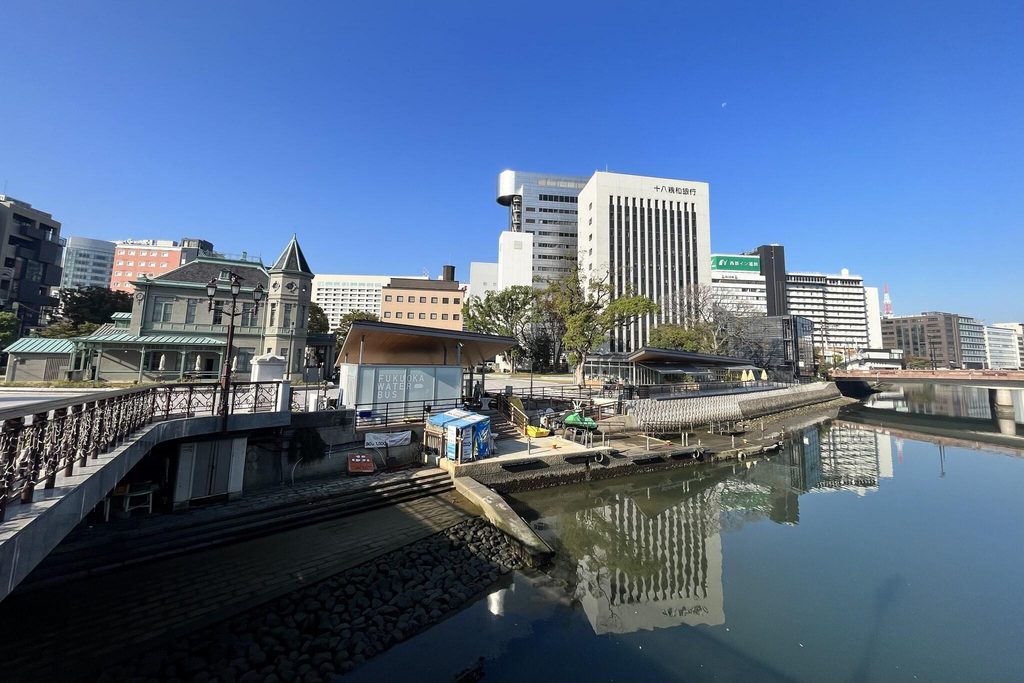
Fukuoka came third, ahead of Tokyo and Kyoto, and food is the reason. Travelko’s note points to the Hakata dishes that warm you up in winter: tonkotsu ramen, motsunabe (an offal hot pot) and mizutaki, a chicken hot pot.
Then there are the yatai, the open-air food stalls that set up on the streets at night. Fukuoka has about 100 of them, more than any other city in Japan, mainly in Nakasu, Tenjin and Nagahama. On a cold night, a bowl of ramen at a yatai counter is one of the best things about the season.
- Where: Nakasu, Tenjin and Nagahama
- When: evenings; they’re outdoors, so some stay shut on stormy nights
- Official info: Fukuoka City yatai guide (Japanese)
💡 Japan Pro Tip: A yatai has only a few seats. Order a drink and a dish or two, eat, and give up your seat when you’re done. Carry some cash, because not every stall takes cards.
4. Osaka: Crab Season and the Festival of the Lights
In Japan’s second city, winter has two things to plan around. The first is crab. The Sea of Japan snow crab season opens on 6 November, and male crabs can be caught until 20 March. Female crabs, smaller and full of roe, are only caught in November and December, so if they’re what you want, go before the end of the year.
Osaka’s crab restaurants serve it all winter. For crab near where it’s landed, Kinosaki Onsen, a hot spring town near Hyogo’s Sea of Japan coast, is about 2 hours 40 minutes from Osaka on the Limited Express Kounotori.
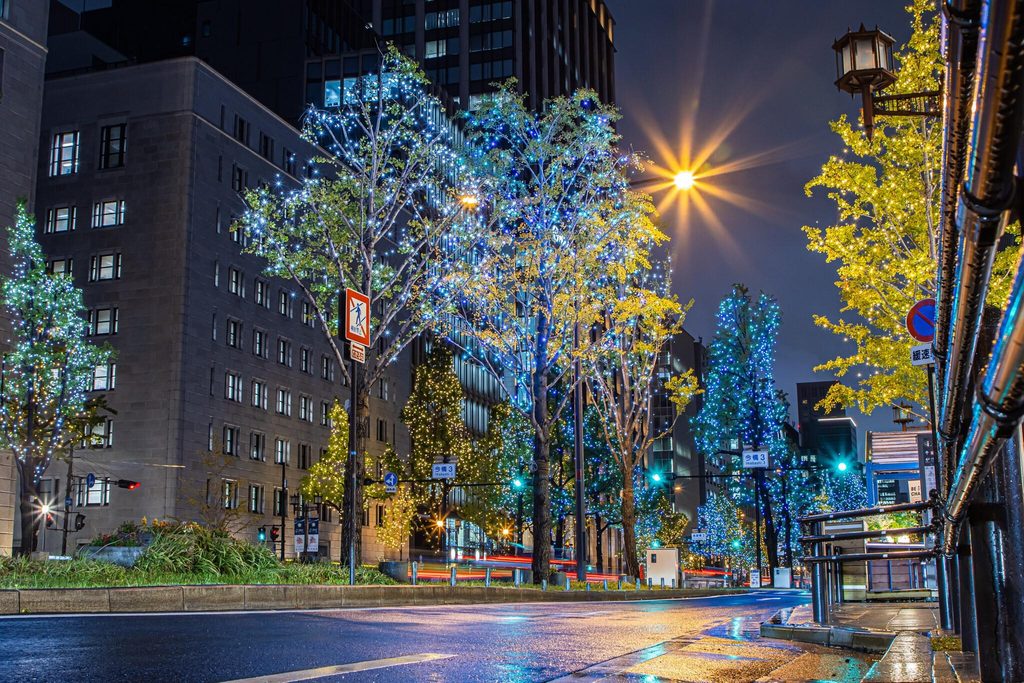
The second is light. The Osaka Festival of the Lights 2026 runs from 3 November 2026 to 31 January 2027. Its centrepiece, the Midosuji Illumination, lights the city’s main boulevard from 3 November to 31 December, from about 17:00 to 1:00, and Nakanoshima has projection mapping and a market from 11 to 25 December.
- Crab: from 6 November; male crabs until 20 March, female crabs in November and December only
- Midosuji Illumination: 3 November to 31 December 2026
- Official info: Osaka City announcement (Japanese)
5. Tokyo: The Winter Illuminations
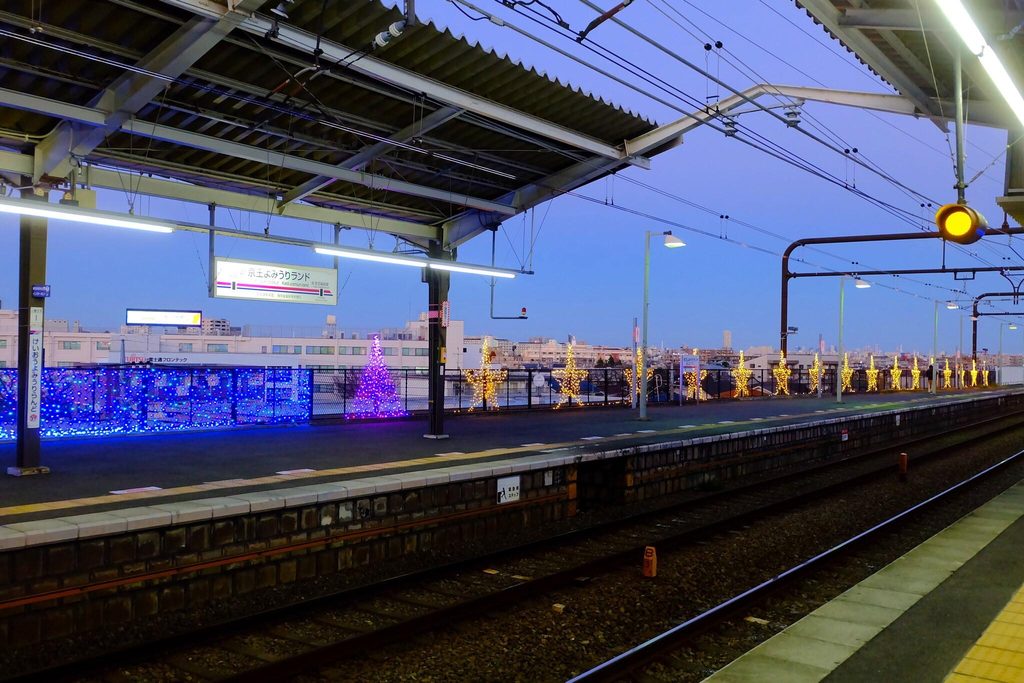
Tokyo’s winters are mostly dry, sunny and cold, and its illuminations put the capital on many winter lists. The first big one to confirm its dates is Jewellumination at Yomiuri Land, an amusement park in Inagi, in western Tokyo. It runs from 29 October 2026 to 4 April 2027, usually from 16:00 to 20:30.
Most of the city’s other well-known light-ups, in districts such as Marunouchi and Roppongi, usually start in November and announce their dates in October. Street illuminations are free and need no booking, so you can fit them around the rest of your trip.
- Jewellumination: 29 October 2026 to 4 April 2027; hours change through the season
- Comment y arriver : the gondola from Keio Yomiuri-Land Station, or a bus from Yomiuri-Land-mae Station
- More: Jewellumination on GO TOKYO (Japanese)
💡 Japan Pro Tip: Yomiuri Land is an amusement park, so Jewellumination needs an admission ticket, unlike the street illuminations in central Tokyo. Check its calendar before you go.
6. Chiba: The First Sunrise and New Year at Narita
Travelko gave no reason for Chiba, and the likeliest one is simple: Chiba is home to Narita Airport and Tokyo Disney Resort, both of which people search for. That’s our guess, not the ranking’s.
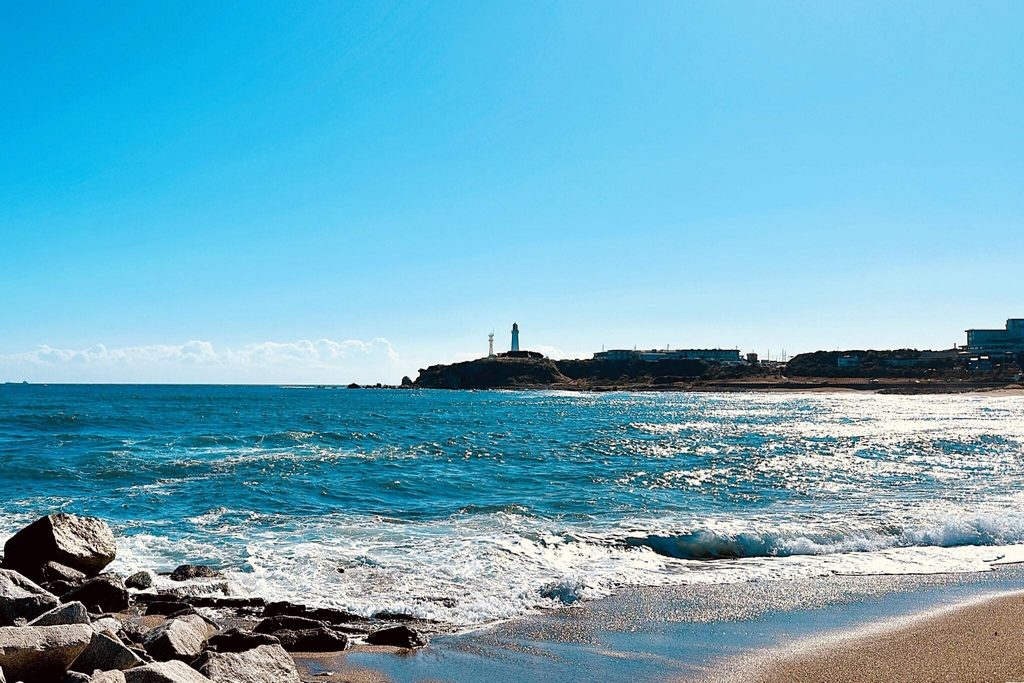
Chiba does have one winter moment that nowhere else can match, though. Inubosaki, a cape at Choshi on the prefecture’s eastern tip, sees the earliest first sunrise of the year in Japan apart from mountain tops and islands, at about 6:46 on 1 January. It’s about 10 minutes on foot from Inubo Station on the Choshi Electric Railway.
Naritasan Shinshoji, the great temple in Narita, is one of the busiest places in Japan for hatsumode, the first temple or shrine visit of the new year. Crowds peak around midnight on New Year’s Eve and from 11:00 to 13:00 on the first three days of January, and the temple welcomes first visits all through January. Narita is also one of our JR Tokyo Wide Pass day trips.
More: First sunrise spots in Chiba (Japanese)
7. Nagasaki: The Lantern Festival
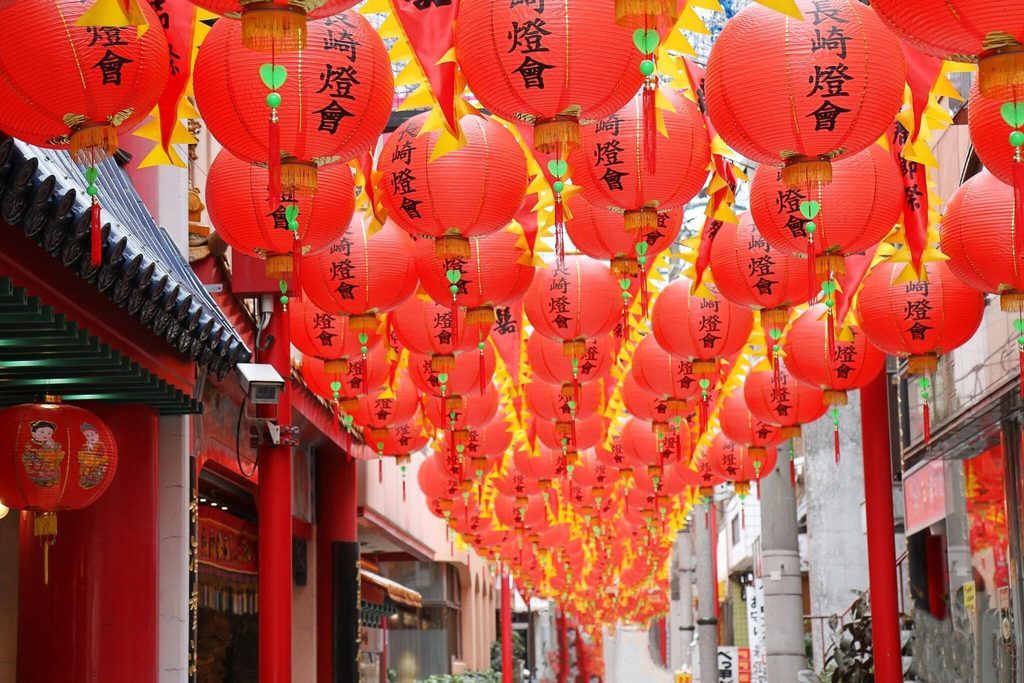
The Nagasaki Lantern Festival is the most colourful event of the Japanese winter, and it has confirmed dates too: 5 to 21 February 2027, 17 days. It grew out of the Chinese New Year celebrations of Nagasaki’s Chinatown, and in 2027 Chinese New Year falls on 6 February, so the festival starts on Chinese New Year’s Eve.
About 15,000 Chinese lanterns light up the city centre, around Shinchi Chinatown, Hamanomachi and the arcades. There’s a dragon dance every day, and two processions are worth planning around: the Mazu Procession on 7 and 14 February, and the Emperor’s Parade, with about 150 people in Chinese costume, on 13 and 20 February.
- Dates: 5 to 21 February 2027
- Official site: Nagasaki Lantern Festival
💡 Japan Pro Tip: The parade weekends are the busiest. Go on a weekday for a quieter visit, and book your hotel early, because the festival fills the city.
8. Aichi: Nabana no Sato and Ghibli Park
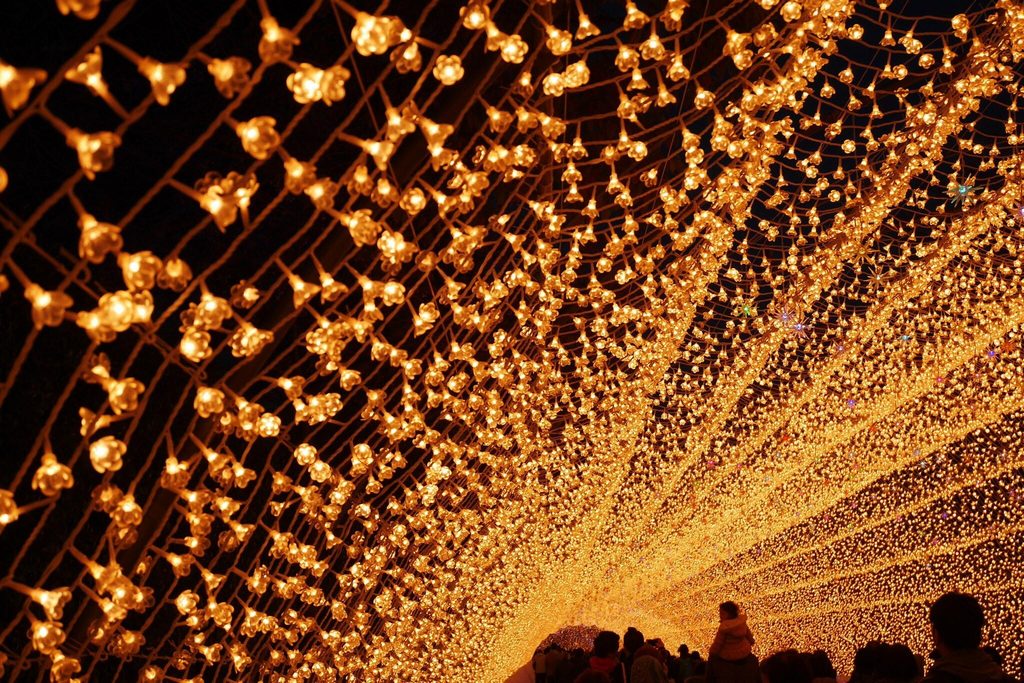
Aichi’s winter highlight is usually the illumination at Nabana no Sato, a flower park reached from Nagoya. In fact, it’s across the border in Kuwana, in Mie Prefecture, but most visitors come from Nagoya, which is why it gets filed under Aichi.
Its 2026–27 season is already set: 17 October 2026 to 31 May 2027, from 10:00 to 21:00 (until 22:00 on some days), closed on 6 and 7 January. From 23 to 25 December, entry from 15:00 is by date-specific advance ticket, sold at FamilyMart and 7-Eleven, with tickets at the gate only if any are left.
Aichi itself has Ghibli Park, open in winter too. See our Ghibli Park tickets guide for how booking works.
- Comment y arriver : Kintetsu to Nagashima Station, then a direct bus (¥250 for adults)
- Official site: Nabana no Sato illumination
💡 Japan Pro Tip: On Saturdays, Sundays and holidays from 31 October to 11 January, some Kintetsu express trains make extra stops at Nagashima for the illumination, as they do on 23 to 25 December.
9. Kyoto: Quiet Temples, Rare Snow
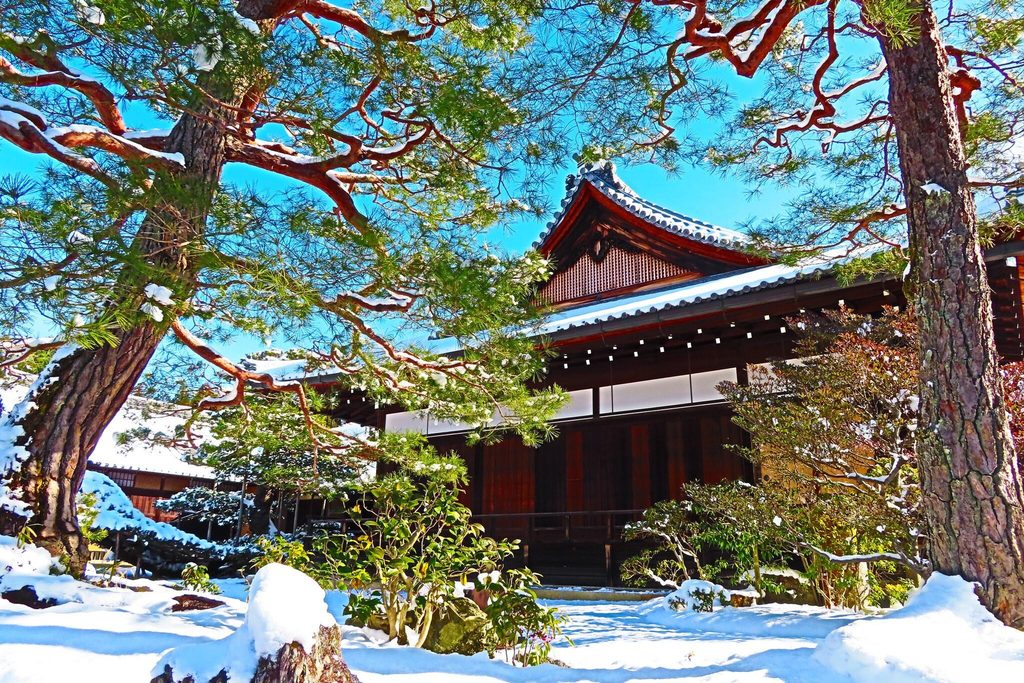
Kyoto under snow is one of the classic images of winter in Japan, but it’s rarely what you’ll find. The Japan Meteorological Agency’s Kyoto office describes the city as one that normally gets little snow. When 7 cm settled in central Kyoto on 8 February 2026, the office put out a special weather bulletin about it.
Go for the quiet instead. Winter is Kyoto’s low season: the temples are emptier than at any other time of year, and the clear, cold light suits the gardens. If you do want snow on a temple roof, watch the forecast and go early on the morning after a snowfall.
Flying into Kansai? See our guide to getting from Kansai Airport to Kyoto.
💡 Japan Pro Tip: The mountains north of the city, around Kurama and Kibune, are colder than the centre and more likely to have snow.
10. Kanagawa: Hakone Onsen and the Ekiden Days
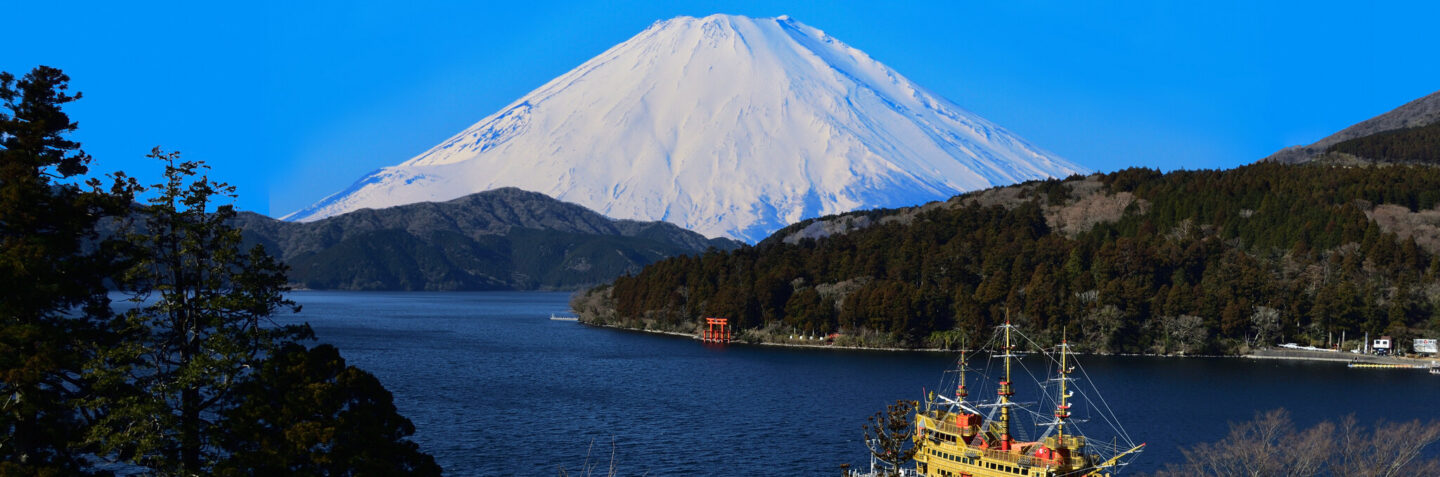
Hakone’s hot springs are made for the cold months, and the dry winter air gives the clearest views of Mount Fuji of the year. The exception is 2 and 3 January.
The 103rd Hakone Ekiden, Japan’s best-known university relay race, runs from Otemachi in Tokyo to Lake Ashi on 2 January 2027 and back on 3 January. In Hakone, the course is National Route 1, the main road over the mountains, and roads close for short periods as the runners pass.
If you’re travelling on those days, take the train rather than driving, or come from 4 January, when Hakone is quieter and the New Year rush is over. If you want to watch, it’s one of the biggest sporting events of the Japanese New Year, so pick your spot by the road early.
- Race days: 2 January (Tokyo to Lake Ashi) and 3 January (Lake Ashi to Tokyo)
- More: Visites d'une journée depuis Tokyo en train
Sapporo or Nagasaki? The February Overlap
The two biggest festivals of winter in Japan overlap. The Sapporo Snow Festival runs from 4 to 11 February 2027 and the Nagasaki Lantern Festival from 5 to 21 February, about 1,500 km away.
You can do both. Sapporo’s festival is the shorter, so go there first, then fly south for Nagasaki’s second week, 12 to 21 February, which also has the Emperor’s Parade on 13 and 20 February.
What to Book First for Winter in Japan
- Sapporo hotels for 4 to 11 February
- Nagasaki hotels for 5 to 21 February, especially the parade weekends
- Nabana no Sato for 23 to 25 December: date-specific tickets only
- Crab dinners in November or December if you want female crab
- Zamami ferries and whale tours, with a spare day for bad weather
- Hakone, avoiding the roads on 2 and 3 January
Street illuminations need no booking, so leave them until you arrive.
What to Pack for Winter in Japan
- Layers you can take off. Trains, shops and restaurants are well heated, so a warm coat over light layers works better than one thick jumper.
- Shoes with grip for Hokkaido and the snowy north, where pavements turn to packed ice.
- A windproof jacket for Okinawa’s whale boats and Nagasaki’s evening crowds.
- Cash for yatai, festival food stalls and small shops.
Snow can delay flights into Hokkaido and trains on the Sea of Japan side, so build a spare day into any trip to the snowy parts of the country, especially if you have a flight home to catch.
Winter in Japan FAQ
Quand est l'hiver au Japon ?
Environ de décembre à février. La neige arrive plus tôt dans le Hokkaido et dans les montagnes, tandis que Okinawa reste tempérée toute l’hiver.
L’hiver est-il un bon moment pour visiter le Japon ?
Oui. L’hiver au Japon offre des ciels clairs sur la côte Pacifique, des fruits de mer de saison et de grands festivals, et en dehors des vacances de Nouvel An, il y a moins de monde que pendant la saison des fleurs à la rose ou des feuilles d’automne.
Où est le lieu le plus chaud pour passer l’hiver au Japon ?
Okinawa. Naha averages about 17°C in January, and humpback whales visit the Kerama Islands from late December to early April.
Quand aura lieu le Festival de la neige de Sapporo en 2027 ?
Du 4 au 11 février 2027, au parc Odori, à Susukino et à Tsudome.
Quand aura lieu le festival des lanternes de Nagasaki en 2027 ?
Du 5 au 21 février 2027. Il débute à la veille du Nouvel An chinois, qui tombe le 6 février 2027.
Le jour de l’année où tombe la neige à Kyoto ?
Pas très souvent. Le centre de Kyoto ne reçoit généralement que peu de neige, donc un temple couvert de neige est plutôt une bonne surprise que quelque chose à prévoir à l'avance.
Quand est-ce que la saison des crabes de neige se déroule au Japon ?
La saison de la mer du Japon débute le 6 novembre. Les crabes mâles sont capturés jusqu'au 20 mars, et les crabes femelles seulement en novembre et décembre.
Que dois-je réserver d'abord pour l'hiver au Japon ?
Hotels for the Sapporo Snow Festival and the Nagasaki Lantern Festival, and Nabana no Sato’s Christmas tickets, which are date-specific.
Est-ce une bonne idée de partir à Hakone en Nouvelle-Annee ?
Oui, mais les 2 et 3 janvier, le Hakone Ekiden se déroule le long de la Route nationale 1 qui traverse Hakone, alors prenez le train ou partez à partir du 4 janvier.
We Update This Page
We checked every date here on 2 October 2026 against the organisers’ own sites and Travelko’s ranking release (Japanese). We will add Tokyo’s illumination dates as they are announced, keep the page current through the 2026–27 season, and update it when Travelko publishes its next winter ranking.
For the weather month by month, see Best Time to Visit Japan.
Prêt à découvrir le Japon ?
Découvrez des séjours triés sur le volet, des expériences locales et des voyages guidés par des experts du Japon.
Explorer le Japon
 English
 Chinese (China)
 Chinese (Taiwan)
 Korean
 Thai
 French
 Spanish
 German
 Vietnamese
 Indonesian
 Italian