

Prices, hours and closing days checked 1 October 2026
The biggest aquarium in Japan, by floor area, is the Port of Nagoya Public Aquarium, at 41,529 square metres. But floor area measures the building, not the water. The biggest viewing tank is in Okinawa, at an aquarium that only comes seventh on the list.
This guide goes through all ten of Japan’s biggest aquariums, with what each is best at, what a ticket costs in 2026, and the closing days that can wreck a plan. Because an aquarium is the classic rainy-day trip, it also tells you which ones really work in the rain.
The short version
- Biggest aquarium by floor area: Port of Nagoya Public Aquarium, 41,529 m²
- Biggest viewing tank: the Kuroshio Sea at Okinawa Churaumi Aquarium, 7,500 cubic metres
- Most species: Toba Aquarium, about 1,200
- Cheapest of the ten: Kasai Rinkai Aquarium, the biggest aquarium in Tokyo, ¥700 for adults
- Best in heavy rain: Osaka Aquarium Kaiyukan, indoors from top to bottom
- Check first: Nagoya closes on Mondays, Kasai Rinkai on Wednesdays, and Kamogawa Sea World has five closing days in December
What “Biggest Aquarium” Really Measures
The usual ranking of Japan’s biggest aquariums uses total floor area, the figure on a building’s plans. It counts offices, plant rooms and stairwells as well as the parts you visit, and sources don’t always agree on it. The most widely quoted ranking gives Toba Aquarium 24,981 square metres, for example, while Toba’s own website says 25,281.
Measure the water instead and the biggest aquarium changes. Churaumi’s Kuroshio Sea tank is 35 metres wide, 27 metres deep from front to back and 10 metres from surface to floor, and holds 7,500 cubic metres. Kaiyukan’s Pacific Ocean tank in Osaka holds 5,400 tonnes and is 9 metres deep. Nagoya’s headline is a performance pool: 60 metres by 30, up to 12 metres deep, with seats for about 3,000. It holds even more water than Churaumi’s tank, but you watch it from a grandstand rather than through glass.
So “biggest aquarium” can mean the biggest building, the biggest tank or the biggest show. This guide follows the floor-area ranking, because it’s the one people search for, and tells you where each one is biggest in the way that matters.
💡 Consejo de Japón: Decide first whether you want a show or a tank. Nagoya, Kamogawa and Hakkeijima are built around performances with set times. Churaumi, Kaiyukan and Toba are built around standing in front of the water. A rainy afternoon goes very differently depending on which you pick.
Japan’s 10 Biggest Aquariums at a Glance
Floor areas are the most widely quoted figures. Adult prices are for 2026, and the last column shows the closing days to check before you travel.
| # | Japan’s biggest aquariums | Prefecture | Floor area | Adult ticket | Closed |
|---|---|---|---|---|---|
| 1 | Port of Nagoya Public Aquarium | Aichi | 41,529 m² | ¥2,030 | Mondays |
| 2 | Osaka Aquarium Kaiyukan | Osaka | 31,044 m² | ¥2,700–¥3,500 by date | 2 days in January |
| 3 | Toba Aquarium | Mie | 24,981 m² (25,281 on its own site) | ¥2,800 | Open every day |
| 4 | Kamogawa Sea World | Chiba | 22,699 m² | ¥3,300 | Set days, including 2, 9 and 15–17 December 2026 |
| 5 | Marine World Uminonakamichi | Fukuoka | 21,079 m² | ¥2,500 | First Monday and Tuesday of February |
| 6 | Aqua World Oarai | Ibaraki | 20,229 m² | ¥2,300 | Maintenance days in June and December |
| 7 | Okinawa Churaumi Aquarium | Okinawa | 19,199 m² | ¥2,180 | None planned until March 2027, except typhoons |
| 8 | Hakkeijima Sea Paradise | Kanagawa | 18,204 m² | ¥3,500 (four aquariums) | Hours change daily |
| 9 | Aquamarine Fukushima | Fukushima | 15,233 m² | ¥1,850 | Open every day |
| 10 | Kasai Rinkai Aquarium | Tokio | 14,722 m² | ¥700 | Wednesdays; 29 December to 1 January |
1. Port of Nagoya Public Aquarium (Aichi): The Biggest Aquarium in Japan
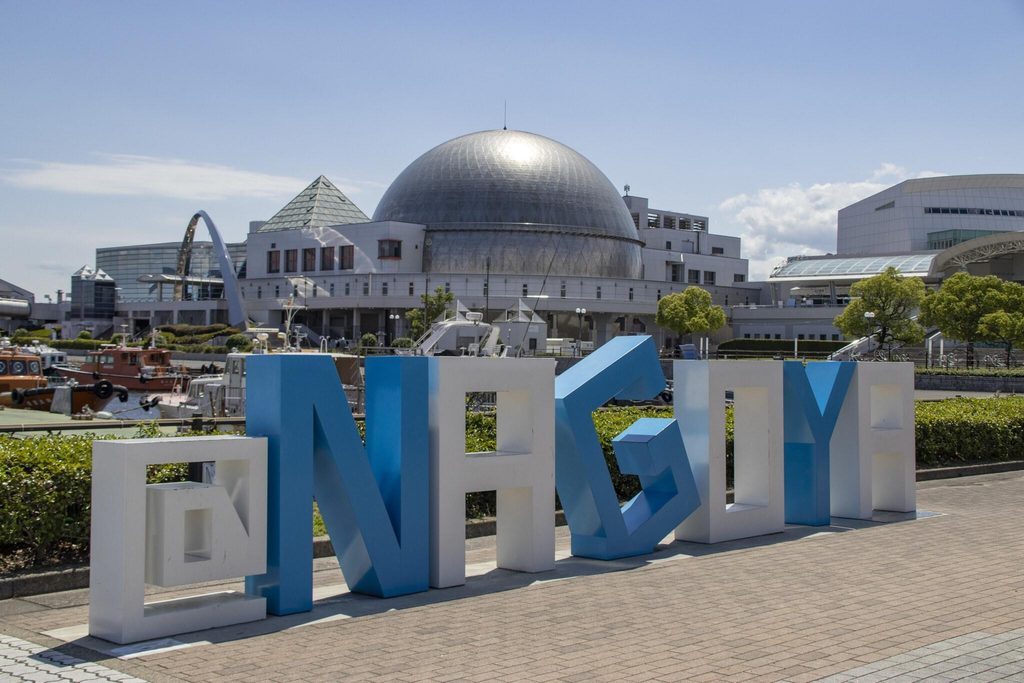
The biggest aquarium in Japan is really two aquariums joined together at Nagoya’s port. The North Building is about marine mammals, with orcas, belugas and dolphins. The South Building travels from the seas around Japan to Antarctica. It takes about three minutes to walk between them.
The Main Pool is the headline: 60 metres by 30, up to 12 metres deep, in a stadium for about 3,000 people with a big screen above the water. The stands have a roof, but rain blows into the front rows, and the dolphin show can be cancelled in heavy rain, thunderstorms and typhoons. In light rain it usually goes ahead, so sit further back.
- Dónde: a five-minute walk from Nagoyako Station on the Meijo subway line
- Tickets: ¥2,030 for adults and high school students, ¥1,010 for elementary and junior high, ¥500 from age 4
- Hours: 9:30 to 17:30, longer in summer and shorter in winter
- Closed: Mondays (Tuesday if Monday is a holiday), but open every day in Golden Week, July and August, and the school winter and spring breaks
- Official site: Port of Nagoya Public Aquarium
💡 Consejo de Japón: In summer and some other seasons, the aquarium sells cheaper evening tickets from 17:00: ¥1,620 for adults. It’s the easiest way to see the biggest aquarium in Japan without the crowds.
2. Osaka Aquarium Kaiyukan (Osaka): The Best on a Wet Day
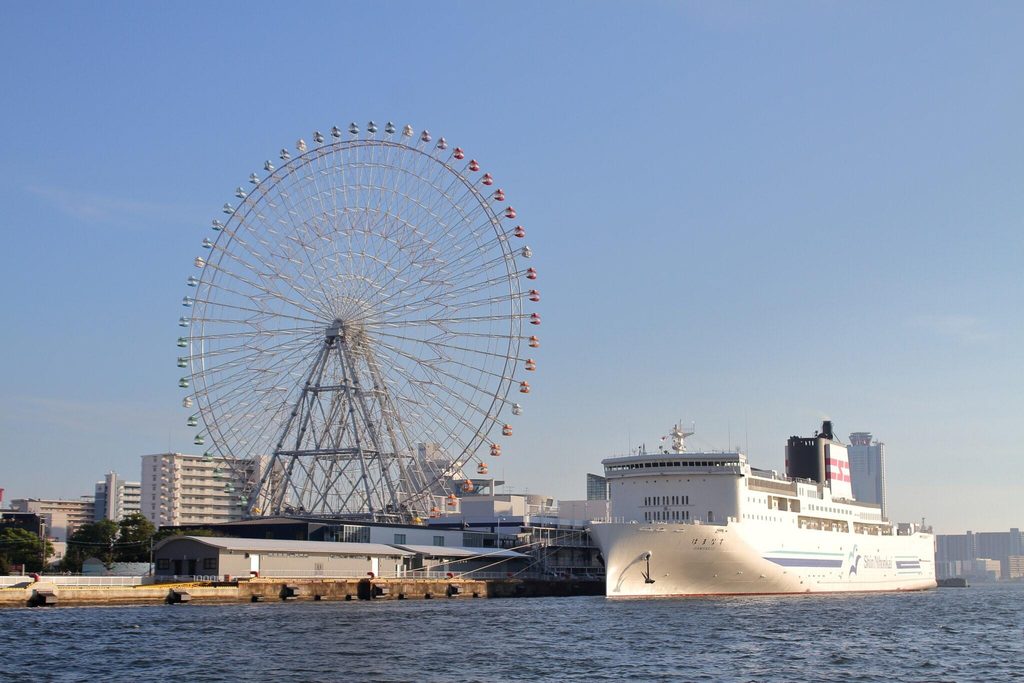
Kaiyukan opened in 1990 and is the second-biggest aquarium in Japan by floor area. Its trick is the route: you ride up to the top and walk down a slow spiral around the Pacific Ocean tank, which runs through the middle of the building from the sixth floor to the fourth. That means you see the same water, and the whale sharks in it, from several depths.
It’s the best of Japan’s biggest aquariums for a wet day, because the whole visit is indoors and the station is five minutes away. The catch is the price. Kaiyukan charges by date in four bands, from ¥2,700 for adults on quiet weekdays to ¥3,500 at the busiest times, so check the colour-coded calendar on the official site before you choose a day.
- Dónde: about five minutes on foot from exit 1 of Osakako Station on the Chuo subway line
- Tickets: ¥2,700 to ¥3,500 for adults, depending on the date
- Hours: usually 10:00 to 20:00, last entry an hour before closing; times vary by season
- Closed: two days a year, both in January
- Official site: Osaka Aquarium Kaiyukan
💡 Consejo de Japón: Moving a Saturday visit to the following Tuesday can drop the price from ¥3,500 to ¥2,700 a head. For four adults, that’s ¥3,200 saved for the same whale sharks.
3. Toba Aquarium (Mie): The Most Species and Japan’s Only Dugong
Toba Aquarium opened in 1955 and keeps about 1,200 species, the most of any aquarium in Japan. It’s laid out as twelve zones with no fixed route, so you wander rather than follow arrows, which is rarer in Japan than it sounds.
Its most famous resident is Serena, the only dugong in Japan. She arrived on 15 April 1987 at 147.5 cm and 67 kg; by her 39th anniversary in April 2026 she was 263 cm and 375 kg. Toba is also where you can see how loose the floor-area figures are: the third-biggest aquarium on the usual list gives a bigger number on its own website.
- Dónde: about 10 minutes on foot from Toba Station (JR and Kintetsu)
- Tickets: ¥2,800 for adults, ¥1,600 for elementary and junior high, ¥800 from age 3
- Hours: 9:00 to 17:00, last entry 16:00; 8:30 to 17:30 from 20 July to 31 August
- Closed: open every day of the year
- Official site: Toba Aquarium
💡 Consejo de Japón: No fixed route means no queue, but it also means people miss whole zones. Take a map at the entrance and pick your three must-sees before you start.
4. Kamogawa Sea World (Chiba): Orcas by the Pacific
Kamogawa Sea World, the fourth-biggest aquarium in Japan by floor area, is best known for its orca performance, staged with the Pacific Ocean behind it. It’s a marine theme park more than a museum, with dolphin, beluga and sea lion shows and a hotel next door.
Of Japan’s biggest aquariums, it’s also the one that fits a rainy-day plan least. The park asks visitors to bring a raincoat or poncho because umbrellas can’t be used in the show venues, and it warns that shows can change or be cancelled because of the weather or the animals’ condition. It also closes on set weekdays: in December 2026, on the 2nd, 9th and 15th to 17th.
- Dónde: free shuttle bus from Awa-Kamogawa Station on the JR Sotobo Line
- Tickets: ¥3,300 for adults, ¥3,000 for over-65s, ¥2,000 for elementary and junior high, ¥1,300 from age 4
- Hours: vary by date, usually 9:00 to 16:00 or 16:30 in autumn; ticket sales end an hour before closing
- Closed: set days on the official calendar, including 2, 9 and 15–17 December 2026
- Official site: Kamogawa Sea World opening calendar
💡 Consejo de Japón: Check the calendar before the forecast. Kamogawa is about two hours from Tokyo, and it’s inside the area of the JR Tokyo Wide Pass, which covers the JR trains to Awa-Kamogawa.
5. Marine World Uminonakamichi (Fukuoka): The Seas of Kyushu
Marine World sits on the Uminonakamichi sandbar across the bay from central Fukuoka, and it’s the fifth-biggest aquarium in Japan by floor area. Its theme is the seas around Kyushu, from the open ocean to the coast, and its residents include finless porpoises, a small grey porpoise native to the waters of northern Kyushu. Dolphins and sea lions perform in a show pool that looks out over Hakata Bay.
It’s the biggest aquarium in Kyushu and an easy half-day from Fukuoka: the train drops you about seven minutes’ walk away.
- Dónde: about seven minutes on foot from Uminonakamichi Station on the JR Kashii Line
- Tickets: ¥2,500 for adults and high school students, ¥1,200 for elementary and junior high, ¥700 from age 3
- Hours: 9:30 to 17:30, varying by season; last entry an hour before closing
- Closed: the first Monday and Tuesday of February
- Official site: Marine World Uminonakamichi
6. Aqua World Oarai (Ibaraki): More Sharks Than Anywhere in Japan
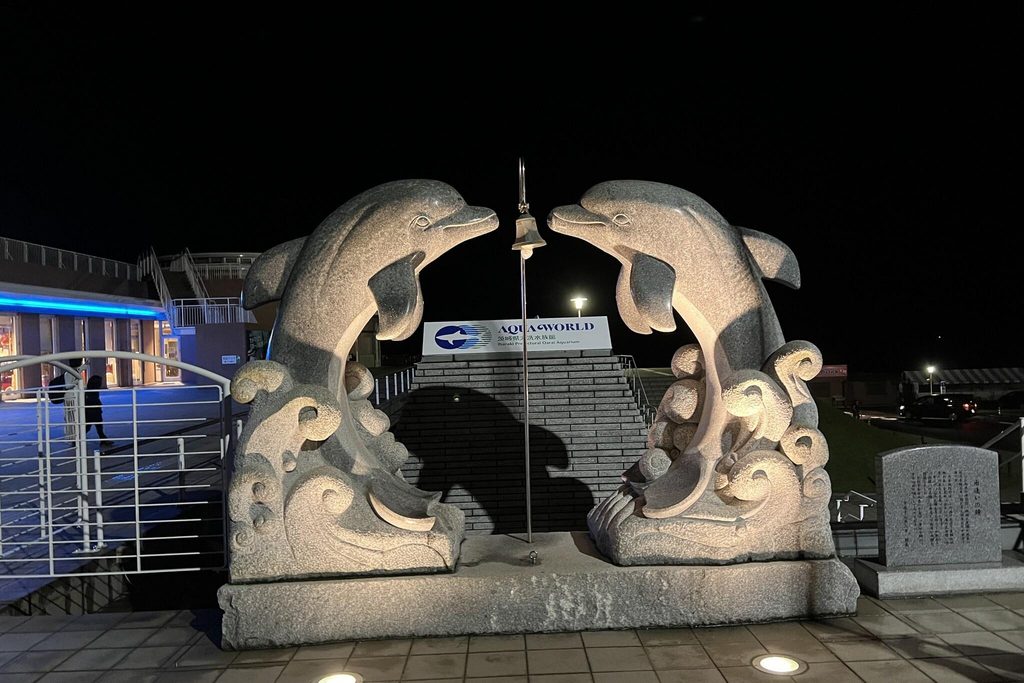
Aqua World Ibaraki Prefectural Oarai Aquarium, to give it its full name, is the sixth-biggest aquarium in Japan, on the Pacific coast north of Tokyo. Its speciality is sharks: it keeps more shark species than any other aquarium in Japan. It’s also known for its ocean sunfish, the huge flat fish called manbo in Japanese, in a large tank in its Timeless Sea zone.
From Tokyo it’s a long day rather than a short one. Take the JR Joban Line to Mito, change to the Oarai Kashima Line for Oarai, then ride the bus for about 15 minutes.
- Dónde: about 15 minutes by bus from Oarai Station
- Tickets: ¥2,300 for adults and high school students, ¥1,100 for elementary and junior high
- Hours: 9:00 to 17:00, last entry 16:00
- Closed: maintenance days in June and December
- Official site: Aqua World Oarai
7. Okinawa Churaumi Aquarium (Okinawa): The Biggest Viewing Tank
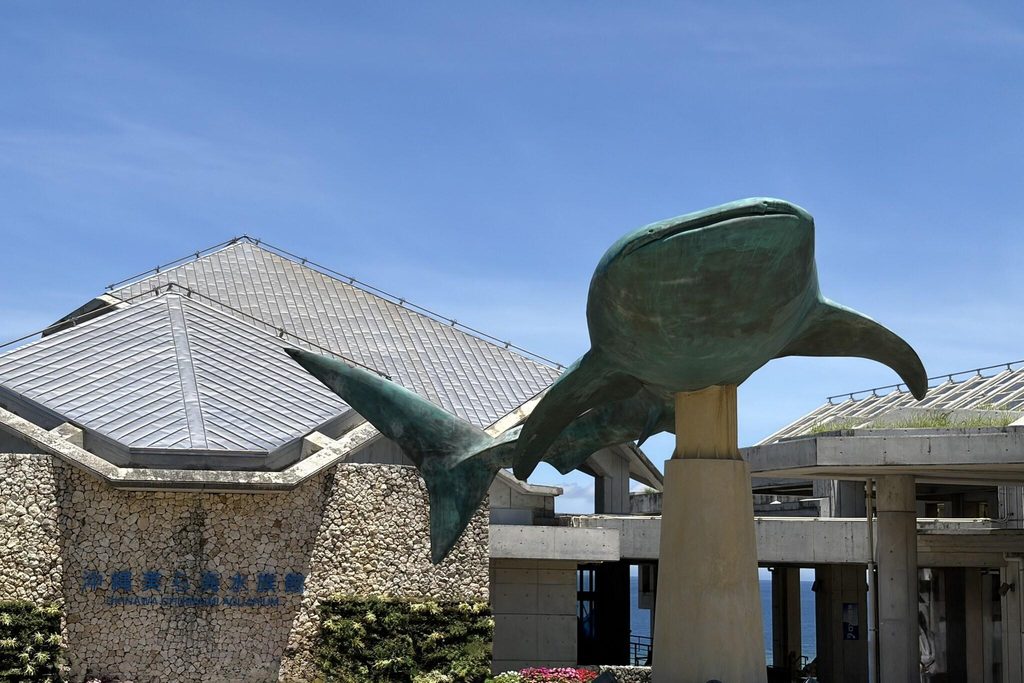
Churaumi is only the seventh-biggest aquarium in Japan by floor area, yet it has the country’s biggest viewing tank. The Kuroshio Sea holds 7,500 cubic metres of water, 35 metres wide and 10 metres deep, with around 70 species inside, including whale sharks and manta rays. Most people sit in front of it for longer than they planned.
It also has the simplest calendar here: the aquarium says it has no planned closing days until 31 March 2027. The one exception is typhoons, which can close it at short notice, so check the official site on any stormy day between summer and autumn. It’s in Ocean Expo Park on the Motobu Peninsula, about two hours from Naha Airport by car.
- Dónde: Ocean Expo Park, Motobu; about two hours by car or around three by express bus from Naha Airport
- Tickets: ¥2,180 for adults, ¥1,440 for high school, ¥710 for elementary and junior high, free under 6
- Hours: 8:30 to 18:30, last entry 17:30; longer in Golden Week and summer
- Closed: no planned closures until 31 March 2027, except for typhoons
- Official site: Okinawa Churaumi Aquarium hours
💡 Consejo de Japón: Older guides say Churaumi closes for two days in early December. For this winter it doesn’t: the aquarium lists no planned closures until the end of March 2027.
8. Hakkeijima Sea Paradise (Kanagawa): Four Aquariums on an Island
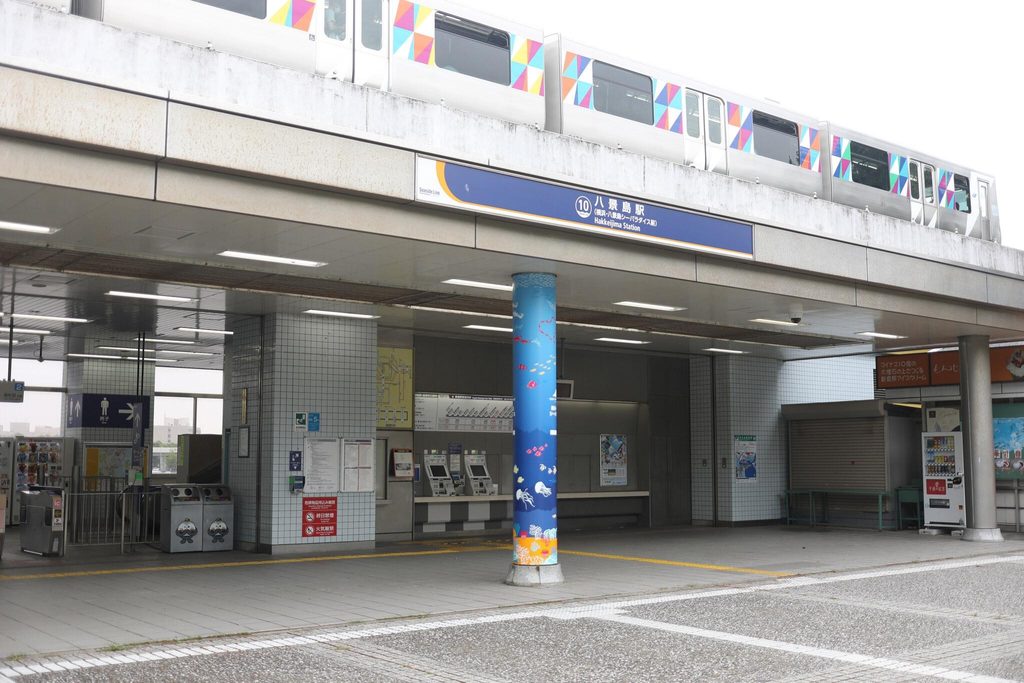
Hakkeijima Sea Paradise, in the south of Yokohama, is the eighth-biggest aquarium in Japan by floor area and the biggest aquarium in Kanagawa, and it’s four aquariums rather than one: the Aqua Museum, Dolphin Fantasy, Fureai Lagoon and Umi Farm. The island also has an amusement park with rides, and walking onto the island is free. You only pay for what you go into.
The Aqua Resorts Pass covers all four aquariums. The One Day Pass adds unlimited rides, for families who want the whole island.
- Dónde: Hakkeijima Station on the Kanazawa Seaside Line
- Tickets: Aqua Resorts Pass ¥3,500 for adults and high school students, ¥2,200 for elementary and junior high, ¥1,200 from age 4; One Day Pass ¥5,900 for adults
- Hours: change day to day; check the official calendar
- Official site: Yokohama Hakkeijima Sea Paradise
9. Aquamarine Fukushima (Fukushima): Where Two Currents Meet
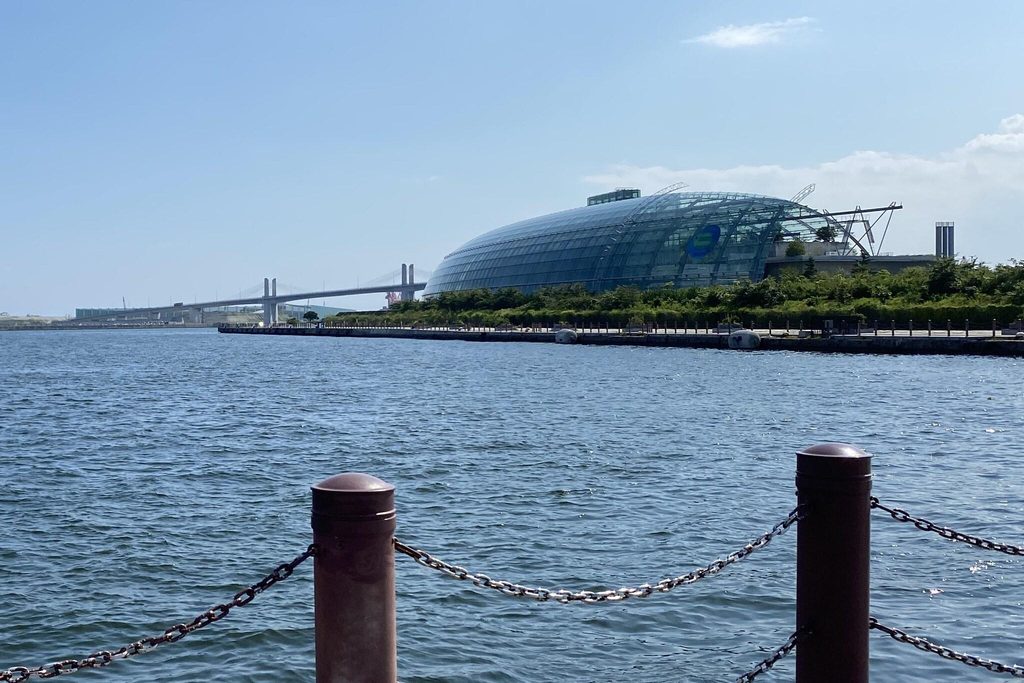
Aquamarine Fukushima, the ninth-biggest aquarium in Japan by floor area, sits under a glass roof at Onahama port in Iwaki. Its centrepiece recreates the meeting of the Kuroshio and the Oyashio, the warm and cold currents that meet off the Fukushima coast, with a tunnel between the two sides.
It’s the best value of the big ones outside Tokyo at ¥1,850 for adults, and children under school age go free. It’s also open every day of the year.
- Dónde: Onahama, Iwaki; a bus ride from JR Izumi Station
- Tickets: ¥1,850 for adults, ¥900 for elementary to high school students, free for preschool children
- Hours: 9:00 to 17:30 from 21 March to 30 November; 9:00 to 17:00 in winter
- Closed: open every day of the year
- Official site: Aquamarine Fukushima
10. Kasai Rinkai Aquarium (Tokyo): See It Before the Rebuild
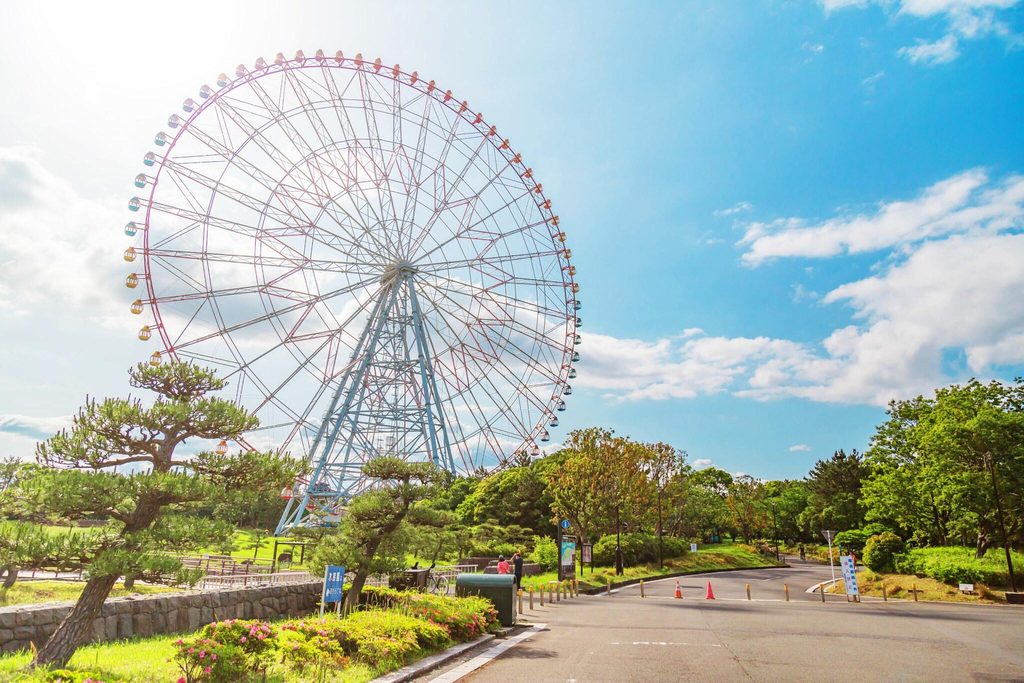
The tenth-biggest aquarium in Japan is also the biggest aquarium in Tokyo, the cheapest of the ten and the easiest to reach. Kasai Rinkai Aquarium sits in a seaside park in eastern Tokyo, under a glass dome, and its best-known tank is a ring of bluefin tuna swimming endlessly around you.
It’s also the only one whose current building has an end date. The Tokyo Metropolitan Government is building a new Kasai Rinkai Aquarium, due to open in September 2028, and the current one stays open until then. If you want to see the dome and the tuna ring as they are now, go in the next two years. The park around it is worth the trip too: see our guide to Parque Kasai Rinkai.
- Dónde: Kasai-Rinkai-Koen Station on the JR Keiyo Line
- Tickets: ¥700 for adults, ¥350 for over-65s, ¥250 for junior high, free for elementary and younger
- Hours: 9:30 to 17:00, ticket sales end at 16:00
- Closed: Wednesdays (Thursday if Wednesday is a holiday) and 29 December to 1 January
- Official site: Kasai Rinkai Aquarium
💡 Consejo de Japón: Entry is free on 4 May, 1 October and 10 October, the aquarium’s anniversary. Expect the biggest crowds of the year on those days.
The Best of Japan’s Biggest Aquariums for a Rainy Day
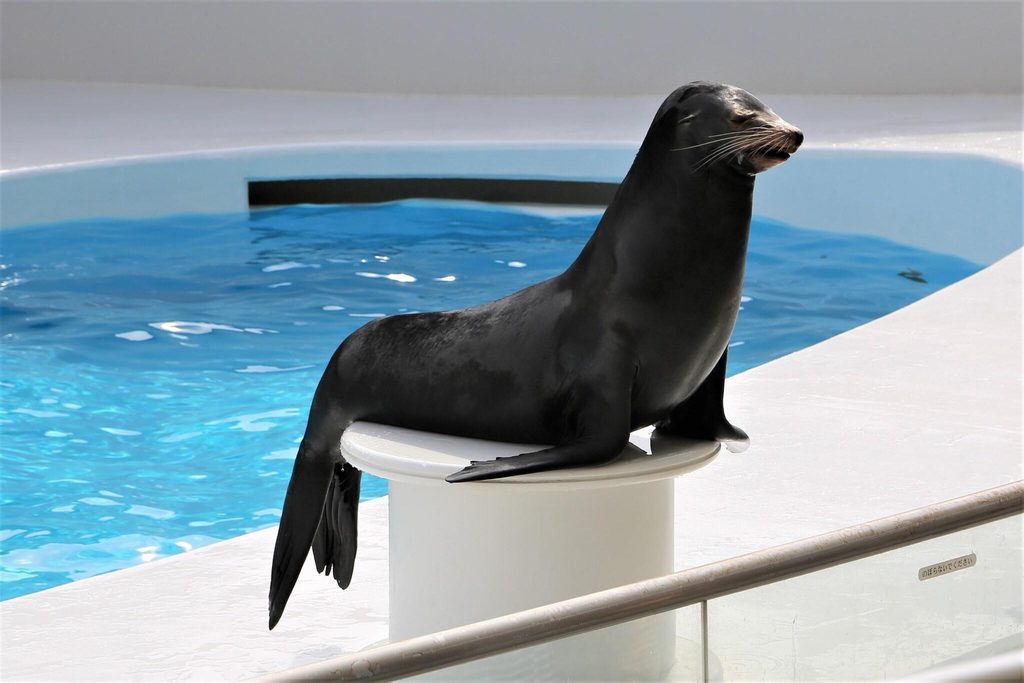
An aquarium is only a rainy-day plan if it’s open and the part you came for has a roof. Of Japan’s biggest aquariums, these are the safest bets:
- Osaka Aquarium Kaiyukan: the whole route is indoors, and the station is five minutes away.
- Toba Aquarium: open every day, ten minutes from the station, with 1,200 species to fill an afternoon.
- Aquamarine Fukushima: open every day under its glass roof.
- Port of Nagoya: fine in light rain, with a roof over the stands, but not on a Monday.
And these are the ones to think twice about in bad weather. At Kamogawa Sea World, umbrellas aren’t allowed in the show venues and shows can be cancelled. Churaumi can close for typhoons. Hakkeijima’s rides and outdoor areas are no fun in the rain, so stick to its Aqua Museum.
Japan’s rainy season, tsuyu, runs through June and into July across most of the country. Our Best Time to Visit Japan guide has the month-by-month picture.
Closing Days at Japan’s Biggest Aquariums
- Port of Nagoya: Mondays, outside the holiday periods.
- Kasai Rinkai: Wednesdays, and 29 December to 1 January.
- Kamogawa Sea World: 2, 9 and 15–17 December 2026, plus other set days on its calendar.
- Aqua World Oarai: maintenance days in June and December.
- Marine World: the first Monday and Tuesday of February.
- Kaiyukan: two days in January.
- Toba, Aquamarine Fukushima and Churaumi: open every day, apart from typhoons at Churaumi.
And at Kaiyukan, check the price for your exact date, because it moves by ¥800.
Japan Aquarium FAQ
¿Cuál es el acuario más grande de Japón?
En cuanto a la superficie, el Acuario Público del Puerto de Nagoya, con 41.529 metros cuadrados; y en cuanto al tamaño de un único tanque de observación, el Acuario Churaumi de Okinawa, cuyo tanque de Kuroshio Sea tiene 7.500 metros cúbicos de agua.
¿Qué acuario en Japón alberga tiburones ballena?
De estas diez, tanto el Aquario Churaumi de Okinawa como el Aquario Kaiyukan de Osaka mantienen tiburones ballena en sus gigantescos acuarios principales.
¿Dónde se puede ver un dugongo en Japón?
Solo en el Toba Aquarium de Mie. Serena, una dugong hembra, vive allí desde 1987 y es la única dugong de Japón.
¿Cuál es el acuario más grande cerca de Tokio?
El Kamogawa Sea World de Chiba es el más grande y más accesible desde Tokio, a unas dos horas de distancia. Hakkeijima Sea Paradise en Yokohama y el Kasai Rinkai Aquarium en Tokio mismo están mucho más cerca.
¿Cuál es el acuario más grande de Tokio?
Kasai Rinkai Aquarium, the tenth-biggest aquarium in Japan by floor area at 14,722 square metres. It costs ¥700 for adults and closes on Wednesdays.
¿El Kasai Rinkai Aquarium está cerrando?
No aún. Un nuevo acuario Kasai Rinkai abrirá en septiembre de 2028, y el actual permanecerá abierto hasta entonces.
Which is the cheapest of Japan’s biggest aquariums?
Kasai Rinkai Aquarium, at ¥700 for adults and free for elementary schoolchildren. Aquamarine Fukushima is next at ¥1,850.
We Update This Page
We checked every price, opening time and closing day here on 1 October 2026, against each aquarium’s own website and recent guides. Floor areas are the most widely quoted figures and vary by source. We update this page when one of Japan’s biggest aquariums changes its prices or closing days, and when the new Kasai Rinkai Aquarium opens.
Planning a day out from Tokyo? See our Day Trips From Tokyo by Train guide, or our JR Tokyo Wide Pass guide if Kamogawa is on your list.
¿Listo para experimentar Japón?
Descubre alojamientos seleccionados, experiencias locales y viajes guiados curados por expertos en Japón.
Explora Japón
 English
 Chinese (China)
 Chinese (Taiwan)
 Korean
 Thai
 French
 Spanish
 German
 Vietnamese
 Indonesian
 Italian