Japan Autumn Leaves Calendar 2026: 36 Best Spots by Peak Date
By JapanProAdmin
Updated 17 octubre 2026 55 min read
Photo: Pexels
Table of contents
This Japan autumn leaves calendar puts 36 of the country’s best koyo (紅葉) spots in the order they peak in 2026, with both of Japan’s big forecasts side by side. Autumn colour doesn’t arrive on one date. It runs downhill and south for three months: the Alps and Tohoku in October, Nikko at the end of the month, Kyoto, Nara and Hakone in late November, and central Tokyo’s gardens in the first week of December. Miss your spot by ten days and you get bare branches or green ones. Think of this page as a Japan fall foliage forecast and an autumn leaves calendar in one.
Every spot below was checked against tenki.jp’s second forecast (14 October 2026), Weathernews (second forecast, 8 October, and live spot pages), Walkerplus, JNTO and each temple, park or tourism association’s own site. Where the two forecasters disagree, we show both, because a single date would claim a precision nobody has. Night light-ups, prices and booking rules are 2026 figures. Last checked 16 October 2026.
Oct – Dec
Peak season
36
Spots on the calendar
12
Night light-ups
2
Forecasts compared
October – December 2026
Open a month for its spots. Dates run from the earliest forecast start of peak colour to the day Weathernews expects leaves to start falling.
October is mountain month. Kamikochi, Tanigawa and Oirase are at or near peak, Irohazaka in Nikko turns from about 23 October, and Tsutanuma's sunrise slot needs booking from 23 October to 3 November.
No events published for January yet.
No events published for February yet.
No events published for March yet.
No events published for April yet.
No events published for May yet.
No events published for June yet.
No events published for July yet.
No events published for August yet.
No events published for September yet.
Kamikochi
Peak now
A car-free valley in the Northern Alps, where larch and birch turn yellow under the Hotaka peaks. tenki.jp says from 15 October; Weathernews already rates it at peak and expects leaves to start falling around 30 October. Japanese name: 上高地.
Yes — the valley is free; you pay only for the bus
Biggest attractions nearby
Kappa Bridge, Taisho Pond and Myojin Pond are all on the flat valley-floor trail.
Tips on beating the crowd
Private cars are banned: park at Sawando (¥800 a day) and take the shuttle bus (¥2,800 return). The road closes for winter after 15 November 2026.
Oirase Gorge
Forecasts 16 days apart
A 14 km stream of waterfalls and beech forest running out of Lake Towada. tenki.jp says from 15 October; Weathernews says around 31 October, with leaves falling from about 10 November. Japanese name: 奥入瀬渓流.
Lake Towada is at the top of the gorge, and Tsutanuma Pond is a short drive north.
Tips on beating the crowd
With forecasts 16 days apart, late October is the safest bet. Combine it with Tsutanuma, where the admission and parking controls run 23 October to 3 November. Buses run from JR Hachinohe Station to Ishigedo in about 90 minutes.
Mount Tanigawa
Peak from about 18 Oct
A ropeway lifts you from Doai onto the slopes of Tanigawadake. Weathernews says around 18 October, with leaves falling from about 30 October; tenki.jp gives the usual late September to late October. Japanese name: 谷川岳.
Minakami Onsen is 25 minutes away by bus, with Oze further east.
Tips on beating the crowd
The ropeway and lift set ticket is ¥3,600 for adults. tenki.jp says the three-layer view of snow, red leaves and green is best from the ropeway around the first snowfall. From JR Minakami Station the bus takes about 25 minutes.
Daisen
Weathernews moved it earlier
The highest mountain in the Chugoku region, with beech forest turning on its flanks. tenki.jp says from 28 October; Weathernews says around 22 October, with leaves falling from about 7 November. Japanese name: 大山.
Daisen-ji temple and Ogamiyama Shrine sit on the mountain's northern slope.
Tips on beating the crowd
Weathernews moved Daisen from 2 November to around 22 October in a week, so check its page before you go. Buses from JR Yonago Station take about 50 minutes. Parking for about 600 cars is free until mid-December.
Irohazaka (Nikko)
Both say from 23 Oct
Forty-eight hairpin bends climb from Nikko town towards Lake Chuzenji. tenki.jp says from 23 October; Weathernews also says around 23 October, with leaves falling from about 8 November. Japanese name: いろは坂.
Kegon Falls and Lake Chuzenji are at the top of the road.
Tips on beating the crowd
The Akechidaira Ropeway, the classic Irohazaka viewpoint, is closed for renovation until the end of August 2027. Buses towards Chuzenji Onsen take about 40 minutes from JR or Tobu Nikko Station.
Tsutanuma Pond
Book sunrise slot
A small pond near Lake Towada where the red hillside reflects in still water at sunrise. Neither forecaster gives a 2026 date, and its usual peak is late October; the dates here are the official admission-control period. Japanese name: 蔦沼.
Limited — free on foot or by bike from 7:30 to 16:00; the sunrise slot and cars pay
Biggest attractions nearby
Oirase Gorge and Lake Towada are both a short drive south.
Tips on beating the crowd
From 23 October to 3 November the 5:00–7:30 sunrise slot must be booked on Peatix: ¥2,000 per person plus ¥2,000 per car. Daytime entry (7:30–16:00) needs no booking; cars pay ¥2,000 in cash at the Tsuta Onsen car park. Tsuta Onsen guests book by phone.
Naruko Gorge
No trains cross this year
A 100 m-deep gorge next to Naruko Onsen. tenki.jp says from 25 October; Weathernews says around 29 October, with leaves falling from about 12 November. Japanese name: 鳴子峡.
The JR line through the gorge (Naruko-Onsen to Shinjo) has been suspended since July 2024, so no trains cross this season; substitute buses run. Viewing is daylight-only. The car park charges from 10 October to 30 November.
Lake Chuzenji (Nikko)
Peak from about 28 Oct
A mountain lake at the top of Irohazaka, ringed by maples. Weathernews says around 28 October, with leaves falling from about 11 November; tenki.jp gives only the usual mid October to early November. Japanese name: 中禅寺湖.
Kegon Falls is a short walk from Chuzenji Onsen, and Irohazaka is the road up.
Tips on beating the crowd
Take the Tobu bus to Chuzenji-Onsen (about 50 minutes from Nikko), then walk five minutes. Lakeside car parks 1 and 2 have about 276 spaces at ¥500.
Kurobe Gorge Railway
Open to Keyakidaira again
An open-sided trolley train that runs about 20 km up a deep gorge. Weathernews says around 5 November, with leaves falling from about 22 November; tenki.jp gives the usual late October to mid November. Japanese name: 黒部峡谷トロッコ電車.
Unazuki Onsen's hot-spring town is at the bottom station.
Tips on beating the crowd
The full line to Keyakidaira reopened on 1 October 2026, but restoration work continues nearby, so you can go only as far as Keyakidaira Station and the visitor centre area. Unazuki–Keyakidaira is ¥2,480 one way. The trolley station is a five-minute walk from Toyama Chiho Railway's Unazuki-Onsen Station.
Kirishima
Shrine area peaks later
Volcanic highlands on the Kagoshima–Miyazaki border, with maples around Onami-ike pond and Shinyu Onsen. Weathernews says around 8 November near the pond and 11 November near Shinyu, with leaves falling from about 23 November; tenki.jp gives the usual late October to early December. Japanese name: 霧島.
Kirishima Jingu shrine and the Ebino Kogen plateau are both nearby.
Tips on beating the crowd
From JR Kirishima-Jingu Station take the bus to Maruo (about 30 minutes), then the Kirishima loop bus to Shinyu Onsen or the Onami-ike trailhead; the pond is about 40 minutes' hike from the trailhead. Weathernews puts the shrine area later, around 28 November.
Mount Koya
Stay in a temple
A mountaintop town of more than 100 temples in cedar and maple forest. Weathernews says around 8 November, with leaves falling from about 20 November; tenki.jp gives the usual late October to early November. Japanese name: 高野山.
Yes — the outdoor grounds are free; halls charge separately
Biggest attractions nearby
Okunoin cemetery, Kongobuji and the Danjo Garan are all in town.
Tips on beating the crowd
The Nankai limited express Koya takes about 80 minutes from Osaka Namba to Koyasan. About 52 of the temples run temple lodgings (shukubo), so you can stay overnight. A Danjo Garan light-up is listed by Weathernews but not yet confirmed for 2026.
Kikuchi Gorge
Closes for winter 1 Dec
A forested gorge of clear streams and small falls at the foot of the Aso caldera. Weathernews says around 12 November, with leaves falling from about 23 November; tenki.jp gives the usual early to late November. Japanese name: 菊池渓谷.
Kikuchi Onsen is in town below, and the Aso caldera is over the ridge.
Tips on beating the crowd
Entry is a ¥500 maintenance contribution for ages 16 and up, 8:30–17:00. There's no direct rail: take the bus from JR Kumamoto to central Kikuchi (about 70 minutes), then a taxi (about 30 minutes). The managed season ends on 1 December.
Nikko Toshogu area
Light-up NIKKO 6–8 Nov
The UNESCO-listed shrines and temples of Nikko — Toshogu, Rinnoji and Futarasan — peak weeks after the mountains above. Weathernews says around 12 November, with leaves falling from about 25 November; tenki.jp gives the usual early to late November. Japanese name: 日光の社寺.
Limited — the approaches are free; Toshogu, Rinnoji and the Futarasan garden charge
Biggest attractions nearby
Shinkyo Bridge is at the foot of the approach, and Irohazaka and Lake Chuzenji are 40–50 minutes up by bus.
Tips on beating the crowd
Light-up NIKKO runs 6–8 November (17:00–21:00, to 20:00 on 8 November), free at all three sites, a few days before the forecast peak. Toshogu is ¥1,600, Rinnoji ¥900 and the Futarasan garden ¥500 from 1 October 2026. The Tobu limited express takes about 1 hour 50 minutes from Asakusa.
Arashiyama
Forecasts 11 days apart
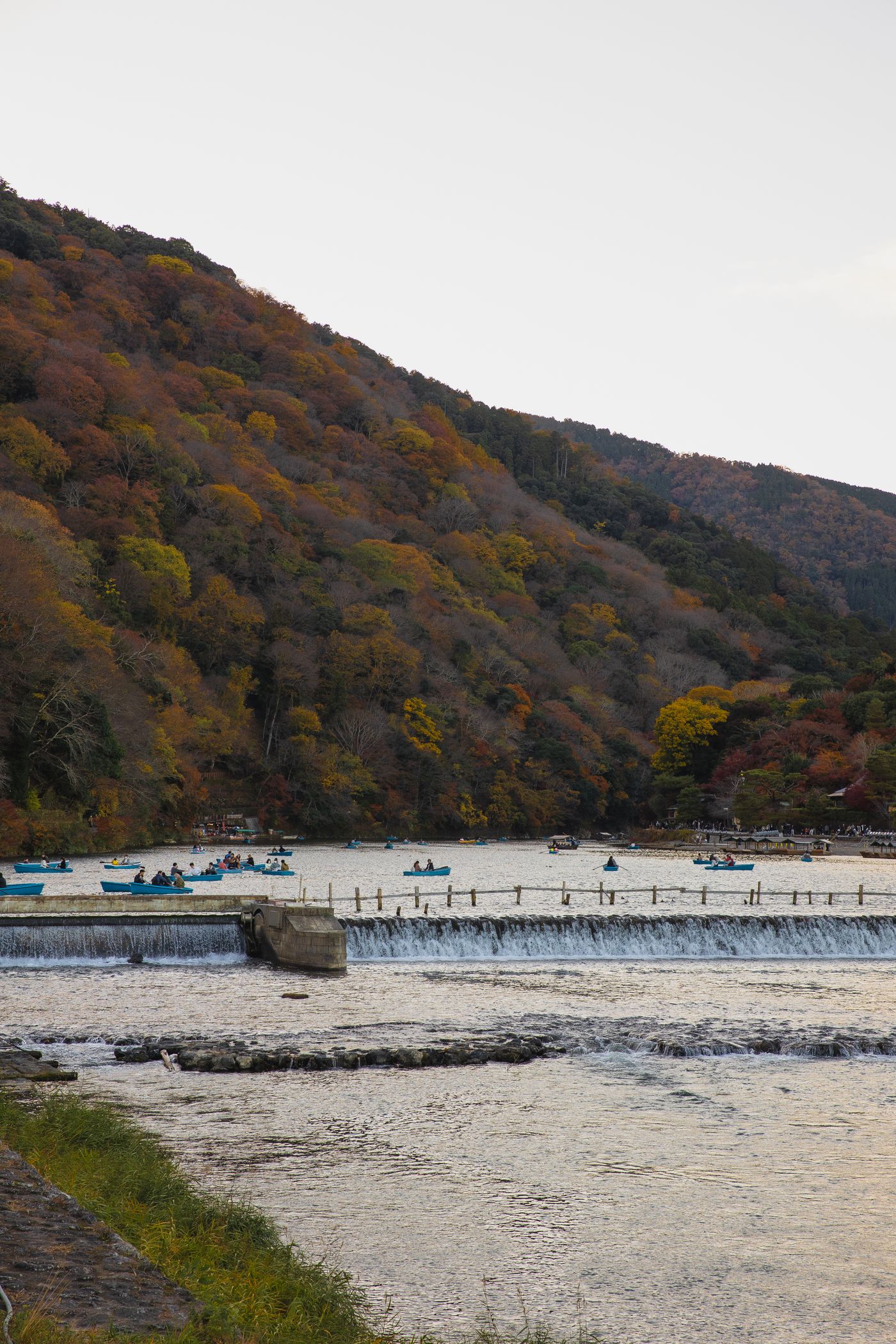
Maple-covered hills over the Katsura River and Togetsukyo Bridge, on Kyoto's western edge. tenki.jp says from 13 November; Weathernews says around 24 November, with leaves falling from about 10 December. Japanese name: 嵐山.
Yes — the riverbank and bridge are free; temples charge separately
Biggest attractions nearby
Tenryuji, the bamboo grove and Jojakkoji are all within walking distance.
Tips on beating the crowd
Where the two forecasts overlap, roughly 24–27 November, is the safest window. Walk about 15 minutes south from JR Saga-Arashiyama Station. No area-wide light-up is listed for 2026.
Fukuroda Falls
Light-up 7 Nov–31 Jan
A four-tier waterfall, 120 m high, framed by maples. tenki.jp says early to mid November (its usual window); Weathernews says around 13 November, with leaves falling from about 26 November. Japanese name: 袋田の滝.
Limited — the falls can be seen from outside; the viewing tunnel costs ¥500
Biggest attractions nearby
Daigo's onsen inns and the Okukuji Fukuroda Onsen area surround the falls.
Tips on beating the crowd
The viewing tunnel is ¥500 for adults. The light-up runs 7 November to 31 January; 2026 hours weren't confirmed when we checked. Take the JR Suigun Line to Fukuroda Station, then the bus (about 10 minutes).
Hakone Gora Park
Forecasts 3 weeks apart
A French-style garden on the slopes of Hakone, run by the Odakyu Hakone group. Weathernews says around 15 November, with leaves falling from about 4 December; tenki.jp says early December, later than usual. Japanese name: 箱根強羅公園.
Hakone Museum of Art is next door, and Lake Ashi and Owakudani are up the ropeway.
Tips on beating the crowd
Adults pay ¥650; primary-school children and under are free. Lake Ashi usually turns earlier (late October to mid November), so a mid-November trip can catch both. The Romancecar takes about 75–90 minutes from Shinjuku to Hakone-Yumoto.
Korankei
Light-up 1–30 Nov
About 3,000 maples line a river gorge in the hills east of Nagoya. tenki.jp says from 16 November; Weathernews says around 23 November, with leaves falling from about 7 December. Japanese name: 香嵐渓.
Yes — the gorge and light-up are free; parking costs ¥1,000
Biggest attractions nearby
Sanshu Asuke Yashiki, a working craft village, is in the gorge, and Asuke's old merchant street is next to it.
Tips on beating the crowd
The 71st Momiji Festival runs 1–30 November with a light-up from sunset to 21:00 every night; Aichi Prefecture says dates and hours won't be extended. In November cars pay ¥1,000 a day. From mid November a bus runs from Yakusa (subway and Linimo from Nagoya).
Lake Kawaguchi Momiji Corridor
Light-up 7–29 Nov
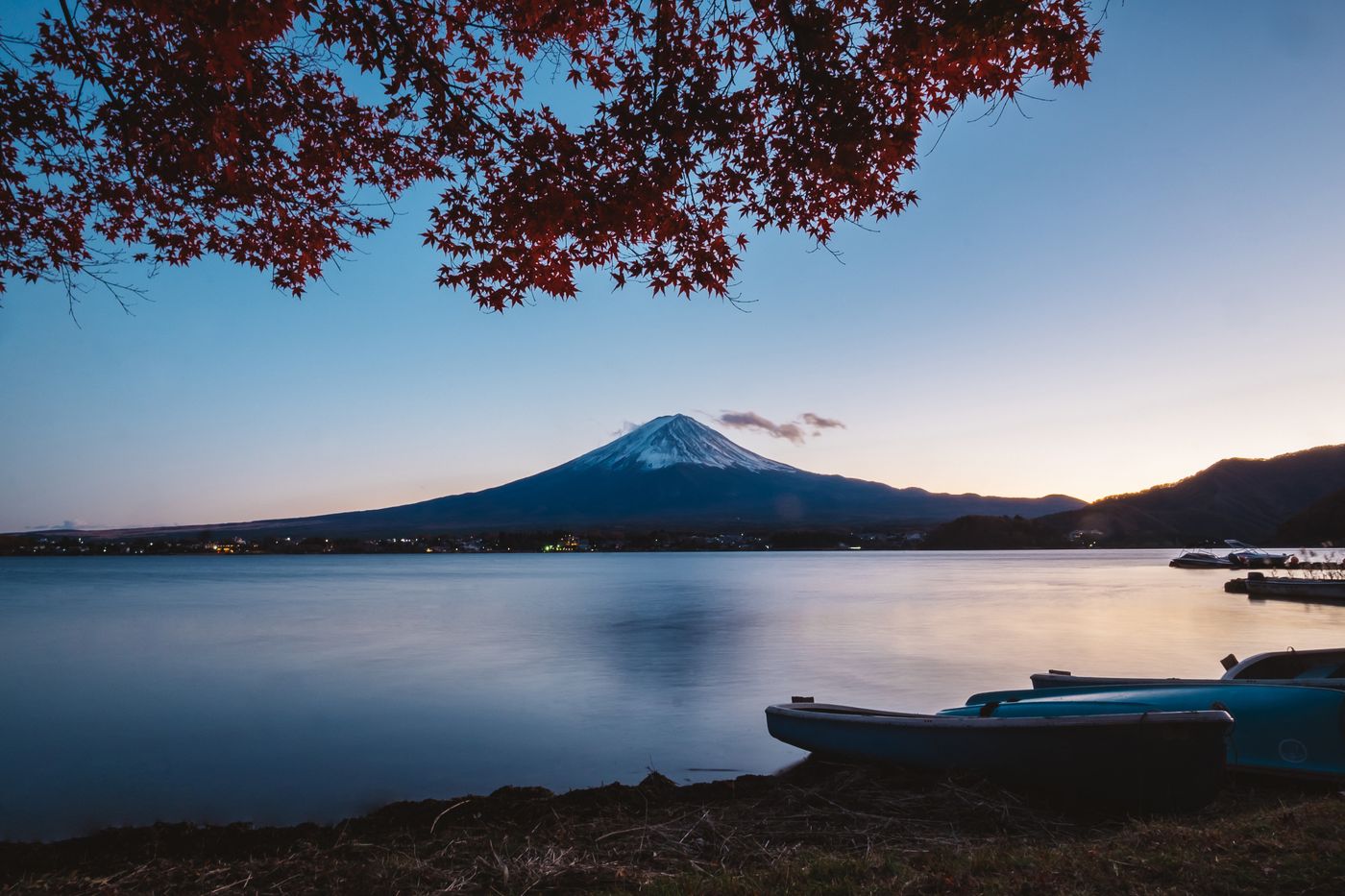
A short tunnel of maples on the north shore of Lake Kawaguchi, with Mt Fuji across the water. Weathernews says around 16 November, with leaves falling from about 29 November; tenki.jp gives the usual early to late November. Japanese name: 河口湖もみじ回廊.
The Kubota Itchiku Art Museum is beside the corridor, and the Kachi Kachi Ropeway is across the lake.
Tips on beating the crowd
The Fuji Kawaguchiko Autumn Leaves Festival runs 7–29 November, with a light-up from sunset to 21:00. From Fujikyu Kawaguchiko Station the retro bus takes about 20 minutes.
Miyajima Momijidani
Both say from 18–19 Nov
The maple valley park behind Itsukushima Shrine on Miyajima island. tenki.jp says from 18 November; Weathernews says around 19 November, with leaves falling from about 1 December. Japanese name: 紅葉谷公園.
Itsukushima Shrine and its sea torii are a short walk away, and the Miyajima Ropeway starts above the park.
Tips on beating the crowd
Take the ferry from JR Miyajimaguchi (about 10 minutes). The Miyajimaguchi car parks have about 1,000 spaces at around ¥1,000 a day. A light-up is mentioned by both forecasters but no 2026 dates were published.
Showa Kinen Park
Night walk 29 Oct–29 Nov
A huge national park in western Tokyo with ginkgo avenues and a Japanese garden. Weathernews says around 18 November, with leaves falling from about 7 December; tenki.jp gives the usual late October to late November. Japanese name: 国営昭和記念公園.
Tachikawa Station's shops and restaurants are just east of the park.
Tips on beating the crowd
The festival and night walk run 29 October to 29 November, lit 16:30–20:30 (last entry 20:30). The Japanese Garden at night needs a separate ticket: ¥1,200 online (limited) or ¥1,300 cash on the day, or ¥1,600 online with park entry. Park entry is ¥450 for adults.
Monte Takao
Festival 24 Oct–13 Dec
Tokyo's hiking mountain, about 50 minutes from Shinjuku on the Keio Line. tenki.jp says from 19 November, later than 2025; Weathernews says around 22 November, with leaves falling from about 9 December. Japanese name: 高尾山.
Yes — the trails are free; the cable car costs extra
Biggest attractions nearby
Yakuoin temple is on the main trail just below the summit.
Tips on beating the crowd
The Takao Momiji Festival runs 24 October to 13 December (Walkerplus listing). From Takaosanguchi Station it's about an hour to the summit using the cable car.
Oboke and Iya Valley
Weathernews only
Deep river gorges in the mountains of western Shikoku. tenki.jp has no forecast for either; Weathernews says around 19 November for Iya Valley and 22 November for Oboke, with leaves falling from about 5 December. Japanese name: 大歩危・祖谷渓.
The Iya Kazurabashi vine bridge is further up the Iya Valley.
Tips on beating the crowd
Oboke is about 20 minutes on foot from JR Oboke Station. For Iya, take the Shikoku Kotsu bus from JR Awa-Ikeda towards Kazurabashi. Boat and vine-bridge fees weren't confirmed when we checked.
Eigenji
Light-up 14–28 Nov
A Zen temple in the Suzuka foothills, reached by a maple-lined stone stairway. tenki.jp says late November to early December; Weathernews says around 20 November, with leaves falling from about 8 December. Japanese name: 永源寺.
The Eigenji Dam lake and the Suzuka Mountains are just upstream.
Tips on beating the crowd
The light-up runs 14–28 November: 17:00–18:30 Monday to Thursday, and 17:00–20:00 on Fridays, weekends and public holidays (including 23 November). It's listed by tenki.jp and Weathernews but not yet on the temple's site, and no price was published. Entry is ¥600; the Ohmi bus from Yokaichi takes about 35 minutes.
Nara Park
Free to walk in
A large open park of lawns, temples and free-roaming deer on the east side of Nara city. Weathernews says around 21 November, with leaves falling from about 10 December; tenki.jp gives the usual late October to early December. Japanese name: 奈良公園.
Todaiji, Kasuga Taisha and Kofukuji are all inside or beside the park.
Tips on beating the crowd
Kintetsu-Nara Station is about five minutes on foot; JR Nara is further. No light-up is listed for 2026.
Kenrokuen
Light-up on Nov weekends
One of Japan's three great gardens, beside Kanazawa Castle. Weathernews says around 22 November, with leaves falling from about 5 December; tenki.jp gives the usual early to late November. Japanese name: 兼六園.
Limited — free early entry from 6:00 to 7:45 from 1 November
Biggest attractions nearby
Kanazawa Castle Park is across the road, and the 21st Century Museum is a short walk.
Tips on beating the crowd
From 1 November the garden is free from 6:00 to 7:45, entering only by the Renchi-mon and Zuishinzaka gates; normal entry is ¥320. tenki.jp and Weathernews list light-ups on 7, 14, 15, 21, 22, 28 and 29 November, 18:00–21:00, not yet confirmed on the official site.
Tofukuji
No light-up, no parking
A Zen temple in south-east Kyoto, best known for the view of maples from Tsutenkyo bridge. Weathernews says around 23 November, with leaves falling from about 10 December; tenki.jp says late November to early December. Japanese name: 東福寺.
During the autumn special period (14 November to 6 December) Tsutenkyo and Kaisando cost ¥1,000, 8:30–16:00; the Hojo garden is ¥600, and no combined ticket is sold in autumn. There's no light-up and no parking from 25 October to 8 December, so come by train.
Eikando
Light-up 20 Nov–6 Dec
A Pure Land temple in eastern Kyoto and one of the city's classic maple spots. Weathernews says around 24 November, with leaves falling from about 6 December; tenki.jp says late November to early December. Japanese name: 永観堂(禅林寺).
Dates 2026
martes 24 noviembre – domingo 6 diciembre, 17:30–21:00
Nanzenji and the Philosopher's Path start just outside the gate.
Tips on beating the crowd
The night light-up runs 20 November to 6 December, entry 17:30–20:30, ¥1,000, same-day tickets only. The day treasure exhibition (11 November to 6 December, ¥1,500) is a separate ticket. There's no parking in autumn.
Kodaiji
Light-up 23 Oct–13 Dec
A Zen temple in Higashiyama built by the widow of Toyotomi Hideyoshi, with a garden that is lit up each autumn. Weathernews says around 24 November, with leaves falling from about 13 December; tenki.jp says late November to early December. Japanese name: 高台寺.
Dates 2026
martes 24 noviembre – domingo 13 diciembre, 17:00–22:00
Kiyomizu-dera, Ninenzaka and Yasaka Shrine are all within a short walk.
Tips on beating the crowd
The night viewing runs 23 October to 13 December: lights on from 17:00, last entry 21:30, gate closes 22:00. One ¥800 ticket covers day and night, but you can't re-enter once you leave. The Kodaiji and Entoku-in combined ticket is ¥1,200.
Kitano Tenmangu Momiji-en
Light-up 13 Nov–6 Dec
A maple garden along the Odoi earthworks, Toyotomi Hideyoshi's old city wall, inside Kitano Tenmangu shrine. Weathernews says around 25 November; tenki.jp says late November to early December. Japanese name: 北野天満宮 史跡御土居もみじ苑.
The Momiji-en is open 31 October to 6 December, 9:00–16:00, and lit up 13 November to 6 December from sunset to 20:00 (last entry 19:40). Entry is ¥1,500 for adults, with tea and a sweet. Walk five minutes from Randen Kitano-Hakubaicho Station, or take city bus 50 from Kyoto Station (about 30 minutes).
Kiyomizu-dera
Night viewing 21–30 Nov
Kyoto's hillside temple with its famous wooden stage over a valley of maples. Weathernews says around 25 November, with leaves falling from about 10 December; tenki.jp says early December. Japanese name: 清水寺.
Kodaiji, Ninenzaka and Sannenzaka are all downhill from the gate.
Tips on beating the crowd
The autumn special night viewing runs 21–30 November, last entry 21:00 and gates closing 21:30; the night price wasn't on the official site when we checked. Day entry is ¥500 for adults. City bus 206 or 100 from Kyoto Station to Gojozaka, then 10 minutes on foot.
Minoo Park
Festival 14 Nov–6 Dec
A forested valley in Osaka's northern hills, with a riverside trail up to Minoo Falls. tenki.jp says late November to early December; Weathernews says around 25 November, with leaves falling from about 10 December. Japanese name: 箕面公園.
Minoo Falls is at the top of the trail, and Ryuanji temple is on the way.
Tips on beating the crowd
The Minoo Park Momiji Festival runs 14 November to 6 December (Walkerplus listing). The park entrance is about five minutes from Hankyu Minoo Station. Car parks fill early in foliage season, so come by train.
Akizuki Castle Ruins
Peak from about 30 Nov
The ruins of a small Edo-period castle town in the hills of Fukuoka, with stone walls and old gates under maples. tenki.jp says late November to early December; Weathernews says around 30 November, with leaves falling from about 10 December. Japanese name: 秋月城跡.
The Sugi no Baba avenue runs up to the castle's Kuromon gate.
Tips on beating the crowd
From Amagi Station (Amagi Railway or Nishitetsu) take the bus towards Akizuki, about 20 minutes, then walk eight minutes. Parking is ¥400 per car per day.
Meiji Jingu Gaien Ginkgo Avenue
Festival dates TBA
Four rows of 146 ginkgo trees line about 300 m of road in central Tokyo. tenki.jp says late November to early December, later than its usual; Weathernews says around 30 November, normal by its own measure, with leaves falling from about 14 December. Japanese name: 明治神宮外苑いちょう並木.
The Meiji Jingu Gaien sports area and Omotesando are within walking distance.
Tips on beating the crowd
The Ginkgo Festival's 2026 dates hadn't been announced when we checked. Gaienmae and Aoyama-itchome stations are about five minutes away, JR Shinanomachi about 10.
Rikugien
Light-up 25 Nov–6 Dec
A 300-year-old strolling garden in north Tokyo, with the city's best-known autumn night viewing. tenki.jp says early to mid December, later than usual; Weathernews says around 4 December, with leaves falling from about 19 December. Japanese name: 六義園.
Dates 2026
viernes 4 diciembre – sábado 19 diciembre, 18:00–20:30
The night viewing runs 25 November to 6 December, 18:00–20:30 (last entry 19:30): ¥1,000 online in advance, ¥1,200 on the day. Day entry is ¥300. There's no parking; Komagome Station is seven minutes on foot.
Metasequoia Avenue Makino
One of the year's last
About 2.4 km of metasequoia trees line a country road near the north end of Lake Biwa, turning rust-orange. Weathernews says around 5 December, with leaves falling from about 18 December; tenki.jp gives no 2026 value. Japanese name: メタセコイア並木.
Makino Pick Land farm park is at the end of the avenue, and Lake Biwa's north shore is minutes away.
Tips on beating the crowd
By car it's about 90 minutes from Kyoto-Higashi IC, with free parking for about 230 cars. Without a car, take the JR Kosei Line to Makino Station, then the Makino Kogen Line bus to Makino Pick Land.
Shinjuku Gyoen
Last big peak, ~6 Dec
A national garden in central Shinjuku mixing Japanese, English and French styles. Weathernews says around 6 December, with leaves falling from about 21 December; tenki.jp has no page for it. Japanese name: 新宿御苑.
Shinjuku's shopping streets are next door, and Meiji Jingu is a short walk west.
Tips on beating the crowd
Entry is ¥500; over-65s and students (high school and up) pay ¥250, and junior high and under are free. It's closed on Mondays (or the next weekday if Monday is a holiday). The Shinjuku Gate is about 10 minutes from the South Exit.
When is Japan fall foliage season?
Japan fall foliage season runs from mid-September, when the first maples turn on Hokkaido’s Daisetsuzan, to mid-December, when the last ginkgo drop in central Tokyo. Most visitors aim for November, when Japan autumn leaves reach Kyoto, Nara, Nikko’s shrines, Hakone and Mt Fuji’s lakes. October suits hikers and road-trippers heading for the Alps and Tohoku, and December is for anyone who wants Tokyo’s gardens without the crowds. The Japan fall foliage peak at any one spot lasts about two weeks, so the calendar above is built around those windows rather than single dates.
How to read a Japan autumn leaves forecast
Two companies forecast koyo in Japan, and they don’t measure the same thing. tenki.jp, run by the Japan Weather Association, gives a start date for 18 headline spots (“from 13 November”) and a ten-day window for everything else (“late November to early December”). For many spots that window is simply the usual peak, so treat it as normal timing rather than a 2026 prediction. Weathernews gives every spot an approximate start date and the date it expects leaves to start falling. Its “peak” means about 70% of the trees have turned.
For the same spot, the two can be ten days or more apart, and up to about three weeks. Arashiyama in Kyoto is the famous case: tenki.jp says from 13 November, Weathernews says around 24 November. Oirase Gorge is 16 days apart, Hakone’s Gora Park about three weeks. Where they disagree, plan for the overlap, not either single date, and keep a day spare. A Japan fall foliage forecast is a forecast, not a promise.
The 2026 picture: both forecasters expect a normal to late season. A cool September and start to October pushed parts of the Hokkaido, Tohoku and Hokuriku mountains a little ahead of schedule. A warm late October and November should slow everything else down, especially low-lying cities, so Tokyo and Kyoto look later than usual this year.
Building a trip around the leaves? The JR Autumn Unlimited Pass covers three days of local trains, the JR Tokyo Wide Pass reaches Nikko, Karuizawa and Tanigawa from Tokyo, and our onsen towns guide is the obvious way to end a cold day in the mountains.
Know before you go
The forecasts disagree
tenki.jp and Weathernews can be 10–20 days apart for the same spot. Aim for the window both cover, and check again a week before you travel: Weathernews' third forecast is due in late October.
Light-ups don't move
Night light-up dates are fixed months ahead and are rarely extended. In a late year like 2026, the first nights of a long light-up can show green leaves, so book the second half.
Some spots need booking
Tsutanuma's sunrise slot is booked on Peatix. Rikugien's night tickets are cheaper online. Eikando's night tickets are sold on the day only, and Kamikochi closes for winter after 15 November.
Go early, go on a weekday
Kyoto's temples, Irohazaka and Mount Takao are at their worst on peak weekends. The first hour after opening is the quietest, and weekdays beat weekends by a mile.
Dress for the mountains
Spots above 1,000 m (Kamikochi, Tanigawa, Oirase, Lake Chuzenji) are close to freezing in the early morning by late October. Bring a warm layer even if Tokyo feels like summer.
Use the train
Car parks at Tofukuji, Eikando and Kamikochi are closed or banned in season, and mountain roads jam. Trains and shuttle buses are faster on peak days.
Japan’s big three for autumn leaves, in full
If you build one trip around Japan autumn leaves, make it one of these: Kyoto’s Arashiyama, Nikko’s Irohazaka and Fuji’s Lake Kawaguchi. All three are reachable from Tokyo or Kyoto in a day, and all three are tied to a confirmed 2026 date or light-up.
Arashiyama
Forecasts 11 days apart
Maple-covered hills over the Katsura River and Togetsukyo Bridge, on Kyoto's western edge. tenki.jp says from 13 November; Weathernews says around 24 November, with leaves falling from about 10 December. Japanese name: 嵐山.
Yes — the riverbank and bridge are free; temples charge separately
Biggest attractions nearby
Tenryuji, the bamboo grove and Jojakkoji are all within walking distance.
Tips on beating the crowd
Where the two forecasts overlap, roughly 24–27 November, is the safest window. Walk about 15 minutes south from JR Saga-Arashiyama Station. No area-wide light-up is listed for 2026.
Irohazaka (Nikko)
Both say from 23 Oct
Forty-eight hairpin bends climb from Nikko town towards Lake Chuzenji. tenki.jp says from 23 October; Weathernews also says around 23 October, with leaves falling from about 8 November. Japanese name: いろは坂.
Kegon Falls and Lake Chuzenji are at the top of the road.
Tips on beating the crowd
The Akechidaira Ropeway, the classic Irohazaka viewpoint, is closed for renovation until the end of August 2027. Buses towards Chuzenji Onsen take about 40 minutes from JR or Tobu Nikko Station.
Lake Kawaguchi Momiji Corridor
Light-up 7–29 Nov
A short tunnel of maples on the north shore of Lake Kawaguchi, with Mt Fuji across the water. Weathernews says around 16 November, with leaves falling from about 29 November; tenki.jp gives the usual early to late November. Japanese name: 河口湖もみじ回廊.
The Kubota Itchiku Art Museum is beside the corridor, and the Kachi Kachi Ropeway is across the lake.
Tips on beating the crowd
The Fuji Kawaguchiko Autumn Leaves Festival runs 7–29 November, with a light-up from sunset to 21:00. From Fujikyu Kawaguchiko Station the retro bus takes about 20 minutes.
Japan Pro AI
Tell it your dates — it will tell you what is being fired
Give the assistant the dates you are in Japan and it will name the autumn leaves spots that will be at peak, how to get there and which night light-ups are on.
Try
Japan autumn leaves light-ups and festivals, 2026
Twelve Japan autumn leaves light-ups and festivals with confirmed or listed 2026 dates. If colour runs late, the lights still switch off on the last date.
Japan autumn leaves move south and downhill, so where you go decides when you go, and this autumn leaves calendar is the quickest way to match the two. Here is how the 2026 season breaks down for the regions most visitors pick, with the spots on the calendar above.
Tokyo autumn leaves 2026
Tokyo is late this year. Mount Takao, 50 minutes from Shinjuku on the Keio Line, peaks from about 19–22 November. In the city, Meiji Jingu Gaien’s ginkgo avenue turns gold from about 30 November, and Rikugien and Shinjuku Gyoen hold out until the first and second weeks of December. Rikugien’s night viewing (25 November – 6 December) is the city’s best after-dark show. For the full city list, see our Tokyo autumn leaves guide.
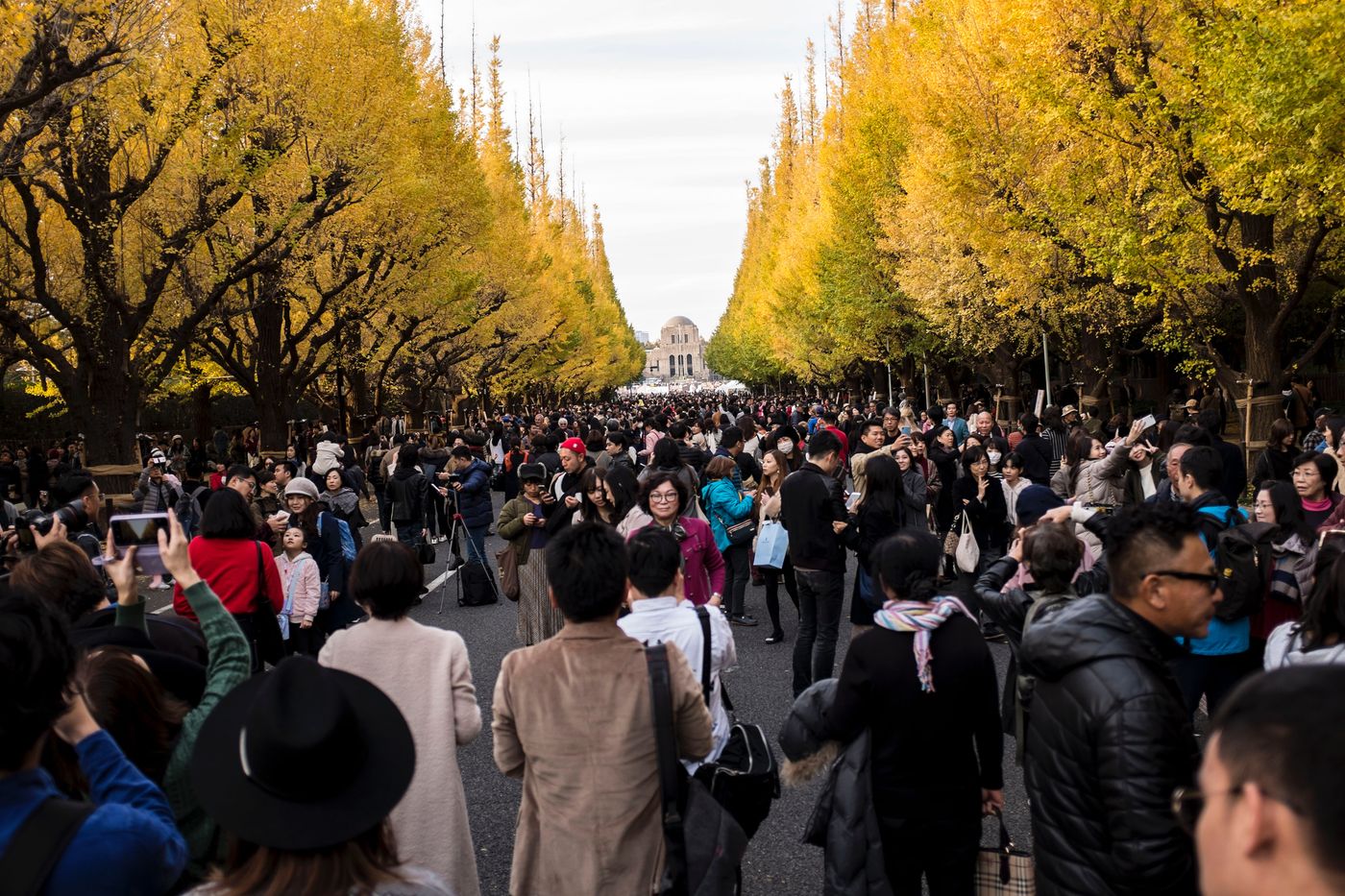
Meiji Jingu Gaien ginkgo avenue, Tokyo: expected from about 30 November 2026.
Kyoto autumn leaves 2026
Kyoto is the most searched destination for Japan autumn leaves, and the forecasters disagree most about it. tenki.jp puts Arashiyama from 13 November; Weathernews says around 24 November. The city temples (Tofukuji, Eikando, Kodaiji, Kiyomizu-dera and Kitano Tenmangu’s Momiji-en) follow a few days later: Weathernews says 23–25 November, tenki.jp late November to early December. The safest window for Kyoto in 2026 is roughly the last week of November. Split your days: Tofukuji and Arashiyama first thing, light-ups at Kodaiji or Eikando after dark.
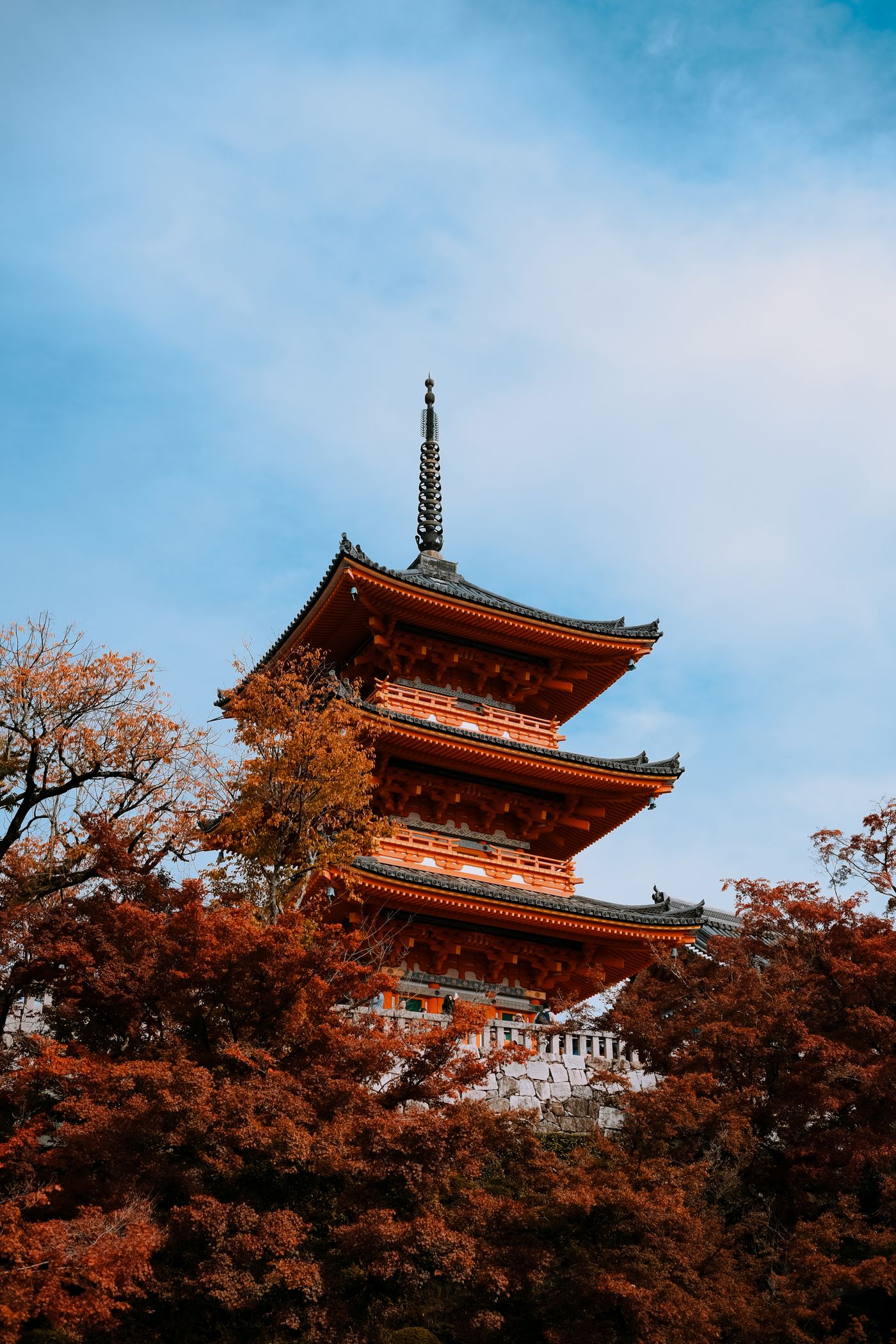
Kiyomizu-dera, Kyoto: night viewing runs 21–30 November 2026.
Nikko autumn leaves forecast 2026
Nikko runs top to bottom. The high moors around Yumoto and Senjogahara turn first, then Irohazaka’s 48 hairpin bends from about 23 October (both forecasters agree), Lake Chuzenji from about 28 October, and the UNESCO shrines in town from about 12 November. Light-up NIKKO lights Toshogu, Futarasan and Rinnoji free on 6–8 November. Note that the Akechidaira Ropeway, the classic Irohazaka viewpoint, is closed until the end of August 2027.
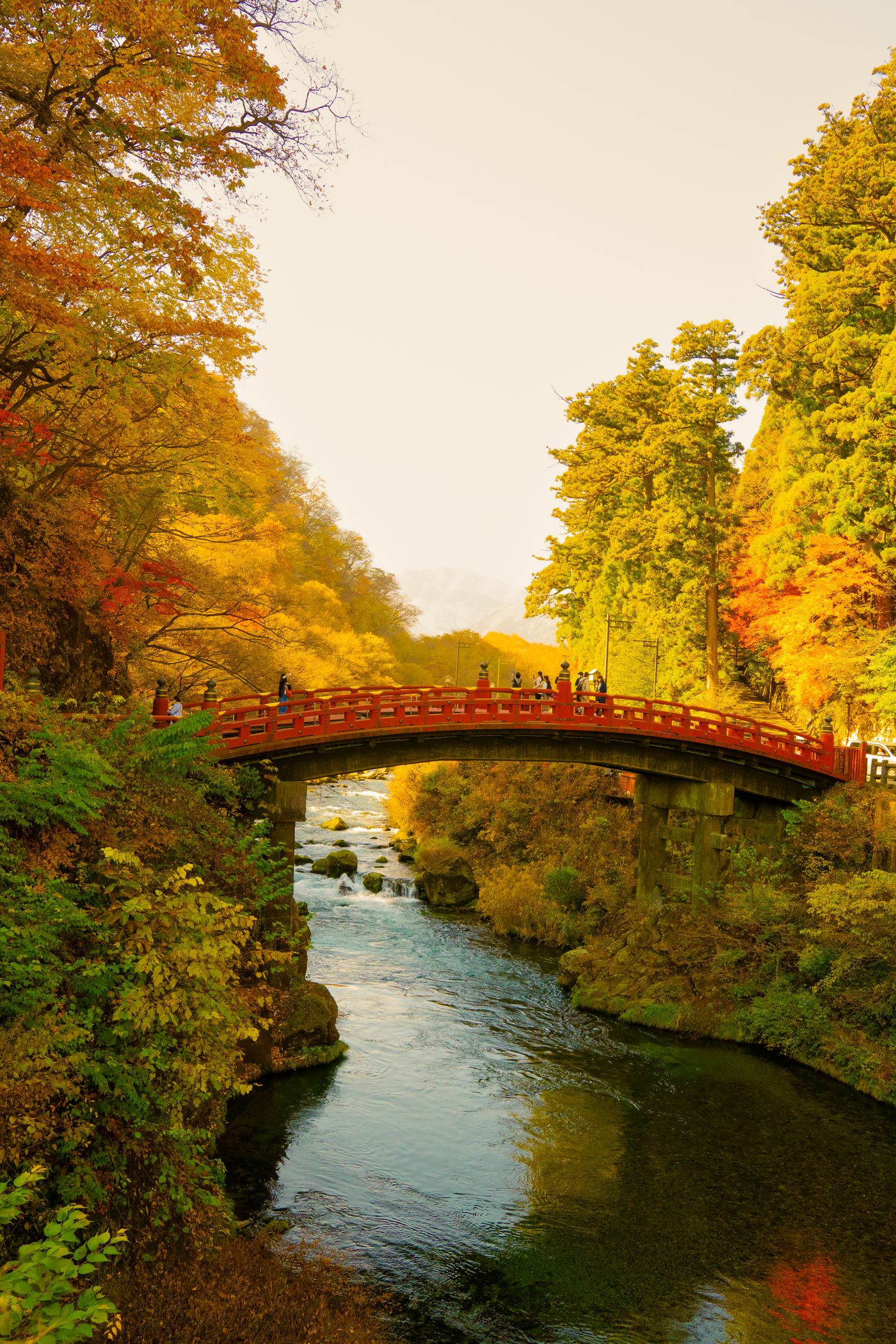
Shinkyo Bridge, Nikko: the town’s shrines peak from about 12 November 2026.
Tohoku and the Alps
Up north and up high, autumn is already here. Kamikochi is at peak, with leaves falling from about 30 October and the road closing for winter after 15 November. Oirase Gorge in Aomori runs from mid to late October into early November, and Tsutanuma Pond nearby has a booked sunrise slot from 23 October to 3 November. Naruko Gorge in Miyagi peaks from about 25–29 October, though no trains cross it this year: the line has been suspended since July 2024. More detail in our Oirase Gorge autumn guide.
Kanazawa, Hakone, Fuji and the rest
Kanazawa’s Kenrokuen garden peaks from about 22 November, with free early entry from 6:00 every morning from 1 November. Hakone splits in two: Lake Ashi in late October to mid November, Gora Park later. Lake Kawaguchi’s Momiji Corridor peaks from about 16 November, with Mt Fuji across the water and a free light-up every night of the 7–29 November festival. Further west, Miyajima’s maple valley peaks from 18–19 November, and Kirishima in Kyushu from about 8–11 November.
Lake Kawaguchi: the Momiji Corridor festival runs 7–29 November 2026.
Three things most autumn leaves guides miss
1. The two forecasts disagree, and that’s useful. Most Japan autumn leaves guides quote one forecaster as if it were the official date. There is no official date. When tenki.jp and Weathernews disagree, the days both cover are your safest window: for Arashiyama that’s roughly 24–27 November, not 13 November or 24 November alone.
2. Light-up dates don’t move. Leaves do. Every night light-up here was fixed months ago. In a late year like 2026, the first weeks of a long light-up (Kodaiji from 23 October, Korankei from 1 November) will light up green leaves. Book the second half of the run, not the first.
3. Several famous spots changed this year. The Akechidaira Ropeway above Irohazaka is closed until August 2027. No trains cross Naruko Gorge. The Kurobe Gorge Railway reopened to Keyakidaira on 1 October 2026, but only the station area is open at the top. Tofukuji has no parking from 25 October to 8 December. Check before you go.
Japan autumn leaves words worth knowing
Koyo (紅葉) — autumn leaves, and the season of watching them. Koyo-gari (紅葉狩り) is the trip itself: literally “autumn leaves hunting”.
Momiji (もみじ) — the Japanese maple, and the red leaves everyone is chasing. Most temple gardens are planted with it.
Icho (いちょう) — ginkgo. It turns bright yellow rather than red, and lines Tokyo’s best autumn streets.
Migoro (見頃) — “peak viewing”. Forecasters publish a migoro start date or window for each spot.
Ochiba (落葉) — falling leaves. When the status says ochiba, you’re late.
Raito-appu (ライトアップ) — a night light-up. Most famous temples run one for two to three weeks in November.
Planning a Japan autumn leaves trip
A Japan fall foliage trip takes more planning than most. Japan autumn leaves season is the second-busiest travel period of the year after cherry blossom, and the same rules apply. Rooms near the famous spots go first, the last trains are packed, and the best hour of the day is the first one.
Book the room before the date is certain. Kyoto, Nikko and Hakone hotels fill weeks ahead for late-November weekends. Book a refundable room for the window both forecasts cover, then adjust.
Stay where the leaves are. A night at a temple lodging on Mount Koya, an onsen ryokan in Hakone or Nikko, or a lakeside hotel at Kawaguchiko puts you at the spot before the day-trippers arrive.
Use a rail pass. The JR Autumn Unlimited Pass (¥7,850 for three days of local JR trains in 2026) and the JR Tokyo Wide Pass both cover autumn leaves day trips from Tokyo.
Keep a backup day. Rain doesn’t stop the leaves, but strong wind after peak can strip a hillside in a night. Don’t leave your main spot for your last day.
Check again a week out. Both forecasters update through the season. Every date on this calendar is re-checked when Weathernews and tenki.jp publish their next forecasts.
How to photograph Japan autumn leaves
Overcast light is your friend: bright sun bleaches reds and throws hard shadows under maples, while a grey sky makes colours glow. Shoot backlit leaves against the sky for the classic stained-glass look, use water (Arashiyama, Oirase, Kenrokuen’s ponds) for reflections, and frame one landmark instead of a whole hillside. Many temples ban tripods inside the grounds and at night light-ups, so raise your ISO instead.
Already over for 2026
These Japan autumn leaves spots in the north and the high mountains peaked in September or early October and are past their best. They’re on next year’s list.
Spot
Usual peak
2026 status
Daisetsuzan Asahidake, Hokkaido
Mid – late Sep
Finished (Weathernews, 4 Oct)
Sounkyo Gorge, Hokkaido
Early – mid Oct
Leaves fallen (tenki.jp, 16 Oct)
Jozankei Onsen, Hokkaido
Early – mid Oct
Leaves falling (Weathernews, 16 Oct)
Senjojiki Cirque, Nagano
Late Sep – early Oct
Leaves falling (Weathernews, 14 Oct)
Karasawa Cirque, Nagano
Early – mid Oct
Leaves falling (Weathernews, 16 Oct)
Tateyama Murodo, Toyama
Mid Sep – early Oct
Finished (tenki.jp, 16 Oct)
Hachimantai, Iwate/Akita
Early – mid Oct
At peak; leaves fall from about 18–23 Oct
Oze and Shiga Kogen
Late Sep – mid Oct
At peak; leaves fall from about 21–22 Oct
Japan autumn leaves FAQ
When is the best time to see autumn leaves in Japan?
It depends on where. Hokkaido and the high mountains peak from mid-September to mid-October. Nikko, Tohoku and the Alps peak in late October. Kyoto, Nara, Hakone and most of central Japan peak in mid to late November. Central Tokyo’s gardens peak in late November and early December.
When do the autumn leaves peak in Kyoto in 2026?
tenki.jp says Arashiyama peaks from 13 November; Weathernews says around 24 November. For Kyoto’s city temples (Tofukuji, Eikando, Kodaiji, Kiyomizu-dera), Weathernews says 23–25 November and tenki.jp late November to early December. The safest window is roughly the last week of November.
When do the autumn leaves peak in Tokyo in 2026?
Later than usual. Mount Takao from about 19–22 November, Meiji Jingu Gaien’s ginkgo avenue from about 30 November, and Rikugien and Shinjuku Gyoen in the first week of December.
What is the Nikko autumn leaves forecast for 2026?
Both forecasters put Irohazaka from about 23 October. Weathernews says Lake Chuzenji around 28 October and the shrine area in town around 12 November. Light-up NIKKO runs free on 6–8 November.
Are Japan’s autumn leaves late in 2026?
Mostly yes, outside the north. A cool September brought parts of the northern mountains forward, but a warm late October and November is expected to delay peak in Tokyo, Kyoto and other low-lying cities.
What’s the difference between the tenki.jp and Weathernews forecasts?
They are separate companies using different methods. tenki.jp gives a start date for 18 headline spots and a ten-day window for the rest. Weathernews gives an approximate start date for every spot and defines peak as about 70% of trees turned. They can be 10 or more days apart for the same spot.
Do you need tickets for autumn light-ups in Japan?
Most temple light-ups charge entry on the day (¥800–¥1,500 in Kyoto). Some sell online: Rikugien in Tokyo is cheaper online, and Tsutanuma in Aomori requires a Peatix booking for its sunrise slot.
Japan autumn leaves calendar: the top 10 at a glance
Short on time? These are the ten Japan autumn leaves spots to plan a trip around in 2026, in date order.
Peak from
Spot
Where
Forecasts (tenki.jp / Weathernews)
Light-up
23 Oct
Irohazaka (いろは坂)
Nikko, Tochigi
23 Oct / ~23 Oct
—
Late Oct
Oirase Gorge (奥入瀬渓流)
Towada, Aomori
15 Oct / ~31 Oct
—
12 Nov
Nikko shrines (日光の社寺)
Nikko, Tochigi
usual / ~12 Nov
6–8 Nov, free
13–24 Nov
Arashiyama (嵐山)
Kyoto
13 Nov / ~24 Nov
—
16 Nov
Lake Kawaguchi (河口湖)
Yamanashi
usual / ~16 Nov
7–29 Nov, free
16–23 Nov
Korankei (香嵐渓)
Toyota, Aichi
16 Nov / ~23 Nov
1–30 Nov, free
18 Nov
Miyajima (宮島)
Hiroshima
18 Nov / ~19 Nov
—
Late Nov
Kyoto temples (東福寺・永観堂・高台寺)
Kyoto
late Nov – early Dec / ~23–25 Nov
Eikando, Kodaiji
30 Nov
Jingu Gaien ginkgo (神宮外苑)
Tokio
late Nov – early Dec / ~30 Nov
—
Early Dec
Rikugien (六義園)
Tokio
early – mid Dec / ~4 Dec
25 Nov – 6 Dec, ¥1,000
Sources: tenki.jp 2026 Japan autumn leaves forecast, second edition (14 October 2026); Weathernews second forecast (8 October 2026) and spot pages read 16 October 2026; Walkerplus autumn leaves listings; JNTO; and the official site of each temple, park and tourism association. Prices and dates change: always check the official site before you travel.
What’s changed: 16 October 2026 — Japan autumn leaves calendar built from the second tenki.jp and Weathernews forecasts, fact-checked against five sources; replaces our earlier 2026 foliage forecast and fall foliage spots articles.

 English
 Japanese
 Chinese (China)
 Chinese (Taiwan)
 Korean
 Thai
 French
 Spanish
 German
 Vietnamese
 Indonesian
 Italian