


The Edo Tokyo Open Air Architectural Museum is a seven hectare park in western Tokyo where around thirty historic buildings have been taken apart, moved and rebuilt on a single site. It covers the seventeenth to the twentieth century, and instead of fragments and scale models behind glass you get the real thing at full size: farmhouses, a merchant’s mansion, a soy sauce shop, a stationery store, a police box and a public bathhouse, standing on their own streets.
Almost all of these buildings were days away from being lost. They survived demolition, earthquake and wartime fire because someone moved them here. Most are open, so you can take your shoes off, step up onto the tatami and stand in the middle of them.
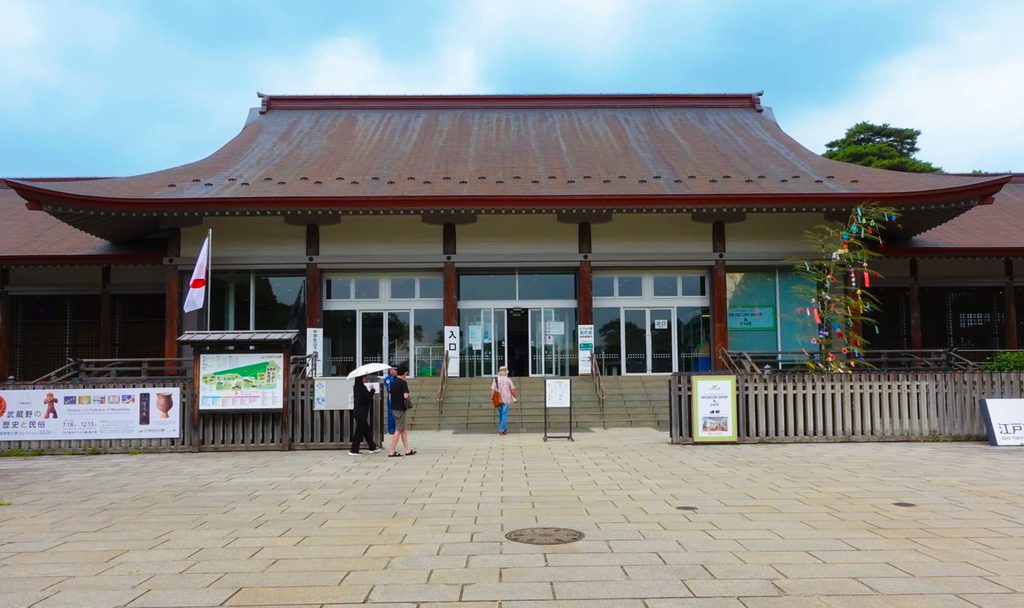
Edo-Tokyo Open Air Architectural Museum: What to Know Before You Go
- Admission: ¥400 for adults
- Closed: Mondays, or the following weekday when Monday is a public holiday
- Hours: these vary by season, so check before you travel
- Nearest station: Musashi-Koganei on the JR Chuo Line
- From Shinjuku: about 30 minutes on the Chuo Line
- From Shibuya: about 35 minutes on the Inokashira Line to Kichijoji, then the Chuo Line
- How long to allow: two to three hours
💡 Japan Pro Tip: You need to take your shoes off to go inside most of the buildings, and you will be doing it over and over. Slip-ons save a lot of fiddling, and wear socks — some of the older floors are cold even in summer.
9 Buildings Not to Miss in the Edo-Tokyo Open Air Museum
The museum splits into three zones. If you only have a couple of hours, these are the nine worth prioritizing.
| Building | Zone | Why stop |
|---|---|---|
| Visitor Center (former Kokaden) | Center | Ceremonial hall from 1940, now the ticket desk, shop and exhibition room |
| Jisho-in Mausoleum | Center | Small vermilion and gold hall at the end of a hedged path |
| House of Korekiyo Takahashi | Center | Home of a leading Meiji and Taisho era statesman |
| Residence of Hachiroemon Mitsui | West | The grandest building on site, with a formal garden |
| Farmhouse of the Yoshino Family | West | Edo period thatch with a sunken hearth you can stand beside |
| House of Georg de Lalande | West | Western style timber house with a cafe and terrace seating |
| Kodakara-yu public bathhouse | East | Temple style frontage linked to Spirited Away |
| Kodera Soy Sauce Shop | East | Shopfront and stock left as they were |
| Takei Sanshodo stationery store | East | Back wall built as a grid of small wooden drawers |
Getting to the Edo Tokyo Open Air Architectural Museum
Musashi-Koganei is a quiet residential stretch of western Tokyo that feels a long way from Shibuya, which is part of the appeal. It makes an easy half day out and one of the more rewarding day trips from central Tokyo by train.

Arrival at Musashi-Koganei Station
From Shinjuku it is roughly thirty minutes on the JR Chuo Line. Come out at the North Exit, then take a Seibu bus from stop 2 or 3 and get off at Koganei-koen Nishi-guchi. You can also walk the whole way if you would rather stretch your legs after the train.
How to get to Edo Tokyo Open Air Architectural Museum
The bus drops you at the edge of Koganei Park, the second largest park run by the city, and the museum sits inside it. From the Nishi-guchi stop it is a flat, well signposted five minute walk along the main paved path to the entrance plaza.
The park is worth the extra few minutes on its own. There are more than 1,700 cherry trees here for spring, heavy green canopy through summer and good color in autumn, so what you see depends entirely on when you visit Tokyo.

The Center Zone: The Entrance Hall and a Gilded Mausoleum
Start in the Center Zone. The Visitor Center is the former Kokaden, a ceremonial hall built in 1940 and later moved out here, and it now holds the ticket desk, the shop and an exhibition room. It is a good place to pick up the site map before you commit to a route.
A short walk behind it, at the end of a path lined with clipped hedges, is the Jisho-in Mausoleum. It is small, vermilion and gold, and it is the one building on the site that stops most people in their tracks. The Center Zone also holds the House of Korekiyo Takahashi, the home of one of the most significant statesmen of the Meiji and Taisho eras.

💡 Japan Pro Tip: Most visitors turn right for the East Zone as soon as they are through the gate. Go straight ahead instead. The Center Zone is quieter, it is a gentler introduction, and the mausoleum photographs far better before the crowd arrives.
The East Zone: Old Downtown Tokyo
The East Zone rebuilds a shitamachi street, the old downtown, with shopfronts from the Meiji, Taisho and Showa periods facing each other across a road. Several are clad in copper that has weathered to a deep green. Nearly all of them are open, and the interiors are stocked as they would have been.
The building at the end of the street is the Kodakara-yu public bathhouse, and it is the reason a lot of people come. Its temple style frontage, with a sweeping curved gable and carved panels above the entrance, is widely thought to have fed into the bathhouse in Studio Ghibli’s Spirited Away.

Working down the street you get the Kodera Soy Sauce Shop, still lined with bottles and cans; Takei Sanshodo, a stationery store whose back wall is a grid of small wooden drawers; Maruni Shoten, a kitchenware store with brass kettles and woven baskets hanging from the ceiling; and Yamatoya, a dried goods store with bonito and dried fish laid out on angled trays.

At the entrance to the zone sits Toden car 7514, a yellow Tokyo streetcar parked on a short length of track with its destination board still set for Shimbashi. You can climb aboard.

💡 Japan Pro Tip: This is the largest and busiest zone, so give it the most time. It is also where the best photographs are — the street, the bathhouse frontage and the streetcar in particular.
The West Zone: A Merchant Mansion, Farmhouses and Modernism
The West Zone runs from Edo period thatched farmhouses to Western influenced homes of the early twentieth century, along a lane the museum calls Yamanote Street.
The Residence of Hachiroemon Mitsui is the biggest and grandest building on the site. It belonged to the Mitsui merchant family, and its scale shows: wide tatami rooms, sliding screens that open along a whole wall, and a formal garden with sculpted pines that you look out over from the veranda.
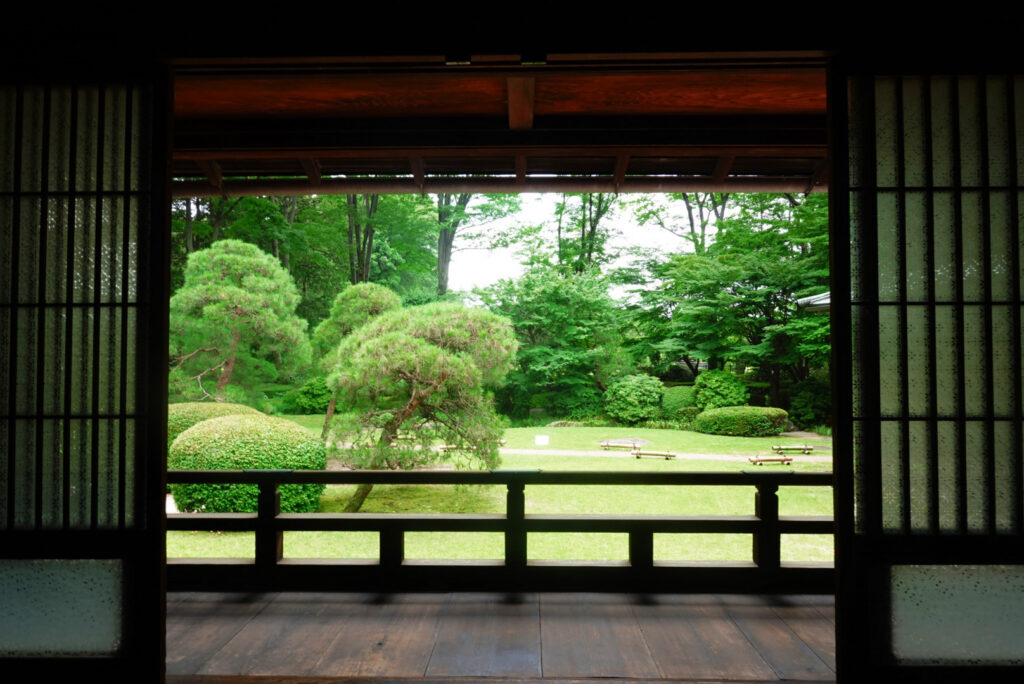
At the other end of the range is the Farmhouse of the Yoshino Family, where you can stand inside and see the irori, the sunken hearth that heated the room and the household’s food.

Where to Eat Inside the Museum
There are two options and they suit different moods. The House of Georg de Lalande in the West Zone, a white timber house with a red roof, has a cafe with terrace seating for coffee and cake. Over in the East Zone, Kura serves Musashino udon, the thick, chewy local style.

What to Do Next in the Neighborhood
Two to three hours covers the museum properly, which leaves the afternoon open. Both of the obvious next stops are east along the Chuo Line.
Three stops takes you to Mitaka for the Ghibli Museum, which needs a ticket booked in advance. One stop further is Kichijoji, good for vintage shopping, a walk around Inokashira Park and dinner in one of the izakaya near the station.
💡 Japan Pro Tip: Ghibli Museum tickets sell out well ahead and are dated and timed, so if you want to pair the two in one day, book that first and build the museum visit around it.
FAQ
Is the Edo Tokyo Open Air Architectural Museum worth visiting?
Yes, if you have any interest in architecture or in old Tokyo. It is one of the few places in the city where you can walk inside around thirty preserved buildings covering the seventeenth to the twentieth century, from thatched farmhouses to a grand public bathhouse. Admission is ¥400 and most visitors need two to three hours.
How long do you need at the museum?
Two to three hours covers all three zones at a comfortable pace, including time spent inside the buildings. If you only have an hour, prioritize the East Zone, which holds the reconstructed shitamachi street, the Kodakara-yu bathhouse and most of the shops you can walk into.
How do you get there from Shinjuku?
Take the JR Chuo Line to Musashi-Koganei, roughly thirty minutes. Leave by the North Exit and take a Seibu bus from stop 2 or 3 to Koganei-koen Nishi-guchi, then walk about five minutes through Koganei Park. From Shibuya, take the Inokashira Line to Kichijoji and change to the Chuo Line, around thirty five minutes.
Is this the bathhouse from Spirited Away?
Kodakara-yu, the bathhouse at the end of the East Zone street, is widely cited as an influence on the bathhouse in the film. It has never been formally confirmed, so treat it as a strong association rather than a fact. The resemblance in the frontage is what draws most visitors down that street.
Can you visit the Ghibli Museum on the same day?
Yes. Mitaka is three stops east of Musashi-Koganei on the Chuo Line, so the two pair easily in one day. Ghibli Museum tickets are dated, timed and sell out well in advance, so book that first and build the architectural museum visit around whatever slot you get.
Plan the rest of your Tokyo trip
For more of the same, our Tokyo museum guide covers the rest of the city’s collections, Asakusa is the closest thing Tokyo has to a surviving old town at full scale, and Todoroki Valley is the other side of this coin — a green pocket of the city that most visitors never reach.
Ready to Experience Japan?
Discover handpicked stays, local experiences, and guided journeys curated by Japan experts.
Explore Japan


 English
  Japanese
  Chinese (Taiwan)
  Chinese (China)
  Korean
  French
  Italian
  Thai
Thai