
Omizutori 2027: Nara Fire Festival Guide to Torch Times, Crowds and Free Viewing
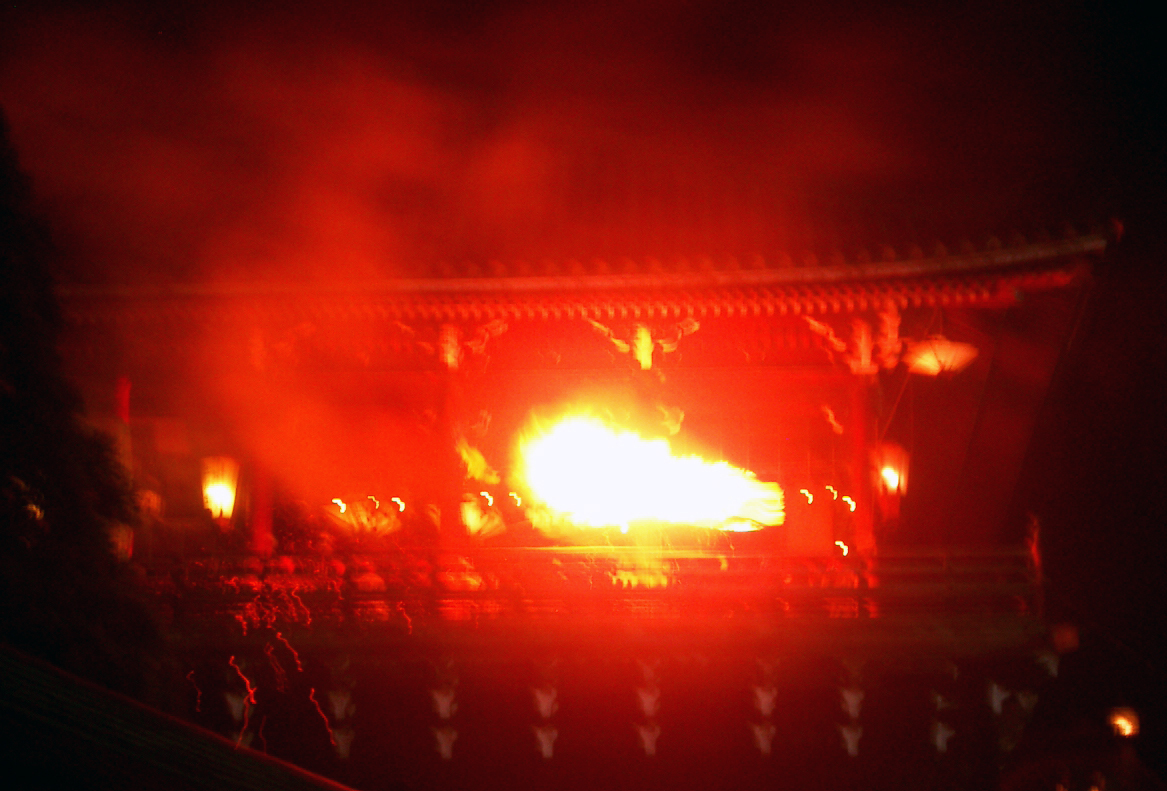
Omizutori, the fire-and-water rite at Todai-ji’s Nigatsu-do hall in Nara, runs every night from 1 to 14 March. Each evening monks’ attendants carry huge burning torches along the hall’s balcony for about 25 minutes from 19:00, longer from 19:30 on 12 March and just ten minutes from 18:30 on 14 March (2026 times). It is free, there are no tickets, and the only thing that decides whether you see it is when you arrive.
That last point is the one most guides skip. Todai-ji closes the approach to Nigatsu-do at a set time each evening, as early as 16:15 on 12 March in 2026, and once the viewing areas are full you are turned away. Below: the night-by-night schedule, where to stand, the crowd rules, the late-night water-drawing on 12 March, and the last trains. 2027 times had not been published when we checked on 23 October 2026; the dates are fixed. For the rest of the year, see our Japanese festival calendar.
1–14 March
Every year
Free
No tickets, no reservations
19:00
Usual torch start, 2026
23:06
Last weekday rapid express to Namba, autumn 2026 timetable
When is Omizutori in 2027?
Monday 1 to Sunday 14 March 2027. The main rite of Shuni-e (the formal name of the ceremony) is held at Nigatsu-do for two weeks, 1–14 March, every year, according to Todai-ji. It has run without a break for more than 1,250 years.
Todai-ji publishes the torch times and viewing rules as a notice in early February; the 2026 notice was dated 3 February. Until the 2027 notice appears, plan on the 2026 pattern below. In 2027 the big night, 12 March, is a Friday, so expect it to be busier than in 2026, when it fell on a Thursday.
The Omizutori torch schedule, night by night
Two times matter each evening: when the approach to Nigatsu-do closes (in Todai-ji’s notice, the time after which you can no longer go up to the hall) and when the torches (otaimatsu) run. These are the 2026 figures from the temple’s 2026 notice, all marked “approximately”.
| Date (2026) | Otaimatsu | What’s different |
|---|---|---|
| 1 March | 19:00–19:25 | First night |
| 2–6 March | 19:00–19:25 | Standard nights |
| 7 March | 19:00–19:25 | Standard night |
| 8–11 March | 19:00–19:25 | Standard nights |
| 12 March | 19:30–20:10 | Bigger basket torches; lay-association day; keep-moving viewing |
| 13 March | 19:00–19:25 | Standard night |
| 14 March | 18:30–18:40 | Shortest night; the torches go up together |
Todai-ji closes the area around Nigatsu-do to visitors in the late afternoon on torch nights, earlier on 12 March. Check the closing time for your date in the temple’s notice and arrive well before it. Once the torches are over and the hall is ready, you can go up again.
What you actually see
Torch-bearers climb the covered stairway to Nigatsu-do, each lighting the way for one of the monks, then run the burning torch along the edge of the balcony and swing it over the crowd. Sparks and ash fall on the people below. On most nights about ten torches go up, one after another (japan-guide.com).
On 12 March the torches are the larger kago-taimatsu (basket torches), about 8 m long, and the procession lasts around 40 minutes. On 14 March the torches go up at once, so it is spectacular but over in about ten minutes.
Where to stand for Omizutori at Nigatsu-do
There are three places, and you do not choose between them: the temple fills them in order.
- The lawn below Nigatsu-do, inside the bamboo fence (nigatsu-do shita shibafu). The closest view of the balcony. Fills first.
- The plaza below the hall. Still a good view, a little further back.
- The second viewing area (dai-ni haikansho). Where you are sent once the first two are full. The 2026 notice did not say where it is; staff direct you there.
When the second viewing area is full too, you will not see the torches that night. Entry is refused once restrictions start, and you cannot reserve or save a space for anyone, according to the 2026 notice. The temple sets the numbers for safety and adjusts them for weather and conditions on the day.
Our advice: on a standard night, be inside the fence by 18:00, earlier at weekends. Bad weather usually means smaller crowds (japan-guide.com), so a drizzly weeknight is the easiest time to get close.
Omizutori crowd control on 12 March
12 March is the night everyone wants, and the one Todai-ji tells general visitors to avoid. It is the visiting day for the temple’s lay associations (kosha). Their members, wearing ribbons, have their own area to watch the torches and then go into the hall to listen to the rite.
- General visitors watch from a separate part of the plaza and see the torches only briefly while being kept moving.
- General visitors cannot enter the side rooms (tsubone) of the hall that night.
- The approach to the hall closed at about 16:15 in 2026, the earliest of the fortnight.
- Once the second viewing area is full, there is no more viewing.
The temple’s own recommendation is to come on another day. If you only have one night in Nara, pick 13 March or any night from 2 to 11 March.
The 12 March late-night ritual that gives Omizutori its name
“Omizutori” means water-drawing. In the early hours after the 12 March torches, at around 1:30 on 13 March, monks draw water from the Wakasai well below Nigatsu-do and offer it to the hall’s Eleven-Faced Kannon (Todai-ji). The well sits in a small building called Akai-ya, which is closed to the public, so the water-drawing itself cannot be watched (HugKum).
What you can do on other nights is listen. After the torches, visitors may sit in the side rooms of the hall and hear the chanting, if there is space (2026 notice). The hall’s rules are strict:
- No smartphones or other electronic devices; no photos, video or audio recording.
- No eating, drinking or smoking. Talk as little as possible.
- Bring a quiet bag for your shoes and a folding umbrella in a bag. Long umbrellas are not allowed in, and boots are a bad idea.
- Close the doors of the side room behind you, and don’t come as a big group.
If you are staying for the small hours of 13 March, there are no trains. Stay in Nara.
What is Shuni-e, and why the fire?
Shuni-e is a repentance rite: eleven monks confess everyday wrongs before the Eleven-Faced Kannon. Todai-ji dates it to 752 and its founder Jitchu, a senior disciple of the monk Roben (Todai-ji). The torches exist to light the monks up to the hall each evening; the show is a side effect.
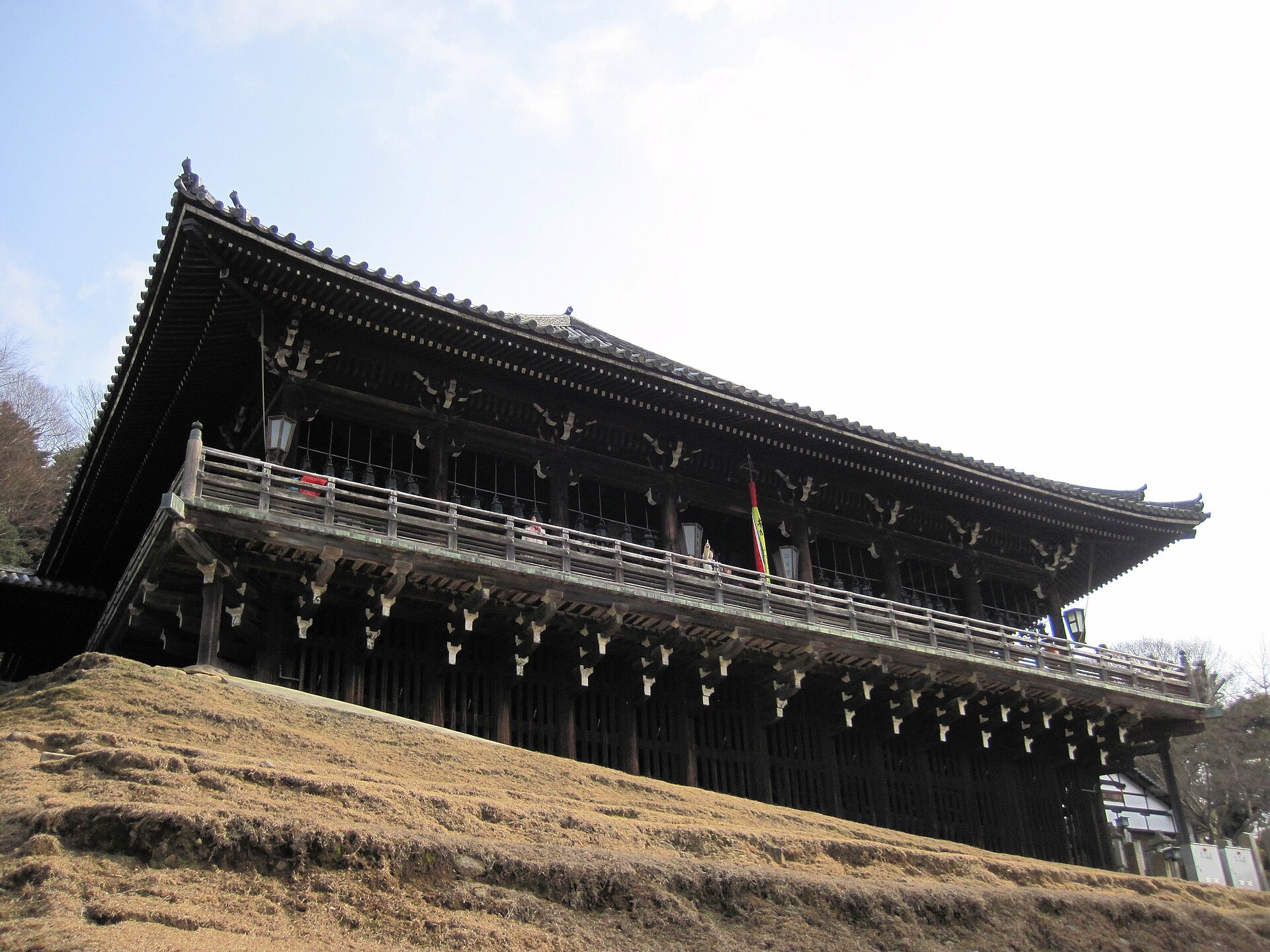
The hall burned during the rite in 1667 and was rebuilt two years later. Today’s Nigatsu-do is a National Treasure (Todai-ji). The name means “second-month hall”, after the lunar month in which Shuni-e was originally held.
Is Omizutori free?
Yes. There are no tickets for the torches and no paid seating; Todai-ji’s notice only says there are no reservations. Todai-ji says Nigatsu-do is open for worship 24 hours a day and lists no admission fee for it.
| Todai-ji (2026) | Cost | March hours |
|---|---|---|
| Otaimatsu torches at Nigatsu-do | Free | Evening, see schedule |
| Nigatsu-do hall and balcony | Free | Open 24 hours (quiet at night) |
| Daibutsuden (Great Buddha Hall) | ¥800 adults | 8:00–17:00 (November–March) |
| Todai-ji Museum | ¥800 adults | 9:30–17:00, last entry 16:30 |
| Daibutsuden + Museum | ¥1,200 adults | — |
| Hokke-do (Sangatsu-do) | ¥800 adults | 8:30–16:00 |
Prices from Todai-ji’s admission page; payment is cash only. The Great Buddha Hall closes at 17:00 in March, so see it first, then walk up to Nigatsu-do.
How to get to Omizutori, and the last trains
Nigatsu-do is on the hillside behind the Great Buddha Hall. Todai-ji gives a walk of about 20 minutes from Kintetsu-Nara Station to the temple; allow extra time for the uphill walk to Nigatsu-do. From JR Nara or Kintetsu-Nara you can also take the city loop bus to “Todaiji Daibutsuden / Kasuga Taisha-mae”, then walk about 5 minutes to the temple (Todai-ji access).
- No car parking at the temple. Use paid lots nearby or, better, the train.
- Last trains to Osaka: the last weekday rapid express from Kintetsu-Nara to Namba left at 23:06 on the autumn 2026 timetable (Ekitan). Torches end by about 19:25 on most nights, so this is only tight if you stay to listen in the hall.
- To Kyoto: no direct Kintetsu train ran from Kintetsu-Nara after 21:08 on that timetable; later journeys need a change at Yamato-Saidaiji. Check the route the evening you go.
- Timetables change in March. Japanese rail operators usually revise timetables in spring, so re-check close to the date.
Heading back down, use your phone torch on the hill paths (outside, not in the hall) and expect a slow walk with the crowd.
Is Omizutori worth it? Who should go and who should skip it
Go if you want to see a Buddhist rite that is still a working ceremony, not a show staged for visitors. The torches are there to light monks up a staircase, the temple sets the rules, and nobody sells you a seat. That is the appeal.
Think twice if you hate standing in a cold crowd for an hour to watch 25 minutes of fire, or if you can only make 12 March. On that night general visitors get a brief, moving view, and the temple itself suggests coming another day.
- Best for a first visit: a weeknight between 2 and 11 March, inside the bamboo fence by 18:00.
- Best for the biggest torches: 12 March, accepting that you will be kept moving and the approach shuts at about 16:15 (2026).
- Best if you are short on time: 14 March, when the torches go up together at about 18:30 and it is all over in roughly ten minutes.
- Best for atmosphere without the crush: a rainy night. Crowds thin and the torches still run.
Children who can stand still for an hour will love the sparks; keep them close in the crowd and dress them in natural fibres too. The hillside approach has steps and slopes, and the temple’s notice says nothing about step-free viewing, so contact Todai-ji (0742-22-5511) before you go if you use a wheelchair. If you are still deciding when to come to Japan, our best time to visit Japan guide sets March against the rest of the year.
Where to stay and how to plan your Omizutori evening
Stay in Nara if you want to see the torches on more than one night or listen in the hall late. From Osaka or Kyoto, a single standard night works as an afternoon trip. A simple plan:
- 14:00 — Arrive, see the Great Buddha Hall before it closes at 17:00.
- 16:30 — Walk up to Nigatsu-do. Take in the view from the balcony while you still can.
- Before 18:00 — Be on the lawn or plaza. Earlier on 1, 12 and 14 March.
- 19:00–19:25 — Torches. Then listen in the hall or walk down to dinner near Kintetsu-Nara.
With a free morning, the quieter temples are the better half of Nara; our guide to quiet temples in Nara has eight with no queues. The 2027 cherry blossom forecast covers the next big thing on the calendar.
Know before you go
Wear wool or cotton
Embers fall on the crowd. Natural fibres cope with sparks better than nylon (HugKum).
Cover your hair
A hood or hat keeps ash out of it. Gloves help in the cold.
No tripods by the hall
Todai-ji does not allow tripods around Nigatsu-do, including the balcony.
Skip 12 March
Todai-ji itself recommends general visitors come another night.
Go on a weeknight
Weekend nights fill earlier; rain thins the crowd.
Pack for the hall
Shoe bag, folding umbrella, no long umbrella, no boots.
Omizutori FAQ
When is Omizutori 2027?
Monday 1 to Sunday 14 March 2027; the dates are the same every year. Todai-ji had not published 2027 torch times as of 23 October 2026.
What time are the Omizutori torches?
In 2026, 19:00–19:25 on most nights, 19:30–20:10 on 12 March and 18:30–18:40 on 14 March. Times are approximate.
Is Omizutori free?
Yes. There are no tickets and no reservations. Nigatsu-do is open 24 hours and lists no admission fee.
Which night is best for Omizutori?
For a good view, any night except 12 March. The 12 March torches are the biggest, but general visitors are kept moving and the approach closed at about 16:15 in 2026.
What time should I arrive for Omizutori?
Before the hall closes to visitors: about 18:00 on most nights in 2026, 16:45 on 1 March, 16:15 on 12 March and 17:30 on 14 March.
Can you watch the water-drawing at Omizutori?
No. It happens around 1:30 on 13 March inside a closed building. You can listen to the rite from the side rooms of the hall on other nights, if there is space.
Can I take photos at Omizutori?
Outside, yes, but tripods are not allowed around Nigatsu-do. Inside the hall, phones and all recording are banned.
How do I get back to Osaka after Omizutori?
From Kintetsu-Nara. The last weekday rapid express to Namba left at 23:06 on the autumn 2026 timetable; check again in March.
Sources and how we checked
Dates, torch times, closing times, viewing rules, hall rules, prices and access were checked on 23 October 2026 against Todai-ji’s official pages and its 2026 Shuni-e notice, with the train time from Ekitan and torch details from japan-guide.com and HugKum where the temple gives none. 2027 times were not yet published; we will update this guide when Todai-ji releases its notice, usually in early February.
Planning Nara in March 2027?
Japan Pro can book your Nara hotel for the Omizutori fortnight and plan the trains and temples around the torch times.
Read next
Nada no Kenka Matsuri 2027: Himeji’s Fighting Festival Explained (14–15 October)
Awa Odori 2027: Tokushima Dance Festival Guide to Tickets, Free Streets and Joining In
Chichibu Night Festival 2026: Schedule, ¥4,000 Seats and Laview Tickets for 2–3 December
 English
 Japanese
 Chinese (Taiwan)
 Chinese (China)
 Korean
 French
 Italian
 Thai