

Access, dates and earthquake updates checked 2 October 2026
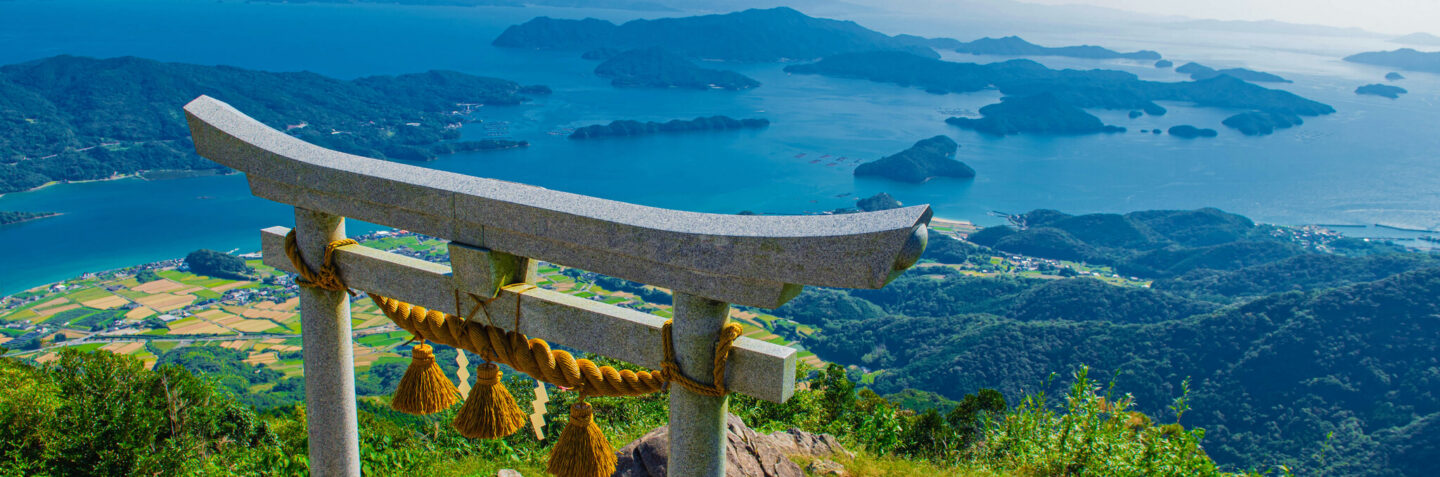
These five Kyushu shrines get called “Ghibli-like” online, and it’s easy to see why: a torii standing in the sea, another on a mountain summit, a train running straight across a shrine path, and a hall built against the rock of a sacred mountain. None of them has any link to Studio Ghibli. They simply look like places its films could have dreamed up.
They’re also harder to reach than the photos suggest. The five are split between northern Fukuoka and the coast of Kumamoto, most are far easier by car, and two of the dates worth planning around come once a year. This guide covers how to reach each shrine, what it costs (nothing, in every case) and what has changed since the earthquake in Kumamoto in July 2026.
简短版本
- Mekari Shrine (Kitakyushu): a torii on the Kanmon Strait; the Mekari Shinji ritual is on 7 February 2027, from 2:30 in the morning
- Sakiyama Hachiman Shrine (Miyako): a railway crosses the shrine path, with no gates or alarms
- Takasumi Shrine (Mount Hiko): a hall built against huge rocks; you need a car or a taxi
- Einoo Tsurugi Shrine (Uki): the torii in the sea; Uki was hit hard by the July 2026 earthquake, so check before you go
- Kuratake Shrine (Amakusa): the torii on a 682-metre summit; its small hall was damaged in the earthquake and repaired by 20 August
The 5 Kyushu Shrines at a Glance
Here is how the five compare. All of them are free to visit.
| Kyushu shrine | Where | The Ghibli-like moment | Getting there | Parking |
|---|---|---|---|---|
| Mekari Shrine | Kitakyushu, Fukuoka | A torii on the Kanmon Strait, under the bridge | Bus from JR Mojiko Station | 50 spaces |
| Sakiyama Hachiman Shrine | Miyako, Fukuoka | A train crosses the shrine path | 500 m from Sakiyama Station | None |
| Takasumi Shrine | Mount Hiko, Fukuoka | A hall built against huge rocks | Car or taxi, 25 min from the Hikosan BRT stop | 50 spaces |
| Einoo Tsurugi Shrine | Uki, Kumamoto | A torii standing in the sea at high tide | 20 min by car from Matsubase IC; check earthquake updates | Check locally |
| Kuratake Shrine | Amakusa, Kumamoto | A torii on a 682 m summit | 45 min by car from Amakusa Airport | 5 or 6 cars |
Two Trips, Not One
The five Kyushu shrines fall into two groups, a long way apart. Mekari, Sakiyama Hachiman and Takasumi are in northern Fukuoka, around Kitakyushu and Mount Hiko. Einoo Tsurugi and Kuratake are in Kumamoto, on the Shiranui Sea and in the Amakusa islands. Kuratake alone is about 2 hours 40 minutes by car from Kumamoto City, and Mekari is at the very northern tip of Kyushu.
So plan two separate days: a northern loop through three shrines in Fukuoka, and a Kumamoto day that pairs the torii in the sea with the torii on the summit. Each makes a good day on its own. Trying to fit all five into one trip means spending most of it in a car.
1. Mekari Shrine (Kitakyushu): The Torii on the Strait
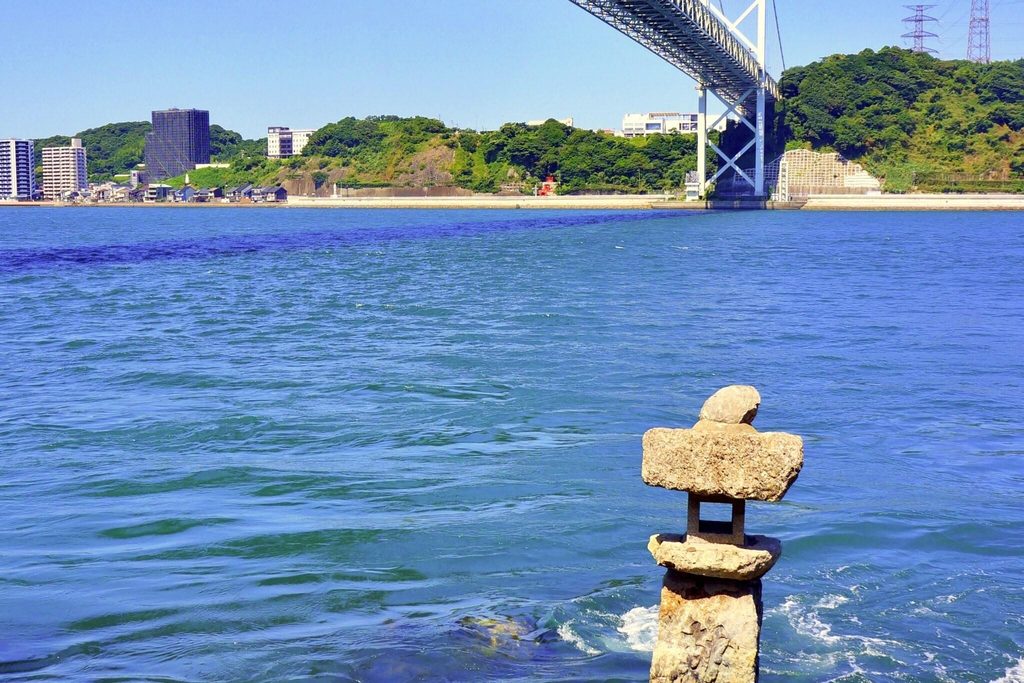
Mekari Shrine stands at the northernmost point of Kyushu, on the edge of the Kanmon Strait, with the Kanmon Bridge overhead and Honshu just across the water. Ships slide past its torii all day long. By tradition it was founded by Empress Jingu, and it has long been worshipped as a guardian of safe passage at sea. In the strait in front of the main hall stands a stone lantern given by local worshippers about 400 years ago. Of the five, Mekari is the easiest to reach without a car.
Its name means “cutting wakame”, and once a year that’s exactly what happens. In the Mekari Shinji ritual, priests go down into the strait at low tide by torchlight, cut wakame seaweed from the rocks and offer it at the altar. It takes place on the first day of the lunar new year, from 2:30 until around 4:00 in the morning, and next falls on 7 February 2027. The public has been allowed to watch since the end of the Second World War, and the ritual is a Fukuoka Prefecture Intangible Folk Cultural Property.
- 如何到达: Nishitetsu bus from JR Mojiko Station to the Mekari Jinja-mae stop
- Parking: 50 spaces
- Prayers: daily from 9:30 to 16:00, booked by phone by the day before
- Mekari Shinji: there’s no public transport at that hour, so you’ll need a car or a taxi
- 官方网站: Mekari Shinji (Kitakyushu City, Japanese)
💡 日本提示: Pair Mekari with Mojiko Retro, the old port district by Mojiko Station, for an easy half day with no mountain roads. For more famous gates around Japan, see our red torii gates guide.
2. Sakiyama Hachiman Shrine (Miyako): The Train Through the Shrine Path
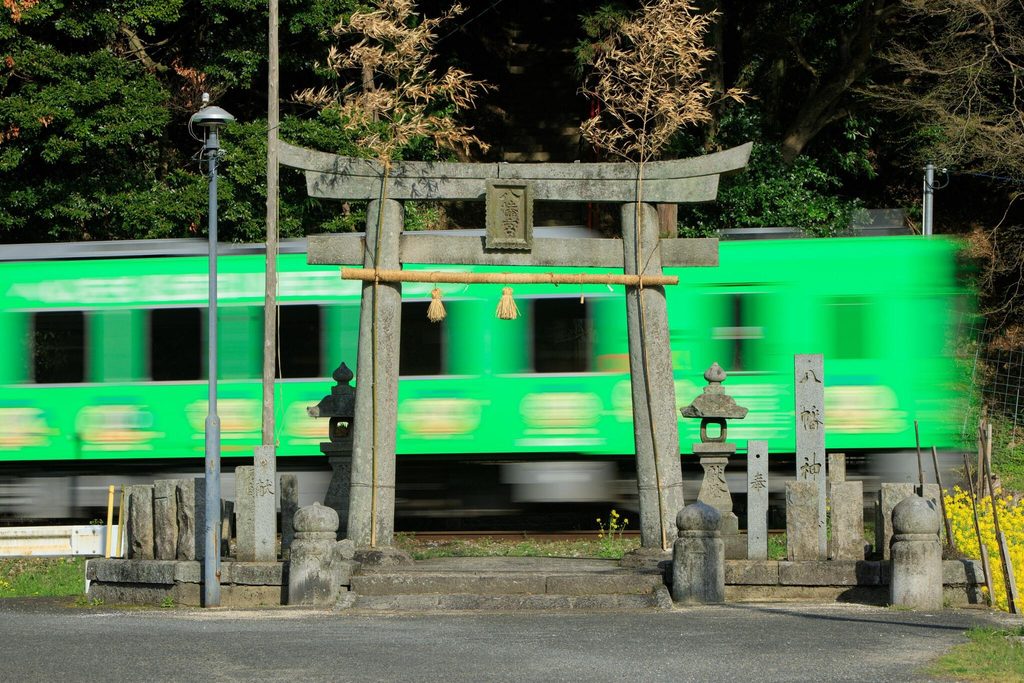
This is the shrine people share for the train. The Heisei Chikuho Railway’s Tagawa Line runs straight across the approach between the first and second torii, so the formal path to the shrine crosses a working railway. There are no alarms, no gates, and not even the usual sign marking a level crossing. You look both ways and cross.
The shrine began as a place of worship linked to Empress Jingu and was moved to where it stands now by the Nakao clan, local lords in the Muromachi period. It’s about 500 metres from Sakiyama Station, and there’s no parking.
Go sooner rather than later. In March 2026, the council of local governments that supports the Heisei Chikuho Railway chose to replace its trains with buses. A plan to end rail services at the end of the 2028 financial year was sent back for review in September 2026, so there’s no closing date yet, but the train through this shrine won’t run forever.
- 如何到达: Heisei Chikuho Railway Tagawa Line to Sakiyama Station, then about 500 metres on foot
- Parking: none
- 官方网站: Sakiyama Hachiman Shrine (Crossroad Fukuoka, Japanese)
💡 日本提示: Trains are few, which makes it easy to forget one could come. Take your photos from beside the track, never standing on it. In August 2025, a person photographing a train at a shrine crossing on JR’s Sasebo Line in Saga, which had an alarm but no gates, was hit and killed.
3. Takasumi Shrine (Mount Hiko): A Hall Built Against the Rock
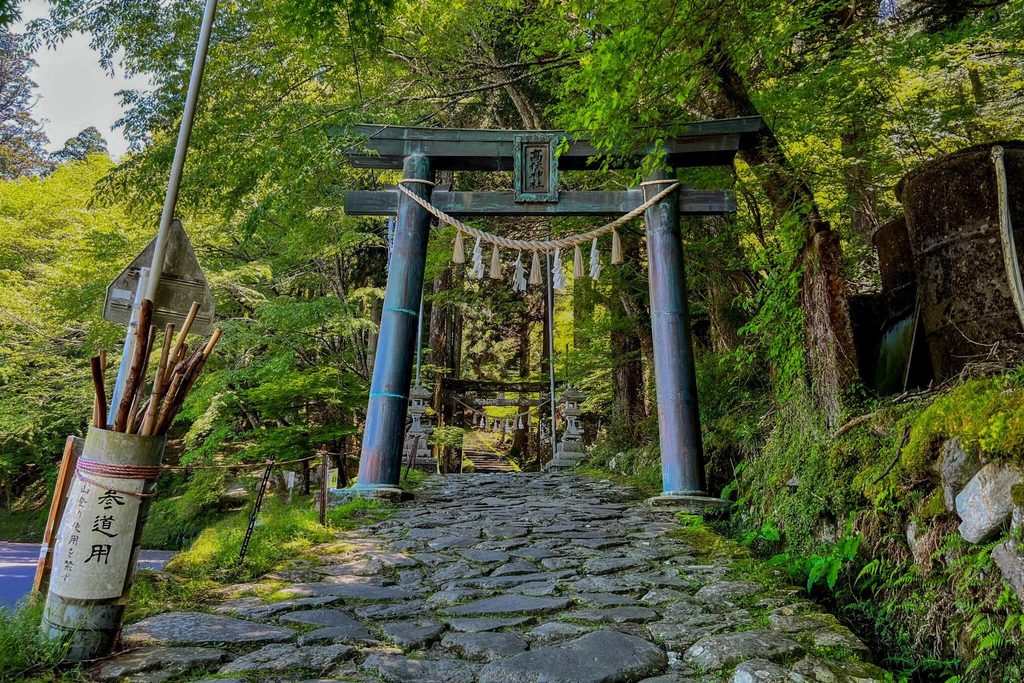
Takasumi Shrine sits on the north-east side of Mount Hiko, counted among Japan’s three great mountains of shugendo, the old tradition of mountain asceticism. Its main hall is built right up against enormous boulders, with moss on the stone and tall trees all around. Of the five, this is the one that feels most like a forest in an animated film.
The shrine is dedicated to Toyohiwake no Mikoto and to Buzenbo, a tengu (a mountain spirit) counted among the eight great tengu of Japan. Look for the stone torii from 1697 and the bronze ox offered in 1838, and note the trailhead for Mount Hiko inside the grounds.
Getting here is the hard part. The JR line that used to serve Mount Hiko was badly damaged in the northern Kyushu floods of July 2017 and never reopened as a railway. Since 28 August 2023, the BRT Hikoboshi Line, a bus that runs partly on the old track bed, has taken its place. From its Hikosan stop, the shrine is still about 25 minutes by car, so without a car or a taxi this one is out of reach.
- 如何到达: about 25 minutes by car from the Hikosan stop on the BRT Hikoboshi Line
- Parking: 50 spaces
- Open: at all times
- 官方网站: Takasumi Shrine (Crossroad Fukuoka, Japanese)
💡 日本提示: The trailhead in the grounds means hikers come and go all day, so the car park turns over quickly. Bring a warm layer: it’s cooler up on the mountain than down in the valley.
4. Einoo Tsurugi Shrine (Uki): The Torii in the Sea
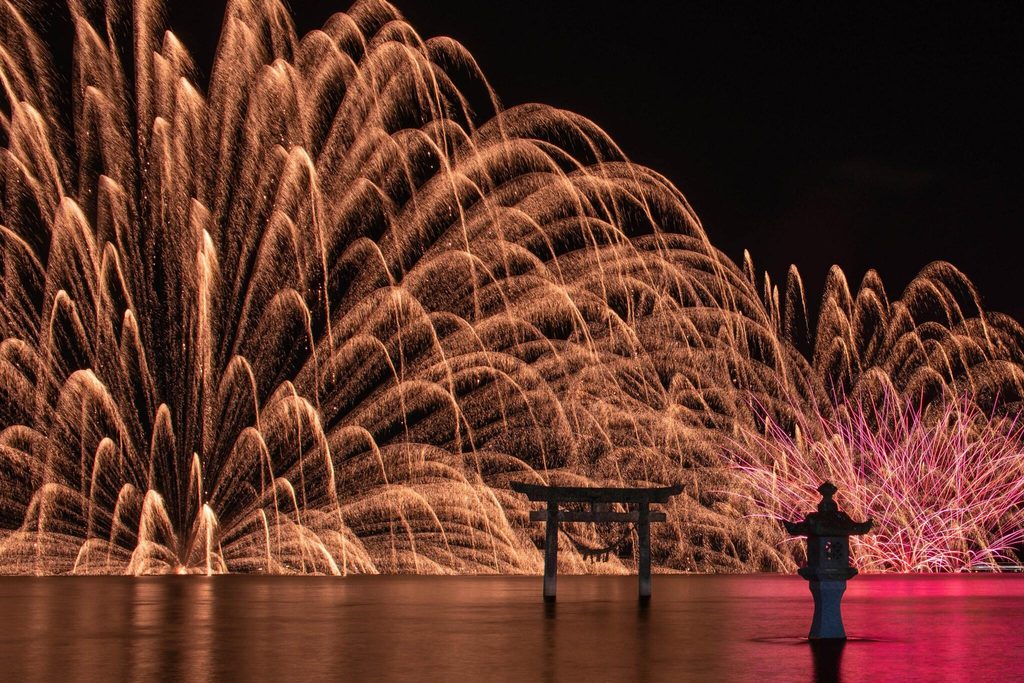
This is the torii standing in the sea, and the most photographed of the five. Einoo Tsurugi Shrine was founded in 713 and is dedicated to Watatsumi, a god of the sea, who is said to have arrived here on the back of a giant ray. The ray’s tail gave the district its name, Einoo, and its sword-like shape gave the shrine its other name, Tsurugi, the sword. How the torii looks changes with the tide, so check a tide table: it’s at high tide that it stands in the water.
It’s also the best-known place to watch shiranui, the “unknown fires”. These are the lights of fishing boats and the far shore, bent by layers of warm and cool air into flickering lines over the sea, and they’re traditionally watched before dawn on Hassaku, the first day of the eighth lunar month. In 2026 that was 11 September; in 2027 it’s 1 September. The shrine, the sea where the fires appear and nearby Mizushima island are together a national Place of Scenic Beauty. The Shiranui sea fire festival was cancelled in 2026.
Before you go, know that Uki was one of the two places that recorded the maximum shindo 7 in the earthquake of 28 July 2026, and on 1 October the city still had evacuation shelters open. We couldn’t confirm the shrine’s condition after the quake. Check Uki City’s earthquake information before you travel, and remember that this is a community still recovering.
- 如何到达: about 20 minutes by car from Matsubase IC on the Kyushu Expressway, or 50 minutes from Kumamoto City; 150 metres from the Nagao bus stop
- Best time: a clear evening at high tide
- Official sites: Einoo Tsurugi Shrine (Uki City tourism, Japanese) and Uki City earthquake information (Japanese)
💡 日本提示: Japan’s tourism agency says that visiting helps Kumamoto recover, and asks travellers to check traffic and facility information first. Here, that matters more than anywhere on this list.
5. Kuratake Shrine (Amakusa): The Torii in the Sky
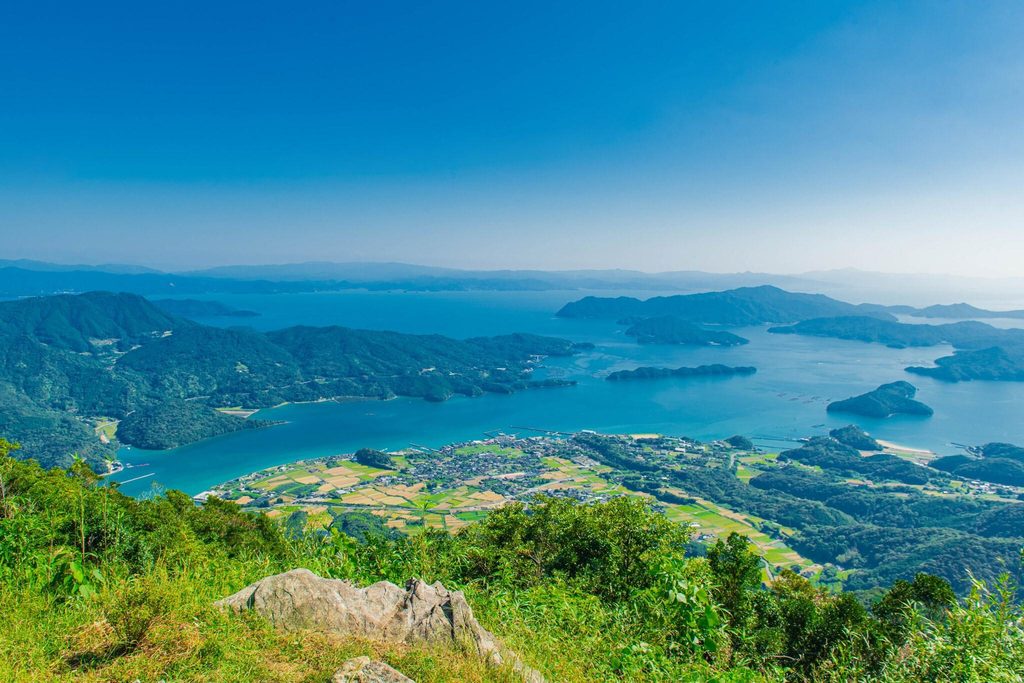
Kuratake Shrine stands on the summit of Mount Kuratake, which at 682 metres is the highest point in the Amakusa islands, making this the highest shrine on the list. It was built to pray for safety at sea, and its torii, known as the torii in the sky, frames a full 360-degree view: on one side the calm Shiranui Sea, also called the Yatsushiro Sea, and the islands of Goshoura; on the other, the Ariake Sea all the way to Unzen.
The earthquake reached here too. In July 2026 the road to the summit was closed and the shrine’s small hall collapsed. The road has since reopened and repairs to the hall were finished on 20 August, so the shrine can be visited as normal, according to Kumamoto’s official tourism site. Amakusa’s main roads and tourist facilities weren’t badly damaged.
The drive is the catch. The road climbs steeply with sharp bends, there’s room for only about five or six cars near the top, and it can close after heavy rain or other disasters, so check the latest road information before you set off.
- 如何到达: about 45 minutes by car from Amakusa Airport, 1 hour 40 minutes from Matsubase IC, or 2 hours 40 minutes from Kumamoto City
- Parking: a few spaces near the summit
- Official sites: Kuratake Shrine (Kumamoto tourism, Japanese) and Amakusa after the earthquake (Japanese)
💡 日本提示: Go early in the day, when the small car park is most likely to have space, and avoid the road after heavy rain.
How to Plan a Kyushu Shrine Trip
The northern loop (Fukuoka, one day by car)
Start at Mekari on the strait, at the very northern tip of Kyushu, then head south to Sakiyama Hachiman in Miyako, then go inland to Takasumi on Mount Hiko. Without a car, Mekari is easy by bus, Sakiyama Hachiman works by train if you check the timetable, and Takasumi isn’t realistic.
The Kumamoto day (by car)
The two Kumamoto shrines make a good day together. Do Kuratake in the morning, then drive back to the coast for Einoo Tsurugi at high tide in the evening, when the light is best on the water. Check both for earthquake updates before you go.
Linking north and south by air
If you want all five Kyushu shrines on one trip, the quickest link between the two regions is by air. Amakusa Airlines flies between Amakusa and Fukuoka three times a day, in under an hour, on a 48-seat plane, and Amakusa Airport is 45 minutes from Kuratake. For flights up to 24 October 2026, the standard one-way adult fare is ¥17,200 (¥17,700 at peak times), with advance fares from ¥15,200 and a web fare of ¥8,100 on some dates. The airline has also announced planned cancellations in October and November 2026, so check before you book.
Driving to the Shrines
A rental car makes this whole trip work, and it’s the only practical way to reach Takasumi and Kuratake. A few things to know before you pick one up:
- Your licence: bring an International Driving Permit of the 1949 Geneva Convention type, or, for a few countries, an official Japanese translation of your licence, along with your own licence.
- Tolls: ask the rental company for an ETC card, so you can drive through the toll gates on the Kyushu Expressway.
- Small is better: the roads up to Takasumi and Kuratake are narrow mountain roads with tight bends.
- Daylight only: allow more time than the map suggests, and don’t drive the mountain roads after dark or after heavy rain.
The Kyushu Expressway reopened in full on 14 August 2026 after the earthquake, but some sections near the epicentre kept lane or speed limits, so check NEXCO West’s traffic information before a Kumamoto day. Without a car, two of the shrines are still easy: Mekari by bus from Mojiko Station, and Sakiyama Hachiman by train.
Dates Worth Planning Around
- 7 February 2027: Mekari Shinji at Mekari Shrine, from 2:30 to around 4:00 in the morning
- 1 September 2027: Hassaku, the traditional night for shiranui at Einoo Tsurugi Shrine
- Any clear evening at high tide: the torii in the sea at Einoo Tsurugi
- After heavy rain: skip Kuratake; the summit road can close
For the weather month by month before your trip, see 前往日本的最佳时间.
Shrine Etiquette
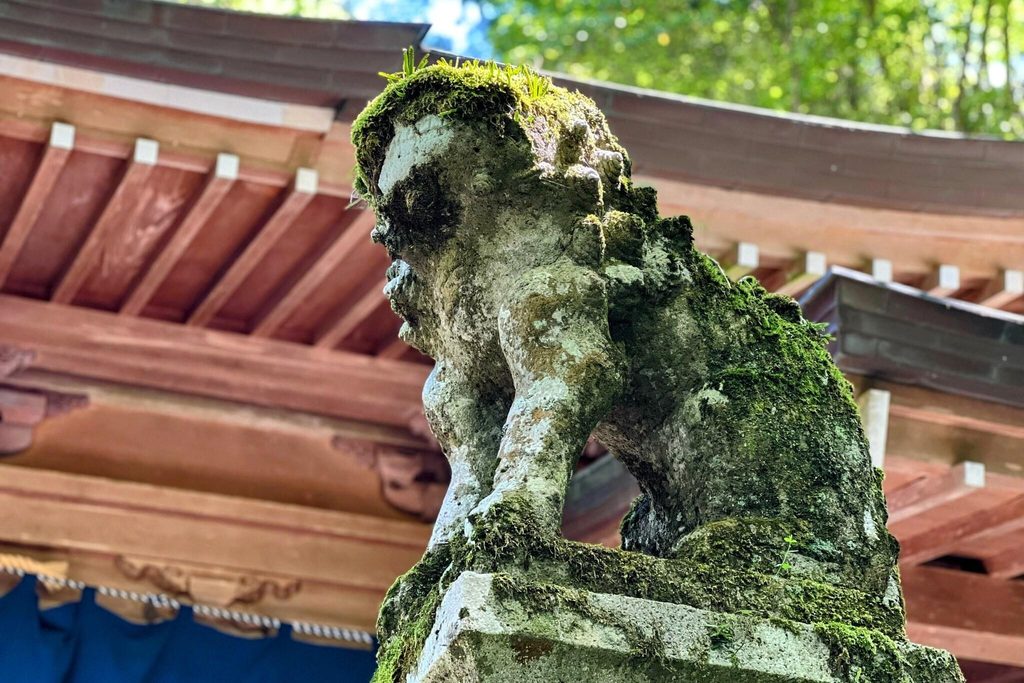
The basics are the same at every shrine, from a small village shrine to a famous one:
- Bow once at the torii before you walk through, and keep to the side of the path; the centre is traditionally left for the gods.
- Rinse your hands and mouth at the water basin; not every shrine has one.
- At the main hall, make a small offering, then bow twice, clap twice and bow once more.
- Take photos quietly, and don’t photograph people while they pray.
- Don’t climb on rocks, walls or torii, and at Sakiyama Hachiman, never stand on the track.
Kyushu Shrine FAQ
Why are these called Ghibli-like shrines?
Because of how they look: a torii in the sea, a gate on a summit, a train across a shrine path, a hall against mossy rock. None of these Kyushu shrines has any link to Studio Ghibli. For the real thing, see our Ghibli Park tickets guide.
Can you visit all five Kyushu shrines in one day?
No. Three are in northern Fukuoka and two are in Kumamoto, hours apart. Plan one day for each region.
Do you need a car?
For Takasumi and Kuratake, realistically yes. Mekari is easy by bus from Mojiko Station, Sakiyama Hachiman is a short walk from Sakiyama Station, and Einoo Tsurugi is 150 metres from a bus stop, though a car makes the Kumamoto day far easier.
Do these Kyushu shrines charge admission?
No. All five Kyushu shrines are free to visit. Mekari Shrine takes bookings for formal prayers, which have their own fees.
Which Kyushu shrine is easiest to reach?
Mekari Shrine, by bus from JR Mojiko Station in Kitakyushu.
Is Einoo Tsurugi Shrine open after the July 2026 earthquake?
We couldn’t confirm its condition. Uki recorded the maximum shindo 7, so check Uki City’s earthquake information before you go.
Is Kuratake Shrine open?
Yes. The summit road has reopened and repairs to the shrine’s hall were finished on 20 August 2026.
When is Mekari Shinji in 2027?
On 7 February 2027, the first day of the lunar new year, from 2:30 until around 4:00 in the morning. The public can watch.
When can you see shiranui?
Traditionally before dawn on Hassaku, the first day of the eighth lunar month. In 2027 that’s 1 September.
Is the train at Sakiyama Hachiman still running?
Yes, for now. The Heisei Chikuho Railway is due to be replaced by buses, but no closing date has been set.
我们正在更新此页面
We checked every date, access route and earthquake update here on 2 October 2026, using official sites wherever they publish them. We’ll update this guide when Einoo Tsurugi Shrine’s condition is confirmed, when the Heisei Chikuho Railway sets a closing date, and before each year’s Mekari Shinji and Hassaku.
 English
 Chinese (China)
 Chinese (Taiwan)
 Korean
 Thai
 French
 Spanish
 German
 Vietnamese
 Indonesian
 Italian