
Tsukishima Monja Experience 2026: How to Book & Cook
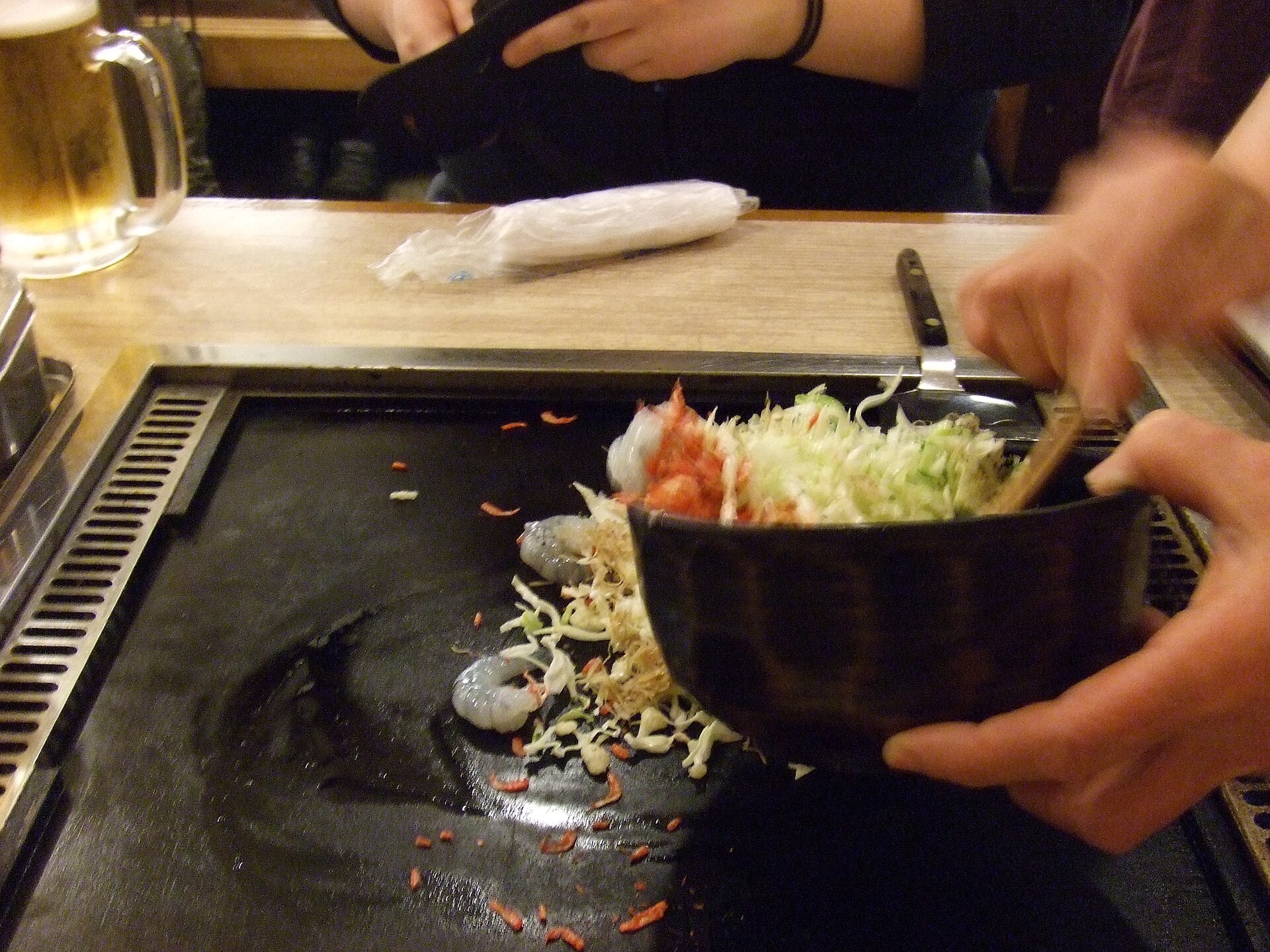
The easiest Tsukishima monja experience for first-timers is the new Tokyo Monja Dining Experience: a 120-minute course at ¥6,000 per person (tax included), booked online at yoyaku.monja.gr.jp. It was launched on 2 November 2026 by the Tsukishima Monja Promotion Cooperative, which groups about 50 restaurants on Monja Street. The course covers teppan dishes, monja, yakisoba and a sweet, and you cook it yourself with multilingual how-to videos.
If you would rather wing it, walk in, order à la carte and expect about ¥2,500–3,500 per person at a typical shop. Get there from Tsukishima Station, Exit 7: the street starts right outside.
6,000 日圓
Course per person (tax incl.)
120 min
Course length
~50 shops
Cooperative members
7 號出口
Tsukishima Station
Monjayaki is Tokyo’s messiest, most hands-on meal, and the Tsukishima monja experience is the way most visitors try it: a hot iron plate in the middle of your table, a bowl of chopped cabbage and runny batter, and two metal spatulas. Until this month, first-timers mostly relied on a patient waiter or a YouTube video. Now the shops’ own cooperative sells a fixed-price course with instructions in English, Japanese, Korean and Chinese.
This guide to the Tsukishima monja experience covers how to book that course, what it does and doesn’t tell you, three member shops with menu prices from the cooperative’s own pages, how to cook monja step by step, and a half-day plan that adds Tsukiji Outer Market and Hamarikyu Gardens.
Last checked: 17 November 2026
What is the Tsukishima monja experience?
Monjayaki (usually just “monja”) is a griddle dish of finely chopped cabbage and toppings mixed with a thin, soupy flour batter. You cook it at your own table and eat it straight off the plate with a tiny spatula, while it is still gooey in the middle and crisp at the edges.
Tsukishima is the dish’s home turf. The island was built on reclaimed land in 1892, and the Tokyo Convention & Visitors Bureau’s GO TOKYO guide counts more than 80 monja restaurants around Nishinaka-dori, the shopping street everyone calls Monja Street.
The street is younger than it looks. According to the cooperative’s records quoted in a Shun Gate interview, there were only four monja restaurants in Tsukishima in the 1950s; TV and magazine coverage in the 1980s set off the boom, and “Monja Street” took shape in the 1990s.
The dish itself is older. One theory traces the name to “moji-yaki” (letter-grilling) sold at Edo-period food stalls, and it spread through dagashiya, the cheap sweet shops where neighbourhood kids hung out from the Meiji era onward.
The shops organised as the Tsukishima Monja Promotion Association in 1997 and became a cooperative in 2002. Today the cooperative lists 48 member restaurants on its store directory, and runs the new English site, booking system and course.
How do you book the Tokyo Monja Dining Experience?
Book on the cooperative’s reservation site, yoyaku.monja.gr.jp, which has an English interface. Pick the “Tokyo Monja Dining Experience | 月島もんじゃ体験コース” plan, choose a date and party size, and pay.
The booking page lists reception hours of 11:00–20:00 and says the last booking is accepted one hour before the shop closes. Some slots confirm instantly; others are provisional until the restaurant confirms.
The cooperative’s 10 November 2026 press release says payment is made in advance by PayPal. Its project page explains how the course works: each shop serves dishes from its own menu, you cook along to multilingual videos opened by QR code, and staff step in when needed.
What the official pages confirm, and what they don’t
| 項目 | What we found (17 Nov 2026) |
|---|---|
| 價格 | ¥6,000 per person, tax included |
| 長度 | 120-minute course |
| 美食 | Teppan dishes, monja, yakisoba and a sweet |
| Instructions | Multilingual videos via QR code, plus staff help |
| 付款 | PayPal, in advance (press release) |
| 飲品 | Not stated on the booking page |
| Which shop | Not named on the booking page |
| Cancellation policy | Not stated on the booking page |
Those gaps matter. Assume drinks are extra, and before paying, check the confirmation for the shop name and the cancellation terms, or ask through the AI chat on visit.monja.gr.jp.
The English site also has an AI chatbot that the cooperative says answers questions in several languages around the clock. It is the quickest way to ask about allergies, prams or late arrivals before you go.
Course or à la carte: which Tsukishima monja experience is right for you?
The course is a fixed-price, low-stress way in. Ordering à la carte is cheaper for light eaters and lets you choose the shop, but you will be reading a Japanese menu and cooking with whatever help the staff have time to give.
| Tokyo Monja Dining Experience | À la carte walk-in | |
|---|---|---|
| 費用 | ¥6,000 per person, fixed | Monja ¥1,200–1,800 at the shops below; about ¥2,500–3,500 per person in total |
| 訂位 | Online, paid in advance | Walk in or book the shop directly |
| Instructions | Multilingual video guide | Depends on the shop |
| Choice of shop | Not shown at booking | Your pick of the street |
| 最適合買 | First-timers, groups, set budgets | Repeat visitors, small appetites |
The ¥2,500–3,500 budget is the average the cooperative lists for Kondo (2nd branch), one of the street’s best-known names. Prices below come from each shop’s page on the cooperative’s site, monja.gr.jp, and were checked on 17 November 2026.
Is the ¥6,000 course worth it? The maths
For two people, the course costs ¥12,000 before drinks. At Ebisuya, the large seafood monja (¥2,180) plus scallop butter (¥2,000) comes to ¥4,180 for two, so even after adding a yakisoba and a dessert you will usually spend well under the course price.
So you are paying for guidance, a guaranteed table and a full multi-dish meal without reading a Japanese menu. For a first visit, a group or a client dinner, that is a fair trade; for a second visit, order à la carte.
| Party | Course total | À la carte example (Ebisuya) |
|---|---|---|
| 2 people | 12,000 日圓 | ¥4,180: large seafood monja + scallop butter |
| 4 people | ¥24,000 | ¥8,360: the same order twice |
For a bigger group, the project page says the cooperative handles group bookings centrally and places them with member shops, and the booking form accepts up to 196 people. Ebisuya and Wadachi both list private rooms for about 40.
Ebisuya: seafood monja and a big group room
Ebisuya does a house seafood monja for ¥1,680, or ¥2,180 for the larger 2–3 person size, and scallop butter for ¥2,000. It is at 3-9-10 Tsukishima and opens Thursday to Monday 12:00–15:00 and 17:30–22:00, and Wednesday 17:00–22:00.
It is closed on Tuesdays. A private room takes groups of 20 to 40, which helps if you are organising a team dinner.
Wadachi: cream monja for the evening crowd
Wadachi is a dinner-only spot on the second floor of the Kotori Building (3-8-10 Tsukishima), open 17:00–22:30 with no regular closing day. Its signatures are a clam chowder monja (¥1,650) and the Wadachi special cream monja (¥1,800).
Side dishes are cheap here: mixed yakisoba is ¥864 and a pork okonomiyaki (buta-tama) is ¥728.
Takenoko: open all afternoon
Takenoko, at 1-9-15 Tsukishima, runs straight through from 12:00 to 22:00 (last order 21:00), which makes it handy for a mid-afternoon visit. Try the special mapo monja (¥1,200), the house special (¥1,650) or a tofu jjigae monja (¥1,250).
It closes on irregular days, so check before you go. None of these three shops publishes its own separate website; the cooperative pages are their official listings.
How to eat monjayaki: cook it in five steps
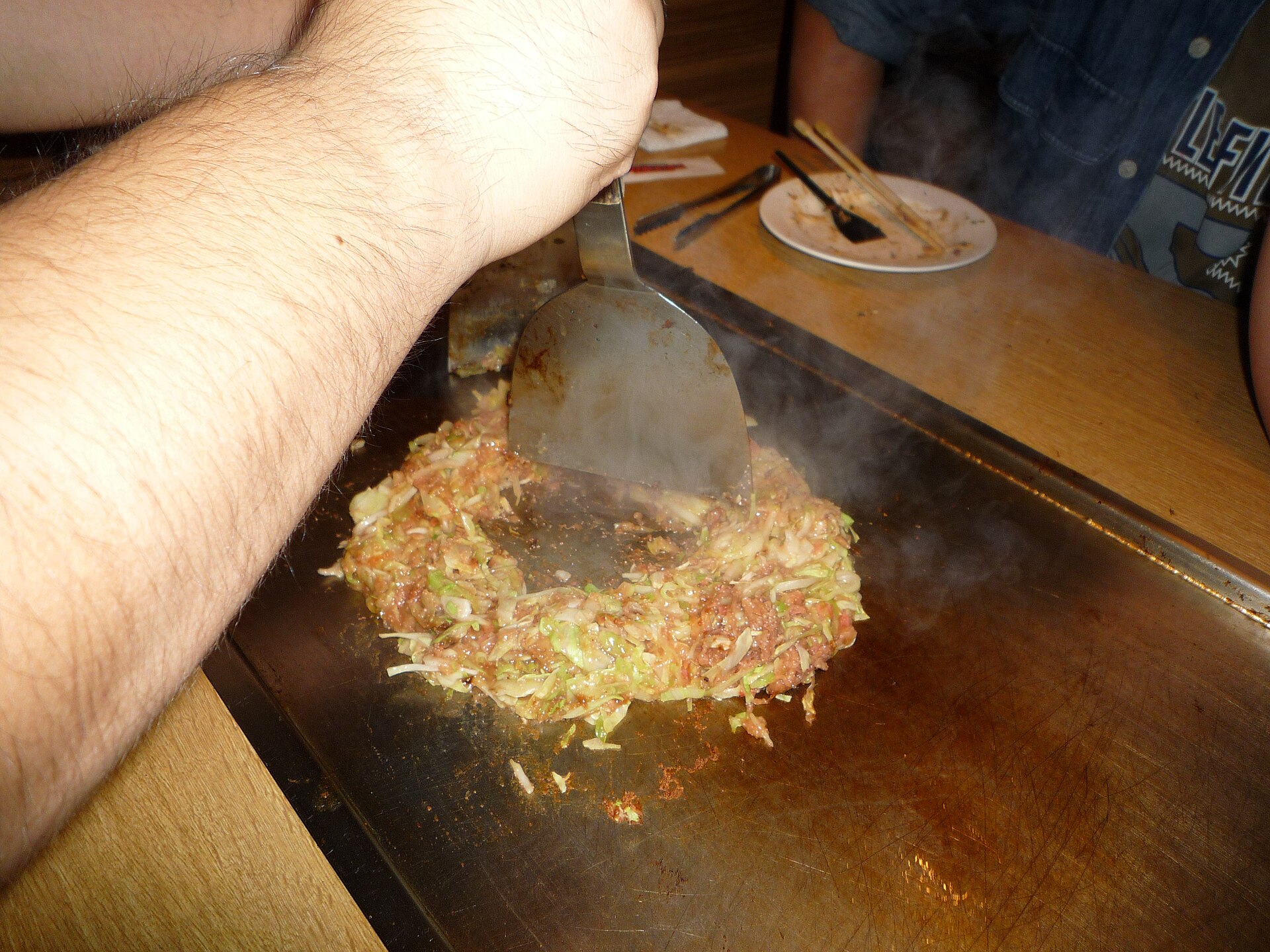
The cooperative’s own how-to guide breaks it into five steps. Your bowl arrives with solid ingredients on top and liquid batter underneath; the trick is to keep them apart until step four.
- 1. Oil and fry the solids. Oil the hot plate, then tip out only the cabbage, seafood and toppings, holding the batter back in the bowl.
- 2. Chop as it cooks. Use the two big spatulas to chop everything finely until the cabbage softens and turns sweet.
- 3. Build the dam. Push the fillings into a ring with a hole in the middle. Locals call this wall the “dote” (bank).
- 4. Pour the batter in. Pour the liquid into the centre and let it bubble and thicken for a moment.
- 5. Mix, spread and scrape. Stir it all together, spread it thin, sprinkle aonori (seaweed flakes) and eat it with the mini spatula, pressing a bite onto the plate until it crisps.
The mini spatula is called a hera or “hagashi”, and it is about the size of a coffee spoon, according to MATCHA. Chopsticks are the wrong tool here.
Monja etiquette: five things to get right
- Don’t pour the batter first. If the dam isn’t ready, the liquid runs across the plate and burns.
- Ask for help early. Staff expect first-timers to need a demo, and the cooperative’s site says beginners “always get help”.
- Eat from the plate, not your own dish. Monja is shared, so scrape from your side of the griddle.
- Turn the heat down, not off, when you slow down. The crust at the bottom (the “okoge”) is the best bit, but it burns fast.
- Never touch the plate. It stays scorching even after the gas is off.
Monja menu words to know
| Word | 意義 |
|---|---|
| Monja / monjayaki (もんじゃ焼き) | The runny cabbage-and-batter dish you cook yourself |
| Dote (土手) | The ring of fried fillings that holds the batter |
| Hera / hagashi (ヘラ/はがし) | The mini spatula you eat with |
| Okoge (おこげ) | The crisp layer stuck to the plate |
| Aonori (青のり) | Green seaweed flakes sprinkled at the end |
| Buta-tama (豚玉) | Pork okonomiyaki |
One dietary note: the batter is wheat flour and water, and seafood is a common filling, so monja is not gluten-free and needs care with shellfish allergies. Tell the staff before you order.
Monja vs okonomiyaki: what’s the difference?
簡答: okonomiyaki is a thick, set pancake you flip and cut like a cake; monja uses far more liquid, never sets, and is eaten gooey straight off the griddle with a mini spatula. Okonomiyaki is the dish of Osaka and Hiroshima; monja is Tokyo’s.
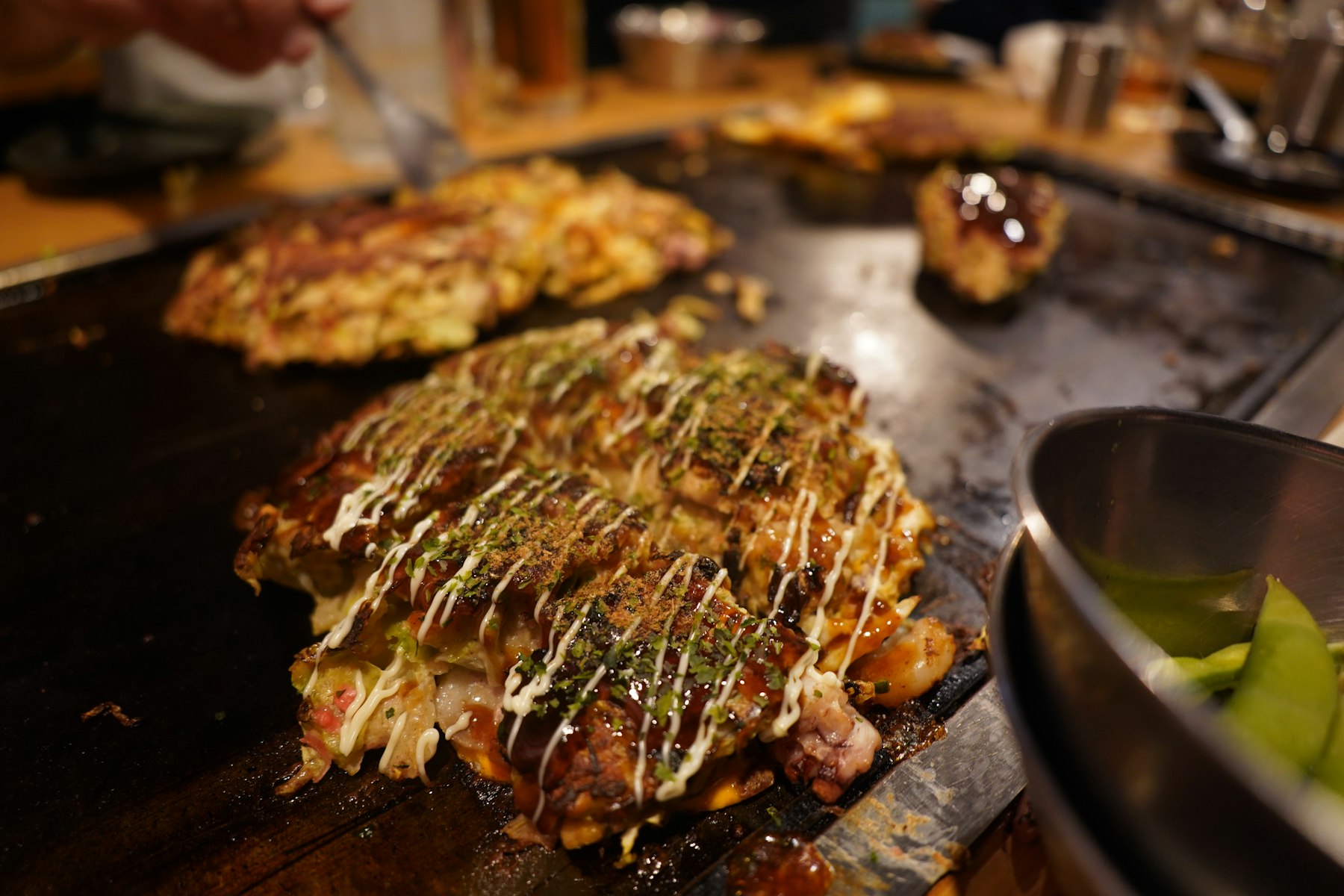
Most Tsukishima shops serve both, so the classic order is a monja first and then an okonomiyaki or yakisoba to share. Wadachi’s ¥728 buta-tama is an easy add-on.
| Monjayaki | Okonomiyaki | |
|---|---|---|
| Home city | Tokyo (Tsukishima) | Osaka, Hiroshima |
| Texture | Runny, sticky, crisp at the edges | Thick, set, fluffy |
| How you eat it | Straight off the plate with a mini spatula | Cut into slices, often onto a plate |
| Flip it? | 不需要 | 可以 |
How do you get to Tsukishima Monja Street?
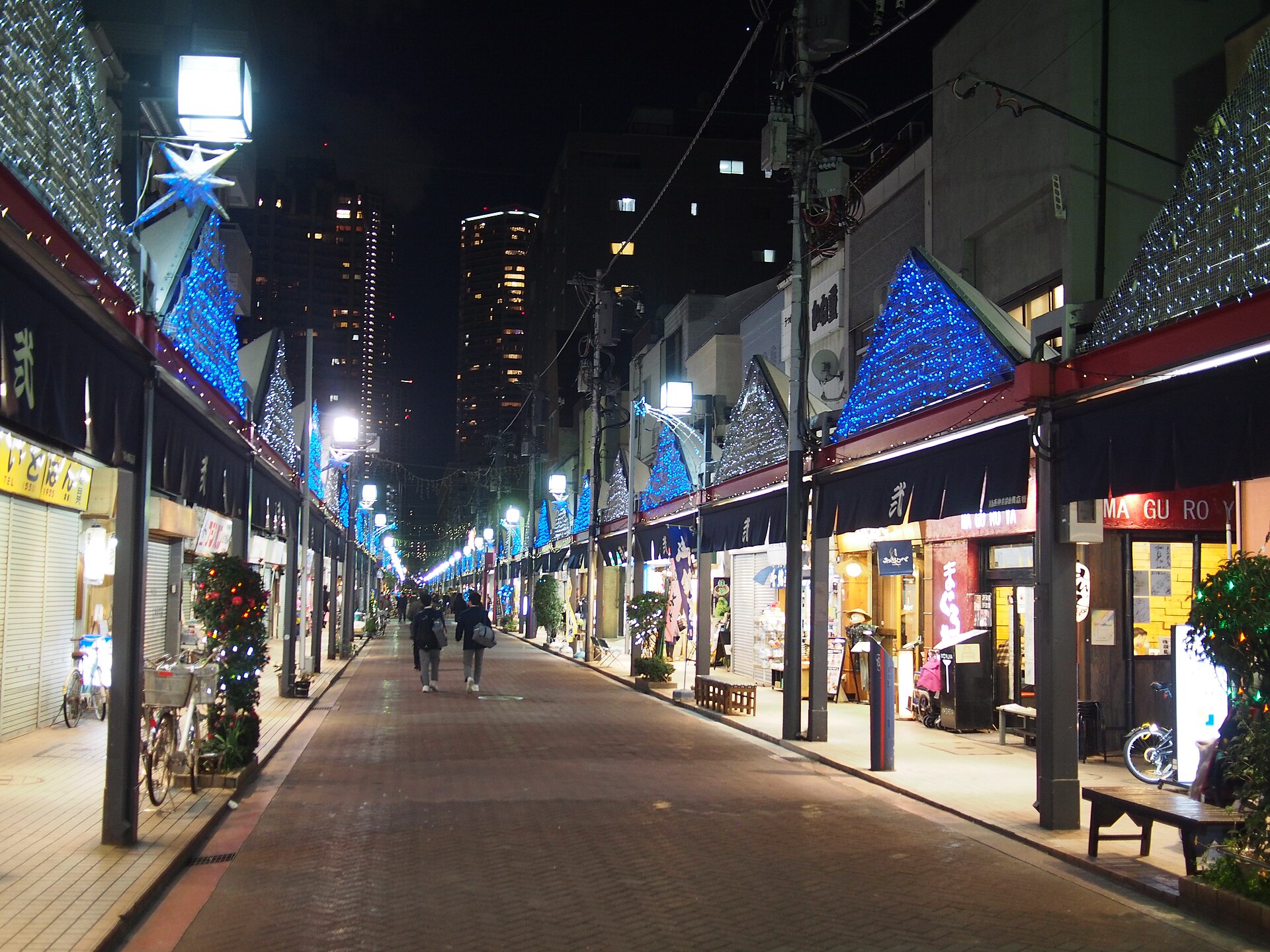
Take the Tokyo Metro Yurakucho Line or the Toei Oedo Line to Tsukishima Station and leave by Exit 7. Nishinaka-dori, the shopping street known as Monja Street, starts right outside the exit.
From Ginza, the Yurakucho Line runs from Ginza-itchome to Tsukishima in two stops. From Tsukiji, the Oedo Line runs from Tsukijishijo to Tsukishima in two stops. Any IC card works on both lines; see our IC卡 指南。
GO TOKYO lists the street’s typical hours as 11:00–20:00 and warns they vary, while individual shops often stay open to 22:00 or later. Evenings and weekends are busiest, so walk-ins may face a wait.
Half-day plan: Tsukishima, Tsukiji Outer Market and Hamarikyu
Tsukishima, Tsukiji and Hamarikyu Gardens sit in a tight line along the Sumida River, linked by two stops on the Toei Oedo Line. Here is a lunch-first plan that fits an afternoon.
| 時間 | 站點 | 備註 |
|---|---|---|
| 12:00 | Monja lunch in Tsukishima | Ebisuya and Takenoko open at 12:00; or book the ¥6,000 course |
| 14:00 | Oedo Line to Tsukijishijo (2 stops) | Or walk across Kachidoki Bridge |
| 14:15 | 築地場外市場 | Many stalls wind down in the afternoon; check the market calendar |
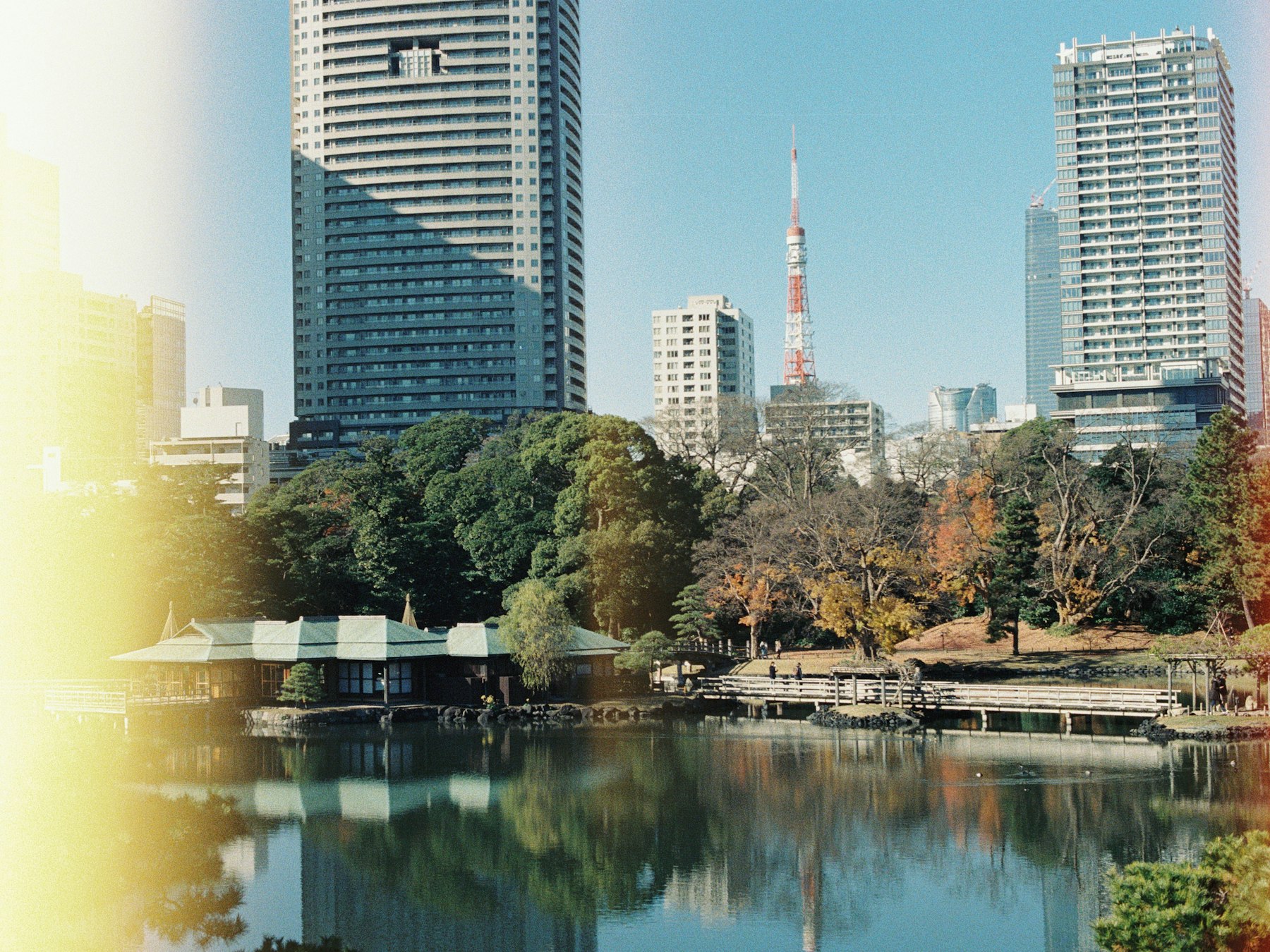
| 15:30 | Hamarikyu Gardens | ¥300; open 9:00–17:00, last entry 30 minutes before closing |
Tsukiji Outer Market is a morning place, and the market’s own site warns that many shops close on Tokyo Central Wholesale Market holidays, so check the Tsukiji calendar first. If seafood is the priority, flip the plan: Tsukiji at breakfast, Hamarikyu mid-morning, monja for a late lunch.
- Morning version, 8:00: breakfast and browsing at Tsukiji Outer Market while most stalls are open.
- 10:00: walk to Hamarikyu Gardens (opens 9:00) for the ponds and the skyline view.
- 12:00: Oedo Line from Tsukijishijo to Tsukishima for a monja lunch when the shops open.
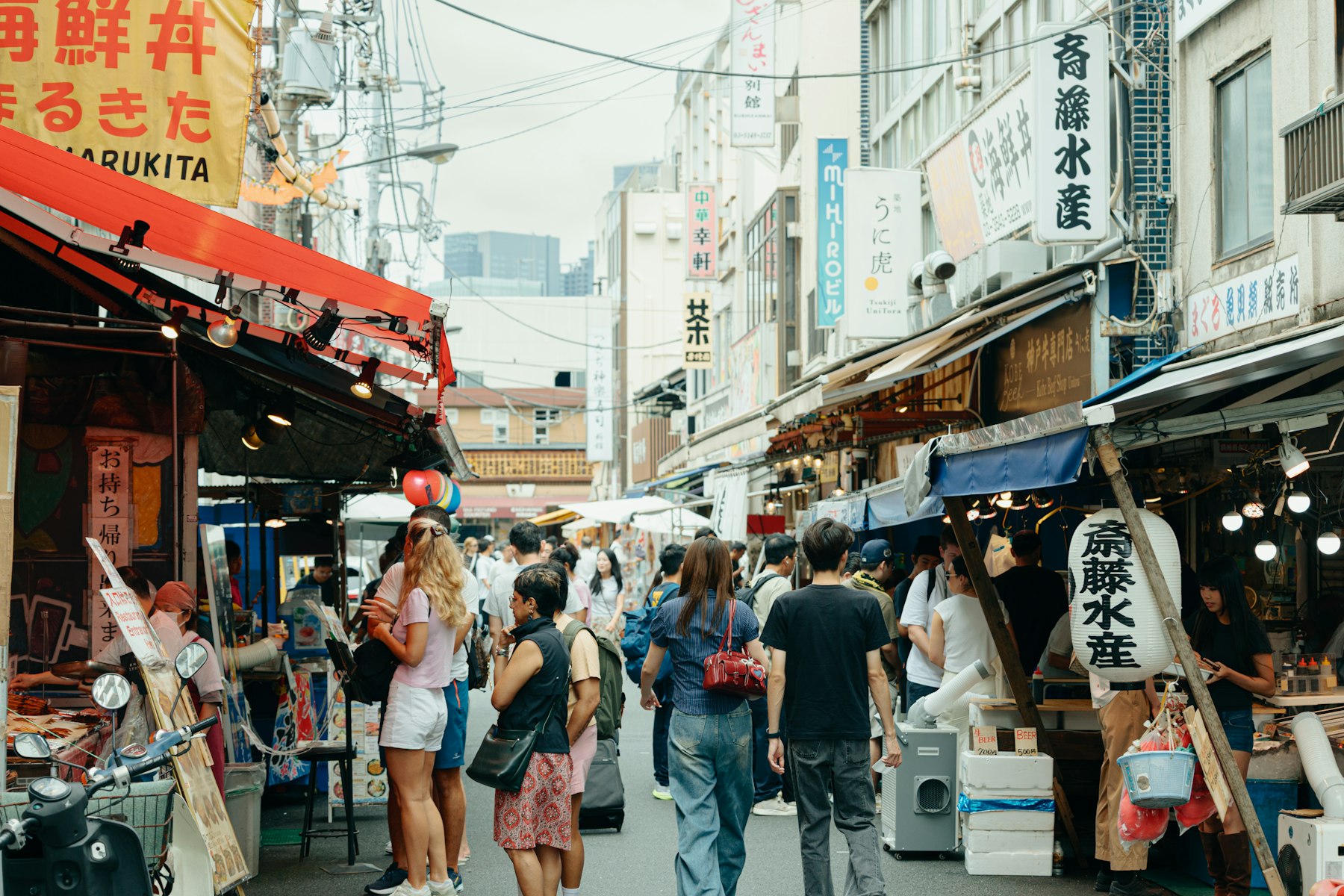
For a guided morning at the market, see our 築地美食之旅指南. We don’t repeat the stall-by-stall picks here.
Hamarikyu Gardens charges ¥300 for general admission and opens 9:00–17:00 (hours vary by season), per GO TOKYO. The official park page lists Tsukijishijo (E18) and Shiodome (E19) on the Oedo Line as the nearest stations.
If you want to stay nearby, Tsukishima is a quiet, residential base two stops from Ginza, and evenings on Monja Street are its main draw. Compare it with other neighbourhoods in our 東京住宿推薦 指南。
For more hands-on food and culture ideas, our 道地的日本體驗 round-up and our 日本餐廳預訂指南 cover the rest of Tokyo.
出發前須知
Go at lunch
Evenings and weekends bring queues. A weekday lunch is the easiest walk-in slot.
Wear dark clothes
Monja spits. Leave the white shirt at the hotel.
Check the shop name
The course booking page doesn't name the restaurant. Confirm it before you pay.
Budget for drinks
Drinks aren't listed in the ¥6,000 course. Assume they're extra.
Use the videos
Scan the table QR code before you start cooking, not after the batter is out.
Tsukishima monja experience FAQ
How much is the Tsukishima monja experience course?
The Tokyo Monja Dining Experience costs ¥6,000 per person, tax included, for a 120-minute course (booking page, checked 17 November 2026).
Do I need to book monja in Tsukishima?
No. Most shops take walk-ins, but evenings and weekends get busy. Book the course online, or book a shop directly, if you have a fixed time.
Which exit is Monja Street at Tsukishima Station?
Exit 7. Nishinaka-dori (Monja Street) starts right outside.
How much does monja cost à la carte?
At the three shops we checked, monja runs from ¥1,200 to ¥1,800. The cooperative lists an average budget of ¥2,500–3,500 per person for Kondo.
Is monjayaki the same as okonomiyaki?
No. Okonomiyaki is a thick pancake you flip; monja is runnier, never sets and is eaten straight off the griddle with a mini spatula.
Is there English help for cooking monja?
Yes. The course uses multilingual how-to videos opened by QR code, and the cooperative’s site is in English, Japanese, Korean and Chinese.
What time do Tsukishima monja shops open?
It varies by shop. GO TOKYO gives typical street hours of 11:00–20:00; Ebisuya and Takenoko open at 12:00, while Wadachi opens at 17:00 and serves dinner only.
Can I combine monja with Tsukiji?
Yes. Tsukijishijo and Tsukishima are two stops apart on the Toei Oedo Line, and Hamarikyu Gardens is next to Tsukijishijo.
資料來源與查核方式
We checked these facts on 17 November 2026 against the cooperative’s 英文網站, 預約頁面 與 project page、其 新聞稿, the shop pages on monja.gr.jp, GO TOKYO for Monja Street and Hamarikyu, and the 築地場外市場日曆. Course details are new and may change; check the booking page before you pay.
Make it a Tokyo food day
Pair your monja night with a hands-on food or culture experience in Tokyo, booked through Japan Pro.
 English
 Japanese
 Chinese (Taiwan)
 Chinese (China)
 Korean
 French
 Italian
 Thai