
Kyoto Autumn Leaves 2026: Peak Dates, Night Light-Ups and How to Beat the Crowds
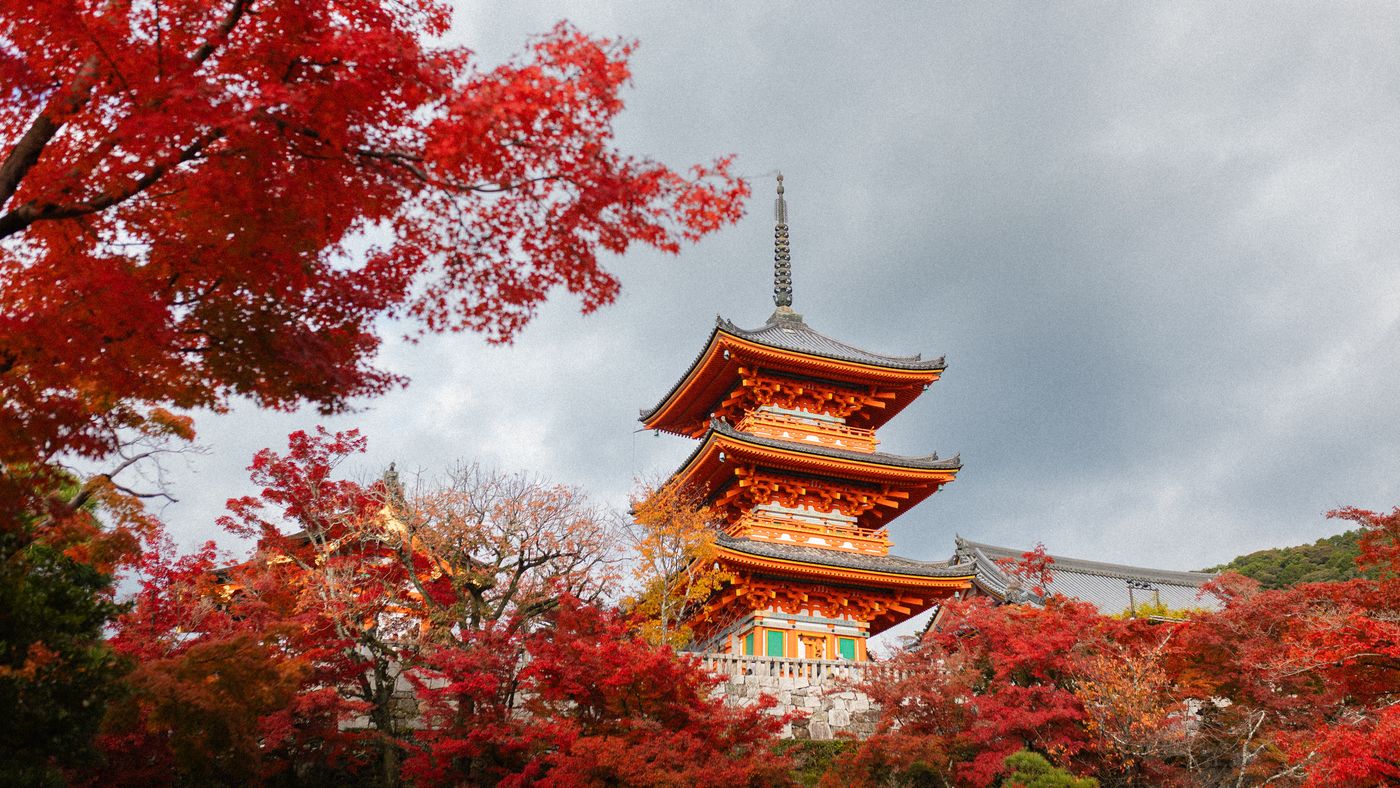
Kyoto’s autumn leaves are expected to peak on time or a little later than usual in 2026. The Japan Meteorological Corporation expects the red maples at its Kyoto observation point to be at their best around 11 December, six days later than normal, with the ginkgo trees peaking around 27 November. Weathernews puts Arashiyama at around 24 November, while tenki.jp (Japan Weather Association) expects colour there from around 13 November. If you want the best odds of colour, temple light-ups and open gardens all at once, plan your Kyoto days between 20 November and 6 December.
20 Nov – 6 Dec
Best window in 2026
~24 Nov
Arashiyama peak (Weathernews)
4
Light-ups confirmed
¥800–¥2,000
Temple entry
This guide to Kyoto autumn leaves in 2026 gives you the forecasts, the night light-up dates that temples have already confirmed, seven places worth your time, and a simple plan for seeing them without spending the day in a queue.
When do the Kyoto autumn leaves peak in 2026?
The main forecasters give different dates because they measure different trees in different places.
| 預報機構 | What they measure | 2026 peak |
|---|---|---|
| Japan Meteorological Corporation (JMC, forecast of 2 September) | Red leaves, Kyoto observation point | Around 11 December (normal: 5 December) |
| Japan Meteorological Corporation (JMC, forecast of 2 September) | Ginkgo (yellow), Kyoto | Around 27 November (normal: 24 November) |
| Weathernews (second forecast, 8 October) | 嵐山 | Around 24 November |
| tenki.jp / Japan Weather Association (second forecast, 14 October) | 嵐山 | From around 13 November |
The JMC date comes from a sample tree in the city, so it runs later than the hills on Kyoto’s edges. Arashiyama, Kibune and the northern valleys turn first. The temples in the city centre and in Higashiyama follow.
Why the wait? In its second forecast on 14 October, tenki.jp (run by the Japan Weather Association) said temperatures in western Japan are expected to stay above normal into November, so most places will peak on time or late. As of 16 October, tenki.jp still listed every Kyoto spot as green.
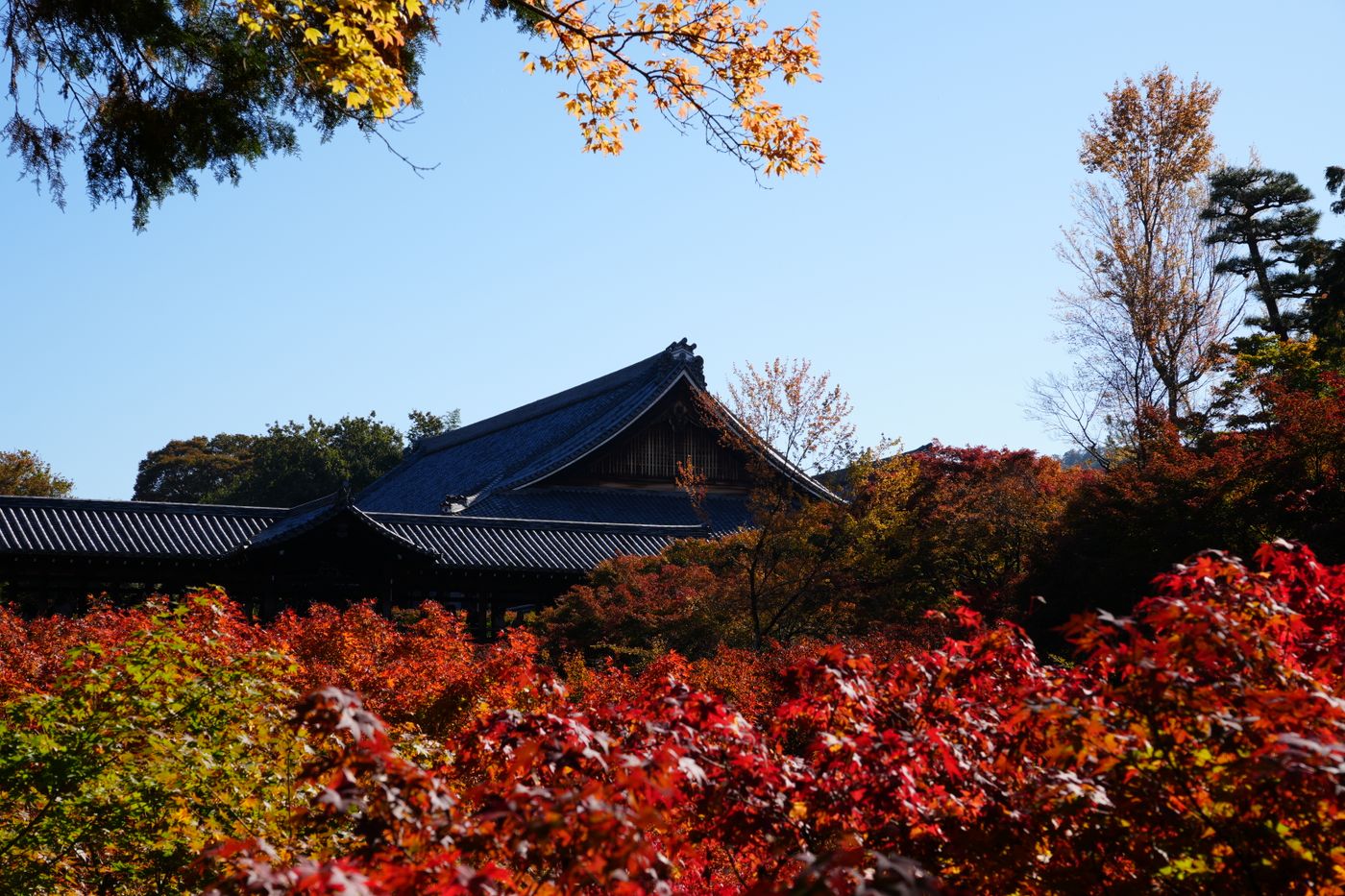
A rough order for 2026, based on each spot’s usual timing and this year’s forecasts:
- Early to late November: Kibune and the Eizan Railway line north of the city
- Mid to late November: Eikando, Kitano Tenmangu, Arashiyama
- Late November to early December: Tofuku-ji, Kiyomizu-dera, Kodaiji
- Early to mid-December: Kyoto Botanical Garden and other late trees in the city
If you can only pick one week, pick the last week of November. You give up a little colour in the hills but you get the city temples near their best, and every light-up listed below is running. To compare Kyoto with the rest of Japan, see our 日本紅葉日曆.
Kyoto autumn leaves at night: 2026 light-up dates
Light-ups are the best way to see the leaves without daytime crowds, and several temples have already published their 2026 dates.
| Place | 2026 dates | Night hours | Admission (adult) |
|---|---|---|---|
| Kodaiji | 23 October to 13 December | Lights on at 17:00, last entry 21:30, gate closes 22:00 | ¥800, same day and night |
| Kitano Tenmangu Momiji-en | 13 November to 6 December | Open until 20:00, lights from sunset, last entry 19:40 | ¥1,500 |
| Eikando | 20 November to 6 December | 17:30 to 20:30 (last entry), gate closes 21:00 | ¥1,000 |
| Kiyomizu-dera | 21 to 30 November | Open until 21:30, last entry 21:00 | Check at the gate |
Not announced yet: the Eizan Railway “Momiji Tunnel” light-up. In 2025 it ran from 7 November and, after an extension, until 30 November, from sunset until about 21:00. We will update this table when the 2026 dates are out.
7 best places for Kyoto autumn leaves
1. Tofuku-ji: the classic maple valley
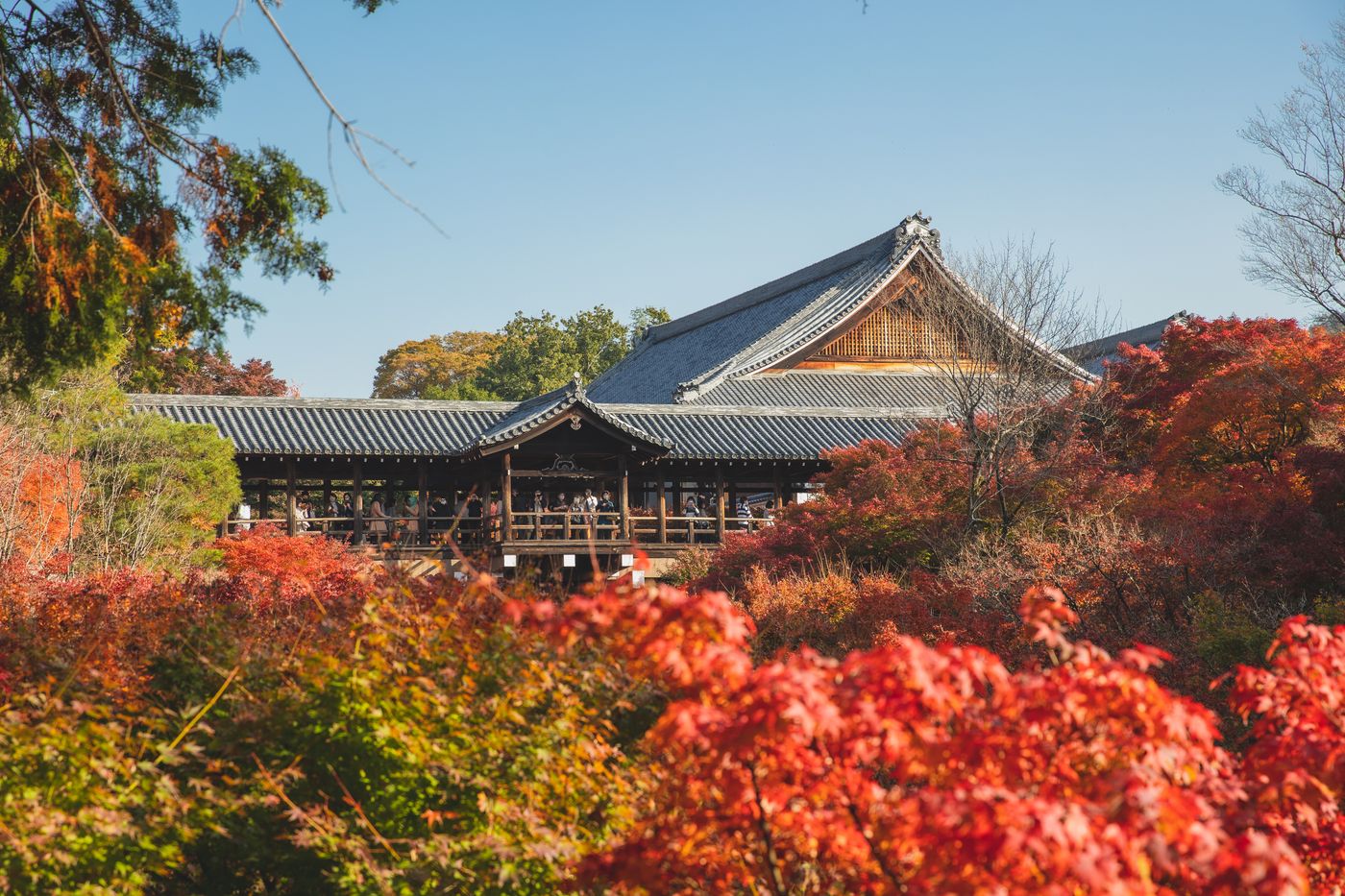
Tofuku-ji is the view most people picture: a wooden covered bridge, Tsutenkyo, crossing a valley packed with maples. It is also one of the busiest places in Kyoto in late November.
- Autumn period: 14 November to 6 December (the temple says autumn dates change every year, so check before you go)
- Hours in autumn: Tsutenkyo 8:30 to 16:00; Hojo garden 9:00 to 16:00
- Admission in autumn: Tsutenkyo and Kaisando ¥1,000 for adults. The Hojo garden rises to ¥600 from 1 November 2026
- Photography: you may be asked not to take photos on Tsutenkyo and Gaunkyo bridges in autumn, and tripods are banned all year
- Getting there: Tofukuji Station on the JR Nara Line or Keihan Line, then a short walk
Get there for the 8:30 opening.
2. Eikando: the best night light-up
Kyoto has long called Eikando (Zenrin-ji) “Momiji no Eikando”, Eikando of the maples. If you only do one light-up, make it this one: the pond garden and Amida Hall are lit after dark.
- Autumn treasure exhibition (day): 11 November to 6 December, 9:00 to 16:00 (last entry), gate closes 17:00, ¥1,500 for adults
- Light-up (night): 20 November to 6 December, 17:30 to 20:30 (last entry), gate closes 21:00, ¥1,000
- Day and night are separate tickets, sold on the day only. There are no advance tickets
- No private cars, motorbikes or e-scooters during the exhibition. The nearest public car park, Okazaki Park, is about 20 minutes away on foot
3. Kiyomizu-dera: Kyoto from the wooden stage
Kiyomizu-dera opens at 6:00, which makes it the easiest major temple to see early. In 2026 it also opens at night from 21 to 30 November (until 21:30, last entry 21:00). The Jojuin garden opens for a special viewing on the same dates: 10:00 to 16:00 and 18:00 to 20:30 (last entry).
- Getting there: from Kyoto Station, city bus 206 or 100 to Gojozaka, then about 10 minutes uphill on foot. Keihan Kiyomizu-Gojo Station is about 25 minutes on foot
- The temple has no car park
4. Kodaiji: the longest light-up season
Kodaiji runs its autumn night viewing from 23 October to 13 December 2026, longer than any other temple on this list. It is a walk from Kiyomizu-dera down Sannenzaka and Ninenzaka, so the two make an easy evening together.
- Hours: 9:00 to 21:30 (last entry), gate closes 22:00, lights on at 17:00
- Admission: ¥800 for adults, the same price day or night
5. Arashiyama and Tenryu-ji
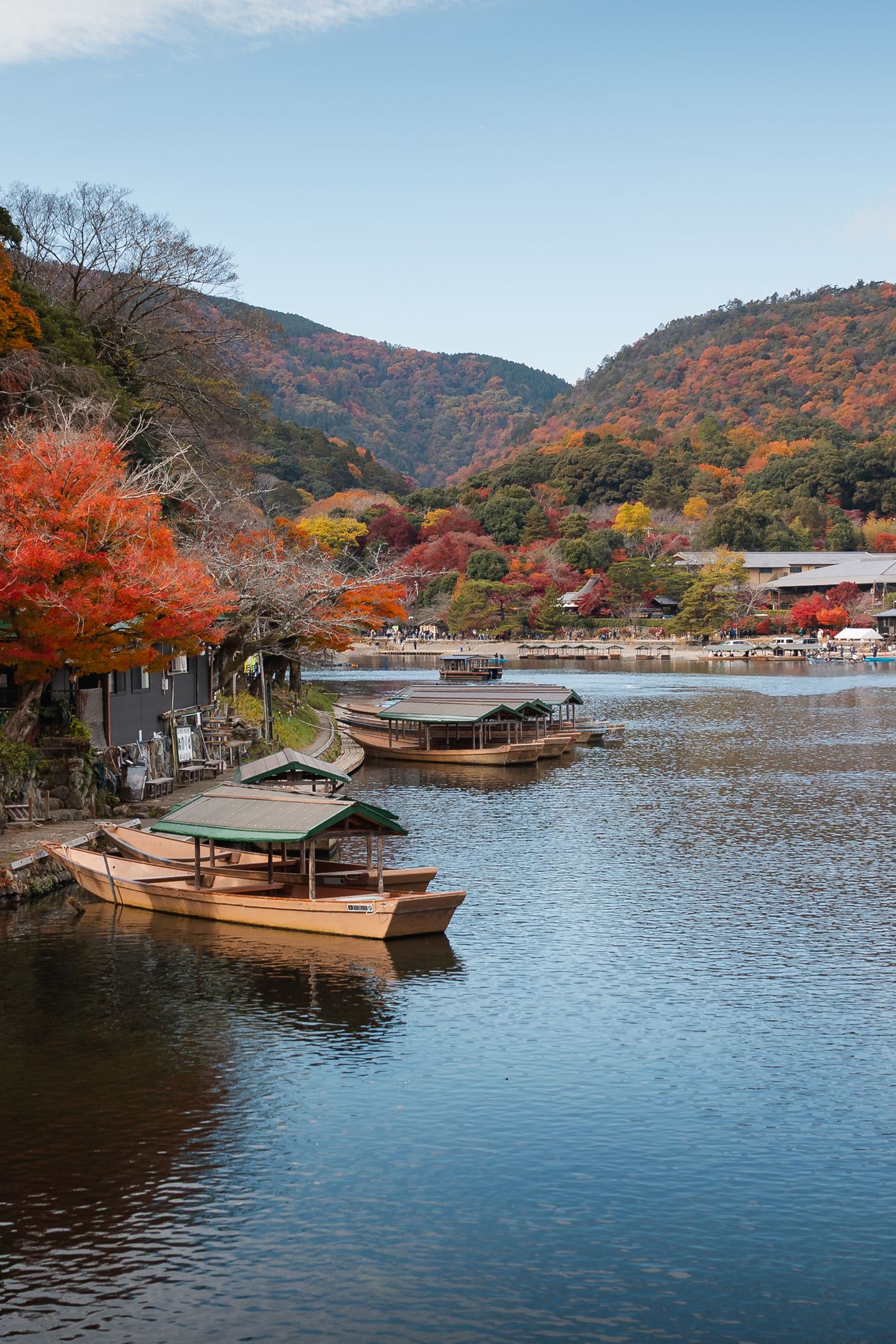
Weathernews expects Arashiyama to peak around 24 November. The hills above the Hozu River turn red and gold, and Tenryu-ji’s garden uses those hills as its backdrop.
- Tenryu-ji hours: 8:30 to 17:00 (last entry 16:50)
- Admission: garden ¥500; add ¥300 for the buildings
- Getting there: Randen (Keifuku) Arashiyama Station, 5 minutes on foot; Hankyu Arashiyama Station, 15 minutes; JR Saga-Arashiyama Station, 13 minutes
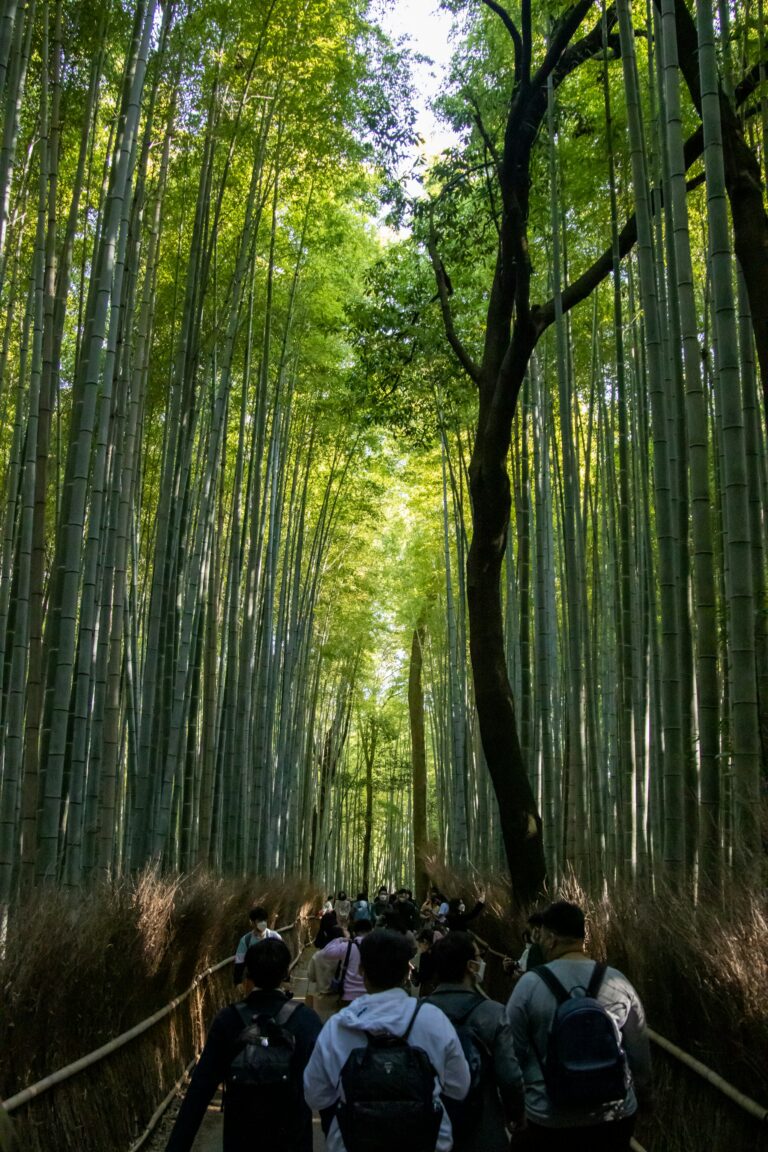
Arashiyama gets very crowded by mid-morning. Arrive for the 8:30 opening, see the garden first, then walk along the river.
6. Kitano Tenmangu Momiji-en
Behind Kitano Tenmangu shrine, a maple garden grows along a surviving stretch of the Odoi, the earth wall Toyotomi Hideyoshi built around Kyoto in the 16th century.
- Open: 31 October to 6 December 2026, 9:00 to 16:00 (last entry 15:40)
- Light-up: 13 November to 6 December, until 20:00 (last entry 19:40)
- Admission: ¥1,500 for adults, ¥700 for children
7. Ruriko-in: the reflection room (book ahead)
Ruriko-in in Yase, north-east Kyoto, is known for the maples reflected in the polished desk of its upstairs room. It opens to the public for special seasons, and autumn 2026 is one of them.
- Open: 1 October to 13 December 2026, 10:00 to 17:00 (last entry 16:30)
- Admission: ¥2,000 for adults; ¥1,000 for junior and senior high school students with ID
- Booking: reservation required from 13 November to 6 December. Outside those dates you can walk in
The reservation window covers peak season, so book as soon as your dates are fixed.
Going in December? Kyoto Botanical Garden
If your trip falls in early December, the Kyoto Botanical Garden is a good bet. Its usual peak runs from mid-November to early December, and Weathernews expects its leaves to start falling only around 14 December this year.
- Hours: 9:00 to 17:00 (entry until 16:00); closed 28 December to 4 January
- Admission: ¥500 for adults
The Momiji Tunnel train to Kibune and Kurama
The Eizan Railway’s Kurama Line passes through about 250 metres of maples between Ichihara and Ninose stations. Trains slow down through this stretch, and in 2025 it was lit up in the evenings from 7 to 30 November (extended from 24 November because of the late colour). The 2026 dates are not out yet. Take the train from Demachiyanagi, and pair it with Kibune, which usually colours from early to late November.
How to beat the Kyoto autumn crowds
Kyoto’s own autumn advice for visitors comes down to a few habits that work.
Take trains, not buses, as far as you can. The Kyoto City tourism site recommends going by subway or train as close to your destination as possible and only then switching to a bus or walking. City buses in Higashiyama fill up fast in November.
Go at opening time. Tofuku-ji and Tenryu-ji open at 8:30 and Kiyomizu-dera at 6:00. The first hour is the calmest of the day.
Use the light-ups. Day-trippers leave in the evening. Kodaiji, Eikando, Kitano Tenmangu and Kiyomizu-dera all give you a second chance at the leaves after dark.
Choose weekdays. Weekends and the 23 November public holiday are the busiest days of the season.
Send your bags ahead. Kyoto runs hands-free luggage storage and delivery services for visitors (hands-free.kyoto.travel), so you don’t have to drag a suitcase onto a bus.
Kyoto crowd and traffic rules for autumn 2026
Kyoto City has published its official autumn traffic measures. The short version: Arashiyama’s main street closes to cars on peak weekend afternoons, and the Tofuku-ji approach goes car-free. Don’t drive. Here’s what’s in force (Kyoto City, 15 Oct 2026).
- Arashiyama, weekdays 16–27 Nov (Confirmed): Nagatsuji-dori, the main street from Sanjo-dori to Marutamachi-dori, is one-way northbound from 11:00 to 17:00. Motorbikes and bicycles are exempt.
- Arashiyama, 21, 22, 23, 28 and 29 Nov (Confirmed): Nagatsuji-dori is one-way northbound from 11:00 to 13:00, then pedestrian-only from 13:00 to 17:00 for all vehicles. Saga-kaido, from the north end of Togetsukyo Bridge to Hankyu Arashiyama Station, is one-way southbound from 11:00 to 17:00. Staff will be at the bamboo grove path to steer people towards Okusaga and Kameyama Park.
- Arashiyama buses (Confirmed): City buses keep their usual route between roughly 10:00 and 16:59. Outside those hours, southbound buses stop at Saga Shogakko-mae on Nagatsuji-dori. On the pedestrian-only days, buses take a detour.
- Tofuku-ji, the same five days, 9:00–16:00 (Confirmed): The access road to the temple becomes pedestrian-only, except for residents’ vehicles. Hon-machi-dori from the Kujo flyover to Takio Shrine is closed to traffic.
- Higashiyama, the same five days (Confirmed): Higashioji-dori has turn bans towards Kodaiji and the Kiyomizuzaka car park (10:00/12:00–19:00). The taxi rank outside Otani Hombyo is closed from 7:00 to 19:00. Taxis are not a shortcut here.
- Jidai Matsuri, Thursday 22 Oct (Confirmed): Rolling road closures run along the procession route through central Kyoto from about 11:50 to 16:00. If it rains, the procession and the closures move to Friday 23 Oct (Kyoto Prefectural Police; Kyoto City Tourism). Kyoto City Bus had not posted 2026 detour details at the time of writing (TBA). Check the city bus notices on the day.
- Beat the crowds at Bishamondo (Confirmed): Bishamondo Monzeki in Yamashina runs a guided, crowd-free morning visit from 8:00 to 9:00 (meet at 7:55) on 22, 28 and 29 Nov and 5 Dec. It costs ¥1,800 and covers the main hall and Shinden. You can stay on afterwards. It’s sold only through JR Central’s EX Tabisaki Yoyaku, so you need an Express Yoyaku or SMART EX account (Sou da Kyoto, ikou).
- Bears (Confirmed): On hill trails such as Takao and the hills above Arashiyama, carry a bell, avoid dawn and dusk, and don’t walk alone. Kyoto Prefecture reports a poor acorn crop in 2026, which pushes bears to look for food before winter (Kyoto Prefecture). A bear was sighted on the Kyoto Isshu Trail’s Kitayama West course in April (Kyoto City Tourism).
Where to stay for Kyoto autumn leaves
Where you sleep decides how much of the day you spend on buses. In late November the city is close to full, so book as soon as your dates are fixed, and expect higher prices on weekends and around the 23 November holiday.
Higashiyama and Gion are the best base for the light-ups. Kodaiji, Kiyomizu-dera and Eikando are all within walking distance or a short taxi ride, so you can see two temples after dark and walk back without queuing for a bus. Rooms here are smaller and pricier, and the lanes around Sannenzaka are crowded from mid-morning.
Around Kyoto Station is the practical choice. Tofuku-ji is one stop away on the JR Nara Line, buses to Higashiyama leave from the station, and you have direct trains to Nara and Osaka for day trips. It is also the easiest place to arrive with luggage.
嵐山 suits a slower trip. A night in a ryokan by the Hozu River puts you in the bamboo grove and Tenryu-ji before the day-trippers arrive, but it is a long way from the eastern temples, so plan the light-ups for another night.
Day trips for more autumn colour near Kyoto
Kyoto is the centre of a region full of maples, and a few nearby spots peak at about the same time with smaller crowds.
奈良
Forty-five minutes by train from Kyoto, Nara Park pairs red maples and ginkgo with the deer and the great temples. It usually colours from mid to late November, so it fits the same trip. Go early, when the park is quiet and the light is low.
Minoo Falls, Osaka
A gentle walk of about 3 km up a forested valley in the north of Osaka ends at a waterfall framed by maples. It is an easy half day if you are staying in Osaka, and the local snack is momiji tempura, maple leaves fried in batter.
Eigenji, Shiga
Eigenji, a Zen temple in the hills east of Lake Biwa, has thousands of maples and far fewer visitors than the Kyoto temples. It holds a light-up in the peak weeks; check the dates on the temple site before you go.
For the dates of all three, and of more than 30 other spots, see our 日本紅葉日曆.
What to pack and temple etiquette in autumn
Late November in Kyoto means cold mornings and evenings and mild afternoons, so dress in layers you can take off as the day warms up. The light-ups are the coldest part of the day: you will be standing still outside after dark, so bring a warm jacket, a scarf and gloves for the evening.
Wear shoes that are easy to slip on and off. Many temple halls, including the upstairs room at Ruriko-in, ask you to take your shoes off, and the wooden floors are cold, so thick socks help. A small bag for your shoes is useful where the temple does not provide one.
Respect the photo rules. Tofuku-ji bans tripods all year and may stop photography on its bridges at peak times, and other temples have their own limits on tripods and selfie sticks, especially during light-ups when the paths are packed. Look for the signs at each gate and follow the staff.
Finally, carry an IC card such as ICOCA or Suica. It works on Kyoto city buses, the subway and the private railways, so you never have to queue for a ticket or find change, which saves real time at busy stops in November.
A one-day plan for late November
- 8:30 Tofuku-ji for Tsutenkyo at opening
- 11:00 Eikando for the pond garden by day, then lunch in Okazaki
- 15:00 Walk south through Higashiyama
- 17:00 Kodaiji as the lights come on
- 19:00 Kiyomizu-dera at night (21 to 30 November only)
If you’d rather not plan it yourself, a guide can handle the route and timing for you. Browse Kyoto temple tours on Japan Pro.
Book these before you go
- Sagano Scenic Railway (Torokko): Seats go on sale on the 官方網站 at 00:00, one month before your ride date. Stations don’t sell advance tickets. They sell same-day tickets only, and only until the seats run out. The evening light-up runs 24 Oct–29 Dec from 16:30, with no service on 16 Dec. This is the current trains’ final season, because they retire on 29 Dec and a new train arrives in spring 2027 (JR West).
- Early entry before the crowds: Besides Bishamondo, EX members can book morning private visits at Eikando and Tofuku-ji (Sou da Kyoto, ikou autumn 2026).
- A rainy-day backup: 我們的 teamLab Biovortex Kyoto guide has the details.
- Add a crab-and-onsen night: 我們的 Kinosaki Onsen crab season guide covers the trip.
- Skip the queues with a local: Browse Kyoto experiences.
Make it more than a photo stop
The leaves are the reason to go, but the trips people remember usually add something: a tea ceremony after a morning of temples, a cooking class, or a night in a ryokan instead of a business hotel.
Browse tea ceremonies and other Kyoto experiences on Japan Pro. Prices are set by the hosts and paid in full when you book, so there is nothing to settle on the day.
Flying into Osaka? Our guide to Kansai Airport to Kyoto compares every route. Staying in Tokyo first? See Tokyo autumn leaves 2026.
Frequently asked questions
When is the best time to see Kyoto autumn leaves in 2026?
Late November to early December. The Japan Meteorological Corporation forecasts red leaves in the city around 11 December and ginkgo around 27 November. Weathernews forecasts Arashiyama around 24 November. The last week of November is the safest single week.
Are the Kyoto autumn leaves late in 2026?
On time or slightly late. JMC’s Kyoto date is six days later than normal, which it still counts as around normal, and the Japan Weather Association expects warmer than normal weather in western Japan into November, which slows the colour.
Which Kyoto temples have night light-ups in autumn 2026?
Confirmed so far: Kodaiji (23 October to 13 December), Kitano Tenmangu Momiji-en (13 November to 6 December), Eikando (20 November to 6 December) and Kiyomizu-dera (21 to 30 November).
Do I need to book anything in advance?
Ruriko-in requires a reservation from 13 November to 6 December. Eikando does not sell advance tickets; you buy on the day. Most other temples are walk-in.
Is early December too late for Kyoto’s autumn leaves?
Not in 2026. With JMC’s city forecast at 11 December, early December is still within the peak for many city temples, and Weathernews expects the Kyoto Botanical Garden to keep its leaves until around mid-December. The hills around Arashiyama and Kibune will be past their best.
Is Arashiyama closed to cars in November 2026?
Partly. On 21, 22, 23, 28 and 29 Nov, Nagatsuji-dori, Arashiyama’s main street, is pedestrian-only from 13:00 to 17:00, after two hours of one-way traffic from 11:00. On weekdays from 16 to 27 Nov, it’s one-way northbound from 11:00 to 17:00 (Kyoto City). Come by Randen, JR or Hankyu, not by car or taxi.
Can I still get a bus to Arashiyama on the busiest November days?
Yes, but expect changes. From 16 to 29 Nov, city buses keep their usual route from about 10:00 to 16:59. Before and after those hours, they use the southbound Saga Shogakko-mae stop on Nagatsuji-dori. On the pedestrian-only days (21–23 and 28–29 Nov), they also take a detour (Kyoto City). Trains are quicker and more predictable.
See Kyoto's maples with a local
Temple walks, tea ceremonies and ryokan stays in Kyoto, booked direct with local hosts.
 English
 Japanese
 Chinese (Taiwan)
 Chinese (China)
 Korean
 French
 Italian
 Thai