
Nada no Kenka Matsuri 2027: Himeji’s Fighting Festival Explained (14–15 October)
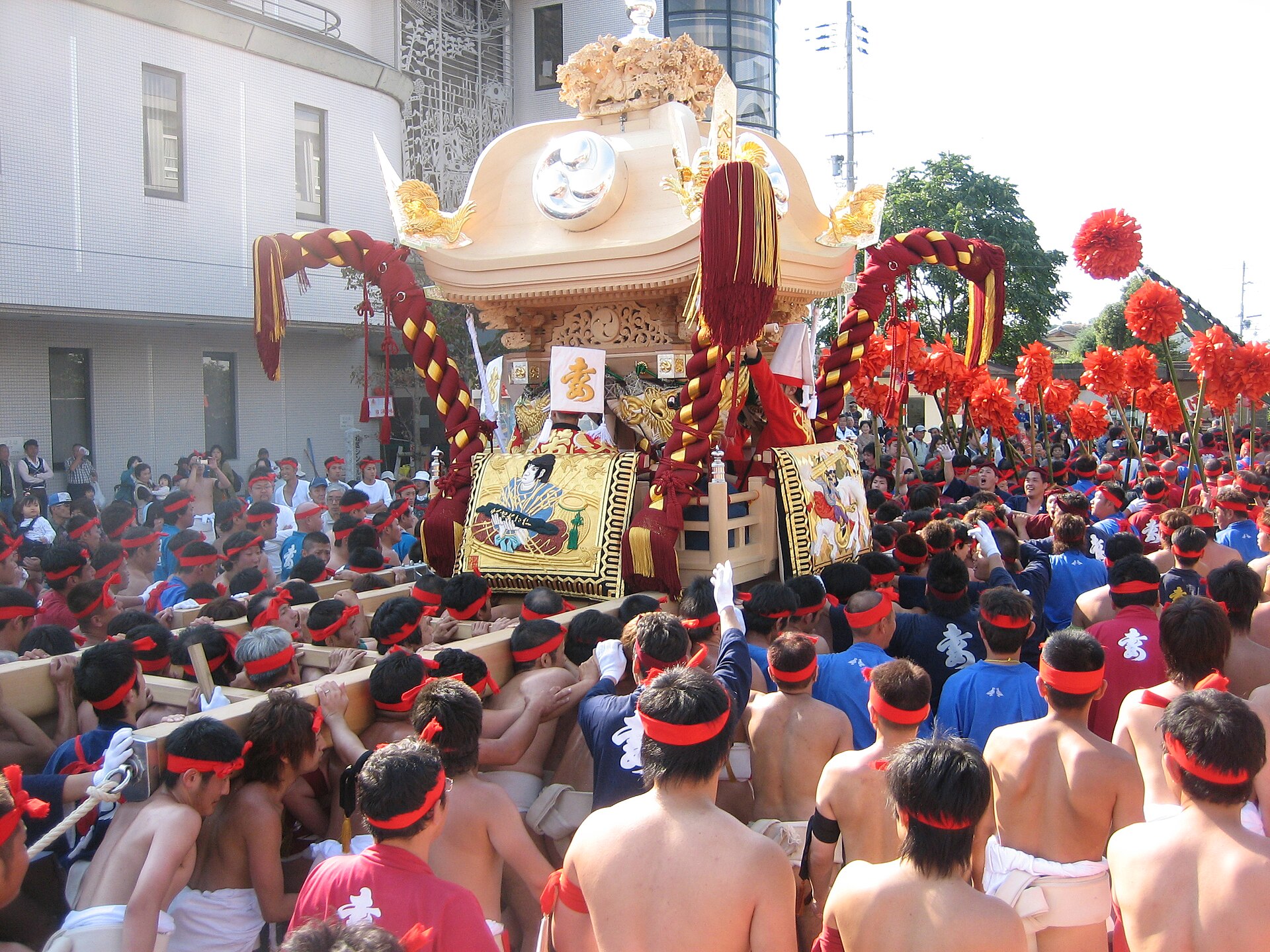
Nada no Kenka Matsuri is held every year on 14 and 15 October at Matsubara Hachiman Shrine in Shirahama, Himeji, whatever day of the week they fall on. That puts the next one on Thursday 14 and Friday 15 October 2027, when three portable shrines will again be rammed into each other on the slopes of Otabi-yama.
The 2026 edition has just finished: the eve on Wednesday 14 October, the main day on Thursday 15 October. This guide explains what the “fighting” actually is, gives the hour-by-hour timetable, clears up the paid-seat question (short version: you can’t buy one), and covers safety, Sanyo Railway access from Himeji and Osaka, and how to fit in Himeji Castle. For the rest of the year, see our Japanese festival calendar. Facts were checked on 23 October 2026.
14–15 Oct 2027
Thu–Fri, fixed date every year
3 mikoshi
Smashed together on the main day
7 districts
Each brings a yatai float
5 min
Walk from Sanyo Shirahamanomiya
When is Nada no Kenka Matsuri 2027?
The festival is the autumn grand festival (秋季例大祭) of Matsubara Hachiman Shrine and runs on 14 and 15 October every year, regardless of the weekday (Kobe Shimbun, JNTO). Day one is the yoimiya (eve), day two the honmiya (main day).
Because the dates are fixed, 2027 needs no announcement to pin down: Thursday 14 and Friday 15 October 2027. What isn’t published yet is the 2027 timetable. The 2026 one appeared on the unofficial festival information site nadamatsuri.jp before the festival, so expect 2027 times in early autumn 2027.
| Day | 2026 (just held) | 2027 | What happens |
|---|---|---|---|
| Yoimiya (eve) | Wed 14 Oct | Thu 14 Oct | Seven yatai floats parade into the shrine |
| Honmiya (main day) | Thu 15 Oct | Fri 15 Oct | Dawn rites, mikoshi clashes, procession to Otabi-yama |
Both 2027 days are weekdays. Book Thursday and Friday off, not a weekend.
What happened at Nada no Kenka Matsuri 2026?
The eve on 14 October followed the usual pattern. Floats from the seven parish districts rolled up to the shrine one after another to drums and the chant “Yoiyasa”, with Higashiyama’s yatai first through the two-storey romon gate in the morning (Kobe Shimbun, 14 Oct 2026). The shrine’s grandstand seating was packed (Kobe Shimbun).
On 15 October the host district for 2026 was Matsubara, the shrine’s own neighbourhood. Its men did the shio-kaki purification in the sea at Shirahama beach just after 6:00, then carried the three mikoshi into the clash on Otabi-yama, west of the shrine (Kobe Shimbun, Kobe Shimbun). Local site TANOSU reported that Kiba district had a newly built yatai for 2026.
Why is it called the “fighting festival”?
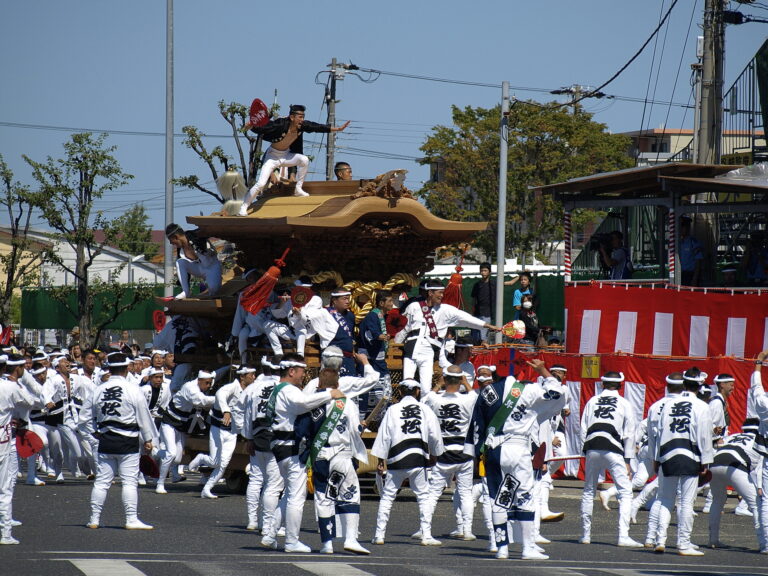
Because the main event is a deliberate collision. Teams of young men carry three large mikoshi, known as Ichi-no-maru, Ni-no-maru and San-no-maru, and push and slam them into each other. JNTO notes the rules are minimal and a bout ends when one mikoshi is hoisted on top of another (JNTO).
Each mikoshi is about 2 m tall and reportedly weighs over 300 kg. The harder they hit, the happier the deity is thought to be, so roofs get holed and ornaments fly off (Kobe Shimbun). The year’s host district repairs them before the next festival, starting with a chisel ceremony at the shrine in September and an unveiling on 1 October.
The yatai floats are different. They carry carved wood, gold and silver metalwork and embroidered curtains, and the teams compete by lifting and showing them off in neri, not by ramming them (JNTO).
Who carries what
Only men from high-school age up to 45 take part in the mikoshi fighting, split into three age groups by headband colour (JNTO):
- Red headbands — 25 and under; they also carry the bamboo poles used in the clash.
- Yellow headbands — 26 to 35.
- White headbands — over 35, carrying the heaviest mikoshi.
Hosting rotates among the districts, so each one gets its turn carrying the mikoshi roughly once every seven years. The other districts bring their yatai.
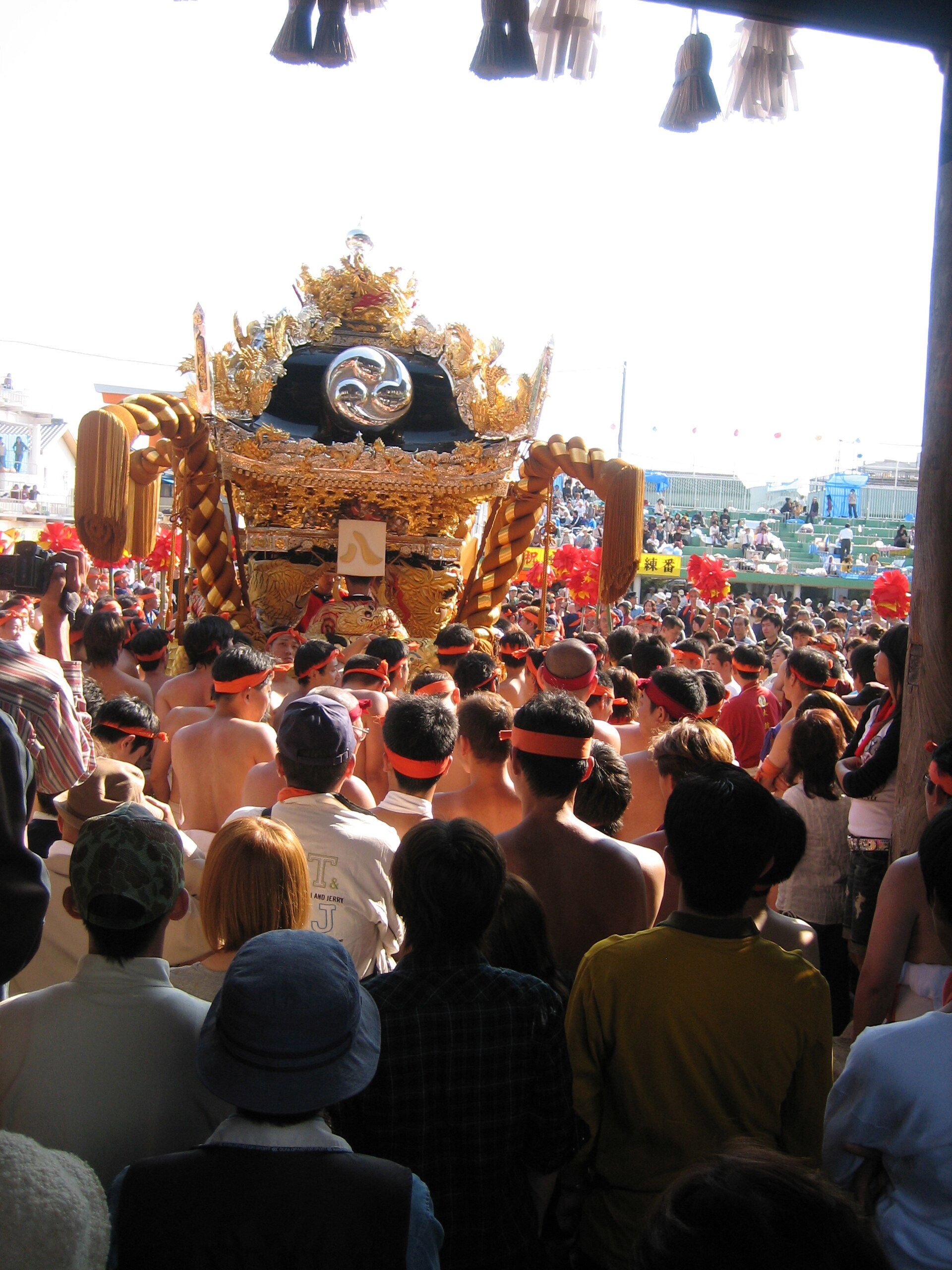
The seven districts of the Nada festival
The parish is made up of seven former villages along the coast in southeast Himeji. These were their 2026 arrival times at the shrine on the eve, from the 2026 timetable:
| District | Japanese | At the shrine (14 Oct 2026) | Through the romon gate | Back out |
|---|---|---|---|---|
| Higashiyama | 東山 | 11:00 | 11:30 | 16:20 |
| Kiba | 木場 | 12:00 | 12:50 | 16:30 |
| Matsubara | 松原 | 12:20 | 13:10 | 13:40 |
| Yaka | 八家 | 13:00 | 13:50 | 16:40 |
| Mega | 妻鹿 | 13:30 | 14:20 | 15:30 |
| Usazaki | 宇佐崎 | 14:00 | 14:50 | 16:00 |
| Nakamura | 中村 | 14:10 | 15:00 | 16:10 |
Each district has its own colours and chants. Pick one float and follow it if you want to make sense of the day.
Nada no Kenka Matsuri schedule, hour by hour
These are the 2026 times. The site stresses they are approximate and the festival runs late when things get heated. Use them as the shape of the 2027 days, not as fixed times.
Day 1: yoimiya (14 October)
- 11:00–14:10 — floats arrive at the shrine front one by one.
- 11:30–15:00 — each float is driven through the romon gate into the grounds. This is the best part of the eve.
- 13:40–16:40 — floats leave the grounds again. JNTO puts the main rituals at roughly 11:00–14:00.
Day 2: honmiya (15 October)
| Time (2026) | What | Where |
|---|---|---|
| about 4:30 | Tsuyuharai — the host district clears the way | Shrine to the Otabi-yama arena |
| about 6:00 | Shio-kaki — purification in the sea | Shirahama beach |
| 8:30–11:40 | Floats arrive at the shrine and enter the gate | Matsubara Hachiman Shrine |
| 11:50–13:40 | Procession leaves for Otabi-yama: priests, mikoshi (12:25), then six yatai at 10–15 minute gaps | Shrine to Otabi-yama |
| Afternoon | Mikoshi clashes and yatai neri in the arena and up the hill | Otabi-yama |
| 16:30–18:25 | Descent from Otabi-yama, one group after another | Otabi-yama |
No separate start time is published for the mikoshi clash itself. Be near the shrine by late morning on the 15th and follow the procession, or be in place at Otabi-yama before it arrives.
Where to watch Nada no Kenka Matsuri (and the sajiki seat question)
There are four places to watch, and only one of them is closed to visitors.
1. The shrine grounds (best on the eve)
On 14 October the action is the floats squeezing through the romon gate. Space fills from the morning. Stand to one side of the gate, not straight in front of it: that is the float’s path.
2. The path up Otabi-yama (main day, free)
Otabi-yama is about 15 minutes’ walk west of the shrine (nadamatsuri.jp). The path up the hill is where you get closest to the yatai as they climb. TANOSU recommends it for general visitors. Good spots go to whoever arrives first.
3. The Hirobatake arena and its sajiki terraces
At the foot of Otabi-yama is the neriba called Hirobatake, a bowl ringed by tiers of permanent sajiki (桟敷) seating. This is where the mikoshi clash on the 15th. You may read about “paid sajiki seats”. We checked: they are not on public sale. The places are passed down through local families and you get in by invitation from a resident (Banshu Autumn Festival Fan Club, Matsuribu). We found no ticket outlet, tour or lottery open to visitors for 2026.
4. The slopes and higher ground around the arena
Free standing room on the slopes around the arena gives you the overview without a seat. Arrive before the procession leaves the shrine at 11:50 to get a decent spot.
Note that there is no official festival website. Matsubara Hachiman Shrine and its parish council don’t run one, and nadamatsuri.jp says it has no connection to either. TANOSU warns about lookalike sites, so don’t pay anyone online for “seats”.
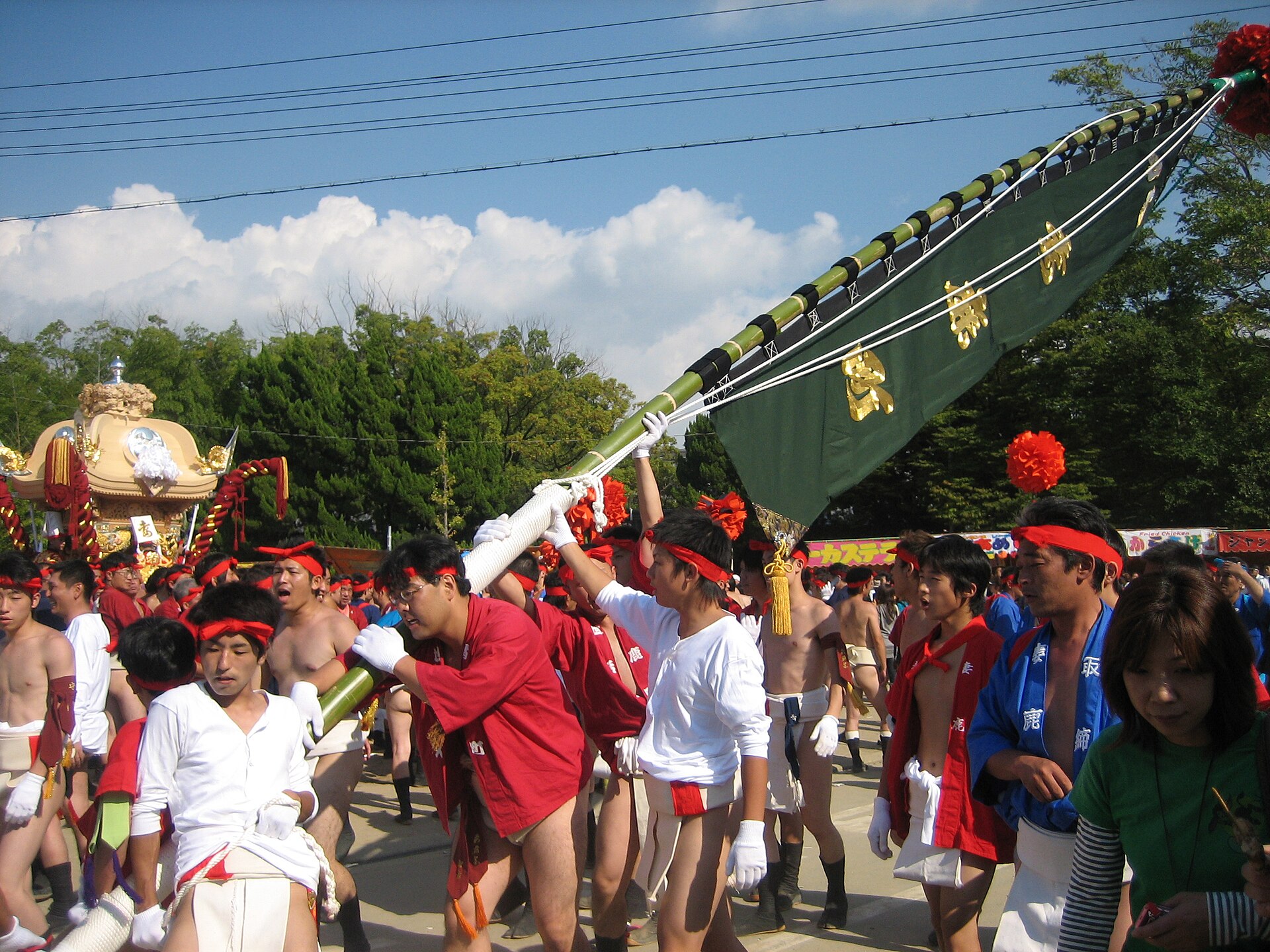
Is Nada no Kenka Matsuri dangerous? Safety rules for spectators
It is a contact festival with heavy wooden structures moving fast through narrow streets and packed crowds. The participants accept the risk. You don’t have to. The local fan club’s advice (source) is short and worth following:
- Never stand with your back to a wall or fence. If a float swings your way you can be pinned.
- Pick a spot you can leave in any direction, and check your exit before the floats arrive.
- Stay out of the float path. The chanting and drums get louder before a float moves. That is your cue.
- Do what the festival stewards say. เดอะ saiten iin carry paper shide streamers. Ask them if you’re unsure where to stand.
- Keep children in reach, and think twice about bringing a pushchair into the shrine grounds or the arena.
- Skip the umbrella. We found no published rain policy for this fixed-date festival. In a crush, a raincoat is safer and blocks fewer views.
Treat the mikoshi clash as something to watch from above, not from the front row.
How to get to Nada no Kenka Matsuri from Himeji and Osaka
Take the train. There is no parking, and the organisers ask everyone to use public transport (nadamatsuri.jp access). Traffic restrictions apply around the shrine on festival days, so don’t plan on a taxi to the door.
| Where to | Station | Walk |
|---|---|---|
| Matsubara Hachiman Shrine | Sanyo Railway Shirahamanomiya (白浜の宮) | 5 min south |
| Otabi-yama (from the station) | Sanyo Railway Shirahamanomiya | 15 min west |
| Otabi-yama (alternative) | Sanyo Railway Mega (妻鹿) | 10 min southeast |
| Otabi-yama (from the shrine) | — | 15 min west |
From Himeji
Walk from JR Himeji to Sanyo Himeji station next door and ride the Sanyo Main Line east towards Kobe. Shirahamanomiya is normally a local-train stop. On festival days the Limited Express and the Direct Limited Express (chokutsu tokkyu) make extra stops there (nadamatsuri.jp). ICOCA and other IC cards work on Sanyo trains; see our IC card guide.
From Osaka and Kobe
The Hanshin–Sanyo Direct Limited Express runs from Osaka-Umeda through Kobe-Sannomiya to Sanyo Himeji, so on festival days you can ride it straight to Shirahamanomiya without changing. The other option is JR to Himeji, then the Sanyo line back east. Trains home on the evening of the 15th are crowded. Leave the arena before the last floats come down if you have a train to catch.
Combine Nada no Kenka Matsuri with Himeji Castle
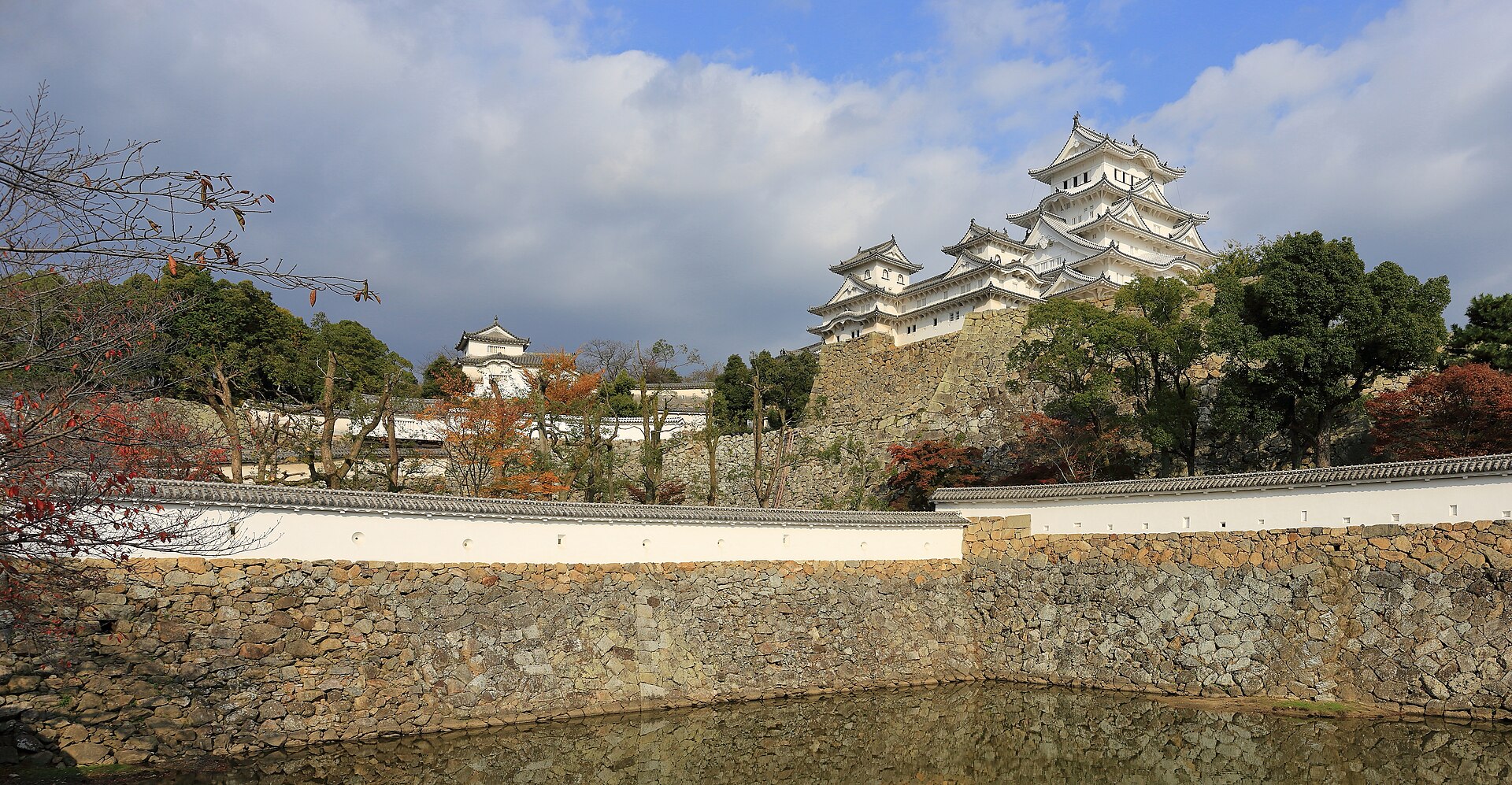
Himeji Castle is a 20-minute walk from JR and Sanyo Himeji stations (official site). It opens 9:00–17:00 with last entry at 16:00 and closes only on 29–30 December (City of Himeji).
Adults (18 and over) pay ¥2,500, Himeji residents ¥1,000, and visitors under 18 get in free. Allow two to three hours for the keep and grounds.
The timetable makes the pairing easy. On the eve, the floats don’t start reaching the shrine until 11:00, so do the castle at 9:00 and take the Sanyo line out for the afternoon. On the main day, do the reverse only if you skip the dawn rites. The castle closes its gates at 16:00, before the descent from Otabi-yama has even started.
A two-day plan for 2027
- Thu 14 Oct, morning — Himeji Castle at opening. Lunch near the station.
- Thu 14 Oct, 12:00–16:30 — Sanyo line to Shirahamanomiya; watch the floats come through the romon gate.
- Fri 15 Oct, 8:30–11:30 — floats entering the shrine again; grab a spot on the procession route.
- Fri 15 Oct, 11:50–18:30 — follow the procession to Otabi-yama for the mikoshi clash and the yatai climbing the hill.
Where to stay for the Nada fighting festival
Stay in Himeji. The Sanyo line gets you from Sanyo Himeji to the shrine without changing trains, the castle is on your doorstep, and the main day starts before dawn. Osaka and Kobe work for the eve as a day trip, but a 4:30 start on the 15th means a very early train.
Both 2027 festival days are weekdays, so hotel pressure should be lighter than at a weekend festival. Book once your dates are fixed anyway: rooms near Himeji station are the obvious choice for anyone seeing both the castle and the festival. Our ryokan guide covers what to expect if you want a traditional inn instead.
What to eat at the festival
Shirahama is a fishing coast, and festival food here goes beyond yakisoba. TANOSU lists konoshiro-zushi (gizzard shad sushi), shako (mantis shrimp) and watari-gani (swimming crab) as the local festival foods, along with amazake and miso dengaku sold by Komatsuya on festival days (TANOSU). Expect cash-only stalls. Carry coins and small notes.
Know before you go
Fixed dates
Always 14–15 October. In 2027 that is Thursday and Friday.
No seats for sale
The sajiki terraces at Hirobatake belong to local families. Anyone selling them online is not official.
No parking
Use the Sanyo line to Shirahamanomiya or Mega. Traffic is restricted on festival days.
Times slip
The published timetable is approximate. Clashes can run long.
Watch from above
Slopes and the Otabi-yama path beat the front row. Keep an exit behind you.
Bring cash
Food stalls and small shops near the shrine rarely take cards.
Other fighting and float festivals in Kansai
If one autumn smash-up isn’t enough, the Kishiwada Danjiri Matsuri in Osaka has four-tonne floats taking corners at a run in September and October. In December, the Chichibu Night Festival near Tokyo hauls lantern-lit floats up a hill under fireworks. Our round-up of festivals still to come in 2026 covers what’s left this year.
Nada no Kenka Matsuri FAQ
When is Nada no Kenka Matsuri 2027?
Thursday 14 and Friday 15 October 2027. The festival is held on 14 and 15 October every year, whatever the weekday. The eve is on the 14th and the mikoshi clash on the 15th.
Can I buy sajiki seats for the Nada fighting festival?
No. The sajiki terraces around the Hirobatake arena at Otabi-yama are passed down in local families and used by invitation. We found no public ticket sale for 2026. Watch for free from the Otabi-yama path or the slopes around the arena.
How do I get to Nada no Kenka Matsuri from Himeji?
Take the Sanyo Railway from Sanyo Himeji to Shirahamanomiya, then walk 5 minutes south to Matsubara Hachiman Shrine. On festival days Limited Express trains stop there too. There is no parking.
Is Nada no Kenka Matsuri safe to watch?
It is safe if you keep your distance. Don’t stand against walls, keep an escape route, stay out of the float path and follow the stewards with paper streamers. Watch the mikoshi clash from higher ground.
What time is the mikoshi clash?
No separate time is published. In 2026 the procession left the shrine for Otabi-yama from 11:50, with the mikoshi at 12:25. The clashes ran through the afternoon, and the descent finished around 18:25.
Can I see Himeji Castle on the same day?
Yes. The castle opens at 9:00 and is a 20-minute walk from Himeji station. On the eve the floats don’t reach the shrine until 11:00, so a morning castle visit fits. Adults pay ¥2,500; under-18s are free.
Who can take part in the fighting?
Only men from the seven parish districts, from high-school age to 45, carry the mikoshi. Visitors watch.
Sources and how we checked
We checked these facts on 23 October 2026 against JNTO, the City of Himeji and Himeji Castle sites, Kobe Shimbun reports on the 2026 festival, and the 2026 timetable on nadamatsuri.jp. There is no official festival website, and nadamatsuri.jp says it has no connection to the shrine. Times are from 2026 and approximate. The 2027 dates follow the fixed 14–15 October rule.
Planning Himeji in October?
Japan Pro can book your Himeji hotel, castle visit and Kansai experiences in English, so you can spend festival day watching, not organising.
Read next
Omizutori 2027: Nara Fire Festival Guide to Torch Times, Crowds and Free Viewing
Awa Odori 2027: Tokushima Dance Festival Guide to Tickets, Free Streets and Joining In
Chichibu Night Festival 2026: Schedule, ¥4,000 Seats and Laview Tickets for 2–3 December
 English
 Japanese
 Chinese (Taiwan)
 Chinese (China)
 Korean
 French
 Italian
 Thai