
Tsuruhashi Osaka Guide 2026: Yakiniku Alley, Market and Koreatown
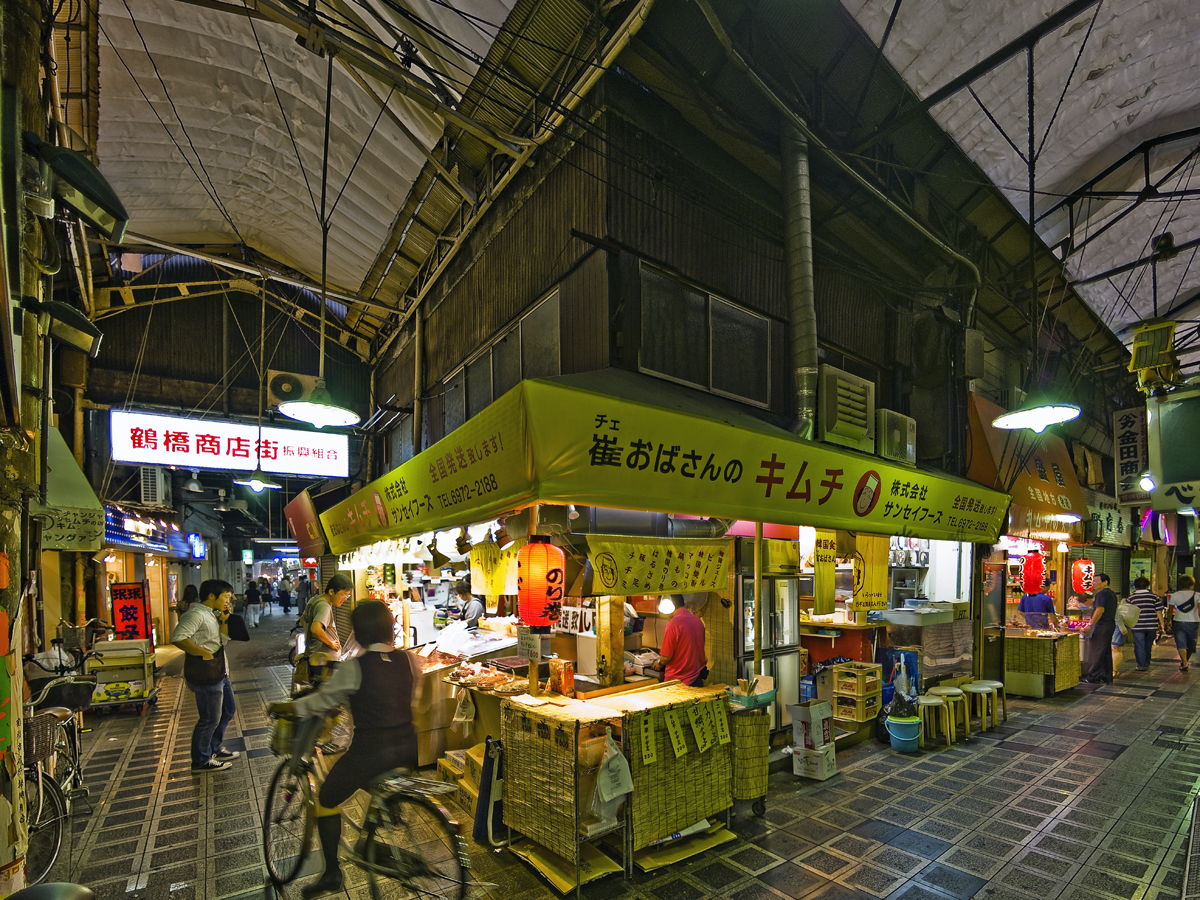
You smell Tsuruhashi before you see it. Step off the JR Loop Line and charcoal smoke from dozens of yakiniku grills drifts up from the alleys under the tracks.
Tsuruhashi is the Osaka station for three things in one walk: grilled beef and offal in the lanes by the station, a postwar covered market of about 800 shops, and Osaka Koreatown on Miyuki-dori, 10 minutes south-east. Come hungry, bring cash, and go in the late morning if you want the market at full swing.
3 lines
JR, Kintetsu, Osaka Metro
~800
Shops in Tsuruhashi Market
10 min
Walk to Koreatown
¥300
Korea Town Museum entry
What is Tsuruhashi, in one table?
Think of Tsuruhashi as three zones in a line, starting at the station and ending in Koreatown. Each has its own best time of day.
| Zone | Where | เหมาะสำหรับ | Best time |
|---|---|---|---|
| Yakiniku alleys | Lanes beside and under the JR and Kintetsu tracks | Grilled beef, horumon (offal), Korean side dishes | Lunch, or an early dinner before the queues |
| Tsuruhashi Market | Covered lanes around the station, mostly south and west | Kimchi, dried fish, Korean groceries, cheap clothing | Morning to just before noon |
| Osaka Koreatown | Miyuki-dori, Momodani, about 10 minutes on foot | Street food, K-beauty, kimchi shops, the history museum | Daytime; museum closes 16:30 |
The Osaka Convention & Tourism Bureau sums the area up as “a famous yakiniku district, shopping streets selling Korean ingredients and cosmetics, and a lively fish market” (OSAKA-INFO). That is a fair description, and it all sits within a 15-minute radius.
How do you get to Tsuruhashi?
Tsuruhashi is a three-way interchange. The JR Osaka Loop Line, two Kintetsu lines and the Osaka Metro Sennichimae Line all stop here (station details). That makes it easy to slot in between Namba and Nara.
| From | Line | Notes |
|---|---|---|
| Namba | Osaka Metro Sennichimae Line | Three stops east, via Nippombashi and Tanimachi Kyuchome |
| Osaka/Umeda or Tennoji | JR Osaka Loop Line | Station JR-O04; the next stops are Tamatsukuri and Momodani |
| Nara | Kintetsu Nara Line | Station A04; one stop from Osaka Uehommachi |
| Osaka Uehommachi | Kintetsu Osaka Line | Station D04 |
For Koreatown you can also use JR Momodani, one stop south on the Loop Line. The tourism bureau puts Miyuki-dori 10 minutes on foot from either station (OSAKA-INFO). An IC card works on all of these lines; see our IC card guide.
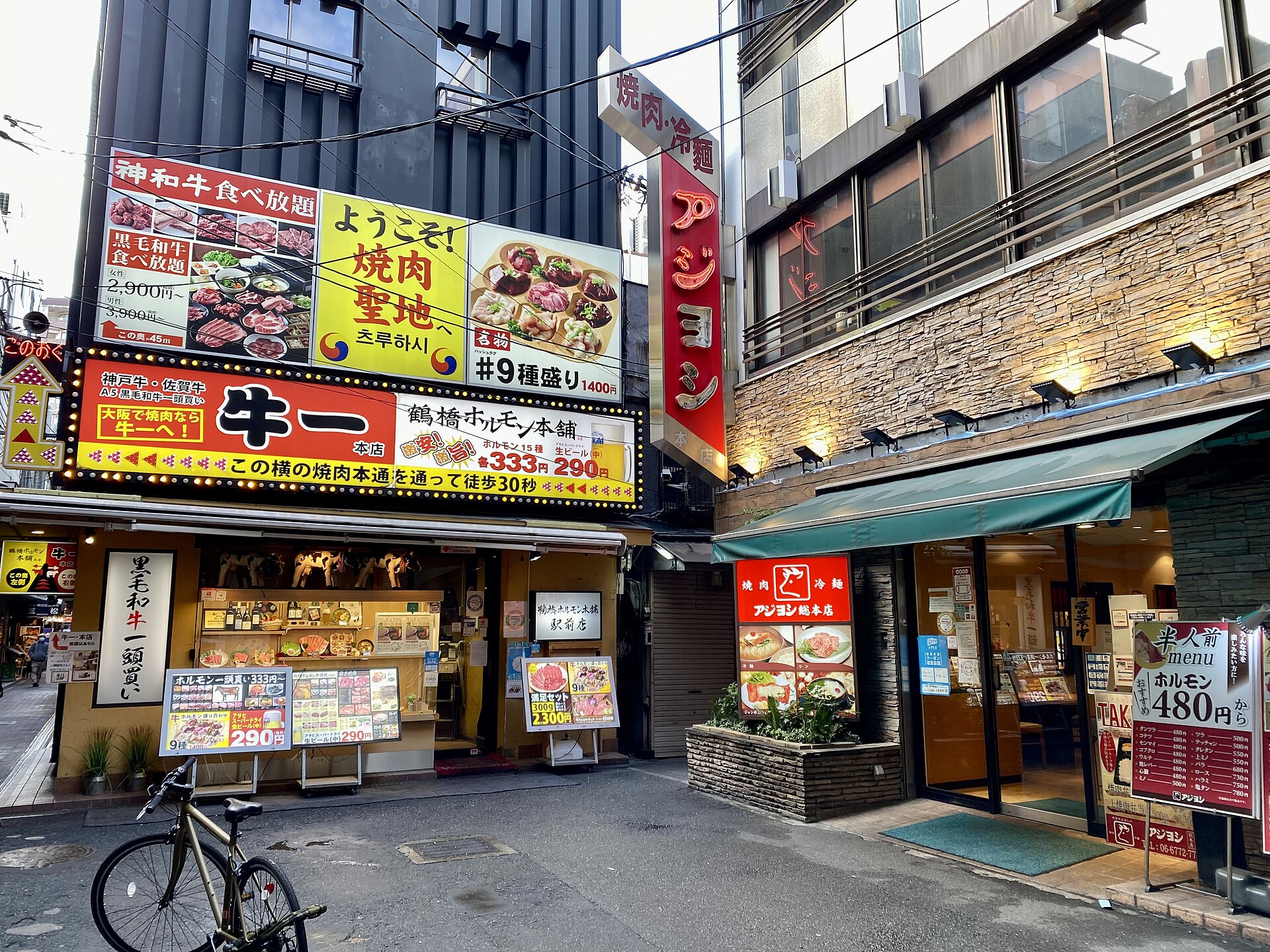
Where is the Tsuruhashi yakiniku alley, and how does it work?
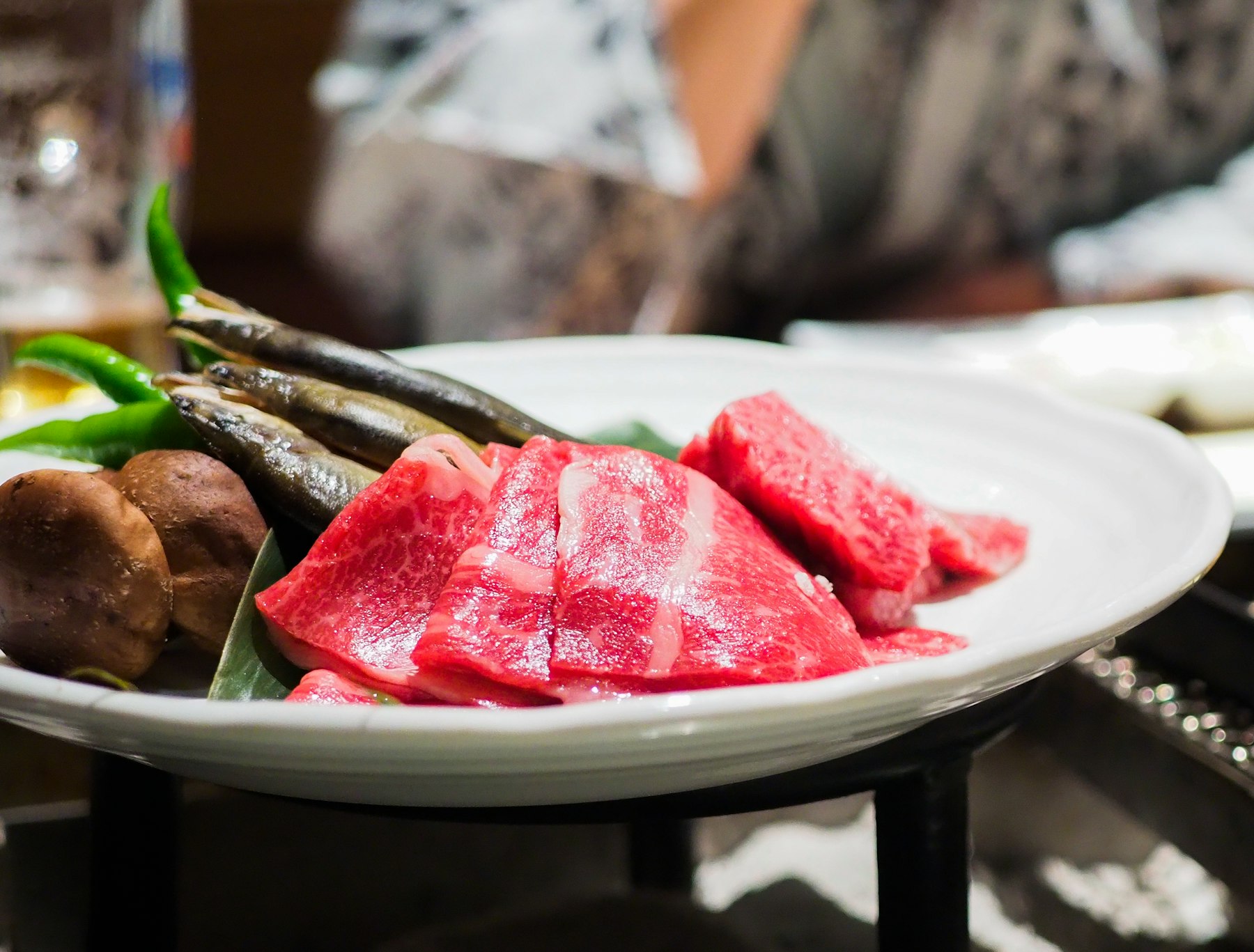
The yakiniku restaurants pack the blocks right beside the station, many of them in the low lanes around and under the elevated tracks. You sit at a table with a charcoal or gas grill set into it, order plates of raw meat, and cook it yourself.
Several names come up again and again in Japanese guidebooks. Tsuruichi (3-3 Shimoajiharacho) is one of the district’s oldest yakiniku houses and is credited with popularising the marinated, pre-sauced style in Osaka (Rurubu). Yakiniku Sora (1-10 Shimoajiharacho) is the horumon specialist known for small, cheap plates and long queues (Mapple).
Opening hours for these places differ between listings, and several change at weekends, so we have not printed them. Check the restaurant’s own page or a map app on the day, and expect a queue at the famous ones on Friday and Saturday nights.
Other long-running names in the same listings: Ajiyoshi (2-2 Shimoajiharacho), focused on fresh wagyu and handmade cold noodles; Hakuuntai by the station, which says it was among the first in Kansai to put stone-pot bibimbap on its menu; and Okura, a charcoal grill tucked under the railway arches (Mapple). None of them needs Japanese to order: most have picture menus or tablets.
How do you choose a yakiniku place in Tsuruhashi?
- Decide beef or offal first. Beef-focused houses sell graded wagyu cuts; horumon specialists sell small, cheap plates of many parts.
- Look at the grill. Charcoal gives more flavour and more smoke; gas is cleaner and common in newer places.
- Count the plates, not the price. Single portions here are often small, which is the point: order four or five kinds and go round again.
- Pace the sauced meat. Marinated karubi and horumon blacken the grill, so cook salted cuts first and ask for a fresh grill plate if it chars.
What should you order?
| Order | มันคืออะไร | How to cook it |
|---|---|---|
| Tan shio | Thin-sliced beef tongue with salt | Order first, before sauced meat dirties the grill; quick on both sides, then lemon |
| Harami | Skirt (diaphragm), technically offal but eats like steak | Medium heat, do not overcook |
| Karubi | Marinated short rib, the Osaka classic | Sweet marinade burns fast; turn often |
| Horumon | Mixed offal: intestine, tripe, heart and more | Long and slow on the edge of the grill |
| Reimen or bibimbap | Cold noodles or rice bowl to finish | No cooking needed |
Most places also serve kimchi, namul and Korean pancakes. If you want help choosing a restaurant or making a booking, our guide to booking restaurants in Japan covers phone-only places and no-shows.
What can you buy at Tsuruhashi Market?
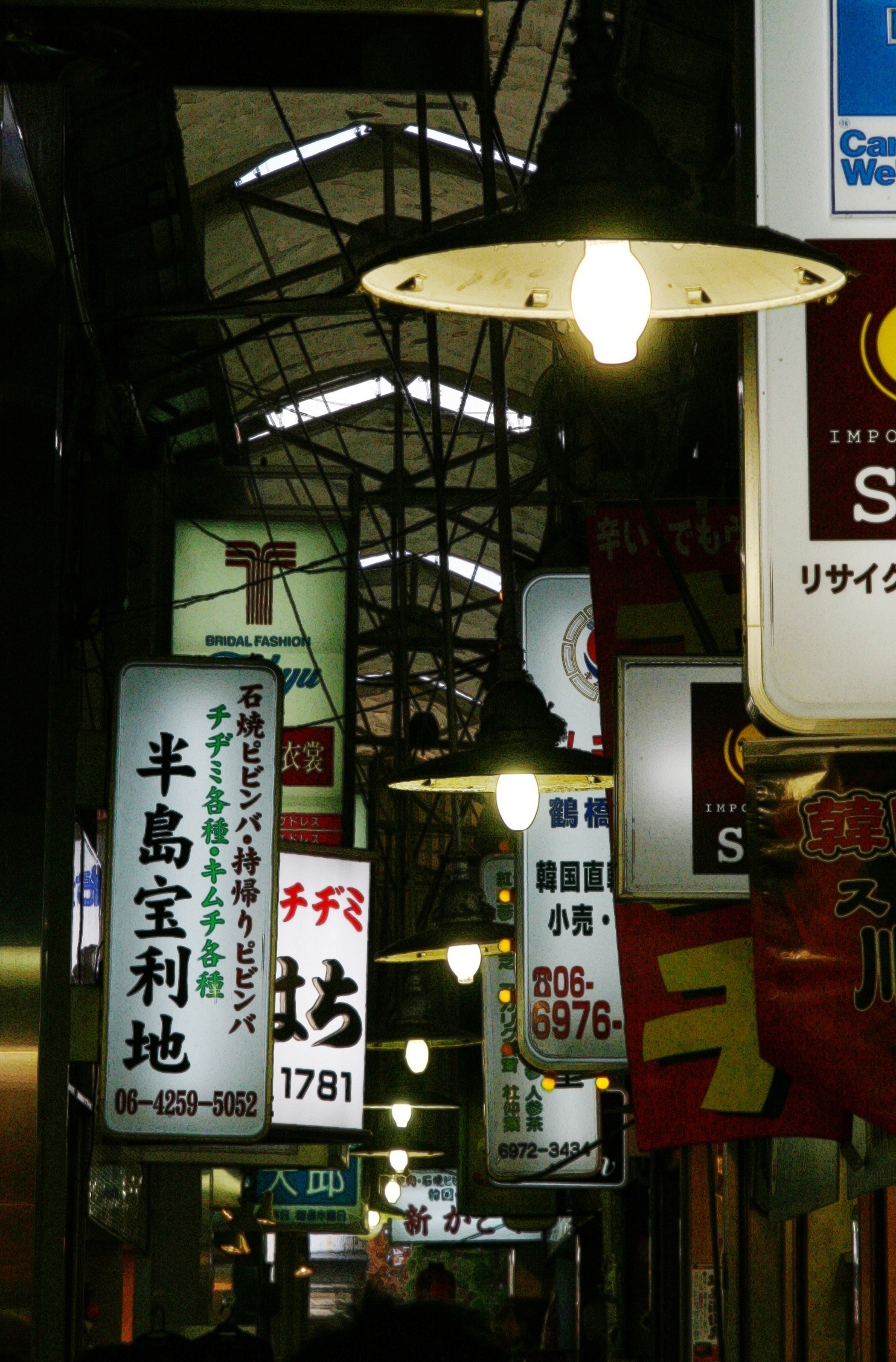
Tsuruhashi Market is not one building. It is six markets and shopping streets with about 800 shops in total, started right after the Second World War, according to the tourism bureau. The lanes are narrow, many are covered, and they wrap around the station on several sides.
- Kimchi and Korean side dishes sold by weight, plus gochujang, rice cakes and Korean snacks.
- Fresh fish and dried seafood, a reminder that this was a wholesale market first.
- Produce, meat and everyday goods for the local kitchen trade.
- Clothing, bedding and, in a few shops, chima jeogori (Korean traditional dress).
There are no market-wide hours. Each shop sets its own opening times and closing days, and the market’s official site is the place to check them. The tourism bureau recommends coming from the morning until shortly before noon, when the market is at its liveliest (COOL OSAKA, July 2026).
Bring cash. Many stalls are small family businesses, and the market is easier to enjoy when you can buy a single pack of kimchi without asking about cards.
Tsuruhashi Market or Kuromon Market?
Both are Osaka food markets, but they serve different people. Kuromon in Namba is about 580 m long with around 150 shops and has turned into an eat-as-you-walk seafood stop for visitors, as we explain in our Namba guide. The Tsuruhashi lanes are bigger, about 800 shops, and still sell mainly to local kitchens.
| Tsuruhashi Market | Kuromon Market | |
|---|---|---|
| Size | About 800 shops in six markets and streets | About 150 shops along about 580 m |
| Main draw | Kimchi, Korean groceries, dried fish, yakiniku next door | Seafood and wagyu grilled to eat on the spot |
| Feel | Working market, narrow mazy lanes | One straight arcade, built for visitors |
| เหมาะสำหรับ | Browsing, take-home food, a yakiniku meal | A quick tasting stroll near Dotonbori |
If you only have time for one and you like markets for what they sell rather than for snacking, pick Tsuruhashi. It is also three subway stops from Namba, so doing both in one day is easy.
How big is Osaka Koreatown, and what is there?
Osaka Koreatown runs along Miyuki-dori in Momodani, Ikuno Ward. The tourism bureau calls it Japan’s largest Koreatown, with about 150 food shops, restaurants and traditional-dress stores along roughly 300 m (OSAKA-INFO). The street began as a postwar informal market and the shopping street in its current form was completed in 1993 (OSAKA-INFO Experience).
The tourism bureau’s Japanese page fills in the story. After the war about 3,000 street vendors gathered around Tsuruhashi Station. In 1984 a “Koreatown” plan, modelled on Chinatowns, was proposed to revive what was then called the Korean market, and the Koreatown name was adopted in 1993 (OSAKA-INFO, Japanese). The street name Miyuki recalls a legend from the ancient chronicles that Emperor Nintoku rested here while visiting immigrant settlers.
เดอะ official Koreatown site lists more than 170 member businesses, including over 20 kimchi specialists and at least five shops selling mushi-buta, steamed pork. Its pitch is that this is a working street where chefs buy ingredients and residents do their shopping, not just a tourist strip.
What to eat on Miyuki-dori
- Kimchi, the street’s signature: many shops let you buy small tubs to try several kinds.
- Steamed pork (mushi-buta), sliced and sold by weight to take away.
- Hotteok (filled sweet pancakes), tteokbokki and gimbap from takeaway counters.
- Korean cosmetics and K-pop goods, which draw a young crowd at weekends.
Sit-down meals around Koreatown
If you want a proper meal rather than snacks, Mapple lists several Korean restaurants on and around the street (Mapple). Shokudo Yamada Shoten (5-5-47 Momodani) is run by a kimchi company, serves kimchi stew as its signature and opens early with a morning menu. Okawari has two branches serving cheap Korean set meals with side dishes and soup. Arirang Shokudo (2-14-9 Tsuruhashi) has served home-style Korean food for more than 20 years. Next door to Yamada, Kudara Rikyu is the upmarket option, grilling black wagyu over charcoal.
Hours are as variable here as by the station, and family-run places close on short notice, so check before you go out of your way for one.
Koreatown asks visitors who eat on the go to be considerate. Litter has been causing trouble for residents, so take rubbish back to the shop where you bought the food, or take it home. There are about 60 security cameras along the shopping area.
Is the Osaka Korea Town Museum worth a stop?
Yes, for 30 minutes to an hour. The museum tells the story of the Korean community in Ikuno, the area once known as Ikaino. It is on Ichijo-dori, about 50 m north of where it crosses the Koreatown main street (official site).
It opened on 29 April 2023 and walks backwards through time in three periods: from 1988 to today, 1945 to 1988, and 1910 to 1945, using photos, charts and video (opening flyer). Themes include how Koreatown formed, Ikuno’s foreign residents, “from conflict to coexistence”, and everyday life and food. One detail sticks: in the 1920s, mail addressed simply to “Ikaino, Japan” is said to have reached the Korean Peninsula, especially Jeju Island.
The opening flyer listed different hours and a Wednesday closure; the current hours on the museum’s website are the ones below.
| Detail | 2026 information |
|---|---|
| Hours | 10:00–16:30, last entry 16:00 |
| Closed | Every Sunday; 28 December–3 January; occasional temporary closures |
| การเข้าชม | ¥300 general (¥200 in groups of 10+); ¥100 university, high-school and younger students; preschoolers free |
| Address | 4-4-11 Momodani, Ikuno-ku, Osaka |
Note the Sunday closure. Weekends are the busiest days on the street, so if the museum matters to you, come on a weekday or Saturday.
Why is Tsuruhashi so Korean?
Ikuno Ward has one of the largest foreign-resident populations in Japan. At the end of December 2025 it had 31,355 foreign residents, 24.52% of its 127,883 registered people, according to Osaka City statistics. In other words, about one person in four.
The old name for this part of Ikuno is Ikaino, and the Korea Town Museum’s 2026 exhibition traced how its “Korean market” became today’s Koreatown. The station market itself grew up right after 1945. Osaka City notes that the population is now more mixed, with students and newer arrivals from places such as China and Vietnam, but the food on the streets is still overwhelmingly Korean.
What should you know before a yakiniku meal?
| Issue | What to do |
|---|---|
| Smoke on clothes | Wear something washable. If the restaurant offers a bag or cover for your coat, use it. |
| Queues | Famous names queue at weekend dinner. Go at opening time, at lunch, or on a weekday. |
| Booking | Small places often take bookings only by phone in Japanese, or not at all. Walk in early instead. |
| Payment | Newer restaurants take cards; older ones and market stalls may not. Carry cash as back-up. |
| Tipping | Do not tip. Thank the staff as you leave. |
| Allergies | Shared grills and marinades make strict allergies hard to manage; carry a written card in Japanese. |
A half-day route from the station
- 10:30 Arrive at Tsuruhashi. Walk the market lanes while the stalls are busiest.
- 12:00 Early yakiniku lunch near the station, before the lunch queue peaks.
- 13:30 Walk about 10 minutes south-east to Miyuki-dori. Snack your way down the street.
- 15:00 Osaka Korea Town Museum (not Sundays; last entry 16:00).
- 16:00 Finish at JR Momodani, or walk back to Tsuruhashi for Kintetsu to Nara or the subway to Namba.
For an evening that keeps going, take the Sennichimae Line back to Namba and follow our Namba Osaka guide. Flying out of Kansai? Our Kansai Airport transfer guide covers the airport lines.
Know before you go
Carry cash
Small market stalls are family businesses; yen in your pocket makes quick purchases easy.
Mornings for the market
The tourism bureau suggests morning to just before noon.
Museum not Sundays
The Korea Town Museum closes every Sunday.
Dress for smoke
Grill smoke clings to clothes; skip your best jacket.
Take your rubbish
Koreatown asks you to return litter to the shop or take it home.
Use Momodani too
JR Momodani is as close to Koreatown as Tsuruhashi.
Tsuruhashi FAQ
How do I get to Tsuruhashi from Namba?
Take the Osaka Metro Sennichimae Line three stops east from Namba to Tsuruhashi.
How far is Osaka Koreatown from Tsuruhashi Station?
About a 10-minute walk south-east. JR Momodani Station is also about 10 minutes away.
What time does Tsuruhashi Market open?
There are no market-wide hours; each shop sets its own. Mornings until just before noon are the liveliest time.
Is Tsuruhashi Market open on Sundays?
Some shops open and some close, because each stall sets its own closing days. Check the official market site for individual shops.
How much is the Osaka Korea Town Museum?
¥300 for adults and ¥100 for students. It is open 10:00 to 16:30 and closed on Sundays.
Why is Tsuruhashi famous for yakiniku?
It sits at the edge of Ikuno, home to a long-established Korean community, and its yakiniku houses grew up around the postwar station market.
Is Tsuruhashi Market better than Kuromon Market?
They are different. Tsuruhashi has about 800 shops selling mainly to locals, with kimchi and Korean groceries. Kuromon has about 150 shops and focuses on seafood to eat on the spot.
Can you eat while walking in Osaka Koreatown?
Yes, but Koreatown asks you to be considerate and to take rubbish back to the shop or home with you.
Sources and how we checked
All facts in this guide were checked between 19 and 21 October 2026 against the linked sources: the Osaka Convention & Tourism Bureau, the official Osaka Koreatown and Korea Town Museum sites, the Tsuruhashi Market site and Osaka City statistics. Restaurant names come from Japanese guidebook listings; their hours vary, so we have left them out.
Eat your way round Osaka with Japan Pro
Book Osaka food tours and experiences with English support through Japan Pro.
 English
 Japanese
 Chinese (Taiwan)
 Chinese (China)
 Korean
 French
 Italian
 Thai