
Sushi Bus Tokyo 2026: Price, Route, Booking and Is It Worth It?
Il Sushi Bus Tokyo is a red open-top double-decker with a real conveyor belt on the upper deck: ¥16,000 gets you about 70 minutes of all-you-can-eat sushi while you loop past Tokyo Tower, Ginza and the Imperial Palace. It started running on 10 October 2026 from Kajibashi Parking Lot, a few minutes’ walk from Tokyo Station, and you book it on the official SUSHI BUS website.
It is brand new, it has only 20 seats, and locals got there first: about 70% of bookings in the first five days came from Japanese customers, Travel Voice reports. Below: the exact times, what ¥16,000 actually buys, rain rules, which seat to pick, and how it stacks up against cheaper open-top buses and a normal kaiten-zushi lunch.
¥16,000
Per person, sushi + 1 drink
70 min
Open-top loop from Tokyo Station
5 a day
11:00, 13:00, 15:00, 17:00, 19:00
20 seats
Book online, no cancellations
Quick answer: Sushi Bus Tokyo at a glance
| What | Details (last checked 17 Oct 2026) |
|---|---|
| Price | ¥16,000 per person, tax included. Same price for everyone aged 2 and over; under-2s ride free on a lap. |
| Premium front seats | 2 seats at the very front of the upper deck. ¥20,000 per person on the official booking page (guaranteed front row). |
| Duration | About 70 minutes, loop tour (no stops, you get off where you got on) |
| Departures | Daily at 11:00, 13:00, 15:00, 17:00 and 19:00. Occasional days off for inspections. |
| Departure point | Kajibashi Parking Lot (鍛冶橋駐車場), 3-8 Marunouchi, Chiyoda-ku, just south of Tokyo Station, about 5 min walk |
| Included | Unlimited sushi + one drink (alcohol included in the choice), plus an onboard staff guide. |
| Seats | 20, all on the open-top upper deck; booths for 2–4 plus the two premium singles |
| Rain | Runs in rain. A transparent roof closes over the deck. |
| Booking | Online only, via sushi-bus.com (tickets sold on Japanticket). No cancellations or changes once booked. |
| Operator | SUSHI BUS Co., Ltd. (株式会社SUSHI BUS), with bus partner WILLER ACROSS |
What is the Sushi Bus in Tokyo?
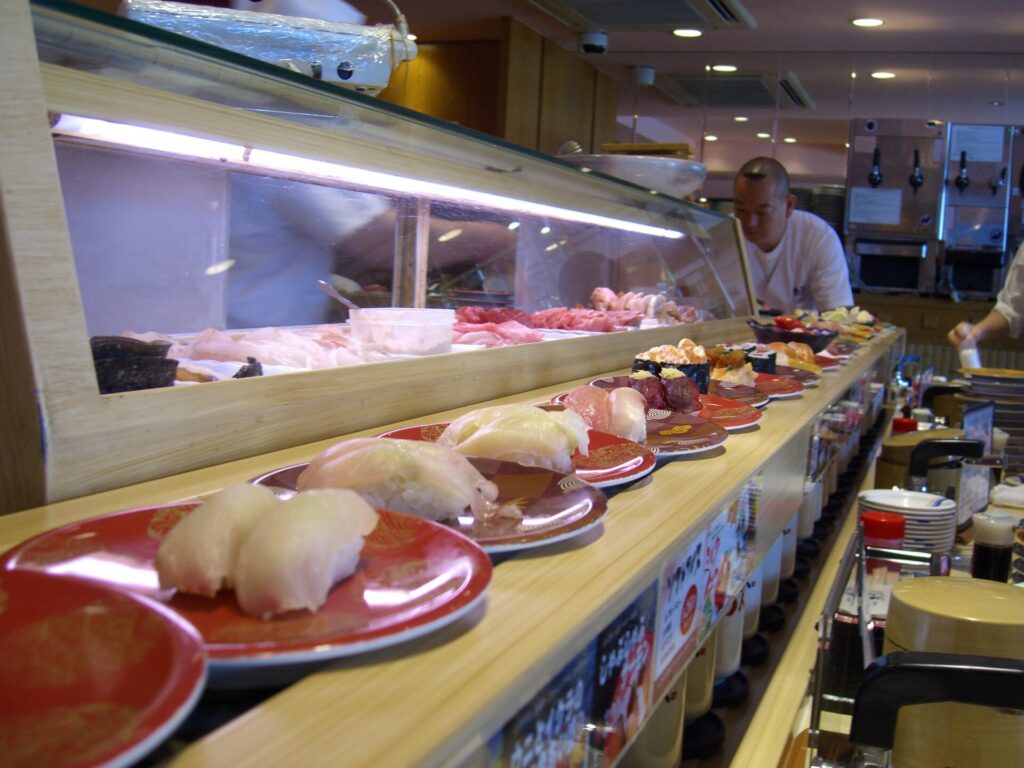
It is a kaiten-zushi (conveyor-belt sushi) restaurant bolted onto a sightseeing bus. The lower deck is a compact kitchen. Staff plate the sushi there, send it up in a small onboard lift, and put it on a lane that runs past every table on the upper deck. You grab what you like as it rolls by, while the city rolls by too.
The company calls it the world’s first sushi conveyor on a bus. We can’t independently verify a “world first”, but we couldn’t find an earlier one either. The bus itself is about 12 m long and 4 m high, wrapped as a giant piece of tuna nigiri, so you will not miss it in the car park. The operator says it spent around two and a half years developing it, and partnered with WILLER ACROSS (bus lease and conversion) and conveyor maker Kitanihon Kako to stop plates flying off under braking, according to the operator’s press release on PR TIMES.
How much is the Sushi Bus Tokyo? Price and what’s included
¥16,000 per person, tax included. The operator says it pitched the price at around US$100 for overseas visitors. There is no child discount: SoraNews24 and MATCHA both report the flat fare applies to everyone aged 2 and up. Under-2s can ride free on a parent’s lap; if you want a separate seat for them, buy a ticket.
What you get for that:
- All-you-can-eat sushi for the whole ride. The operator says 10–15 types of fish per service, bought pre-cut from a Toyosu Market wholesaler. Reviewers sampled tuna, salmon, prawn, squid, octopus, yellowtail, egg, crab and grilled beef nigiri. The menu changes with what’s in season.
- Bigger-than-chain toppings. Chutoro (medium-fatty tuna) slices are 12 g, about 1.5 times a typical conveyor-sushi chain portion, the operator told Rurubu. Time Out Tokyo’s reviewer singled out the chutoro as the highlight.
- Drinks. One drink is included, and it can be alcoholic. Ride reports mention beer, soft drinks and green tea on the list.
- The tour. About 70 minutes past central Tokyo landmarks, with live commentary and music from the onboard crew.
Is ¥16,000 good value for sushi alone? Honestly, no. You can eat very well at a chain like Sushiro from about ¥120 a plate. SoraNews24’s reviewer was full after five plates. What you’re paying for is the format, the views and the story you’ll tell at home. Price it as a sightseeing tour that feeds you, not as a sushi dinner.
Sushi Bus Tokyo times and schedule
| Departure | Back at Kajibashi | Il migliore per |
|---|---|---|
| 11:00 | 12:10 | Lunch, brightest light for photos |
| 13:00 | 14:10 | Late lunch; pairs with a morning at the Imperial Palace East Gardens |
| 15:00 | 16:10 | Golden-hour start in autumn and winter |
| 17:00 | 18:10 | Sunset and city lights (in mid-October Tokyo’s sun sets around 17:00) |
| 19:00 | 20:10 | Full night views: Tokyo Tower lit up, Ginza neon |
The bus runs daily, with irregular days off for vehicle inspections and maintenance. Turn up early: the booking page asks you to arrive at least 20 minutes before departure, and boarding starts about five minutes before the bus leaves.
Where does the Sushi Bus leave from? Kajibashi Parking Lot near Tokyo Station
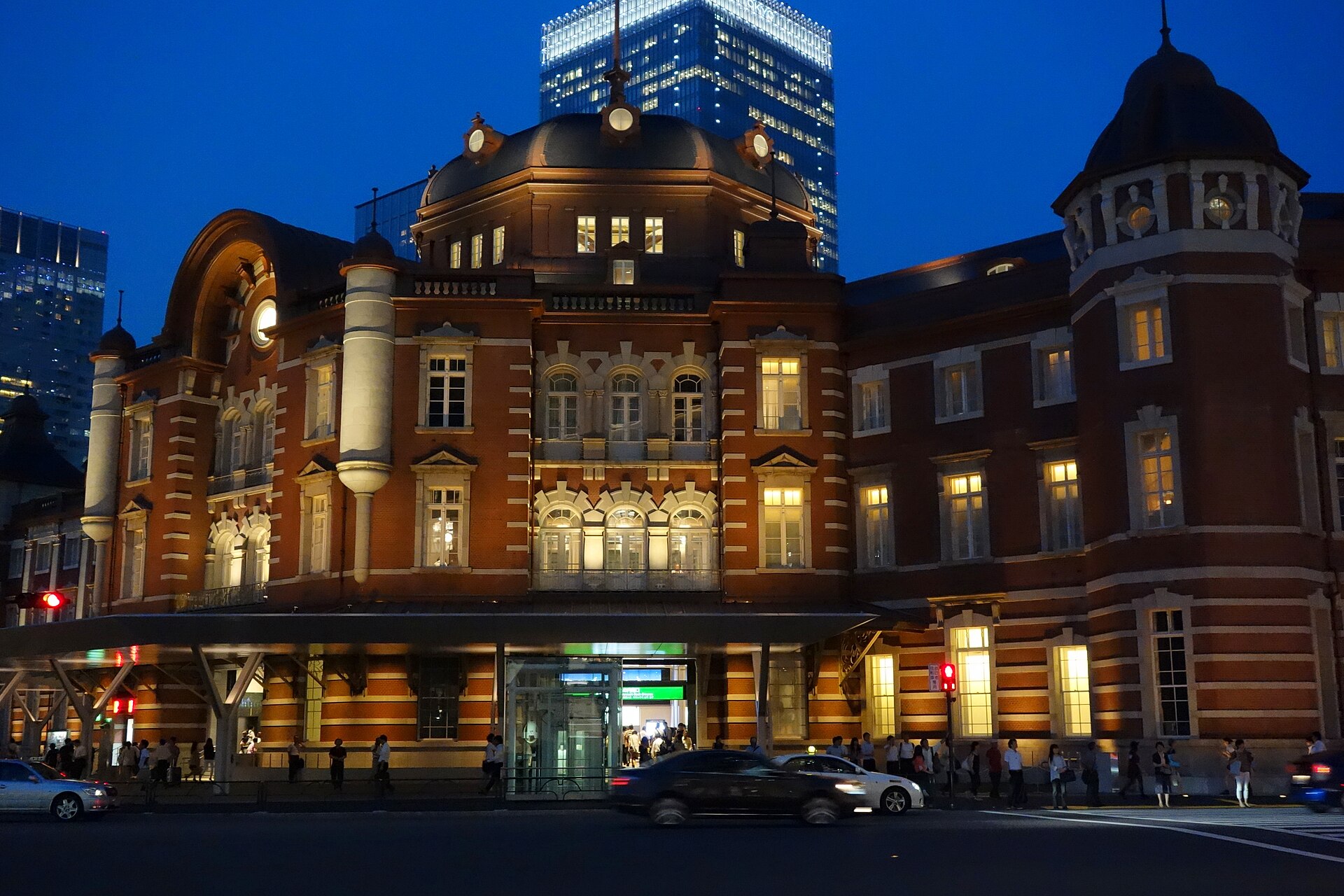
The bus departs from and returns to Kajibashi Parking Lot (鍛冶橋駐車場), the big coach park just south of Tokyo Station (next to the Tokyo International Forum) that long-distance highway buses also use. The address is 3-8 Marunouchi, Chiyoda-ku. The operator says it is a 3–5 minute walk from Tokyo Station.
Our tip: allow 10 minutes if you’re coming from a Yamanote Line platform or dragging a suitcase. Tokyo Station is huge, and the coach park is busy with highway-bus passengers. Search “Kajibashi Parking Lot” in Google Maps rather than “Tokyo Station”. The bus is hard to miss once you’re there.
Sushi Bus route: what will you see?
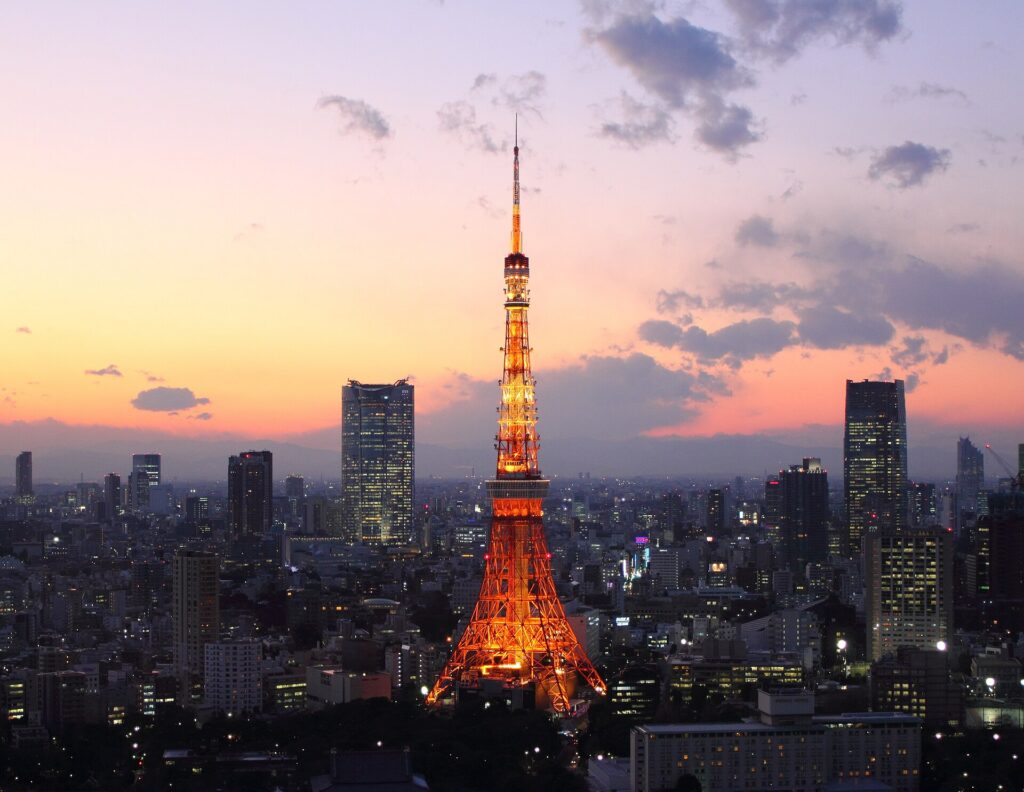
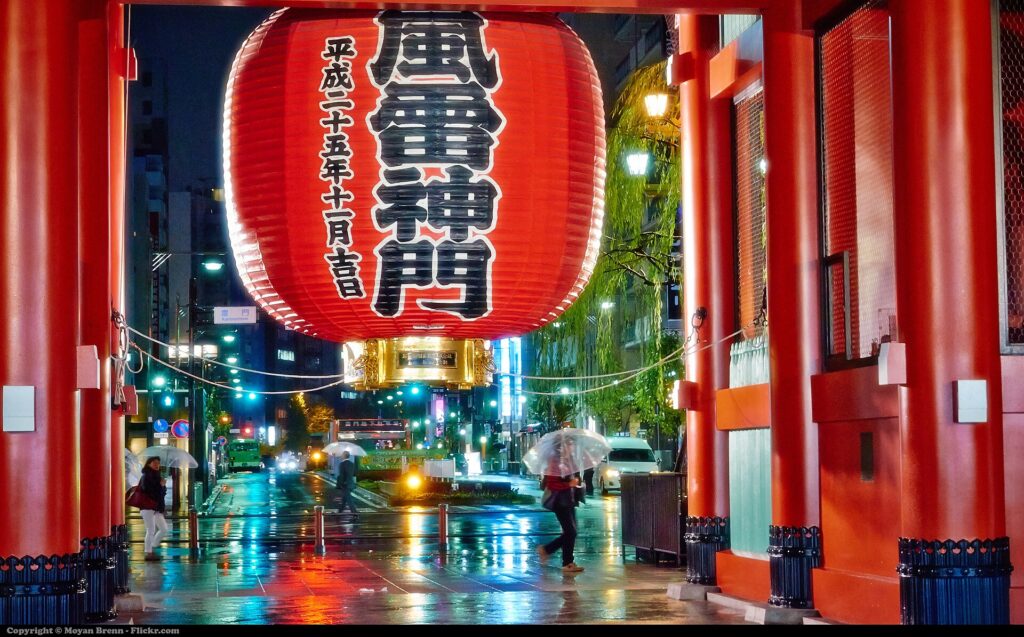
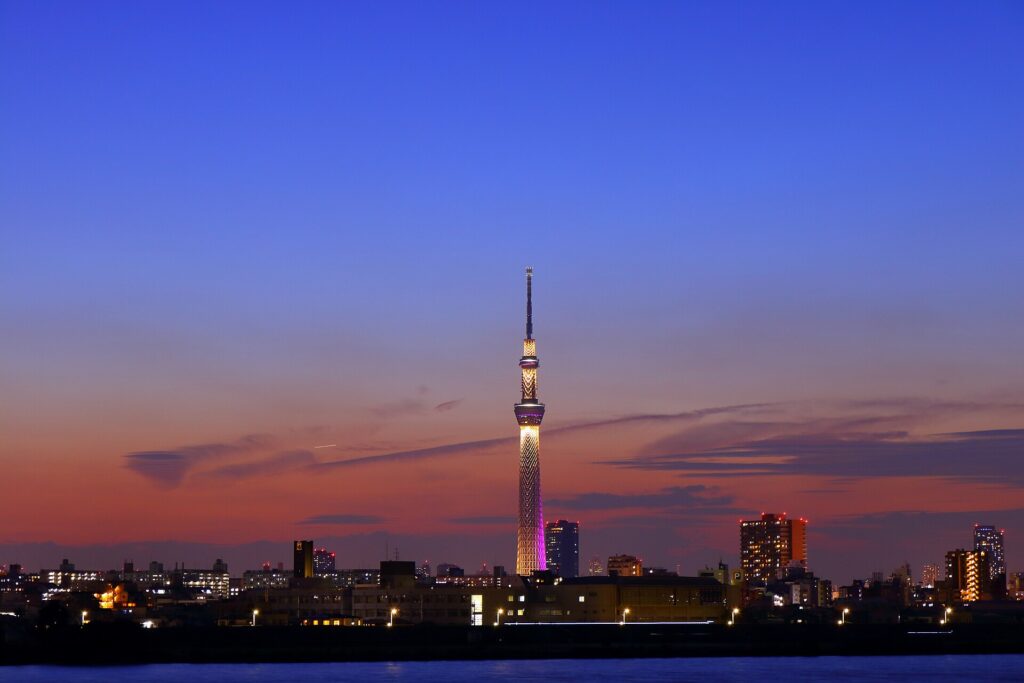
There’s no fixed route. The operator chooses it on the day based on traffic, weather, time and season, and there are no stops. Landmarks named by the operator and by reviewers who rode it include:
- Tokyo Tower
- Ginza (Ginza-dori)
- The Imperial Palace and Marunouchi
- Asakusa’s Kaminarimon Gate and Tokyo Skytree (named by the operator; not on every run)
- The National Diet Building, Shibuya Crossing and Rainbow Bridge (named by the operator; not on every run)
Average speed is around 30 km/h, so you get time to look, but don’t book this expecting to tick off Asakusa, Shibuya and Odaiba in one ride. If a particular sight matters to you, see it properly on foot. Our Guida di Asakusa e first-time Tokyo guide will help.
How to book the Sushi Bus Tokyo
Bookings are online via the official SUSHI BUS website. Reservations opened on 30 September 2026 at 15:00 JST. With 20 seats a run and heavy domestic demand, popular slots (weekends, 17:00, 19:00) are the first to go.
- Book direct. The Reserve button on the official site takes you to the operator’s ticket page on Japanticket. That is the only booking route the operator lists, so treat any other reseller as unofficial.
- Group size. Booths seat 2–4. A group of two will probably share the lane with other parties; four can fill a booth.
- Cancellation policy. There isn’t one: the booking page says cancellations and changes are not permitted once you’ve booked, and tickets are valid only on the date you booked. Be sure of your date before you pay.
- Language. Ride reports say staff speak English and Japanese, and the welcome signage is in English. The official site and the ticket page both have English versions.
Sushi Bus Tokyo in the rain: what happens?
It still runs. A clear roof slides over the upper deck, so you keep the views and stay dry. Because it runs rain or shine and bookings can’t be cancelled, a wet day won’t get you a refund; if a typhoon is forecast, contact the operator, which may change or cancel runs in severe weather.
Our practical weather tips:
- Wind and cold. With the roof open, an evening ride in late autumn or winter will feel colder than street level. Bring a layer.
- Heat. In hot weather the roof may close to protect the fish, Time Out Tokyo notes. Sunglasses and a hat help on the 11:00 and 13:00 runs.
- Low clearances. SoraNews24 reports that overhead bridges and expressways pass very close to the roof. Stay seated, keep your seatbelt on (it’s compulsory while moving) and hold your phone firmly.
- Motion sickness. The operator says none of around 500 test riders had serious motion sickness, but it varies. If you’re prone to it, pick a forward-facing seat and eat steadily rather than fast.
Best seats on the Sushi Bus for photos
- Front premium seats. The two front singles give an unobstructed forward view of the road and skyline. Worth it for a solo traveller or a photographer; less social for couples.
- Booths. You can’t choose a standard seat in advance. In a booth you face your friends across the table with the conveyor beside you. Great for food shots, less so for landmarks behind your head.
- Time of day. 15:00 and 17:00 departures in October–November give you warm light then city lights. The 19:00 run is the one for Tokyo Tower glowing orange.
- Phone strap. Open top, moving bus, chopsticks in one hand: use a strap or a grip.
- Be the attraction. Pedestrians stare and wave. Japanese creators say the bus feels like a new attraction in its own right, and you will end up in other people’s photos.
Dietary notes: allergies, halal, vegetarian, gluten-free
The operator says it caters for a range of dietary needs for overseas guests, and the official site lists halal, gluten-free and vegetarian options. It doesn’t publish menus or allergen handling, so ask ahead.
- Note any allergy (shellfish, fish, egg, wheat, sesame) in the booking form and email the operator in advance at info@sushi-bus.com.
- Remember it’s a small, shared kitchen on a moving vehicle. If you have a severe allergy, the conveyor format means cross-contact is possible.
- Soy sauce contains wheat. If you’re coeliac, ask whether gluten-free soy sauce is provided.
- Vegetarians: ask what non-fish items are on that day’s menu (egg nigiri is common, but beef also appears).
Sushi Bus vs Hato Bus vs Sky Bus vs a normal kaiten-zushi
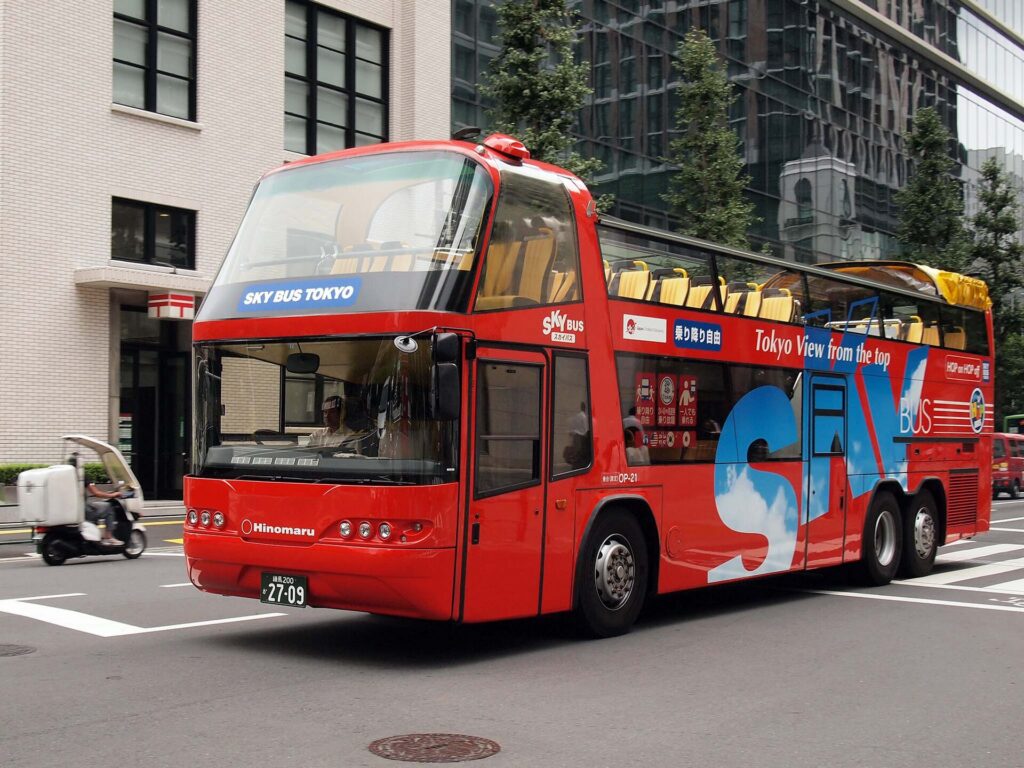
The Sushi Bus is not your only open-top bus in Tokyo, and not your only conveyor-belt sushi. Here’s how it compares, using official prices.
| Option | Price (adult) | Time | Food? | Il migliore per |
|---|---|---|---|---|
| SUSHI BUS | ¥16,000 (premium seats more) | ~70 min | Unlimited sushi + drink | A one-off experience; food lovers |
| Hato Bus TOKYO Panorama Drive | ¥2,200–2,400 (child ¥1,100–1,200) | ~1 hr | No | Cheap open-top sightseeing from Tokyo Station |
| Hato Bus Premium Night Drive | ¥3,400–3,600 | ~2 hr 20 min | No (Tokyo Tower Main Deck entry included) | Night views on a budget |
| SKY BUS TOKYO | Approx. ¥1,600–2,500 depending on course (child ¥600–1,200) | Varies by course | No | Imperial Palace/Ginza or Tokyo Tower/Rainbow Bridge loops from the Mitsubishi Building, Marunouchi |
| Sushiro / Kura Sushi | From ~¥120 a plate at Sushiro | As long as you like | Pay per plate | Cheap, cheerful kaiten-zushi; Kura has big stores in Asakusa, Harajuku, Ginza and Oshiage |
Hato Bus prices are from its official open-top bus page and vary by date. Sky Bus prices come from the Chiyoda City tourism listing; check the live price on skybus.jp for your course. Hato Bus also runs a seasonal ginkgo course (A1305, 7 Nov–5 Dec 2026, not Sundays or 23 Nov) that pairs nicely with our Tokyo autumn leaves 2026 guide.
Our take: If you want sights, a ¥2,200 open-top bus covers more ground. If you want great sushi, you’ll eat better per yen at the fish stalls near Tsukiji or at a proper counter. The Sushi Bus wins only on the combination, and on novelty. That’s a fair thing to pay for once.
What to do before or after the Sushi Bus
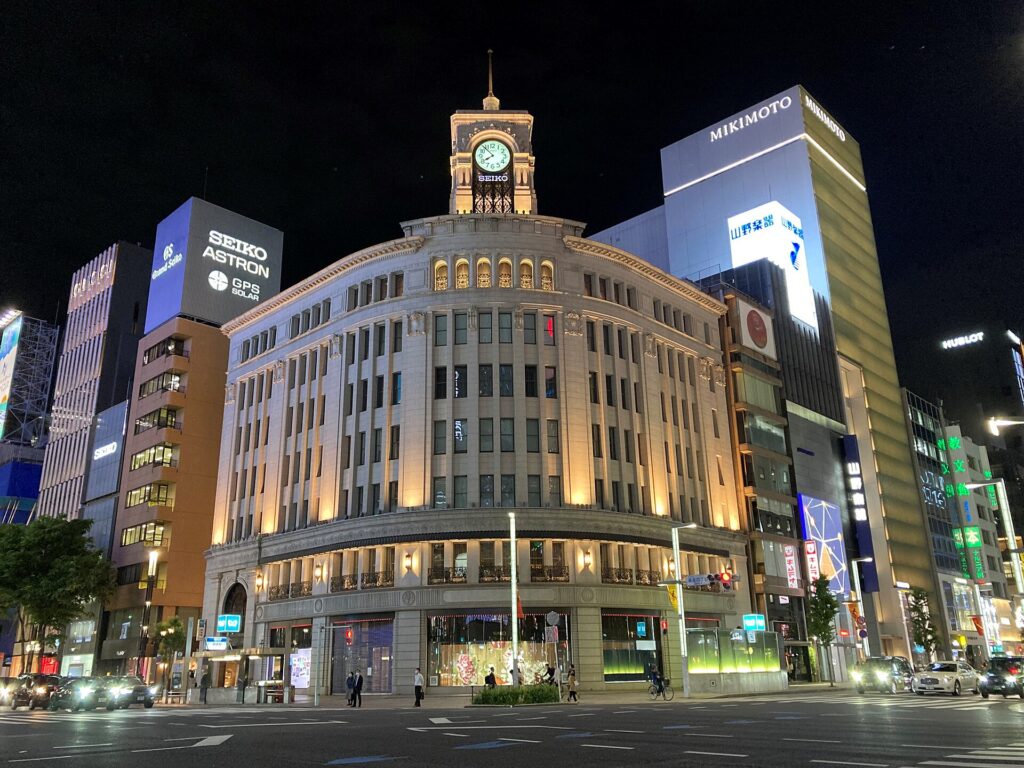
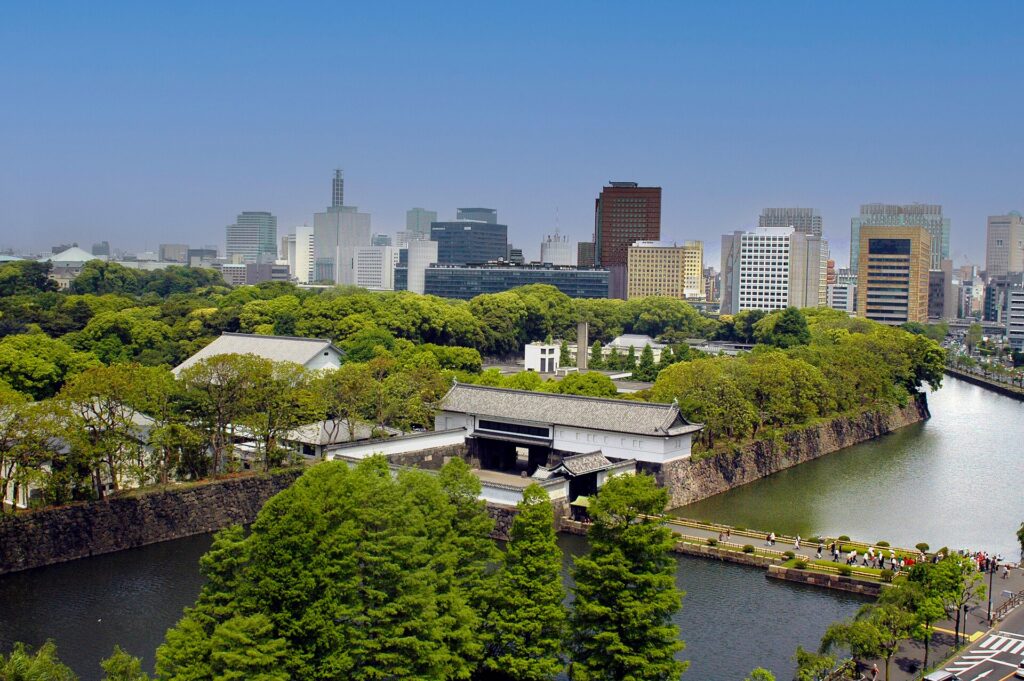
Kajibashi sits between Tokyo Station, Marunouchi and Ginza, so it’s easy to build a half-day around it.
- Imperial Palace East Gardens. Free, about 10–15 minutes’ walk from Tokyo Station via the Otemon Gate. In October it’s open 9:00–16:30 (last entry 16:00) and closed on Mondays and Fridays; see the Imperial Household Agency page.
- Ginza. Walk south from Kajibashi for department stores, Chuo-dori window-shopping and a coffee to settle the sushi.
- Tsukiji Outer Market. A short taxi or subway hop away. Public shoppers are asked to come after 9:00, and many stalls wind down by early afternoon, per the Tsukiji Outer Market official site. Good for a morning snack crawl before an 11:00 or 13:00 ride.
- Toyosu Market. The source of the bus’s fish. Free to visit, roughly 5:00–17:00 depending on the shop, closed Sundays, Wednesdays and holidays plus irregular days; Shijo-mae Station on the Yurikamome line, per GO TOKYO. Go early.
- Tokyo Station itself. The restored red-brick Marunouchi building is at its best lit up after a 17:00 or 19:00 ride. Shopping here? Our Japan tax refund guide explains how to shop tax-free.
Is the Sushi Bus Tokyo worth it?
Yes, if it’s your first trip, you love sushi, you want a memorable one-off and ¥16,000 doesn’t sting. Reviewers who rode it at launch were won over by the smooth service and generous chutoro; one called it a must-do rather than a tourist trap.
Skip it if you’re on a budget, you want top-tier sushi (spend that money at a proper counter instead), or you want to properly see Asakusa and Shibuya. The route isn’t guaranteed, and Time Out Tokyo found most items apart from the tuna fairly ordinary.
Japan is having a moment, which helps explain the buzz. JNTO counted 27.6 million international visitors in January–August 2026 (JNTO statistics), and readers of the UK’s Ultratravel voted Japan “Favourite Country for a Holiday” for the second year running (JNTO announcement, 9 Oct 2026). More visitors means more competition for 20 seats. If you want a specific date, book now.
Sushi Bus Tokyo FAQ
How much does the Sushi Bus in Tokyo cost?
¥16,000 per person including tax, for everyone aged 2 and over. The two front premium seats cost ¥20,000. Under-2s ride free on a lap. Book on sushi-bus.com.
Where does the Tokyo sushi bus depart from?
Kajibashi Parking Lot (鍛冶橋駐車場), about 3–5 minutes’ walk from Tokyo Station. The tour is a loop, so it ends where it starts.
How long is the Sushi Bus tour and what times does it run?
About 70 minutes. Departures are at 11:00, 13:00, 15:00, 17:00 and 19:00 daily, with occasional days off for maintenance.
Is the sushi really all-you-can-eat?
Yes, for the length of the ride. Expect 10–15 kinds of fish plus items like egg and beef. One drink is included, and it can be alcoholic.
Does the Sushi Bus run in the rain?
Yes. A transparent roof closes over the upper deck. Bookings can’t be cancelled or changed, so check the forecast before you book.
Can I book the Sushi Bus in English?
Yes. The official website and its ticket page both have English versions. Staff on board speak English and Japanese, according to SoraNews24’s ride report.
Last checked 17 October 2026. Prices and times can change, so confirm on the official site before you go.
Sources: SUSHI BUS official site; SUSHI BUS booking page (Japanticket); SUSHI BUS press release, 8 Oct 2026 (PR TIMES); SUSHI BUS press release (bookings open); Travel Voice, 16 Oct 2026; Rurubu; Time Out Tokyo review; SoraNews24 ride report; SoraNews24 booking news; Hato Bus open-top tours; SKY BUS TOKYO; Imperial Household Agency; GO TOKYO; JNTO statistics; JNTO.
Make a day of Tokyo's food scene
Food tours, market walks and dining with local hosts, booked direct in your language.
 English
 Japanese
 Chinese (Taiwan)
 Chinese (China)
 Korean
 French
 Italian
 Thai