
New Year in Tokyo 2027: Hatsumode, Countdowns and What’s Open
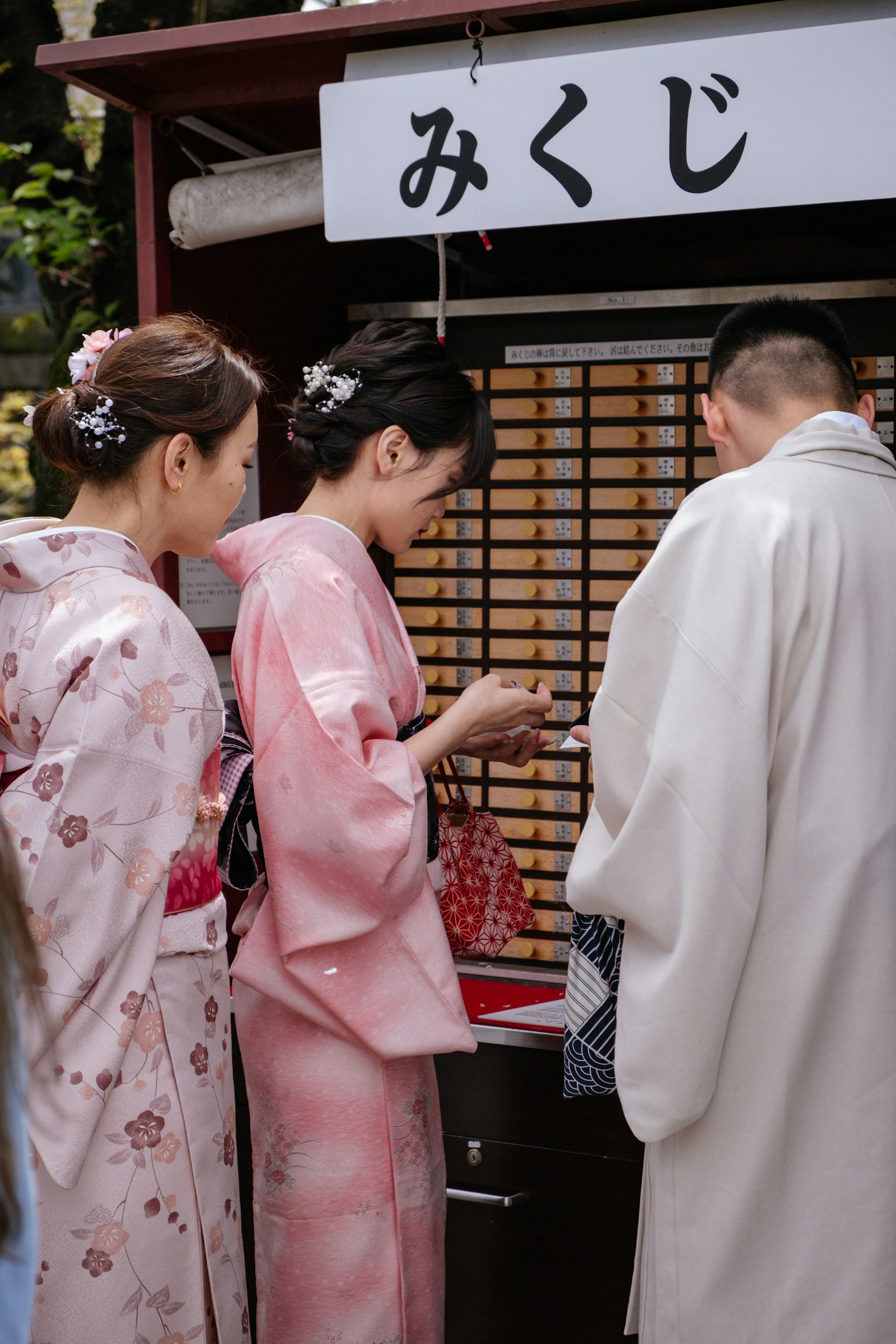
New Year in Tokyo is the city’s biggest holiday, and in 2026–27 it starts with a quiet countdown and ends with millions of people queuing at shrines. The short version: go to a shrine or temple at midnight on Thursday 31 December or early on Friday 1 January, watch the first sunrise at 6:50am, and expect museums, banks and many restaurants to close from about 29 December to 3 January.
6:50am
Tokyo sunrise, 1 Jan 2027
~3 million
Hatsumode visitors at Meiji Jingu
6 years
Shibuya countdown not held
This guide covers 29 December 2026 to 3 January 2027: the six best hatsumode shrines and temples, which trains run all night, countdown events (and the ones that are not happening), bell ringing you can watch or join, first-sunrise spots, lucky bags, the Imperial Palace New Year greeting, food, etiquette and a what’s-open table. Every date is labelled Confirmed (published by the organiser), Expected (based on a fixed rule or last year) or TBA. Many 2026–27 schedules are not out yet; we say so plainly rather than guess. Last checked 17 October 2026.
What happens at New Year in Tokyo?
Japanese New Year (shogatsu) is a family holiday, closer to Christmas in Europe than to a party night. The big moments are:
- 31 December (Thu), evening: toshikoshi soba (year-crossing noodles), then joya no kane, the 108 bell strikes at Buddhist temples around midnight.
- Midnight: shrines open for hatsumode, the first visit of the year. The queues start well before.
- 1 January (Fri), 6:50am: hatsuhinode, the first sunrise (National Astronomical Observatory of Japan).
- 1–3 January: sanganichi, the first three days. Families eat osechi, shops open for hatsuuri (first sales) and sell fukubukuro lucky bags.
- 2 January (Sat): the Imperial Palace New Year greeting (Expected, see below).
Is there a Shibuya countdown for New Year’s Eve 2026?
Status: TBA — plan on no. The official Shibuya scramble crossing countdown event was last held for 2019–20. In December 2025 Nikkei reported it was off for a sixth year in a row, citing crowd-crush risk. As of 17 October 2026, Shibuya ward has not announced its 2026–27 plans, and its recent moves point one way: for Halloween 2026 it is fencing off the Hachiko statue and running about 185 security guards (Shibuya Keizai Shimbun, 30 Sept 2026).
Two rules already apply. Street drinking around Shibuya Station is banned every night, 18:00–5:00, under an ordinance in force since October 2024. And last year (2025–26) the area around the Hachiko statue was fenced off until about 1:00 on 1 January, with convenience stores asked not to sell alcohol at night (Shibuya Keizai Shimbun). People still turn up at the crossing at midnight. There is no stage, no screen countdown and no drinking. If you want a party, book a club or hotel event instead.
Where can you count down to 2027 in Tokyo?
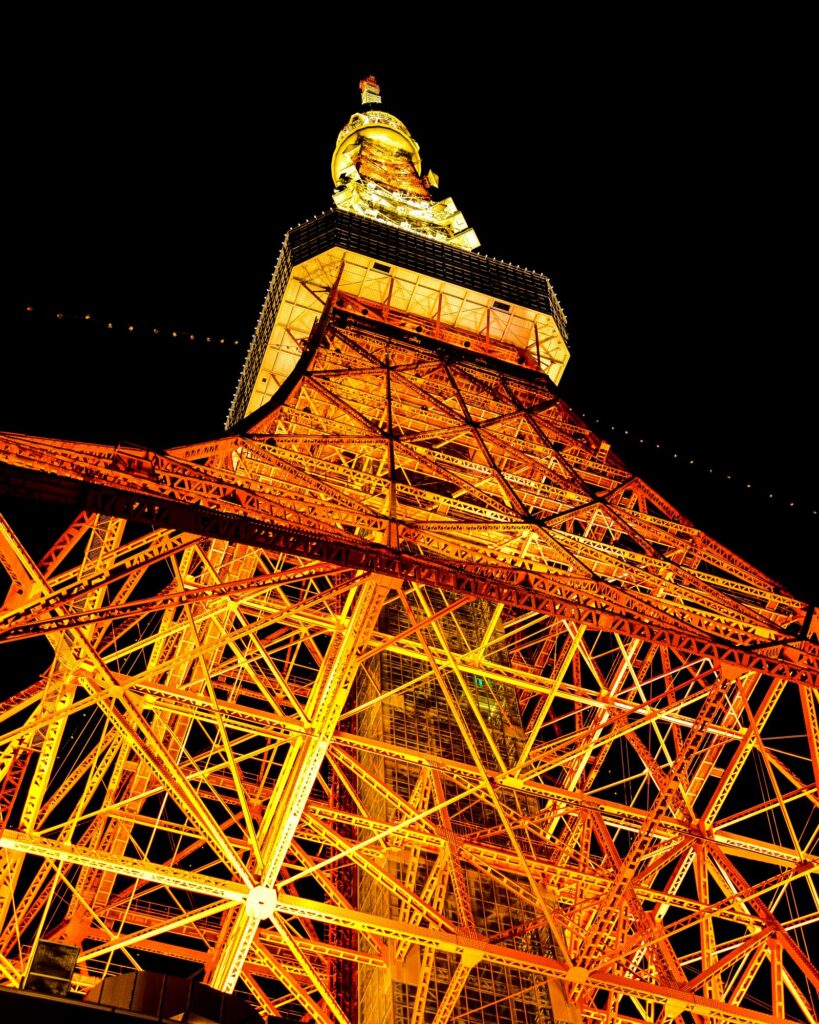
- Zojoji Temple (Shiba): the closest thing to a public countdown. The bell rings at midnight with Tokyo Tower lit up behind the temple. See the Zojoji entry below for bell tickets.
- Tokyo Disney Resort: not this year. The resort has confirmed that “New Year’s Eve” will not be held at Tokyo Disneyland or Tokyo DisneySea on Thursday 31 December 2026 (official calendar). Both parks are expected to open as usual; check the December calendar for hours.
- Clubs: Shibuya and Roppongi clubs run ticketed countdowns. Last year WOMB charged ¥6,000 in advance and WWW ran a 24-hour party from ¥3,300 (MATCHA listing, 2025–26). 2026–27 line-ups are TBA.
- Hotels: many luxury hotels sell New Year’s Eve dinner and countdown packages from November. These sell out; book by early December.
💡 Japan Pro Tip: A good New Year’s Eve in Tokyo is a long dinner, soba before midnight, then a temple bell. We can book a New Year’s Eve dinner course with a table near Zojoji or Asakusa so you walk straight to the bell. See New Year experiences.
Best hatsumode shrines and temples in and near Tokyo
Hatsumode is the year’s first visit to a shrine or temple. Most people go between midnight and 3 January; any visit in early January still counts. Here are the six worth your queue time, from busiest to most relaxed day trip.
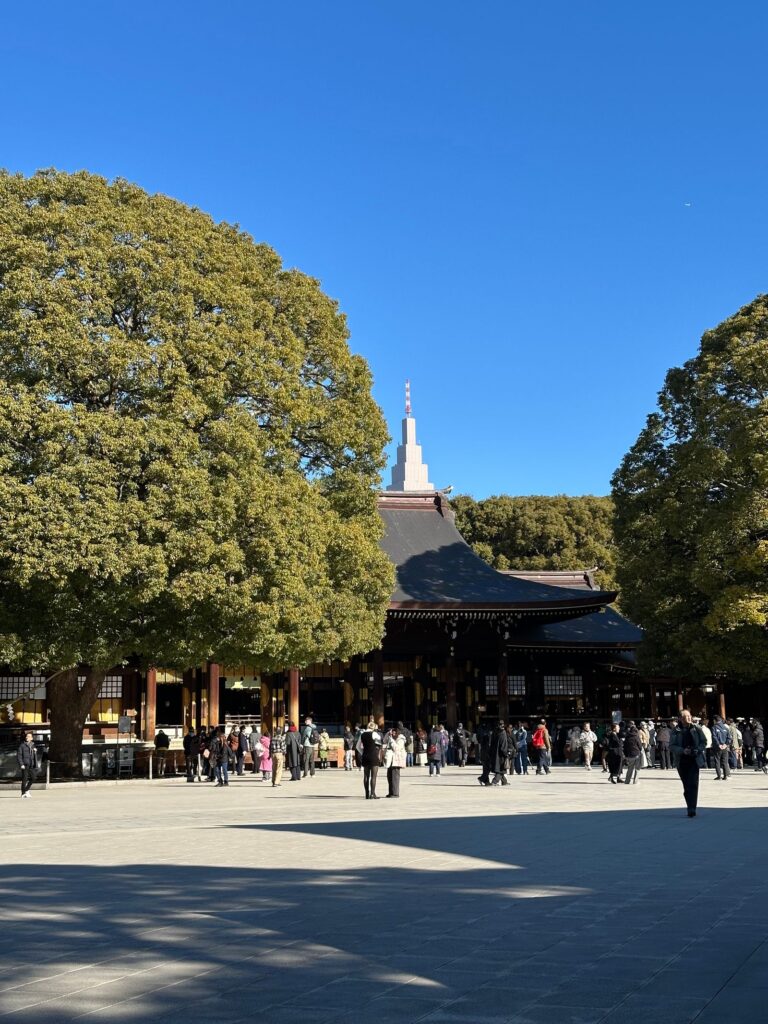
1. Meiji Jingu (Shinto shrine)
The Lowdown: Japan’s busiest hatsumode spot, with about 3 million visitors over the New Year period (JNTO). The shrine stays open through the night on 31 December. At peak times the wait can be over three hours.
Where: 1 min from JR Harajuku Station or Meiji-jingumae Station (Chiyoda and Fukutoshin lines).
The Vibe: A huge, orderly crowd moving through a forest. Food stalls line the approach.
Price: Free. Omamori charms and omikuji fortunes cost extra.
Hours (Expected): Last year: 31 Dec 6:40–midnight, then open through to 18:30 on 1 Jan; 2–3 Jan 6:40–18:00 (2025–26 hours, as reported by ActivityJapan). Normal January gates are 6:40–16:20 (official). 2026–27 hours are not published yet.
Official Link: meijijingu.or.jp
💡 Japan Pro Tip: The worst times are 22:00 on 31 Dec to 3:00 on 1 Jan, and from 10:00 on 1–3 Jan. Go at 7:00 on 2 or 3 January, or any day from 4 January, and you will walk straight in.
2. Senso-ji (Buddhist temple)
The Lowdown: Tokyo’s oldest temple, with Nakamise shopping street as the approach. At midnight the bell at Benten-yama is struck and the crowd cheers; the 108 strikes take about 40 minutes and are rung by the temple’s Hyakuhachi-kai members, so you watch rather than ring (Senso-ji). The New Year service (shushoe) runs 31 Dec–6 Jan in the main hall.
Where: 5 min from Asakusa Station (Ginza, Asakusa and Tobu lines).
The Vibe: Loud, festive and packed, with incense smoke and stalls.
Price: Free. Omamori and omikuji cost extra.
Hours: The main hall normally opens 6:30–17:00 from October to March. Midnight access on 31 Dec is a long-standing tradition, but the temple has not published 2026–27 times (Expected).
Official Link: senso-ji.jp
💡 Japan Pro Tip: Go after dark on 2 or 3 January. The pagoda is lit, the queue is shorter and Nakamise stalls are still trading. Then read our Asakusa guide for dinner.
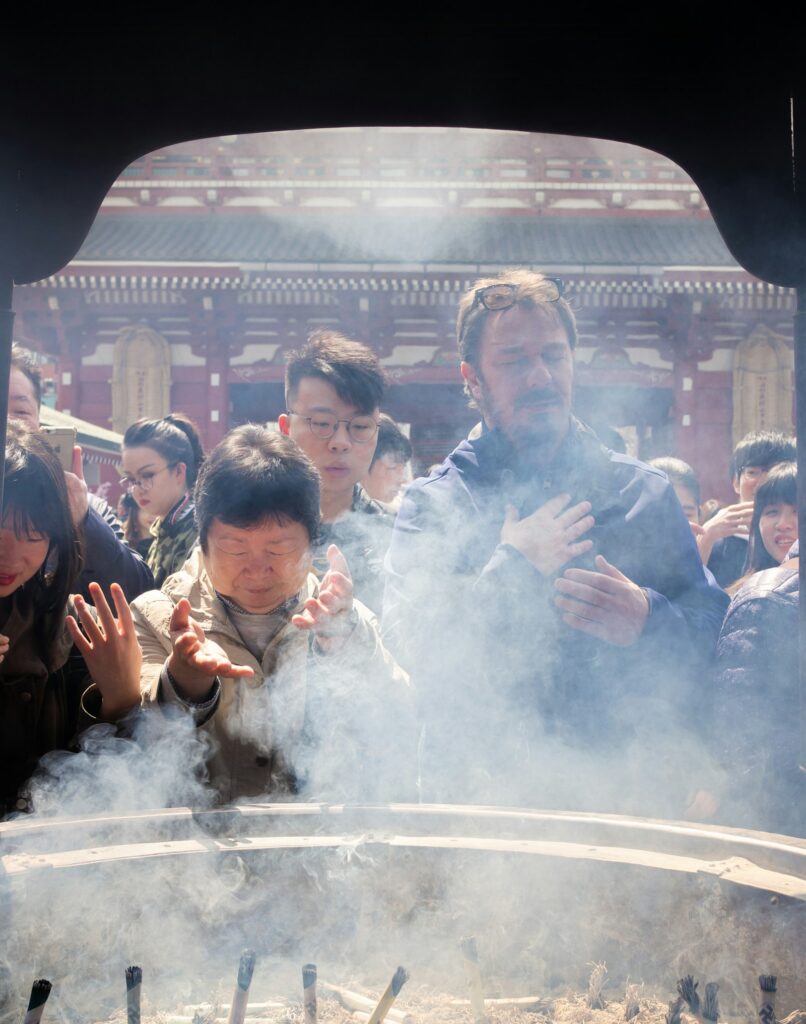
3. Kanda Myojin (Shinto shrine)
The Lowdown: The 1,300-year-old guardian shrine of central Tokyo, next to Akihabara, so the charms come with anime tie-ins. The gates open at midnight (Time Out, 2025–26; Expected for 2027). After the holiday, Tokyo office workers come in company groups to pray for business, so the first working days get busy too.
Where: 5 min from Ochanomizu Station (JR, Marunouchi line) or 7 min from Akihabara.
The Vibe: Compact, colourful and urban.
Price: Free to visit. Formal prayers (shoden sanpai) are paid.
Official Link: kandamyoujin.or.jp
💡 Japan Pro Tip: Online bookings for New Year 2027 formal prayers inside the hall are open now and close at 17:00 on Friday 27 November 2026 (per the shrine’s booking notice; check the official site before you rely on it). It is the easiest way to see the inside of a working shrine.
4. Zojoji (Buddhist temple)
The Lowdown: The temple with the Tokyo Tower view, and the one place in Tokyo where you can ring a New Year’s Eve bell yourself. Ringing starts at midnight with the head priest; visitors then ring in groups of four with a kanetsuki ticket. Last year tickets cost ¥2,000 (with a souvenir), were limited and went on sale on 1 December at the temple office (Zojoji). Old charms are burned at 23:00 and the New Year service begins at midnight.
Where: About 5 min from Daimon Station (Asakusa and Oedo lines) or 10 min from JR Hamamatsucho.
The Vibe: The best countdown photo in Tokyo.
Price: Free to visit. Bell ticket ¥2,000 last year (2026–27 price TBA).
Hours (last year): Main hall open all day 31 Dec through to 17:30 on 1 Jan, then 6:00–17:30. The charm counter ran 22:00 on 31 Dec to 18:00 on 1 Jan. Last year the main Sanmon gate was closed to foot traffic from 19:00 on 31 Dec to 17:00 on 4 Jan for renovation, so use the side entrances.
Official Link: zojoji.or.jp
💡 Japan Pro Tip: What about the New Year balloon release? Zojoji’s published New Year programme does not include one, so do not plan your night around it. Do plan around Tuesday 1 December 2026, the Expected first day of bell-ticket sales: tickets go fast and must be bought in person.
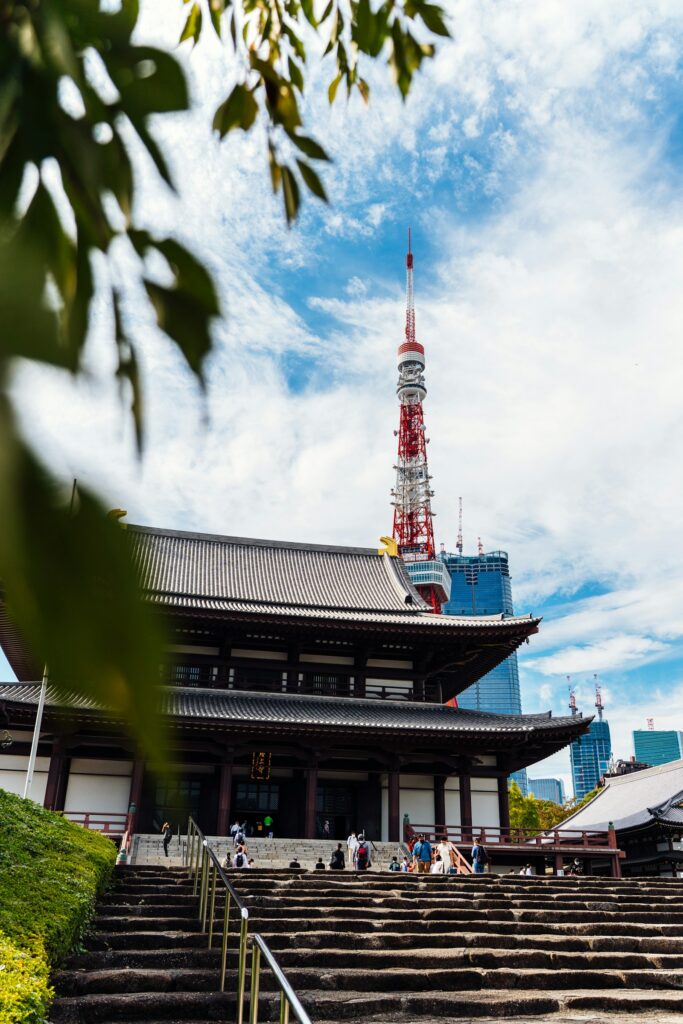
5. Kawasaki Daishi (Buddhist temple, day trip)
The Lowdown: One of the Kanto region’s biggest New Year draws, on the Keikyu line between Tokyo and Yokohama. The New Year fire ritual (ganchō ōgoma-ku) starts at 0:00 on 1 January in the main hall as the bells ring (official). The Nakamise approach is lined with traditional sweet shops.
Where: 8 min from Kawasaki-Daishi Station. Take Keikyu to Keikyu Kawasaki, then the Daishi line (change at Shinagawa from Tokyo).
The Vibe: Smoke, drums and serious crowds. The temple says reception moves to the Fudo Hall when the main hall is full.
Price: Free. Goma prayers paid.
Official Link: kawasakidaishi.com
💡 Japan Pro Tip: Keikyu did not run all night last year, but it added Daishi line trains on 1–3 January. Go on the 3rd in the afternoon and pair it with Haneda if you are flying out (see our Haneda layover guide).
6. Naritasan Shinshoji (Buddhist temple, day trip)
The Lowdown: A huge temple complex near Narita Airport that receives over 10 million visitors a year (official), with New Year as the peak. It is recruiting New Year staff from 31 December 2026 to 31 January 2027, which tells you how long the rush lasts. The Omotesando street is lined with eel restaurants.
Where: 10 min from JR or Keisei Narita Station (Keisei runs direct from Ueno).
The Vibe: Grand, hilly and old-fashioned.
Price: Free. Goma prayers paid.
Official Link: naritasan.or.jp
💡 Japan Pro Tip: Last year Keisei ran all night between Keisei-Ueno and Keisei-Narita, and JR ran four overnight Chiba–Narita trains. If you have a flight from Narita on 1–3 January, stop here on the way with your luggage in a station locker.
Which trains run all night on New Year’s Eve in Tokyo?
Status for 2026–27: Expected. We found no operator announcement as of 17 October 2026. JR East announced last year’s in its winter extra-trains release on 17 October 2025 (18 October in 2024), so expect news any day now. This is what ran on 31 December 2025 into 1 January 2026 (JR East; Tetsudo Channel round-up):
| Line | Section | Overnight (2025–26) |
|---|---|---|
| JR Yamanote | Full loop | About 1:00–5:00, every 10–25 min |
| JR Keihin-Tohoku/Negishi | Sakuragicho–Omiya | About 1:00–4:00, every 15–70 min |
| JR Chuo-Sobu Local | Mitaka–Chiba | About 0:20–4:40, every 15–120 min |
| JR Chuo Rapid | Mitaka–Takao | About 0:50–4:30, every 40–120 min |
| JR Yokosuka | Yokohama–Zushi | About 1:00–5:00, every 80 min |
| JR Sobu/Narita | Chiba–Narita | 4 trains only |
| Keio | Shinjuku–Takaosanguchi | All night |
| Keisei | Keisei-Ueno–Keisei-Narita | All night |
| Tokyo Metro | All lines | No overnight trains, no later last trains |
| Toei Subway, Odakyu, Seibu, Tobu, Tokyu, Keikyu | — | No overnight trains (Tokyu and Keikyu added some late or early trains) |
Tokyo Metro has not run New Year’s Eve all-night trains since the 2019–20 season and ran its weekend timetable from 30 December to 3 January last year (Mynavi News). That matters: Senso-ji, Kanda Myojin and Zojoji are subway destinations. Check the JR East and Tokyo Metro sites in December.
Where can you ring the New Year bell (joya no kane) in Tokyo?
- Zojoji: ticketed, ¥2,000 last year, sold from 1 December in person. The best option for visitors.
- Tsukiji Hongwanji: limited numbered tickets for the first visitors on the night (JNTO). 2026–27 details TBA; check tsukijihongwanji.jp in December.
- Senso-ji: watch only. Rung by the temple’s own bell society from midnight for about 40 minutes.
- Smaller temples: Time Out reported free tickets at Ikegami Honmonji (600 groups, from 23:00) and paid ringing at Gohyaku Rakanji last year. Treat these as TBA.
Where to see the first sunrise (hatsuhinode) near Tokyo
Sunrise in Tokyo on Friday 1 January 2027 is 6:50am (Confirmed, NAOJ). Be in position by 6:20; the sky is already bright.
- Mt Takao: the classic. Keio ran all night to Takaosanguchi last year and JR Chuo Rapid ran overnight to Takao. The summit gets very crowded and pre-dawn temperatures are near freezing, so dress for it.
- Musashi-Mitake Shrine (Okutama): JR replaced the Ome line’s all-night service last year with special “Musashi-Mitake Hatsuhinode” rapid trains from Tachikawa (2:15 and 3:59 departures).
- Fuji Five Lakes: JR ran a reserved-seat limited express, “Fuji Kayuu Hatsuhinode”, from Shinjuku to Kawaguchiko last year. Seats sell out in advance.
- Enoshima: Odakyu ran an early “New Year Express” Romancecar from Shinjuku to Katase-Enoshima.
- In the city: any high, east-facing spot works. Hotel rooms with an eastern view are the warmest option.
Tokyo Tower and Tokyo Skytree have not published New Year 2027 opening times yet. Check tokyo-skytree.jp and tokyotower.co.jp in November. For more train escapes, see our day trips from Tokyo by train.
When is the Imperial Palace New Year greeting in 2027?
Expected: Saturday 2 January 2027. The New Year General Greeting (shinnen ippan sanga) is held on 2 January every year, but the Imperial Household Agency had not posted 2027 details on 17 October 2026. In 2026 the Emperor and Empress appeared on the Chowaden balcony about five times between about 10:10 and 14:20; entry was through the Seimon (Nijubashi) gate from 9:30 to 14:10 (Imperial Household Agency).
- Free, no ticket. There is a bag search, so arrive early and bring as little as possible.
- No suitcases (use station lockers), no knives or scissors, no flagpoles, no drones, no alcohol.
- Gravel and slopes: skip heels and geta. Wheelchair users should check the access arrangements on the Imperial Household Agency page.
- It can be cancelled in bad weather; check the Imperial Household Agency site on the morning.
When are the fukubukuro lucky bag sales in Tokyo?
Status: TBA. Department stores reopen on 1 or 2 January for hatsuuri, the first sale, and fukubukuro usually sell for about a third of the value inside (JNTO). Isetan Shinjuku, Mitsukoshi Ginza and Shibuya 109 had not published 2027 dates by 17 October 2026. Big stores now pre-sell many bags online by lottery in December, often to Japanese addresses only, so the in-store bags on opening day are what most visitors can buy.
- Queue before opening for fashion and electronics bags; the popular ones go in the first hour.
- Food bags (coffee chains, bakeries) are cheaper and easier to get.
- Bring your passport for tax-free shopping; see our Japan tax refund guide for how the system works now.
What to eat at New Year in Japan
- Toshikoshi soba (年越しそば): buckwheat noodles on 31 December. Long noodles for a long life; they snap easily, so you “cut off” the year’s bad luck. Soba shops have big queues from late afternoon; many close early.
- Osechi ryori (おせち料理): lacquered boxes of cold dishes eaten 1–3 January. Each item means something: black beans for health, herring roe for children, prawns for a long life. Department stores and hotels sell pre-ordered boxes; orders close in December.
- Ozoni (お雑煮): soup with mochi rice cake. Recipes vary by region and family. Take small bites: mochi is a real choking risk.
- Amazake and stall food: shrines serve sweet rice drink and stalls sell yakisoba, takoyaki and grilled squid.
Hatsumode etiquette: how to visit a shrine at New Year
- Bow once at the torii gate and walk to the side of the path; the centre is for the gods.
- Purify at the water basin: left hand, right hand, rinse the mouth from your cupped left hand, never from the ladle. Basins are sometimes closed at New Year for crowd flow.
- At a shrine: coin in, bow twice, clap twice, pray, bow once. At a temple: no clapping. A ¥5 coin (go-en) is a pun on good fortune.
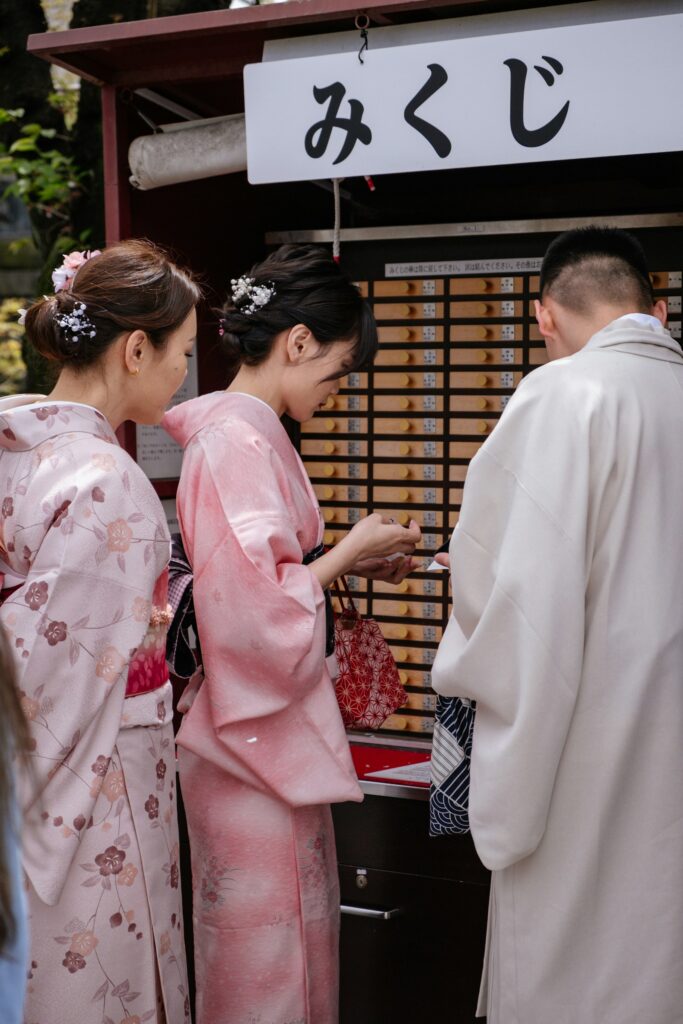
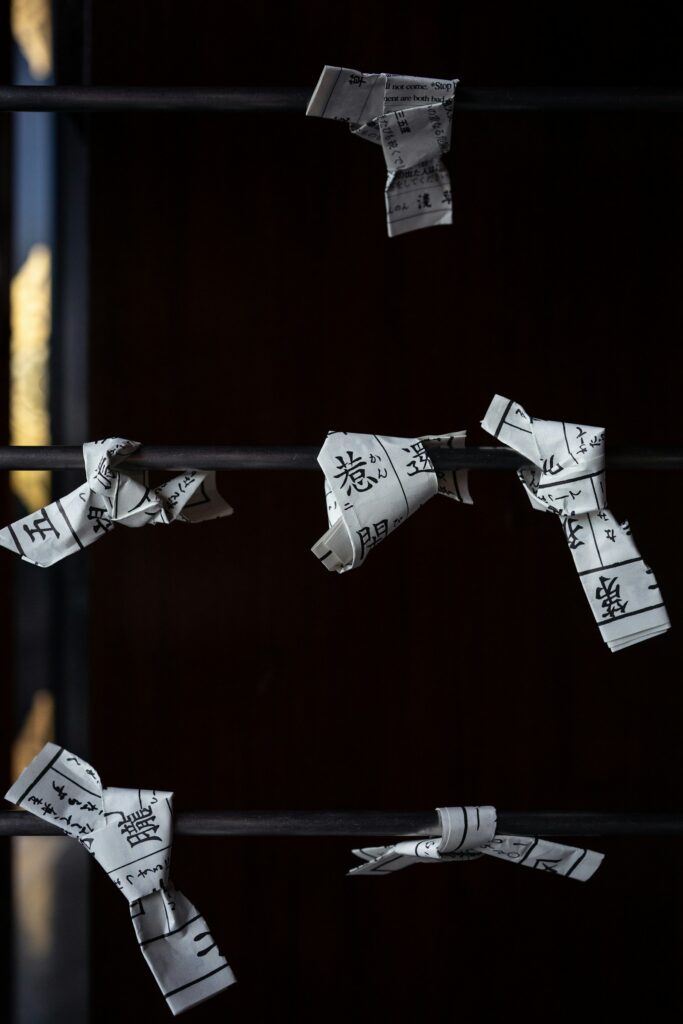
- Omikuji: if your fortune is bad, tie it on the rack and leave it behind. Keep a good one in your wallet.
- Return last year’s omamori to the collection box so it can be burned. Do not photograph inside halls or during prayers.
What’s open in Tokyo on New Year (29 Dec 2026–3 Jan 2027)?
Much more than ten years ago, but not everything. Shrines, temples, convenience stores, chain restaurants, theme parks and most train lines run as normal. Government offices, many museums, banks’ counters and small family restaurants close. Here is what we could verify.
| Place | 29–31 Dec | 1–3 Jan | Status |
|---|---|---|---|
| Tokyo National Museum | Closed (26–31 Dec) | Open from 1 Jan; 1 Jan 12:00–20:00 | Confirmed (TNM) |
| Shinjuku Gyoen | Closed (29 Dec–3 Jan) | Closed | Confirmed (Ministry of the Environment) |
| Imperial Palace East Gardens | Closed (28 Dec–3 Jan) | Closed | Confirmed (IHA) |
| Edo-Tokyo Museum | Year-end closure | Dates TBA | TBA (calendar) |
| Shrines and temples | Open; overnight at major sites on 31 Dec | Open, extended hours | Expected |
| Tokyo Disney Resort | Open; no NYE party on 31 Dec | Open | Confirmed (no NYE) |
| Department stores | Open, shorter hours on 31 Dec; often closed 1 Jan | Reopen 1 or 2 Jan with first sales | Expected (JNTO) |
| Convenience stores | Open 24 hours | Open 24 hours | Expected |
| Chain restaurants | Mostly open | Mostly open | Expected |
| Independent restaurants and bars | Many close from 29–31 Dec | Many closed to 3 Jan or later | Expected; book ahead |
| Tsukiji Outer Market | Busy year-end shopping | Many shops closed when the wholesale market is closed | TBA (calendar) |
| Seven Bank ATMs (7-Eleven) | Visa and Mastercard 00:00–24:00 | Same, except maintenance | Confirmed (Seven Bank) |
| Bank and post office counters | Closed from 31 Dec | Closed to 3 Jan | Expected |
| Tokyo Metro | Weekend timetable from 30 Dec | Weekend timetable to 3 Jan | Expected (2025–26 pattern) |
Three things other New Year in Tokyo guides miss
1. Your midnight plan needs a JR station
The subway stops at its normal time on New Year’s Eve. If your hotel is near a Yamanote, Chuo or Keihin-Tohoku station, you can go to Meiji Jingu at midnight and ride home at 2am. If it is only on a subway line, either walk, budget for a taxi (queues are long), or pick Zojoji or Senso-ji close to your hotel. Plan the route home before you choose the shrine.
2. Get cash before 31 December
Shrine stalls, omamori counters and small soba shops are often cash only. 7-Eleven’s Seven Bank ATMs accept Visa and Mastercard around the clock, but they can be busy and briefly offline for maintenance. Take out what you need for the five days on 29 or 30 December and carry ¥5 and ¥100 coins for offerings and fortunes.
3. The booking deadlines are in November
- Fri 27 Nov 2026, 17:00: Kanda Myojin New Year 2027 formal prayer bookings close (per the shrine; re-check).
- Late October: JR East all-night train announcement (Expected any day: it came on 17 Oct last year). Reserved New Year sunrise trains sell out after that.
- Tue 1 Dec 2026: Zojoji bell-ringing tickets (Expected, based on last year).
- Early December: NYE dinner courses, hotel countdowns and kimono rental slots for 1–3 January fill up.
💡 Japan Pro Tip: Hatsumode in kimono is the photo everyone wants, and 1–3 January is the busiest week of the year for kimono rental in Asakusa. We book kimono hatsumode experiences with local hosts in English; reserve by early December.
Japan is also an easy pick for winter: UK readers of Ultratravel voted it Favourite Country for a Holiday for the second year running (JNTO, 9 Oct 2026). For the rest of the season, see our winter in Japan guide and, if it is your first trip, our first-time Tokyo guide.
New Year in Tokyo FAQ
Is the Shibuya countdown happening for New Year’s Eve 2026?
Almost certainly not. The Shibuya scramble crossing countdown has not been held for six seasons in a row, and as of 17 October 2026 Shibuya ward had not announced 2026-27 plans. Street drinking near Shibuya Station is banned from 18:00 to 5:00 every night.
Do Tokyo trains run all night on New Year’s Eve 2026?
Some do. 2026-27 plans were not announced by 17 October 2026. Last year JR ran the Yamanote, Chuo, Chuo-Sobu, Keihin-Tohoku and Yokosuka lines overnight, and Keio and Keisei ran all night, but Tokyo Metro and Toei subways did not.
What time is the first sunrise in Tokyo on 1 January 2027?
6:50am, according to the National Astronomical Observatory of Japan. Mt Takao, Okutama, the Fuji Five Lakes and Enoshima are popular viewing trips.
Is Meiji Jingu open all night on New Year’s Eve?
It has stayed open through the night of 31 December in past years. In 2025-26 it was open from 6:40 on 31 December through to 18:30 on 1 January. Check the official site in December for 2026-27 hours.
What is open in Tokyo on 1 January?
Shrines, temples, convenience stores, Tokyo Disney Resort, most chain restaurants and the Tokyo National Museum (12:00 to 20:00 on 1 January 2027). Shinjuku Gyoen, the Imperial Palace East Gardens, bank counters and many small restaurants are closed.
When is the Emperor’s New Year greeting in 2027?
It is expected on Saturday 2 January 2027, as it is held on 2 January every year. Entry is free through the Imperial Palace main gate, with a bag check. Details for 2027 had not been published by 17 October 2026.
Spend New Year in Tokyo like a local
Book a New Year's Eve dinner course, a kimono hatsumode visit or a guided shrine walk with English-speaking local hosts. We handle the Japanese-only reservations.
Plan your New Year in Tokyo now
New Year in Tokyo rewards planning: pick a shrine near a JR line, book dinner and kimono slots by early December, and get your cash out before the 31st. We will update this guide as the 2026–27 train, shrine and store schedules are published. Want it sorted for you? Book a New Year experience with Japan Pro.
Sources: Meiji Jingu, Senso-ji, Zojoji, Kanda Myojin, Kawasaki Daishi and Naritasan official sites; JR East; Imperial Household Agency; National Astronomical Observatory of Japan; Tokyo National Museum; Ministry of the Environment; Tokyo Disney Resort; Seven Bank; JNTO; Nikkei; Shibuya Keizai Shimbun; Mynavi News; Tetsudo Channel. Last checked 17 October 2026.
 English
 Japanese
 Chinese (Taiwan)
 Chinese (China)
 Korean
 French
 Italian
 Thai