Japanese Festival Calendar 2026–27: Every Major Matsuri, All Year, by Prefecture
By JapanProAdmin
Updated 17 October 2026 69 min read
Table of contents
Japan holds thousands of matsuri every year, but only a few dozen are worth building a trip around. This Japanese festival calendar lists 65 of them, all year round, from Sapporo’s snow sculptures and Nara’s burning hillside to Kyoto’s Gion Matsuri and Tokushima’s Awa Odori, with the exact 2026–27 date for each and whether that date is confirmed or only expected.
Every festival card gives the nearest station, whether it is free to watch, the price of paid seats where they exist, the official site and one tip that makes the day easier. We checked each entry against the organiser’s own site on 17 October 2026: 43 dates are confirmed, and the rest are marked as expected or to be announced.
65
Festivals listed
32
Prefectures covered
61 of 65
Free to watch
Oct – Sep
A full year of dates
Japanese festival dates that changed for 2026–27
Most festival calendars online copy last year’s dates. These are the changes that will catch you out:
Yokote Kamakura (Akita, official site) left its fixed 15–16 February. Since 2026 it runs on the second Friday and Saturday of February as a trial until 2029, so expect 12–13 February 2027.
Konomiya Hadaka Matsuri (Aichi) is Friday 19 February 2027 on the shrine’s own schedule. Simple lunar-calendar maths gives the 18th, which is wrong.
Kanda Matsuri (Tokyo) is back in full in 2027: the grand version is held only in odd-numbered years. The date is not out yet; we expect the weekend of 8–9 May.
Namahage Sedo (Akita) now charges ¥2,000 entry, capped at 1,800 people a night and sold online only from 1 December 2026.
Nozawa Fire Festival (Nagano) was limited to people staying in the village in 2026. Book your room first.
Shirakawa-go winter light-up (Gifu) is advance-booking only, on four nights: 11, 17, 24 and 31 January 2027.
Shuri Castle (Okinawa): the rebuilt Seiden main hall reopens on 23 November 2026, three weeks after the Shurijo festival.
October – December 2026
Open a month to see its festivals. Past dates drop off on their own, and every card says whether its date is confirmed.
October2 eventsKyoto's Jidai and Kurama fire festivals, the same night
The autumn festival season peaks in late October. Kyoto has two of its best on the same day, 22 October: the Jidai Matsuri costume parade in the afternoon and the Kurama Fire Festival after dark, 30 minutes apart by train.
No events published for January yet.
No events published for February yet.
No events published for March yet.
No events published for April yet.
No events published for May yet.
No events published for June yet.
No events published for July yet.
No events published for August yet.
No events published for September yet.
Jidai Matsuri (Festival of the Ages)
Costume parade
Around 2,000 people in costume walk from Kyoto Imperial Palace to Heian Jingu, retelling Kyoto's 1,100 years as capital, from the Meiji Restoration back to the Heian period. It is one of Kyoto's three great festivals, and the full procession takes about two and a half hours to pass any one spot. Japanese name: 時代祭.
Marutamachi (Karasuma Line) · walk 5 min to Kyoto Gyoen (start); Higashiyama (Tozai Line) · walk 10 min to Heian Jingu (finish)
Seat from
¥5,000
Watching for free
Yes — anywhere along the public route (Karasuma-dori, Oike-dori, Kawaramachi, Sanjo, Jingu-michi).
Biggest attractions nearby
Heian Jingu garden, Okazaki museums, Nanzen-ji. Kurama Fire Festival is the same evening, 30 min north by Eizan train.
Tips on beating the crowd
The head of the parade leaves Kyoto Gyoen about 12:00, passes Oike-dori about 13:20 and reaches Jingu-michi about 14:20. Oike-dori is the widest and easiest free stretch. Umbrellas are banned in the seat areas, so bring a raincoat. If it rains, the parade moves to Fri 23 Oct; if that is rained out too, it is cancelled.
Kurama Fire Festival
Fire festival
The annual festival of Yuki Shrine, one of Kyoto's three 'strange festivals'. From 18:00 villagers carry torches through Kurama, some weighing around 100 kg. At about 20:00 more than a hundred gather below the Kurama-dera gate before two mikoshi are rushed down the steps. It runs until after midnight. Japanese name: 鞍馬の火祭.
Yes — free, but you watch from the narrow village street and police move crowds along; the area below Kurama-dera's gate is closed off before the mikoshi come down.
Biggest attractions nearby
Kurama-dera and the hiking trail over the mountain to Kibune; Jidai Matsuri in central Kyoto that same afternoon.
Tips on beating the crowd
Cars are banned from 15:00 between Kibune-guchi and Kurama Onsen, and all car parks close, so you need the Eizan train. Expect queues and boarding limits at Demachiyanagi and Kurama. In 2025 the last train back left Kurama at 23:24, and the 2026 timetable is announced just before the day. Arrive by 17:00 and wear clothes you don't mind getting sparks or ash on.
Shurijo Castle Revival Festival
Royal procession
Naha's autumn festival recreates the court of the Ryukyu Kingdom. A king, queen and Chinese envoys parade down Kokusai-dori, the royal couple appear at Hoshin-mon gate, and a traditional procession winds through Shuri's old castle town. This year carries extra weight, because the rebuilt Seiden main hall opens to the public on 23 November 2026. Japanese name: 首里城復興祭.
Shuri (Yui Rail monorail) · walk 15 min to Shurijo Castle Park; Kokusai-dori is beside Kencho-mae and Makishi stations
Seat from
Free to watch
Watching for free
Yes — the Kokusai-dori parade and the Shuri streets are free. Watching from inside the paid castle precinct needs a castle ticket.
Biggest attractions nearby
Shurijo Castle (Seiden opens 23 Nov 2026), Tamaudun royal mausoleum, Kinjo-cho stone-paved path, Kokusai-dori and Makishi Public Market.
Tips on beating the crowd
1 Nov: Ryukyu Royal Procession on Kokusai-dori. 2 Nov: king and queen at Hoshin-mon. 3 Nov: Koshiki Gyoretsu procession from Hoshin-mon in the early afternoon. In 2025 it ran 12:50–15:30. For the 3 Nov procession, stand along Ryutan-dori by the pond, where there is more space.
Karatsu Kunchi
Giant floats
Fourteen huge lacquered hikiyama floats, shaped like a red lion, a samurai helmet, a sea bream and a dragon, are hauled through the castle town by men chanting 'En-ya!'. The floats date from 1819 onwards. The festival is part of UNESCO's float-festival listing. Japanese name: 唐津くんち.
Mon 2 Nov: lantern-lit evening parade, 19:30–22:00. Tue 3 Nov: the main day, 9:30–16:30, when the floats are dragged into the deep sand at Nishinohama Otabisho. That is the shot to get, so be there by late morning. Wed 4 Nov: 10:00–16:40 round the old town. Transport IC cards don't work from the Saga or Imari directions, so carry cash for tickets.
Tori-no-ichi at Ootori Shrine
Night market
On the Days of the Rooster in November, Asakusa's Ootori Shrine fills with stalls selling decorated bamboo kumade rakes, charms for 'raking in' good fortune. When a deal is struck, the seller claps you out with a rhythmic tejime. In 2026 there are two days: Sat 7 Nov (Ichi-no-tori) and Thu 19 Nov (Ni-no-tori). Japanese name: 酉の市.
Yes — entry is free. Kumade rakes are sold by stalls, from small ones to very expensive ones.
Biggest attractions nearby
Senso-ji and Nakamise, Kappabashi kitchen street, Yoshiwara history walk, Tokyo Skytree.
Tips on beating the crowd
Only the two days are market days (7 and 19 Nov), each running a full 24 hours from the midnight drum. Late evening on the Saturday is the most crowded, so go before 18:00 or after midnight. Buy a small rake first, and next year buy a bigger one: that's the custom.
Kamiari-sai (Gods’ Gathering), Izumo Taisha
Shrine ritual
In the 10th month of the old lunar calendar, Japan's gods are said to gather at Izumo. On the opening night, priests light a bonfire on Inasa Beach to welcome them, then lead a silent lantern procession to Izumo Taisha. Rites continue at the shrine for a week. Japanese name: 神迎祭・神在祭.
Dates 2026
Wednesday 18 November – Wednesday 25 November, 19:00
Izumo Taisha-mae (Ichibata Railway) · walk 5 min to the shrine; about 20 min to Inasa Beach
Seat from
Free to watch
Watching for free
Yes — no seats; stand behind the barrier at Inasa Beach and along the route to the shrine.
Biggest attractions nearby
Izumo Taisha, Shimane Museum of Ancient Izumo, Hinomisaki Lighthouse, Izumo soba on Shinmon-dori.
Tips on beating the crowd
Kamimukae-sai on Wed 18 Nov, 19:00, at Inasa Beach. Arrive about 17:00 to get a place near the barrier. No flash, and don't step on the mats laid for the gods. Dress for a cold sea wind. Late trains run towards Izumoshi, but the last connection towards Matsue is early, so stay on the Izumo side that night.
Chichibu Night Festival
Night floats
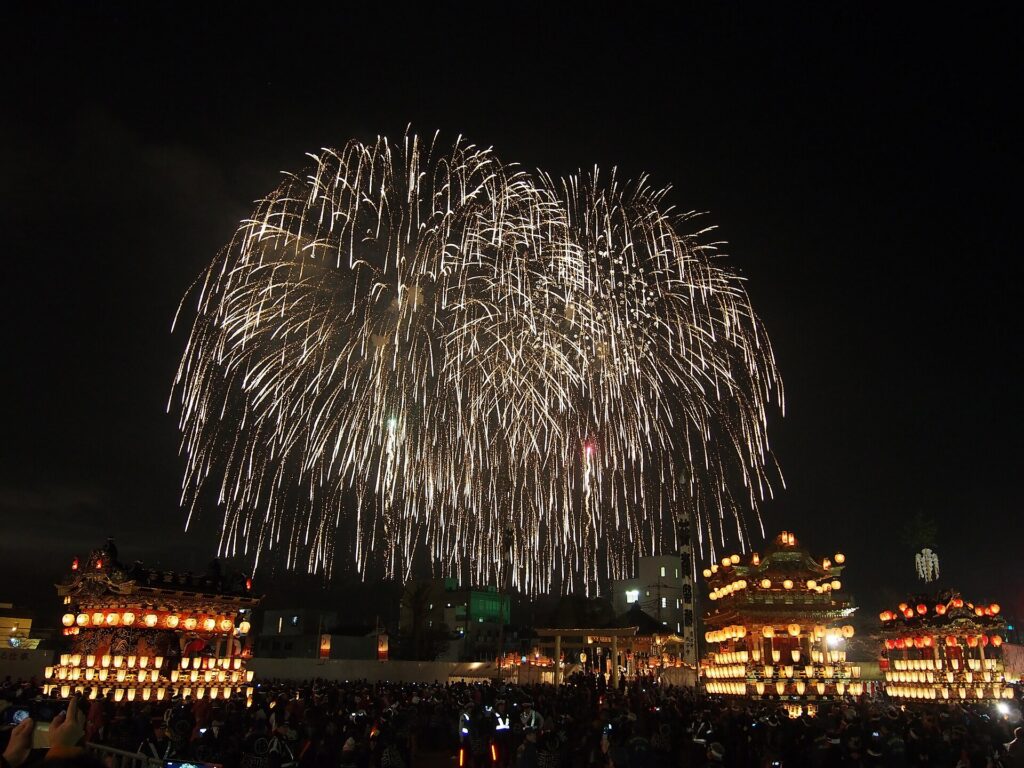
On a freezing December night, six lantern-covered floats weighing up to 20 tonnes are hauled up the steep Dango-zaka slope while winter fireworks burst overhead. It is one of Japan's three great float festivals and part of UNESCO's float-festival listing. Japanese name: 秩父夜祭.
Dates 2026
Wednesday 2 December – Thursday 3 December, 18:45–22:30
Chichibu (Chichibu Railway) · walk 5 min; Seibu-Chichibu · walk 15 min
Seat from
¥4,000
Watching for free
Yes — the streets and the floats' climb up to the otabisho are free; the area around Dango-zaka slope is closed to people without seats from about 17:30 to 22:30.
Biggest attractions nearby
Chichibu Shrine, Hitsujiyama Park, Nagatoro river gorge, local sake breweries.
Tips on beating the crowd
Wed 2 Dec is the eve. Thu 3 Dec is the big night: floats leave for the otabisho at 18:45, and fireworks run 19:30 to about 21:55 (2025 times, about 4,100 shells). From 19:30 to 22:30 no trains run between Chichibu and Kagemori, so use the free buses. The 2026 paid seats (B seats, ¥4,000) were sold by postcard lottery and at Yao Department Store from 31 Oct to 3 Nov. Book a Seibu Laview seat early.
Kasuga Wakamiya On-matsuri
Ancient procession
Held without a break since 1136, this festival of Kasuga Taisha's Wakamiya shrine brings the deity down to a temporary shrine for 24 hours. The 17 December Owatari-shiki parade fills central Nara with Heian- to Edo-period costumes, horses and dancers. Court music and dance at the Otabisho go on late into the night. Japanese name: 春日若宮おん祭.
Dates 2026
Tuesday 15 December – Friday 18 December, 11:30–22:30
Kintetsu Nara · walk 15 min to Noborioji / the Otabisho
Seat from
¥2,000
Watching for free
Yes — the Owatari-shiki procession through Nara is free to watch from the streets.
Biggest attractions nearby
Kasuga Taisha, Nara Park deer, Todai-ji, Naramachi old town.
Tips on beating the crowd
Thu 17 Dec is the day to go. The parade passes Noborioji around 11:50–12:30, then the Matsu-no-shita-shiki rite runs 13:00–14:30. The paid seats (2026): Noborioji ¥2,000, Matsu-no-shita ¥5,000–5,500, Otabisho-mae ¥10,000 (13:00–22:30). Book via NARA Time from 20 Oct 2026. Kasuga's midnight Senko-no-gi (start of 17 Dec) happens in total darkness. No lights or photos.
Hagoita-ichi (Battledore Fair), Senso-ji
Expected date
Senso-ji's year-end fair fills the temple grounds with stalls selling oshi-e hagoita, padded battledores decorated with kabuki actors, geisha and the year's celebrities. Stallholders clap a tejime for every sale. It is one of Tokyo's best-loved Edo-era markets. Japanese name: 羽子板市. Held 17–19 December every year; the 2026 edition is not yet listed.
Dates 2026
Thursday 17 December – Saturday 19 December, 09:00–19:30
Asakusa (Ginza / Asakusa / Tobu lines) · walk 5 min
Seat from
Free to watch
Watching for free
Yes — free to browse; the decorated hagoita are for sale.
Biggest attractions nearby
Senso-ji, Nakamise, Sumida River walk, Tokyo Skytree.
Tips on beating the crowd
Open 9:00–19:30 (until 19:00 on the last day). Come after dark, when the stalls are lit against the Hozomon gate. Shop for small ones near closing time, when some stalls bargain.
January – September 2027
The rest of the year, month by month. Dates marked expected follow the festival's own rule and will be confirmed nearer the time.
January7 eventsFire festivals and a snow-bound village
January is fire season: bonfires burn New Year decorations across Japan, Nozawa Onsen sets a wooden shrine alight on 15 January, and Nara burns a whole hillside on 23 January.
Usokae and Onisube at Dazaifu Tenmangu
Expected date
Every 7 January Dazaifu Tenmangu holds two rites. At 18:00, in Usokae, strangers swap wooden bullfinch charms in the dark, chanting 'kaemasho'. Then comes Onisube, a smoky fire festival said to date from 986, in which about 300 parishioners fan huge bonfires to drive out a demon. Japanese name: 鷽替え・鬼すべ神事. Held on 7 January every year; the 2027 edition is not yet announced.
Yes — watch Onisube from the shrine grounds; joining Usokae costs ¥2,000 for a wooden bullfinch.
Biggest attractions nearby
Dazaifu Tenmangu, Kyushu National Museum, Komyozen-ji moss garden, umegae-mochi on the approach street.
Tips on beating the crowd
The fire is lit around 21:00, and the smoke is thick, so don't wear your best coat. Keep the wooden bullfinch from Usokae: a few hidden gold ones win prizes.
Toka Ebisu at Imamiya Ebisu Shrine
Expected date
Around a million people come to Osaka's merchant shrine over three days to buy fukuzasa, lucky bamboo branches, and pray for business. Fuku-musume shrine maidens hand out the branches, and on 10 January the Hoekago palanquin parade comes from Minami with geisha and celebrities. Japanese name: 十日戎. Held 9–11 January every year; the 2027 edition is not yet announced.
Imamiya Ebisu (Nankai Koya Line) · walk 1 min; Ebisucho (Sakaisuji Line, exit 5) · walk 8 min
Seat from
Free to watch
Watching for free
Yes — free entry; lucky bamboo branches (fukuzasa) and charms are sold.
Biggest attractions nearby
Shinsekai and Tsutenkaku, Den Den Town, Namba and Dotonbori.
Tips on beating the crowd
9 Jan is Yoi-Ebisu, 10 Jan Hon-Ebisu (the busiest day) and 11 Jan Nokori-Ebisu. Sources give different opening hours, so check the shrine site in December. For fewer crowds, go late on the 11th. Use Nankai's Imamiya Ebisu station: it is right at the gate.
Shirakawa-go Winter Light-up
Winter light-up
On four winter evenings the steep thatched gassho-zukuri farmhouses of the World Heritage village are lit up against the snow. It is one of the most photographed scenes in Japan. 2027 is the 41st edition. Japanese name: 白川郷ライトアップ.
No railway — Takayama Station · bus 50–67 min; Kanazawa Station · bus about 75 min
Seat from
Free to watch
Watching for free
Limited — the village is free, but on light-up nights you need an advance booking (parking, tour bus or lodging); you can't just turn up on the day.
Biggest attractions nearby
Shiroyama viewpoint, Wada House, Gokayama villages, Takayama old town.
Tips on beating the crowd
2027 dates: Mon 11 Jan (holiday), Sun 17, Sun 24 and Sun 31 Jan. The first round of car-park bookings is already sold out, and village lodging is by lottery, so the realistic option is a bus tour from Takayama or Kanazawa. Wear snow boots: the paths are packed ice.
Matsutaki-sai (Donto-sai) at Osaki Hachimangu
Expected date
Sendai's biggest New Year bonfire. Residents bring their New Year decorations to burn on a huge sacred fire, which is lit at sunset. Several thousand hadaka-mairi pilgrims in white loincloths, with paper in their mouths, walk through the January cold to the shrine. The tradition is about 300 years old. Japanese name: 松焚祭. Date expected by tradition; not yet officially announced.
The fire is lit around sunset. Roads close 16:00–21:00 (2026), and the shrine asks you to use buses or public transport after 17:00. The pilgrims come from all over the city in the evening; the best view is near the torii. Wrap up: it is usually below freezing.
Nozawa Onsen Dosojin Fire Festival
Expected date
One of Japan's wildest fire festivals. Villagers build a two-storey wooden shrine. The men of the unlucky ages of 25 and 42 defend it from the top while others charge with burning torches, until the whole thing is set alight. It is a national Important Intangible Folk Cultural Property. Japanese name: 野沢温泉の道祖神祭り. Date expected by tradition; not yet officially announced.
Iiyama (Hokuriku Shinkansen) · direct bus about 25 min
Seat from
Free to watch
Watching for free
Limited — in 2026 you needed an entry ticket, given only to people staying in the village; ask your lodging.
Biggest attractions nearby
Nozawa Onsen ski resort, the 13 free soto-yu public baths, Ogama hot-spring cooking pool, Iiyama's temples.
Tips on beating the crowd
In 2026 the battle began about 20:30, and the adults' fire went on until about 22:00. Book a ryokan in the village months ahead: that is the only way to get an entry ticket. No bottles, cans or alcohol on site, and drones are banned. All roads are no-parking.
Wakakusa Yamayaki (Mountain Burning)
Hill burning
On a January evening, the whole grassy slope of Mt Wakakusa in Nara Park is set on fire, lighting up the night sky over Todai-ji and Kasuga Taisha. Fireworks come first. It is held on the fourth Saturday of January. Japanese name: 若草山焼き.
Kintetsu Nara · walk about 25 min to the Nara Park viewing areas
Seat from
Free to watch
Watching for free
Yes — free from Nara Park (Kasugano and Ukigumo gardens) and from a distance at Heijo Palace site. A paid standing area at the foot of the hill also exists.
Biggest attractions nearby
Todai-ji, Kasuga Taisha, Nara Park deer, Naramachi.
Tips on beating the crowd
17:05 sacred fire procession from Kasuga Taisha; 18:15 fireworks (about 15 min); 18:30 the hill is lit, and the fire is mostly out by 19:30. There is no rain date: if heavy rain, snow or wind cancels it, it isn't rescheduled. The decision is posted by 10:00 on the day. Individual tickets for the paid area at the foot of the hill are announced on the official site in early November (group sales opened 7 Oct 2026).
Nago Cherry Blossom Festival
Expected date
Japan's cherry blossom season starts in Okinawa in late January, with the deep-pink kanhizakura. Nago's festival lights up the hillside of Nago Castle ruins with blossoms and lanterns, and the main street fills with parades, Eisa drumming and street food. Japanese name: 名護さくら祭り. Date expected by tradition; not yet officially announced.
Dates 2027
Saturday 30 January – Sunday 31 January, 13:00–20:30
No railway in northern Okinawa — bus from Naha to Nago; the park is in central Nago
Seat from
Free to watch
Watching for free
Yes — free.
Biggest attractions nearby
Okinawa Churaumi Aquarium (about 40 min by car), Motobu Yaedake sakura, Orion Beer Nago brewery.
Tips on beating the crowd
Held on the last Saturday and Sunday of January (2026: 31 Jan–1 Feb, 13:00–20:30). The bloom moves up the hill, so the best trees are often at the top. Walk up from the bottom in the afternoon, then come back down to the street for the evening.
Setsubun-e at Naritasan Shinsho-ji
Expected date
On Setsubun, the day before spring by the old calendar, Japanese temples throw roasted beans to drive out demons. Naritasan's is the most famous: sumo wrestlers and the cast of NHK's year-long historical drama throw beans from a stage in front of the main hall to huge crowds. Japanese name: 節分会. Date expected by tradition; not yet officially announced.
Yes — free to watch the bean-throwing from the temple grounds; the separate Kaiun mamemaki for participants cost ¥10,000 in 2026.
Biggest attractions nearby
Naritasan Park, Omotesando eel restaurants, Boso no Mura open-air museum.
Tips on beating the crowd
Setsubun falls on Wed 3 Feb 2027. In 2026 the special bean-throws were at 11:00, 13:30 and 16:00, with drama cast only at the first two. Get in front of the main hall an hour early, and bring a bag to catch beans. It is 15 min by train from Narita Airport, so it works on an arrival or departure day.
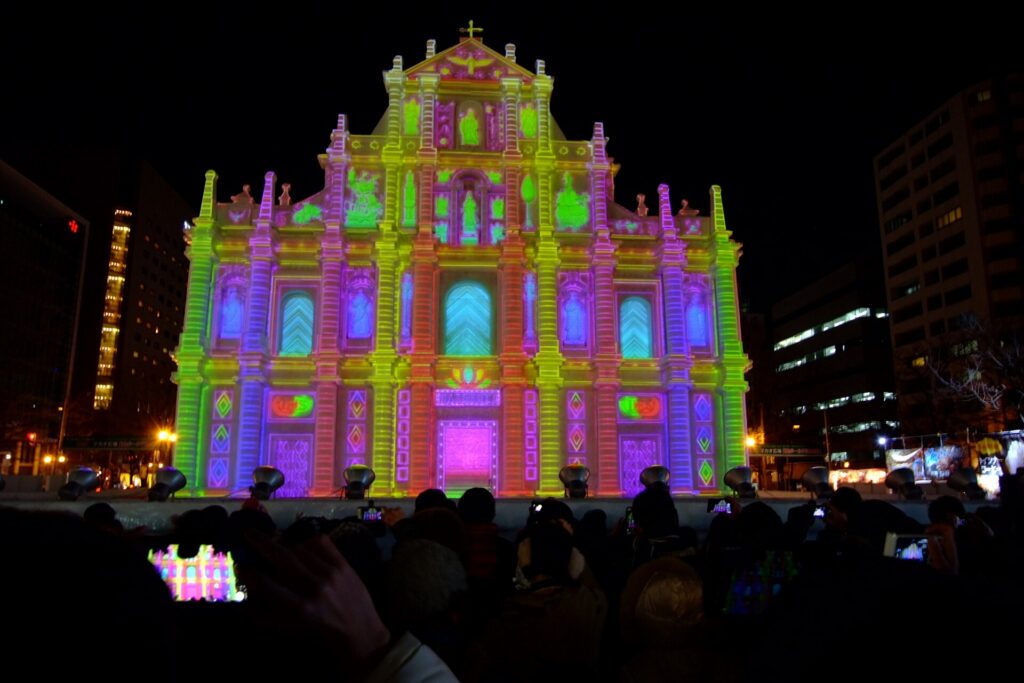
Sapporo Snow Festival
Snow festival
Japan's biggest winter festival lines Odori Park with giant snow and ice sculptures, some the size of buildings, made with help from the Ground Self-Defense Force. Susukino has an ice-sculpture street, and Tsudome has snow slides for children. 2027 is the 77th edition. Japanese name: さっぽろ雪まつり.
Yes — free at all three sites (Odori, Susukino, Tsudome).
Biggest attractions nearby
Otaru Snow Light Path (40 min by train), Nijo Market, Mt Moiwa night view, Sapporo Beer Museum.
Tips on beating the crowd
Runs Thu 4 to Thu 11 Feb 2027 (11 Feb is a national holiday) at all three sites. The Odori sculptures are lit from sunset until 22:00. Go on a weekday evening and climb the Sapporo TV Tower for the overhead view. Sapporo hotels fill months ahead.
Nagasaki Lantern Festival
Lantern festival
Nagasaki's Chinese New Year festival hangs around 15,000 lanterns over Shinchi Chinatown, the Nakashima River and the arcades, with giant lantern figures, dragon dances and Chinese acrobatics. It grew out of Chinatown's own New Year celebration. Japanese name: 長崎ランタンフェスティバル.
Dates 2027
Friday 5 February – Sunday 21 February, 17:00–22:00
Megane-bashi, Dejima, Glover Garden, Inasayama night view.
Tips on beating the crowd
17 days, Fri 5 to Sun 21 Feb 2027. Lanterns are lit 17:00–22:00 (Chinatown and Hamanmachi from 12:00, per 2026). The Emperor's Parade ran on the two Saturdays in 2026 (14:00 from Chuo Park). Expect 2027 to follow, but check. The Nakashima River lanterns by Megane-bashi bridge are the calmest and most photogenic spot.
Otaru Snow Light Path
Expected date
Volunteers set out thousands of candles in snow lanterns and floating glass floats along Otaru Canal, the old Temiya railway line and Mt Tengu. It is quieter and more romantic than Sapporo, and it overlaps with the Snow Festival. Japanese name: 小樽雪あかりの路. Date expected by tradition; not yet officially announced.
Dates 2027
Saturday 6 February – Saturday 13 February, 17:00–21:00
Otaru (JR Hakodate Line) · walk 10 min to the canal venue
Seat from
Free to watch
Watching for free
Yes — free.
Biggest attractions nearby
Otaru Canal, Sakaimachi glass and music-box street, Otaru sushi street, Sapporo Snow Festival.
Tips on beating the crowd
Lit 17:00–21:00. Start at the Temiya Line venue for the snow lanterns, then walk to the canal around 19:00 when the light is at its best. The canal steps are icy, so wear spiked boots or slip-on cleats.
Oto Matsuri (Torch Festival)
Expected date
About 2,000 men in white, tied with straw rope, climb to Kamikura Shrine on a cliff above Shingu with pine torches. When the gate opens they race down 538 steep stone steps in a river of fire. It is held every year on the night of 6 February and is part of the national Important Intangible Folk Cultural Property 'Hayatama Festival and Oto Festival of Shingu'. Japanese name: 御燈祭り. Date expected by tradition; not yet officially announced.
Yes — watch from the foot of the steps; only registered male agariko climb.
Biggest attractions nearby
Kumano Hayatama Taisha (Kumano Kodo World Heritage), Gotobiki-iwa boulder, Nachi Falls, Katsuura tuna.
Tips on beating the crowd
6 Feb 2027 is a Saturday, so it will be busier than usual. Be at the base of the steps before 19:00, and stand well back from the gate: men really do run. From the town, the whole mountain path looks like a stream of flame.
Hirosaki Castle Snow Lantern Festival
Snow lanterns
About 150 snow lanterns, some 300 candlelit mini-kamakura igloos and big snow sculptures fill Hirosaki Park around one of Japan's 12 original castle keeps. The castle and the moat trees are lit up after dark. 2027 is the 51st edition. Japanese name: 弘前城雪燈籠まつり.
Hirosaki (JR Ou Line) · Konan bus about 15 min to Shiyakusho Koen-iriguchi, or walk 30 min
Seat from
Free to watch
Watching for free
Yes — free.
Biggest attractions nearby
Hirosaki Castle, Fujita Memorial Garden, Neputa Mura, Hirosaki apple pie cafes.
Tips on beating the crowd
Lit from sunset (about 16:30) to 21:00, per 2026. The mini-kamakura in Nishi-no-kuruwa look best just after dark. The daytime loop bus stops running early, so plan on a taxi or a 30-minute walk back to the station. The paths are icy, so wear boots with grip.
Yanagawa Hina Matsuri Sagemon Meguri
Expected date
For Girls' Day, Yanagawa's homes and shops hang sagemon, cascades of hand-sewn charms such as cranes, rabbits and balls, beside their hina doll displays. Doll-boat parades glide along the town's willow-lined canals. It is the most atmospheric Hina Matsuri event in Japan. Japanese name: 柳川雛祭り さげもんめぐり. Date expected by tradition; not yet officially announced.
Runs 11 Feb to 3 Apr 2027. The highlight is the Ohina-sama Water Parade: in 2026 it was Sun 15 Mar, 11:00–12:20. The 2027 date is due in late November. Combine it with a kawakudari punt ride, and check the canal-drainage period in February, when boats run a shorter route.
Namahage Sedo Festival
Namahage demons
At Shinzan Shrine on the Oga Peninsula, masked namahage, the straw-caped mountain demons who visit Oga homes on New Year's Eve, come down from the snowy hillside by torchlight. They dance around a huge sacred bonfire and scare the crowd. The event mixes Shinto rite with folk theatre. Japanese name: なまはげ柴灯まつり.
Dates 2027
Friday 12 February – Sunday 14 February, 18:00–20:30
Oga (JR Oga Line) · festival shuttle from Michi-no-Eki Oga beside the station, about 30 min (¥1,000 day pass); about 2 hours in total from Akita
Seat from
¥2,000
Watching for free
No — entry costs ¥2,000 per adult in 2027 (junior high and under free), paid online in advance; capped at 1,800 people a night.
Biggest attractions nearby
Namahage Museum and Oga Shinzan Folklore Museum, Oga Onsen, Nyudozaki cape, Yokote Kamakura (about 2 hours away).
Tips on beating the crowd
2027 is the 64th edition (12–14 Feb). Entry rose to ¥2,000, and online booking opens 1 Dec 2026. Saturday sells out first, and the 12–13 Feb nights clash with Yokote Kamakura, so Sunday 14th is the easy pick. Last trains from Oga to Akita leave about 21:35 and 22:44.
Yokote Kamakura Festival
Expected date
About 100 snow huts called kamakura, each a small shrine to the water god, are built around central Yokote. Local children invite you inside to sit by a brazier and share amazake. Thousands of mini-kamakura candles glow along the Jakuzaki riverbank. Japanese name: 横手の雪まつり かまくら. Date expected under the festival's new rule; not yet officially announced.
Dates 2027
Friday 12 February – Saturday 13 February, 18:00–21:00
Trap alert: after decades on fixed 15–16 Feb, the festival moved in 2026 to the second Friday and Saturday of February. This is a trial until 2029, so 2027 should be Fri 12–Sat 13 Feb, but it isn't announced yet. Free loop buses link the four main sites. Go inside a kamakura: it's the whole point.
Hachinohe Enburi
Folk dance
About 30 troupes perform enburi, a prayer for a good rice harvest, in tall horse-head eboshi hats that sway as the dancers mime planting. It is held in the depth of the northern winter and is a national Important Intangible Folk Cultural Property. Japanese name: 八戸えんぶり.
Dates 2027
Wednesday 17 February – Saturday 20 February, 07:00–20:20
Hon-Hachinohe (JR Hachinohe Line) · walk about 10 min to City Hall
Seat from
Free to watch
Watching for free
Yes — street and City Hall plaza shows are free; the garden performance at Koshokaku is ticketed.
Biggest attractions nearby
Hachinohe Hasshoku Center fish market, Minato morning market (Sundays), Kabushima island, Tanesashi coast.
Tips on beating the crowd
17 Feb: dedication at Chojasan Shinra Shrine 7:00, parade 10:00, mass performance 10:40–11:20 in the city centre. 17–20 Feb: Kagaribi Enburi by bonfire at the City Hall plaza at 18:00, 19:00 and 20:00. The Koshokaku garden show (17:00 and 19:15) comes with amazake and senbei-jiru soup, but it is advance-ticket only, and the 2027 price isn't out yet.
Konomiya Hadaka Matsuri (Naked Festival)
Naked festival
Nearly 10,000 men in loincloths crowd Owari Okunitama Shrine to touch the shin-otoko, the one 'god man' who takes on everyone's bad luck. Clouds of steam rise from the crush. It falls on the 13th day of the lunar New Year, so the date moves every year. Japanese name: 国府宮はだか祭.
Konomiya (Meitetsu Nagoya Line, north exit) · walk 3 min
Seat from
Free to watch
Watching for free
Yes — free; watch from behind the barriers along the approach.
Biggest attractions nearby
Nagoya Castle, Atsuta Shrine, Inuyama Castle, Nagoya's miso-katsu and hitsumabushi.
Tips on beating the crowd
Watch out for the date: 2027 is Fri 19 Feb, not the 18th that some calendar maths gives. The Naoi rite starts at 15:00, and the scrum usually builds from about 16:00. Get a spot near the approach by around noon. Roads near the shrine close for about three days, so come by Meitetsu. Drones, stepladders and stools are banned.
Tokamachi Snow Festival
Snow festival
Japan's oldest modern snow festival, started in 1950 in one of the world's snowiest towns. Its idea is 'treat snow as a friend, not an enemy'. Neighbourhoods build snow sculptures all over town, and the Snow Carnival stage show on a giant snow stage ends with fireworks. Japanese name: 十日町雪まつり.
The 78th festival runs Fri 19 to Sun 21 Feb 2027. The sculptures are judged on the Friday evening and stay up until the end. In 2026 the hours were Fri 18:00–21:00, Sat 10:00–21:00, Sun 9:00–15:00. Winter tyres are mandatory, and the car parks jam, so take the train.
Saidaiji Eyo (Naked Festival)
Expected date
Around 10,000 men in loincloths pack the main hall of Saidaiji Kannon-in. At 22:00 the lights go out and two sacred shingi sticks are thrown into the crowd. Whoever ends up with one is the year's lucky man. The festival has been held for about 500 years. Japanese name: 西大寺会陽. Date expected by tradition; not yet officially announced.
The rule is the third Saturday of February, so 20 Feb 2027 is likely. The organisers say details come out around October 2026. In 2026, standing tickets were cash-only at a window, and no ticket is refundable. Some roads close from about 19:30. Stay in Okayama city and take the JR Ako Line.
Omizutori (Shuni-e) at Todai-ji Nigatsu-do
Torch rite
A Buddhist rite of repentance held every year since 752 without a break. Each night, monks with huge burning torches rush along Nigatsu-do's wooden balcony, showering sparks on the crowd below. People say the sparks bring a year of good health. It marks the arrival of spring in Nara. Japanese name: 修二会(お水取り).
Kintetsu Nara · city loop bus 4–7 min to Daibutsuden Kasuga Taisha-mae, then walk 10 min uphill
Seat from
Free to watch
Watching for free
Yes — free, but the viewing areas below Nigatsu-do have a capacity limit; once they're full, you can't see the torches.
Biggest attractions nearby
Todai-ji Daibutsu, Nigatsu-do balcony view over Nara, Kasuga Taisha, Nara National Museum.
Tips on beating the crowd
Torches every night 1–14 Mar, usually about 19:00. On 12 Mar the biggest kago-taimatsu torches start about 19:30, and on 14 Mar it is about 18:30. On 12 Mar the best area is reserved for lay associations, and Todai-ji itself suggests coming on another night. Arrive an hour early, because late arrivals are turned away. Saving places is not allowed. Inside the hall: no phones, photos or food.
Sagicho Matsuri, Omihachiman
Expected date
Each neighbourhood of Omihachiman's old merchant town builds a sagicho, a tall straw torch topped with a 'dashi' sculpture of the year's zodiac animal, made entirely from food such as beans and dried goods. The torches are carried and rammed together through the streets, then burned at Himure Hachimangu on the second night. Japanese name: 左義長まつり. Date expected by tradition; not yet officially announced.
Omi-Hachiman (JR Biwako Line) · bus 5 min to Kobata-cho Shiryokan-mae, then walk 7 min
Seat from
Free to watch
Watching for free
Yes — free.
Biggest attractions nearby
Hachiman-bori canal, Omihachiman old town, Hachimanyama ropeway, La Collina Omihachiman.
Tips on beating the crowd
Saturday: sagicho parade from 14:00 and dashi contest results about 17:30. Sunday: 'kenka' clashes from 10:30, then burning at the shrine from 20:00 to 22:40 (2026 times). Look at the dashi up close on Saturday afternoon, before they are burned.
Kanamara Matsuri
Expected date
Kawasaki's famously cheeky fertility festival is held at Kanayama Shrine inside Wakamiya Hachimangu, with three phallic mikoshi (including the pink 'Elizabeth') paraded through the streets. Behind the souvenirs it's a genuine shrine rite for fertility, safe childbirth and protection from disease. Japanese name: かなまら祭. Date expected by tradition; not yet officially announced.
Kawasaki Daishi Heikenji temple (5 min walk) and its candy-cutting shops on Nakamise; Keikyu back to Shinagawa or Haneda Airport in under 30 minutes.
Tips on beating the crowd
It is held on the first Sunday of April (5 April in 2026), so 4 April 2027 is expected — confirm on the shrine's X account. The approach is tiny and packed by 11:00; arrive before the noon mikoshi departure and stand along the route rather than in the precinct.
Nagahama Hikiyama Matsuri
Float kabuki
A UNESCO-listed float festival of Nagahama Hachimangu where boys aged roughly 5–12 perform full kabuki plays on the stages of ornate hikiyama floats. The main day is 15 April, when the floats gather at the shrine and the children perform as an offering, then repeat their plays around town. Japanese name: 長浜曳山まつり.
Yes — free; kabuki is performed on the float stages in the street.
Biggest attractions nearby
Kurokabe Square glass shops, Nagahama Castle on Lake Biwa, Daitsuji temple; Hikone Castle is 10 minutes by train.
Tips on beating the crowd
Held 13–16 April each year (2026: 13–16 April). Performance times are posted by the Nagahama Tourism Association shortly before the festival — ring 0749-53-2650 if you can't find them. There is no festival parking, so come by JR.
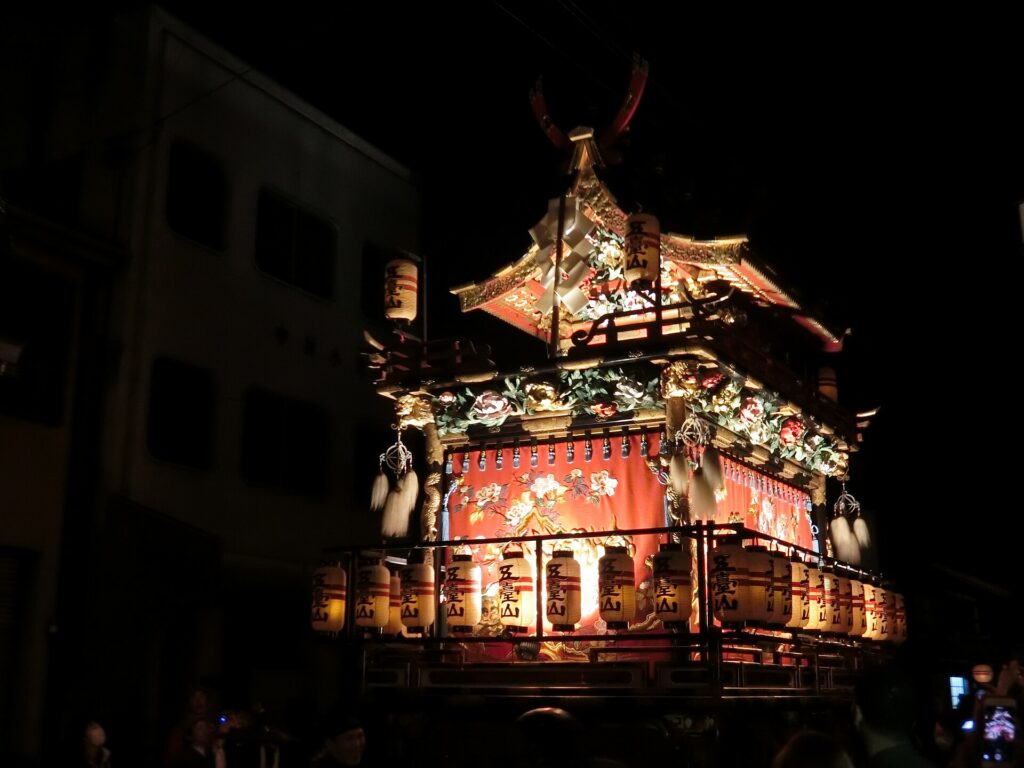
Takayama Spring Festival
Float parade
One of Japan's most beautiful float festivals: 12 lacquered yatai, several topped with karakuri puppets, are displayed in Takayama's old town for the Hie Shrine (Sanno-sama) festival. On the evening of 14 April the floats are pulled through the streets lit by around a hundred lanterns each. Japanese name: 春の高山祭(山王祭).
Dates 2027
Wednesday 14 April – Thursday 15 April, 09:30–20:30
Yes — all events are free to watch in the streets.
Biggest attractions nearby
Sanmachi old merchant streets, Takayama Jinya, Hida Folk Village; Shirakawa-go is about 50 minutes by bus.
Tips on beating the crowd
Fixed dates every year. Karakuri shows run at about 10:00 and 14:00 (around 50 min), and the yomatsuri night parade is about 18:00–20:30 on the 14th (2026 programme). Book a room months ahead — staying in Furukawa or Gero means you'll struggle to see the night parade.
Hakata Dontaku Port Festival
Street parade
Held every 3–4 May, Dontaku fills Fukuoka with shamoji-clapping dancers, floats and stages across the city during Golden Week. The Dontaku parade runs along Meiji-dori from Gofukumachi to Tenjin Chuo Park, with the main stage outside City Hall. Japanese name: 博多どんたく港まつり.
Tenjin / Gofukumachi (Fukuoka Subway) · walk 3 min
Seat from
Free to watch
Watching for free
Yes — the parade on Meiji-dori and about 30 stages are free.
Biggest attractions nearby
Kushida Shrine (display yamakasa float all year), Canal City, Nakasu yatai food stalls in the evening.
Tips on beating the crowd
Fixed dates every year; 2026 parade times were 13:00–19:00 on 3 May and 14:00–19:00 on 4 May, with an eve festival on 2 May. Watch near Gofukumachi where groups start fresh, and use the subway — the surrounding roads are closed.
Hamamatsu Matsuri
Kite battles
Every 3–5 May more than 170 neighbourhoods fly giant kites above the Nakatajima dunes, trying to cut rival strings in noisy 'itokiri' battles. By night, lantern-lit goten-yatai palace floats roll through central Hamamatsu. Japanese name: 浜松まつり.
Hamamatsu (JR Tokaido Shinkansen) · festival shuttle bus to Nakatajima
Seat from
Free to watch
Watching for free
Yes — kite fights at Nakatajima and the evening palace-float parade are free.
Biggest attractions nearby
Nakatajima Sand Dunes, Hamamatsu Castle, Lake Hamana eel restaurants.
Tips on beating the crowd
Fixed Golden Week dates. In 2026 kite flying ran 10:00–15:00 and the float parade about 18:00/18:30–21:00. Bring sunscreen and a scarf — the dunes are windy and shadeless.
Hiroshima Flower Festival
Expected date
Hiroshima's peace-themed Golden Week festival fills Peace Memorial Park and Peace Boulevard with flower displays, stages and food. The flower parade runs on 3 May and the performance parade on 5 May, ending with a fireworks finale. Japanese name: ひろしまフラワーフェスティバル. Date expected by tradition; not yet officially announced.
Peace Memorial Park and Museum, Atomic Bomb Dome, Hiroshima Castle; Miyajima is about an hour away.
Tips on beating the crowd
Held 3–5 May (2026 dates); 2027 has not been announced, so treat it as expected. Combine with the Peace Memorial Museum early in the morning before the crowds arrive.
Naha Hari Dragon Boat Races
Expected date
Naha's dragon-boat festival has its roots in Ryukyu-era rites for safe seas and good fishing. The highlight is the Hon-baari race between the traditional Tomari, Kume and Naha crews, plus open races, stages and food stalls. Japanese name: 那覇ハーリー. Date expected by tradition; not yet officially announced.
No rail stop beside the venue — bus or taxi from central Naha
Seat from
Free to watch
Watching for free
Yes — free to watch from the quay.
Biggest attractions nearby
Kokusai-dori, Makishi Public Market, Shuri Castle; Tomari Port for island ferries.
Tips on beating the crowd
The 52nd edition ran 3–5 May 2026 at Naha Port Shinko Wharf, with the Hon-baari crews racing from 10:00 on 5 May; 2027 dates are expected but not yet announced. Bring shade — there is very little on the wharf.
Kanda Matsuri (main festival year)
Date TBA
One of Edo's three great festivals, Kanda Myojin's grand festival is held in full only in odd-numbered years, so 2027 is a main-festival year. Saturday's Shinkosai procession of three shrine mikoshi, mounted riders and floats covers central Tokyo from Kanda to Nihonbashi, and on Sunday about a hundred neighbourhood mikoshi pour into the shrine. Japanese name: 神田祭. Date to be announced.
2027 is a main-festival year (2026 was a kage-matsuri). The date is not announced: in 2019, 2023 and 2025 the Shinkosai procession ran on the Saturday before the 15 May grand rite (2025: Sat 10 May, Miyairi Sun 11 May), a week before Sanja Matsuri. As 15 May 2027 is itself a Saturday and Sanja is 14–16 May, we have pencilled in Sat 8–Sun 9 May — confirm on kandamatsuri.com in early 2027. Using the 2025 route, the procession left about 07:50, passed Nihonbashi Mitsukoshi around 16:20 and returned about 18:20; on Sunday, stand on the shrine approach from 09:00.
Sanja Matsuri
Expected date
Asakusa Shrine's festival is Tokyo's wildest: over three days around 100 neighbourhood mikoshi are bounced through Asakusa, and on Sunday the three main shrine mikoshi are carried out at dawn. It honours the three men who founded Senso-ji. Japanese name: 三社祭. Date expected by tradition; not yet officially announced.
Senso-ji, Nakamise, Sumida River and Tokyo Skytree (20 min walk), Kappabashi kitchen street.
Tips on beating the crowd
Held Friday–Sunday of the third weekend of May; Japan Guide lists 14–16 May 2027, and the official schedule is usually published in spring. In 2026 the Daigyoretsu parade started at 13:00 Friday and the main mikoshi left at 07:00 Sunday, returning from about 18:30. Spectators can't go inside the gates for the Sunday-morning scramble — watch on the streets around Kaminarimon instead.
Aoi Matsuri
Imperial procession
One of Kyoto's three great festivals, the Aoi Matsuri sees about 500 people in Heian-period court dress parade 8 km from the Imperial Palace to Shimogamo and Kamigamo shrines, with ox carts and the Saio-dai princess. Hollyhock (aoi) leaves decorate everyone and everything. Japanese name: 葵祭.
Yes — free along the route; paid seats at Kyoto Gyoen and Shimogamo Shrine.
Biggest attractions nearby
Shimogamo Shrine's Tadasu no Mori forest, Kamigamo Shrine, Demachi Futaba mame-mochi.
Tips on beating the crowd
Always 15 May (a Saturday in 2027), postponed a day if it rains (decided around 18:00 the day before). The procession leaves the Imperial Palace at 10:30, passes Shimogamo around 11:15–11:40 and reaches Kamigamo around 15:30. 2026 seats ran ¥5,000–6,500 (general) up to ¥20,000 for interpreted 'Royal' seats; Kamigamo is the calmer end.
Nikko Toshogu Spring Grand Festival
Samurai procession
Each May Nikko Toshogu re-enacts the 1617 transfer of Tokugawa Ieyasu's spirit with the 'Thousand Warrior Procession' of about 1,000 people in samurai armour and Edo costume escorting three mikoshi. Ritual horseback archery (yabusame) is held the day before. Japanese name: 日光東照宮春季例大祭(百物揃千人武者行列).
Shinkyo Bridge, Rinnoji, Taiyuinbyo; Kegon Falls and Lake Chuzenji are 40 minutes by bus.
Tips on beating the crowd
Fixed on 17–18 May (Mon–Tue in 2027, so far calmer than a weekend). In 2026 yabusame was around 13:00 on the 17th and the procession at 11:00 and 13:00 on the 18th. Stand on the stone steps near the Otabisho for the classic view.
Kanazawa Hyakumangoku Matsuri
Expected date
Kanazawa's biggest festival celebrates Maeda Toshiie's entry into the city in 1583. The Hyakumangoku procession of samurai, Kaga Tobi firefighters and a celebrity 'Toshiie' runs from Kanazawa Station to the castle, followed by mass dancing in the evening. Japanese name: 金沢百万石まつり. Date expected by tradition; not yet officially announced.
Kanazawa (JR / Hokuriku Shinkansen) · parade starts at East Plaza
Seat from
Free to watch
Watching for free
Yes — free; no paid seats.
Biggest attractions nearby
Kenrokuen Garden, Kanazawa Castle Park, Higashi Chaya district, Omicho Market.
Tips on beating the crowd
Timed to Oyama Shrine's Hokokusai on the first Saturday of June, so the parade on Saturday 5 June 2027 (festival 4–6 June) is expected. In 2026 the procession ran 14:20–17:30 and Hyakumangoku Odori dancing 18:00–20:00. Watch near Korinbo for shade and cafés.
YOSAKOI Soran Festival
Dance festival
Born in 1992 when a Hokkaido student mixed Kochi's yosakoi with the local Soran-bushi fishing song, this is now one of Japan's biggest dance festivals, with hundreds of teams performing across Sapporo. Each team must carry naruko clappers and use a phrase of Soran-bushi. Japanese name: YOSAKOIソーラン祭り.
Yes — free at most venues; paid seats at Odori Park.
Biggest attractions nearby
Odori Park, Sapporo TV Tower, Nijo Market, Hokkaido Shrine (its own festival is mid-June).
Tips on beating the crowd
The organisers have confirmed 9–13 June 2027 for the 36th festival. The Odori Park main stage and the weekend finals are the draw; free street venues such as Susukino are less crowded and just as lively.
Chagu Chagu Umakko
Expected date
About a hundred horses in bright costumes hung with jingling bells walk about 14 km from Onikoshi Sozen Shrine in Takizawa to Morioka Hachimangu, often ridden by children. It's an Important Intangible Folk Cultural Property and the bells are listed among Japan's 100 soundscapes. Japanese name: チャグチャグ馬コ. Date expected by tradition; not yet officially announced.
Morioka (JR / Tohoku Shinkansen) · bus about 15 min to Morioka Hachimangu
Seat from
Free to watch
Watching for free
Yes — free.
Biggest attractions nearby
Iwate Park (Morioka Castle ruins), Ishiwari-zakura cherry rock, wanko-soba restaurants.
Tips on beating the crowd
Held on the second Saturday of June (13 June in 2026, 09:30–13:55), so 12 June 2027 is expected. The horses pass central Morioka around midday — Zaimokucho and the Nakatsu River are good spots.
Gion Matsuri
Float parade
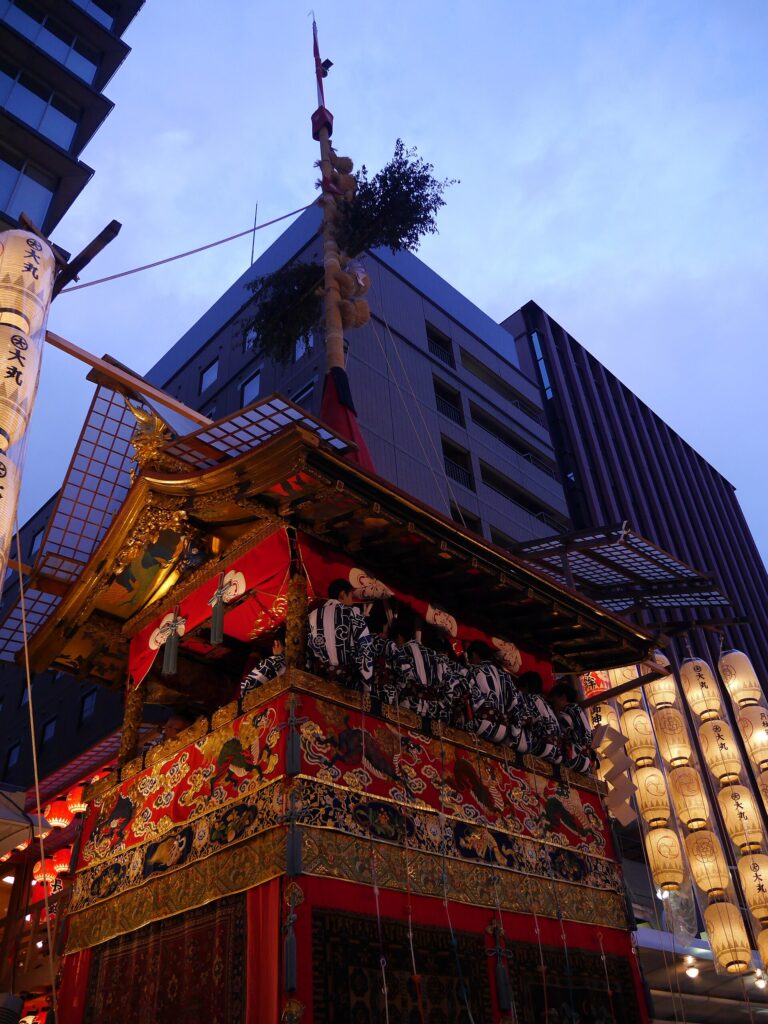
Yasaka Shrine's month-long festival is Japan's most famous. Its 34 yamaboko floats, some as heavy as 12 tonnes, are pulled through central Kyoto in two parades, the Saki Matsuri on 17 July and the Ato Matsuri on 24 July. Japanese name: 祇園祭.
Fixed dates: in 2027 both parades fall on Saturdays, so expect huge crowds. The 17 July parade leaves Shijo-Karasuma at 09:00 (to about 13:00) and the 24 July parade leaves Karasuma-Oike at 09:30. 2026 seats ran ¥6,000 (general) to ¥14,500; the yoiyama evenings of 14–16 July are free.
Hakata Gion Yamakasa
Float race
Fukuoka's 780-year-old Kushida Shrine festival has seven teams racing one-tonne kakiyama floats on their shoulders through Hakata in the early hours. Elaborate decorated kazariyama stand around the city for two weeks beforehand. Japanese name: 博多祇園山笠.
Yes — free along the 5 km course; seats inside Kushida Shrine are scarce (enquire with the shrine).
Biggest attractions nearby
Kushida Shrine, Canal City, Tocho-ji and Shofuku-ji temples, Nakasu yatai.
Tips on beating the crowd
Fixed dates. The finale, Oiyama, starts at 04:59 on 15 July (a Thursday in 2027), with teams setting off five minutes apart. The start area is packed from 1am — stand further along the course instead, or watch the practice runs on 10–14 July.
Murakami Taisai
Float parade
The festival of Seinamiwa Haguro Shrine sends 19 lacquered and gilded oshagiri floats around the old castle town of Murakami. It begins with the lantern-lit eve on 6 July, and the procession runs all day on the main day. Japanese name: 村上大祭.
Murakami salted-salmon shops, Mt Oyoyama castle ruins, Senami Onsen by the sea.
Tips on beating the crowd
Fixed on 6–7 July (2026: eve 6 July, main 7 July, stalls 6–8 July). The floats start on the morning of the 7th; come back after dark when they're lit up.
Nachi Fire Festival
Fire festival
Kumano Nachi Taisha's festival returns its 12 deities to Nachi Falls on tall fan-decorated mikoshi. White-robed priests purify the path with twelve huge burning torches on the stone steps below the waterfall. Japanese name: 那智の扇祭り(那智の火祭).
Nachi Falls, Seiganto-ji pagoda, Daimon-zaka stone path; Katsuura's fresh tuna.
Tips on beating the crowd
Always 14 July (a Wednesday in 2027). The shrine programme runs about 10:00–15:30 and the fire rite is in the afternoon; stand beside the steps of Hiryu Shrine at the falls. It may be cancelled or postponed in bad weather.
Tenjin Matsuri
River festival
One of Japan's three great festivals, Osaka Tenmangu's Tenjin Matsuri honours the scholar-deity Sugawara no Michizane. On 25 July a land procession leaves the shrine, then about a hundred boats sail the Okawa River under fireworks. Japanese name: 天神祭.
Fixed dates (a Saturday–Sunday in 2027). On the 25th the land procession leaves at 15:30, the boat procession starts around 18:00 and fireworks run about 19:30–21:00. Paid riverside seats cost roughly ¥3,000–30,000 (Japan Guide, 2026). Kawasaki Bridge is closed even to pedestrians.
Hirosaki Neputa Festival
Lantern floats
Hirosaki parades about 80 fan-shaped neputa lanterns painted with warrior scenes on the front and beauties on the back, to the slow beat of taiko drums. It is calmer and more painterly than its Aomori cousin. Japanese name: 弘前ねぷたまつり.
Hirosaki Castle and park, Tsugaru-han Neputa Village, apple pie cafés.
Tips on beating the crowd
Fixed dates. In 2026 the parades started at 19:00 (Dotemachi course 1–4 Aug, Ekimae course 5–6 Aug) with a 10:00 morning run on the 7th. JR Hirosaki to Chuo-Hirosaki is a 15-minute walk.
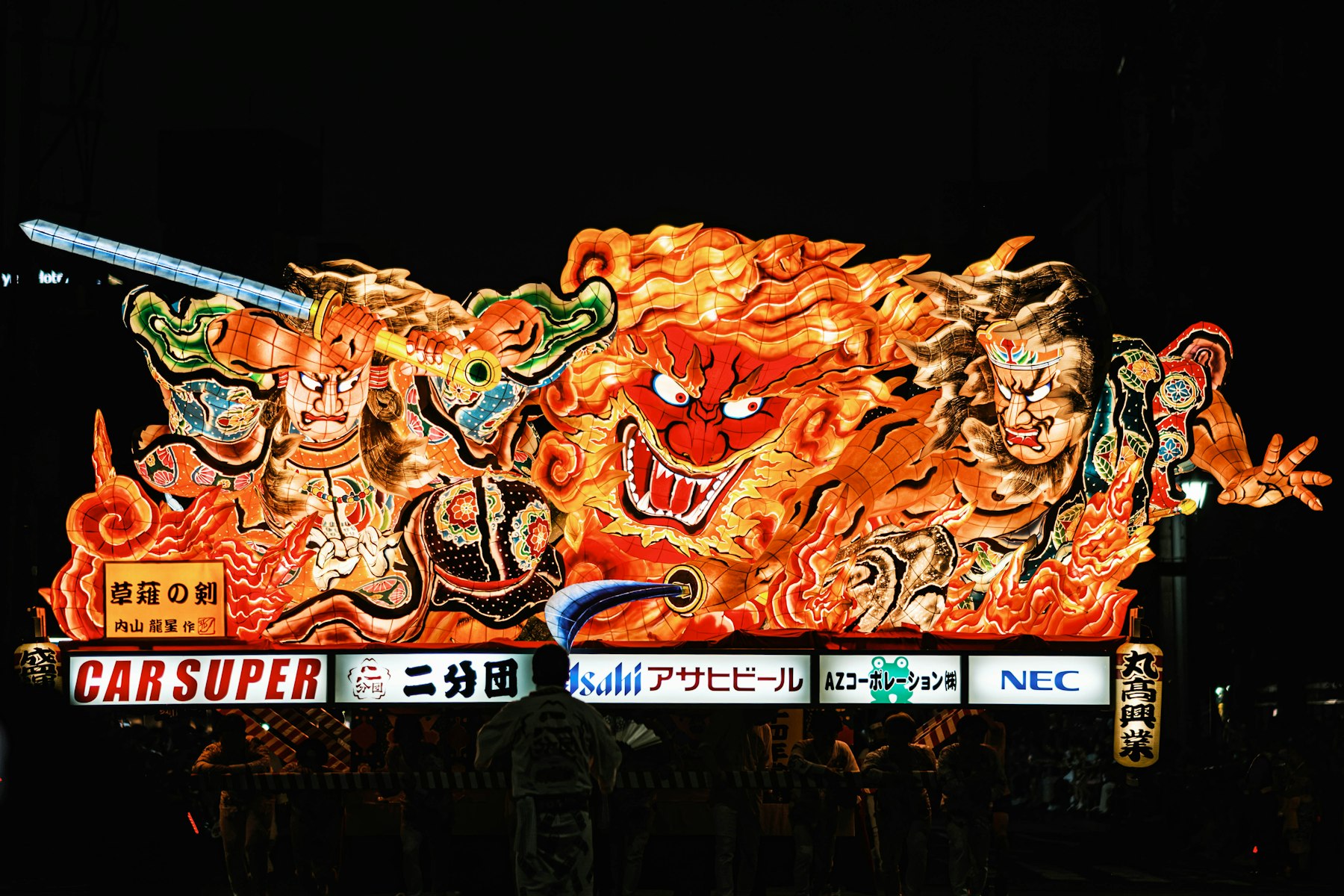
Aomori Nebuta Matsuri
Lantern floats
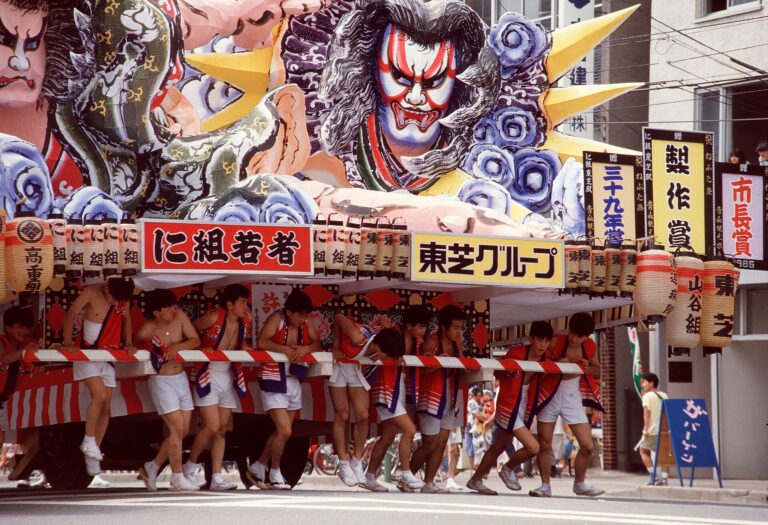
Giant illuminated paper-and-wire warriors, some 9 m wide, roll through Aomori while haneto dancers leap and chant 'Rassera!'. It ends on 7 August with a daytime parade, fireworks and a sea parade. Japanese name: 青森ねぶた祭.
Nebuta Museum WA-RASSE, A-Factory cider, Furukawa fish market nokke-don.
Tips on beating the crowd
Fixed dates. Parades run 19:00–21:10 on 2–3 Aug and 18:45–21:10 on 4–6 Aug. On the 7th there's a daytime parade (13:00–14:20) and fireworks (19:15–21:00). Seats cost ¥4,000 (Japan Guide, 2026) plus fees. Rent a haneto costume and you can dance in the parade.
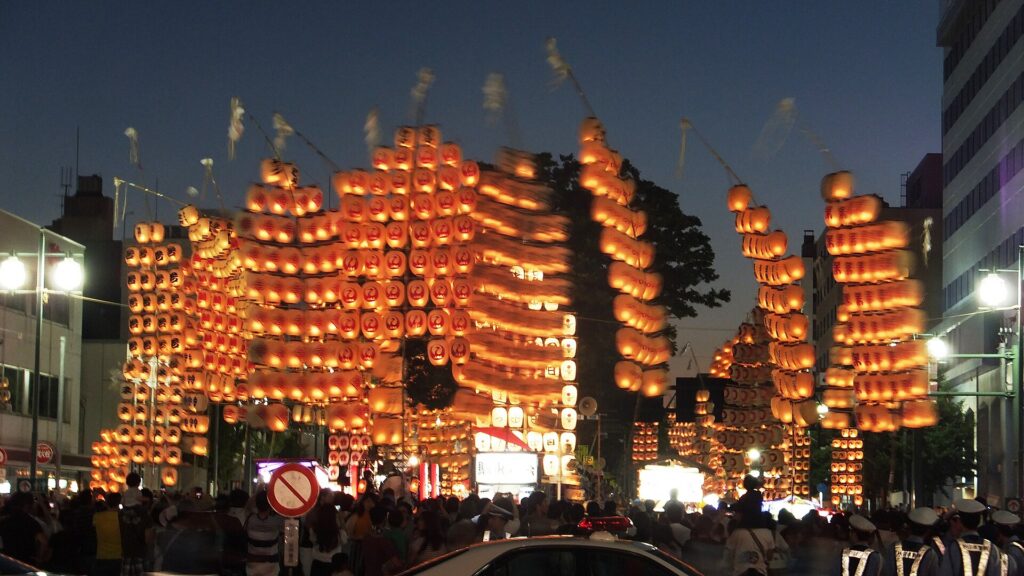
Akita Kanto Matsuri
Lantern poles
Performers balance 12 m bamboo poles hung with up to 46 paper lanterns on their palms, foreheads, shoulders and hips, about 280 poles lit at once along Kanto Odori. It's a prayer for a good harvest, and the lanterns represent rice bales. Japanese name: 秋田竿燈まつり.
Kanto Museum (Neburinagashi-kan), Senshu Park, Akita Museum of Art; daytime pole contests 4–6 Aug.
Tips on beating the crowd
Fixed dates. Night shows run about 18:45–21:00; median seats cost ¥3,500–4,500 (Japan Guide, 2026). Stay for the final 'fureai' session, when you can meet performers and try lifting a pole.
Yamagata Hanagasa Matsuri
Dance parade
Over 10,000 dancers twirl safflower-decorated straw hats down the main street to the 'Yassho, Makasho' chant. It's one of Tohoku's big summer festivals and the most open to visitors joining in. Japanese name: 山形花笠まつり.
Dates 2027
Thursday 5 August – Saturday 7 August, 18:00–21:45
Yes — free; paid seats in front of City Hall (Lawson Ticket).
Biggest attractions nearby
Bunshokan (former prefectural office), Yamadera temple (20 min by train), Zao Onsen.
Tips on beating the crowd
Fixed dates. The 2026 parade ran about 18:00–21:45 and went ahead in rain. Visitors can join the open 'anyone can dance' section at the end of the parade — check the official site for that year's join point.
Sendai Tanabata Matsuri
Streamers
Sendai's covered shopping arcades are hung with thousands of huge washi streamers, some over 5 m long, made by local shops and families. It is Japan's best-known Tanabata, held a month later than the 7 July date under the old calendar. Japanese name: 仙台七夕まつり.
Zuihoden mausoleum, Sendai Castle ruins, gyutan beef-tongue restaurants; Matsushima is 40 minutes by train.
Tips on beating the crowd
Fixed dates. The arcades are lit 10:00–21:00 (until about 20:00 on the last day). Go before 10:00 or after 19:00 to walk Chuo-dori and Ichibancho without the crowds.
Yosakoi Matsuri (Kochi)
Dance festival
The original yosakoi: around 200 teams with naruko clappers and music trucks dance through 16 venues across Kochi. Started in 1954, it has inspired yosakoi events all over Japan. Japanese name: よさこい祭り.
Fixed dates: eve and fireworks on 9 Aug, main dancing 10–11 Aug (11:00–22:00 in 2026), national contest and closing on 12 Aug. Otesuji is the main stage, but the Obiyamachi arcade lets you see the teams up close.
Awa Odori (Tokushima)
Dance festival
Japan's biggest bon-dance festival: around a million visitors watch groups of dancers (ren) fill Tokushima's streets over four nights. 'The dancers are fools and the watchers are fools — so why not dance?' says the famous chant. Japanese name: 阿波おどり.
Dates 2027
Thursday 12 August – Sunday 15 August, 18:00–22:00
Yes — free street dancing and free stages; paid enbujo seats.
Biggest attractions nearby
Mt Bizan ropeway and Awa Odori Kaikan, Naruto whirlpools, Iya Valley.
Tips on beating the crowd
Official pattern is 11–15 August: 11 Aug (a holiday) is a ticketed pre-festival (zenyasai) at Asty Tokushima, and street dancing runs 12–15 August. Paid seats cost ¥1,000–15,000 per 90-minute block (Japan Guide, 2026), on sale from 1 July via Ticket Pia. Book a bed early — Naruto or Takamatsu are the fallbacks.
Gujo Odori — Tetsuya Odori
All-night dance
Gujo Hachiman dances on about 30 nights from mid-July to early September, and during Obon (13–16 August) the circle dances go on all night. It's a participation festival: visitors join the ring in yukata and geta. Japanese name: 郡上おどり(徹夜おどり).
Tetsuya Odori is held 13–16 August each year (2026: 20:00 to 04:00/05:00); the wider 2027 season (2026: 11 Jul–5 Sep) is not yet published. Buy a pair of local geta in town — the clacking is part of the sound.
Nagasaki Shoro Nagashi
Lantern boats
On the last evening of Obon, Nagasaki families pull decorated boats (shorobune) carrying the spirits of loved ones who died during the year through the city to the launch sites, with gongs, chanting and deafening firecrackers. Some boats are nearly 10 m long. Japanese name: 精霊流し.
Dejima, Glover Garden, Chinatown; Inasayama night view.
Tips on beating the crowd
Always 15 August, from early evening. Kenchi-zaka slope and the Shianbashi–Ohato area are the classic spots. Bring earplugs: firecrackers go off for hours, and remember it's a memorial, not a party.
Kyoto Gozan Okuribi
Bonfires
To send ancestral spirits back at the end of Obon, five huge bonfires shaped as characters and symbols are lit on the mountains around Kyoto, starting with the 'Dai' on Nyoigatake. It's a solemn Buddhist rite, not a show. Japanese name: 京都五山送り火.
Demachiyanagi (Keihan / Eizan) · walk 5 min to the Kamo River
Seat from
Free to watch
Watching for free
Yes — free; viewed from across the city.
Biggest attractions nearby
Ginkakuji and the Philosopher's Path, Shimogamo Shrine, Kamo River terraces.
Tips on beating the crowd
Always 16 August. Fires are lit one after another from 20:00 (Daimonji) to 20:20 (Torii-gata) and each burns about 30 minutes. The Kamo River near Marutamachi–Imadegawa gives a clear view of Daimonji; no single spot shows all five.
Tokyo Koenji Awa Odori
Expected date
Tokyo's biggest Awa Odori brings about 10,000 dancers in 160-plus ren to the streets around Koenji Station. It started in 1957 as a local shopping-street event. Japanese name: 東京高円寺阿波おどり. Date expected by tradition; not yet officially announced.
Dates 2027
Saturday 28 August – Sunday 29 August, 17:00–20:00
Koenji's vintage shops and izakaya, Nakano Broadway, Kichijoji.
Tips on beating the crowd
Held on the last weekend of August (29–30 August in 2026, 17:00–20:00), so 28–29 August 2027 is expected. Go to the quieter southern venues around Shin-Koenji; trains out of Koenji are crushed after 20:00.
Owara Kaze no Bon
Night dance
In the hillside town of Yatsuo, dancers in deep straw hats move silently through lamp-lit streets to the plaintive sound of the kokyu fiddle, praying that the autumn typhoons spare the harvest. It's quiet, elegant and very different from summer's noisy festivals. Japanese name: 越中八尾おわら風の盆.
Dates 2027
Wednesday 1 September – Friday 3 September, 17:00–23:00
Yatsuo's Suwamachi stone-paved street, Toyama Glass Art Museum, Kurobe Gorge.
Tips on beating the crowd
Fixed dates. In 2026 dancing ran 17:00–23:00 on 1–2 Sept and 19:00–23:00 on 3 Sept. The best street dancing (machi-nagashi) often happens after the official hours, so stay late and book Toyama city rooms early.
Tsurugaoka Hachimangu Yabusame
Horseback archery
On the last day of Tsurugaoka Hachimangu's grand festival (14–16 September), archers in Kamakura-period hunting dress gallop down a 250 m track inside the shrine and shoot at three targets. The rite goes back to the time of Minamoto no Yoritomo. Japanese name: 鶴岡八幡宮例大祭 流鏑馬神事.
Always 16 September (a Thursday in 2027). The rite is in the afternoon; crowds line the track hours earlier, so arrive by late morning, and stand near a target to see the arrow hit.
Kishiwada Danjiri Matsuri (September)
Expected date
Teams of hundreds haul 4-tonne carved wooden danjiri floats at full speed through Kishiwada's narrow streets, with a carpenter dancing on the roof. The terrifying 90-degree corner turns (yarimawashi) are the reason people come. Japanese name: 岸和田だんじり祭. Date expected by tradition; not yet officially announced.
Dates 2027
Saturday 18 September – Sunday 19 September, 06:00–22:00
Held on the Saturday–Sunday before Respect for the Aged Day (2026: 19–20 Sept; 2025: 13–14 Sept), so 18–19 September 2027 is expected. In 2026 the yoimiya ran 06:00–22:00 and the honmiya 09:00–22:00. Watch the corners from behind barriers and never stand on the outside of a bend.
No events published for October yet.
No events published for November yet.
No events published for December yet.
How to use this Japanese festival calendar
Each festival carries one of three labels. Confirmed means the organiser has announced the date, or the festival has been held on the same fixed date for generations (the Gion parades on 17 and 24 July, Aomori Nebuta on 2–7 August). Expected means the date follows a rule, such as “the third Saturday of February”, but the 2027 edition has not been announced. To be announced means we could not work out a reliable date yet.
Times and seat prices are from the 2026 edition unless the card says otherwise, because most organisers publish them only a few weeks before the day. Check the official link on each card before you travel, and see our Japan fireworks calendar for the hanabi displays that often run alongside summer festivals.
Japan festivals by season
Sapporo Snow Festival, 4–11 February 2027. Photo: t-konno / Wikimedia Commons, CC BY-SA 3.0
Winter (December to February): fire, snow and naked festivals
Winter is the most underrated festival season. The north builds snow festivals (Sapporo, Tokamachi, Hirosaki, Yokote’s snow huts) while the rest of Japan lights fires to burn away bad luck: Nozawa’s fire battle, Nara’s Wakakusa Yamayaki and the torch run down 538 steps at Shingu’s Oto Matsuri. February also has Japan’s two famous naked festivals, at Konomiya and Saidaiji, where thousands of men in loincloths scramble for luck.
Takayama Spring Festival night procession, 14 April. Photo: 大野 一将 / Wikimedia Commons, CC BY-SA 4.0
Spring (March to May): floats, processions and Golden Week
Spring festivals are about elegance. Takayama’s karakuri puppet floats, Kyoto’s Aoi Matsuri in Heian court dress and Nikko’s thousand-samurai procession are among the most beautiful parades in the country. Golden Week (late April to early May) is crowded and expensive, so book early if you want Hakata Dontaku or Hamamatsu.
Most of Japan’s famous festivals happen in July and August. Gion Matsuri, Tenjin Matsuri, the Tohoku lantern festivals and Awa Odori draw millions of visitors, and hotels in Aomori, Tokushima and Kyoto sell out months ahead. It is hot and humid: plan for evening events, carry water and wear a yukata if you want to join in.
Chichibu Night Festival, 2–3 December. Photo: ちちびあん / Wikimedia Commons, CC BY-SA 4.0
Autumn (October and November): harvest and float festivals
Autumn brings harvest festivals and some of Japan’s finest float parades, from Kawagoe and Karatsu to Chichibu in early December. It is also the most comfortable weather for standing outside for hours. Pair a festival with the autumn leaves, which peak in Kyoto and Tokyo from late November; see our Japan autumn leaves calendar.
Japan’s three great festivals, and the ones that rival them
Japan traditionally names three great festivals (Nihon sandai matsuri): Kyoto’s Gion Matsuri, Osaka’s Tenjin Matsuri and Tokyo’s Kanda Matsuri. For sheer spectacle, Aomori’s Nebuta belongs with them: giant lit-up paper warriors rolling through the streets with thousands of dancers. These three have the most to plan around: paid seats, crowds and hotels that sell out.
The big three, in full
The events worth planning a trip around.
Gion Matsuri
Float parade
Yasaka Shrine's month-long festival is Japan's most famous. Its 34 yamaboko floats, some as heavy as 12 tonnes, are pulled through central Kyoto in two parades, the Saki Matsuri on 17 July and the Ato Matsuri on 24 July. Japanese name: 祇園祭.
Fixed dates: in 2027 both parades fall on Saturdays, so expect huge crowds. The 17 July parade leaves Shijo-Karasuma at 09:00 (to about 13:00) and the 24 July parade leaves Karasuma-Oike at 09:30. 2026 seats ran ¥6,000 (general) to ¥14,500; the yoiyama evenings of 14–16 July are free.
Tenjin Matsuri
River festival
One of Japan's three great festivals, Osaka Tenmangu's Tenjin Matsuri honours the scholar-deity Sugawara no Michizane. On 25 July a land procession leaves the shrine, then about a hundred boats sail the Okawa River under fireworks. Japanese name: 天神祭.
Fixed dates (a Saturday–Sunday in 2027). On the 25th the land procession leaves at 15:30, the boat procession starts around 18:00 and fireworks run about 19:30–21:00. Paid riverside seats cost roughly ¥3,000–30,000 (Japan Guide, 2026). Kawasaki Bridge is closed even to pedestrians.
Aomori Nebuta Matsuri
Lantern floats
Giant illuminated paper-and-wire warriors, some 9 m wide, roll through Aomori while haneto dancers leap and chant 'Rassera!'. It ends on 7 August with a daytime parade, fireworks and a sea parade. Japanese name: 青森ねぶた祭.
Nebuta Museum WA-RASSE, A-Factory cider, Furukawa fish market nokke-don.
Tips on beating the crowd
Fixed dates. Parades run 19:00–21:10 on 2–3 Aug and 18:45–21:10 on 4–6 Aug. On the 7th there's a daytime parade (13:00–14:20) and fireworks (19:15–21:00). Seats cost ¥4,000 (Japan Guide, 2026) plus fees. Rent a haneto costume and you can dance in the parade.
Japanese festivals by prefecture
Use this table to find what is on near where you will be. Prefectures are listed from north to south.
Matsuri (祭り): a festival, usually held by a shrine to honour its kami (god).
Mikoshi (神輿): a portable shrine carried on the shoulders; the god rides inside during the festival.
Dashi, yatai, hikiyama, yamaboko: different regional names for festival floats, from Takayama’s puppet floats to Kyoto’s 12-tonne yamaboko.
Yoimiya (宵宮): the eve of a festival, often the best night for stalls and atmosphere.
Hi-matsuri (火祭り): a fire festival.
Hadaka matsuri (裸祭り): a “naked” festival, where men wear only a loincloth.
Bon odori (盆踊り): summer Obon dancing; Awa Odori and Gujo Odori are the most famous.
Ren (連): a dance group at Awa Odori and other dance festivals.
Yatai (屋台): also the word for festival food stalls: yakisoba, takoyaki, kakigori shaved ice.
Sajiki-seki (桟敷席): paid stand seating along a parade route.
Festival etiquette in six rules
Never touch a mikoshi uninvited
It carries a god. Join a carrying team only if a local group invites you, and follow their lead.
Stay behind the rope
Floats weigh tonnes and turn fast. At Kishiwada and Hakata, the barriers are there for a reason.
Carry cash
Food stalls, charms and many seats are cash only. Keep ¥1,000 notes and coins.
Take your rubbish home
Public bins are rare in Japan, and festival crowds make it worse. Bring a small bag.
Ask before photographing people
Especially at shrine rites and at Obon events such as Nagasaki's Shoro Nagashi, which are memorials.
Plan the last train
Rural festivals end late and the last train leaves early. Check it before you go, or stay the night.
Paid seats: which festivals sell them
Most Japanese festivals are free to watch from the street. A few sell reserved seats, which are worth it for long parades in the heat. These are the seat prices we could verify (2026 editions unless noted):
Festival
Prefecture
Dates
Seats or entry
Jidai Matsuri
Kyoto
22 Oct
from ¥5,000
Chichibu Night Festival
Saitama
2–3 Dec
from ¥4,000
Kasuga Wakamiya On-matsuri
Nara
15–18 Dec
from ¥2,000
Namahage Sedo Festival
Akita
12–14 Feb
from ¥2,000
Aoi Matsuri
Kyoto
15 May
from ¥5,000
Gion Matsuri
Kyoto
1–31 Jul
from ¥6,000
Tenjin Matsuri
Osaka
24–25 Jul
from ¥3,000
Aomori Nebuta Matsuri
Aomori
2–7 Aug
from ¥4,000
Akita Kanto Matsuri
Akita
3–6 Aug
from ¥3,500
Awa Odori
Tokushima
12–15 Aug
from ¥1,000
Seats usually go on sale one to two months ahead through the organiser, Ticket Pia, Lawson Ticket or convenience-store machines, and the best ones sell out on the first day.
Planning a trip around a Japanese festival
Book your bed first. For Gion, Nebuta, Awa Odori and Sapporo Snow Festival, hotels in the city fill months ahead. Stay one or two stops away if you have to.
Buy train seats early. Shinkansen reserved seats go on sale one month before travel and the festival days sell out, especially around Obon (13–16 August).
Check the weather plan. Some festivals move or cancel in rain (Aoi, Jidai); others go ahead in anything. Wakakusa Yamayaki has no rain date at all.
Arrive early, leave late. The best spots fill hours before the start, and the crush for the trains after a big festival can take an hour. Waiting it out in a nearby izakaya is the local solution.
Dress for it. A yukata for summer dance festivals, snow boots with grip for Sapporo and Hirosaki, and clothes you do not mind getting sparks on for fire festivals.
Japanese festival calendar FAQ
When is festival season in Japan?
There are festivals all year, but July and August are the peak, with Gion Matsuri, Tenjin Matsuri, Aomori Nebuta and Awa Odori. Golden Week (late April to early May) and October are the next busiest. February is the best month for snow and fire festivals.
What are the three biggest festivals in Japan?
The traditional “three great festivals” are Kyoto’s Gion Matsuri (all of July, parades on 17 and 24 July), Osaka’s Tenjin Matsuri (24–25 July) and Tokyo’s Kanda Matsuri (mid-May, held in full in odd-numbered years, so 2027 is a main year).
Are Japanese festivals free to watch?
Almost all are. 61 of the 65 festivals on this calendar are free to watch from the street. A few sell reserved seats, such as Gion (from about ¥6,000), Aomori Nebuta (¥4,000) and Akita Kanto (¥3,500), and a handful now charge entry, such as Namahage Sedo (¥2,000).
What festivals are on in Tokyo?
The big Tokyo festivals are Sanja Matsuri in Asakusa (third weekend of May), Kanda Matsuri (May, main year in 2027), the Tori-no-ichi rake fairs in November, Senso-ji’s Hagoita-ichi in December and Koenji Awa Odori at the end of August. Kawagoe, Chichibu and Kamakura are easy day trips.
What festivals are on in Kyoto?
Kyoto’s three great festivals are the Aoi Matsuri (15 May), the Gion Matsuri (July) and the Jidai Matsuri (22 October). Add the Kurama Fire Festival (22 October) and the Gozan Okuribi bonfires on 16 August.
What is the best winter festival in Japan?
Sapporo Snow Festival (4–11 February 2027) is the biggest. For atmosphere, the Otaru Snow Light Path, Yokote’s kamakura snow huts and the Shirakawa-go light-up are hard to beat, and Nozawa Onsen’s fire festival on 15 January is the most dramatic.
Can tourists join a Japanese festival?
Yes, at many of them. You can dance at Awa Odori in some open groups, at Gujo Odori and in the open section of Yamagata Hanagasa, and you can rent a costume to dance as a haneto at Aomori Nebuta. Carrying a mikoshi needs an invitation from a local group.
How accurate are these festival dates?
Every date was checked against the organiser’s official site on 17 October 2026. Confirmed dates are announced or fixed by long tradition; expected dates follow the festival’s own rule but have not been announced, so check the official link on each card before you book.
Japanese festival calendar: the top 10 at a glance
Every date, time and price on this page comes from the festival organiser, the shrine or temple, or the city or prefectural tourism office, linked on each card. Where those were not yet published, we used Japan National Tourism Organization listings and Japan Guide, and said so. Last checked: 17 October 2026. Spotted a change? Tell us and we will update the card.
Photo credits
Card photos are resized to fit; no other changes were made.
Tell us which festival you're planning around and we'll match you with local guides, seats where they're sold and ryokan nearby, booked direct with hosts.


 English
 Japanese
 Chinese (Taiwan)
 Chinese (China)
 Korean
 French
 Italian
 Thai